Skip to content

Dietitian's view

Give kiwi with care because of its acidic nature.

Lokmini is not a healthcare provider and does not offer health services. For your baby's specific needs, talk to your doctor or a dietitian.

  • Fruits
  • 6 mo+
  • Low choking risk

Kiwi for babies: when to start

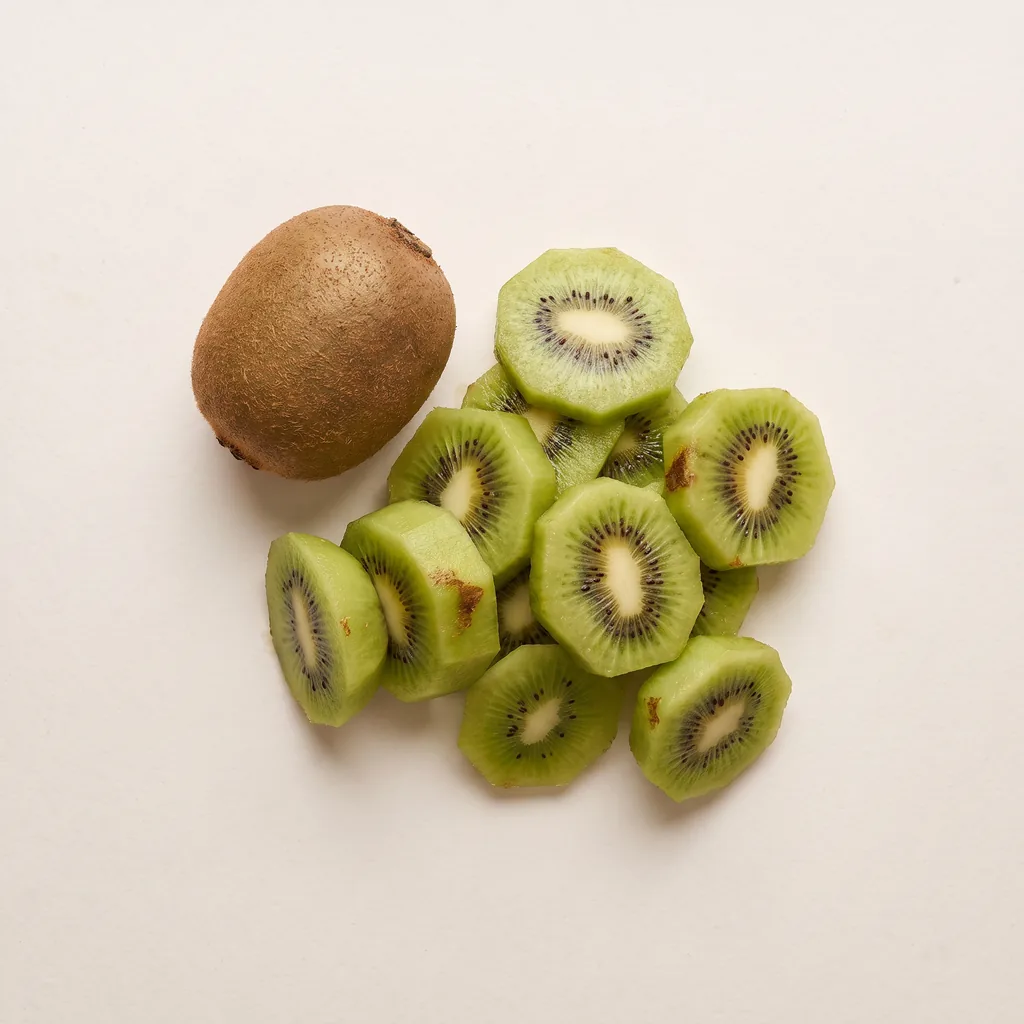
Kiwi can start when your baby is ready for solids, usually around 6 months. It comes from East Asia and is widely grown in New Zealand. There the fruit used to be called gooseberry. It was later sold as kiwifruit, after the small brown flightless bird of New Zealand.

  • Vitamin C
  • Vitamin K
  • Fiber
  • Potassium
  • Folate
  • Magnesium
Kiwi prepared for a baby

About kiwi

It gives carbohydrate, fiber and water. Minerals and vitamins include potassium, magnesium, calcium, folate, and vitamins K, C and B6. Vitamin C increases iron absorption and contributes to the normal function of the immune system.

Also known as: altın kivi, kivi, kiwi, yeşil kivi

  • Gluten-free
  • Vegan

How to prepare it by age

6 monthsStrip or mash
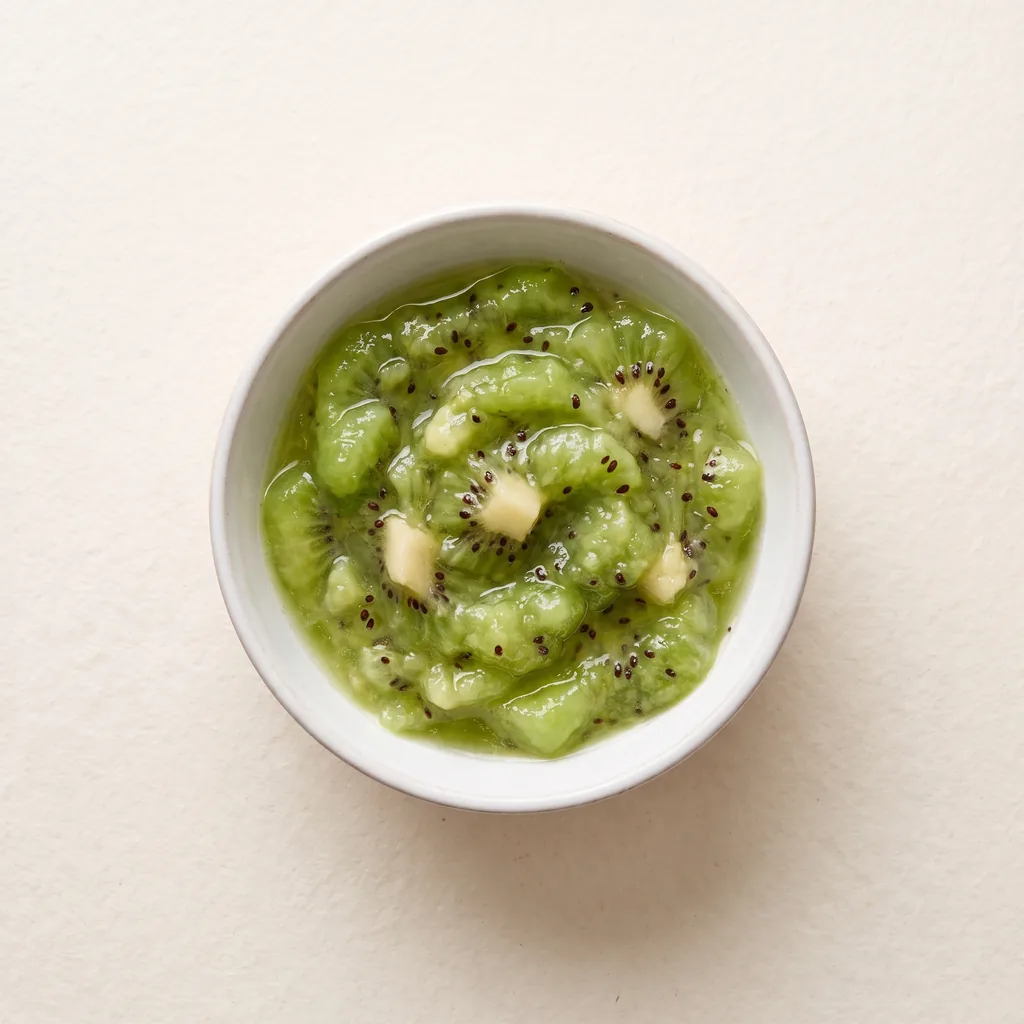
Kiwi prepared for 6 months

Cut: Finger strip

Peel ripe, soft kiwi and cut it lengthwise into finger-thick wedges. Firm kiwi is not suitable at this age. If it gives under a thumb press, it is ripe. The acid can redden the skin around the mouth, which is not an allergy. Kiwi rarely causes a true allergy, but offer it alone and in a small amount the first time.

Cut: Fork mashed

Peel ripe, soft kiwi and mash it with a fork. Serve it alone or stirred into a soft food such as yogurt or porridge. Start with a small amount the first time.
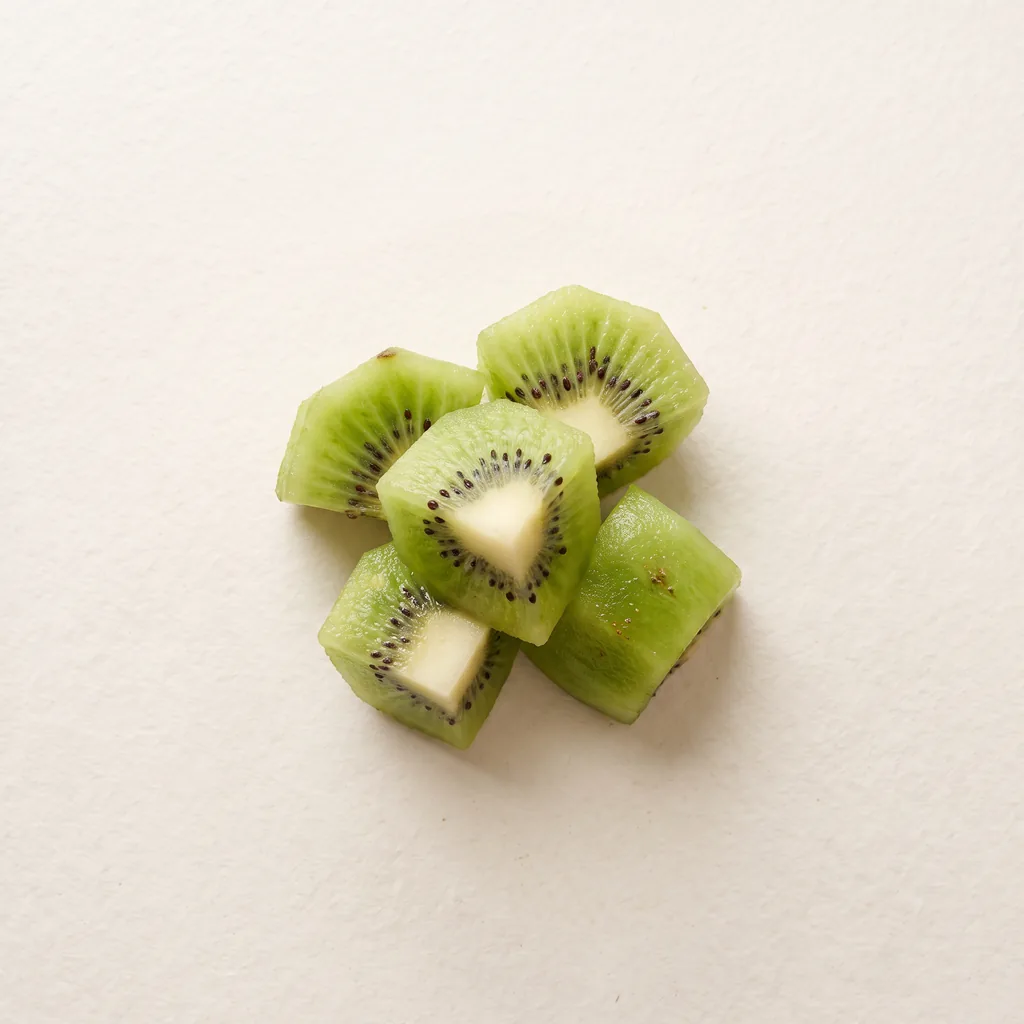
9 monthsCube

Kiwi prepared for 9 months

Cut: Bite sized piece

Cut peeled, ripe kiwi into small bite-sized cubes. The tiny black seeds are harmless, so you do not need to remove them. If pieces are too slippery, coat them with a fine powdery food like shredded coconut or crushed cereal.

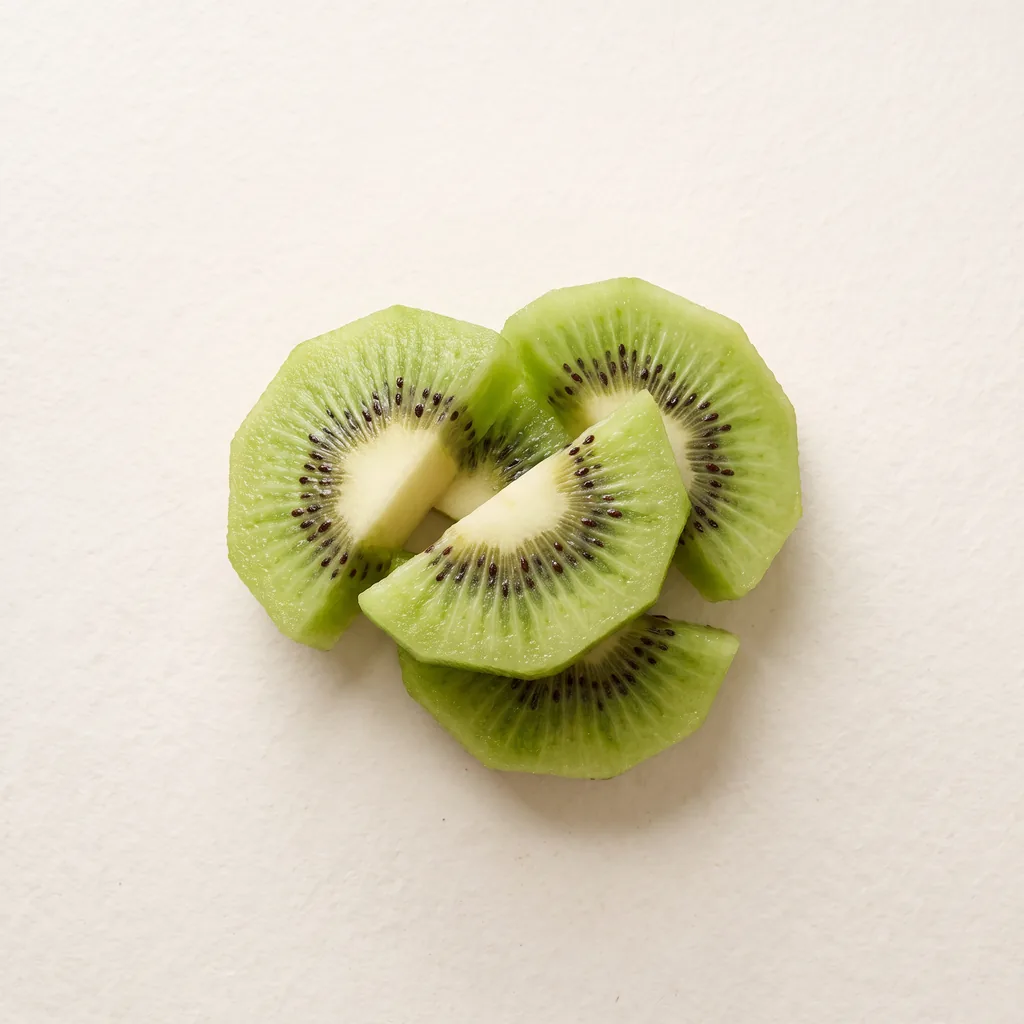
12 monthsCube

Kiwi prepared for 12 months

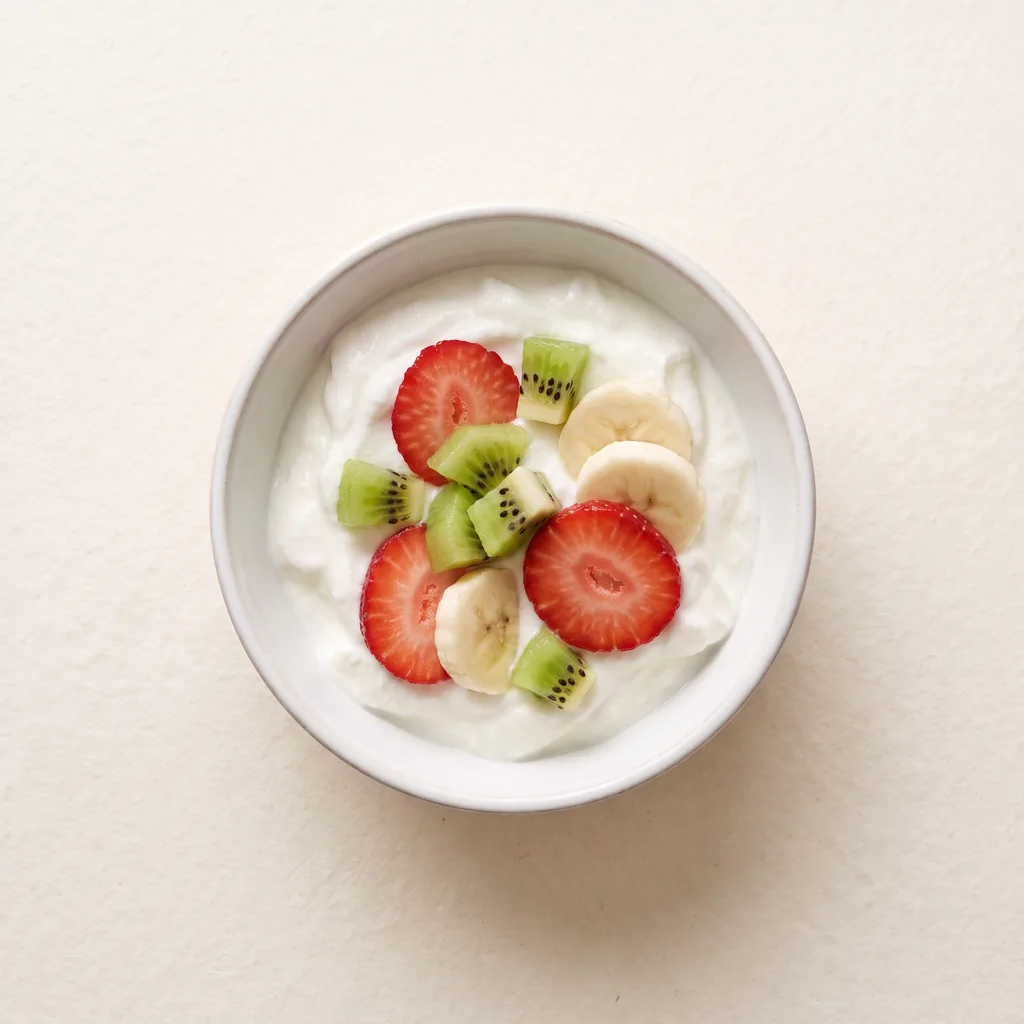
Keep serving kiwi as cubes or half-moon slices. After 12 months, you can hand your child a peeled half kiwi to scrape with a spoon. Kiwi also works as a sweet topping on oatmeal, rice or yogurt.

Choking risk

  1. Low
  2. Medium
  3. High

Kiwi's firm, slippery texture can raise choking risk in babies. Choose fully ripe kiwi that mashes easily between your fingers. Slice it, mash it or serve it in small, soft pieces to suit your baby's developmental skills. Your baby should sit upright through the meal and stay under your constant watch.

Firm kiwi

Do not give your baby unripe, firm kiwi. Choose soft kiwi that mashes easily when pressed lightly.

Allergen information

Kiwi is not among the main food allergens usually listed, but it can cause serious allergic reactions. Several fruit proteins, including actinidin, can play a part in kiwi allergy.

In some people with latex allergy, cross-reactions can happen between kiwi, banana, avocado and chestnut. People sensitive to birch pollen can develop pollen food allergy syndrome. This can cause itching, burning or tingling in the mouth. Symptoms are usually mild, but serious reactions are also possible. Peeling or cooking kiwi may reduce the effect of some allergens, but it does not remove the allergy risk completely.

A common mix-up

A red patch around the mouth is most often an acid effect. If you see lip swelling, hives or vomiting, contact a doctor.

Frequently asked questions

Is kiwi a common allergen?

Kiwi is not among the main food allergens usually listed, but it can cause serious allergic reactions. Several fruit proteins, including actinidin, can play a part in kiwi allergy.

How do you prepare kiwi for babies?

For a 6-month-old: Peel ripe, soft kiwi and cut it lengthwise into finger-thick wedges. Firm kiwi is not suitable at this age. If it gives under a thumb press, it is ripe. The acid can redden the skin around the mouth, which is not an allergy. Kiwi rarely causes a true allergy, but offer it alone and in a small amount the first time.

Is kiwi a choking hazard for babies?

Kiwi's firm, slippery texture can raise choking risk in babies. Choose fully ripe kiwi that mashes easily between your fingers. Slice it, mash it or serve it in small, soft pieces to suit your baby's developmental skills. Your baby should sit upright through the meal and stay under your constant watch.

When can a baby eat kiwi?

Your baby can eat kiwi once they are about 6 months old and ready for solids. Choose fully ripe, soft kiwi and serve it in a way that suits your baby's developmental skills.

Is kiwi skin edible?

Yes, kiwi skin is edible and contains fiber. Wash it well under running water before eating. It is also fine to peel it for your baby.

Why does kiwi redden the skin around the mouth?

Kiwi is acidic, so it can cause mild irritation around the mouth. Redness only where the fruit touched the skin does not always mean an allergy. If needed, you can put a thin layer of plain petroleum jelly around the mouth before the meal.

Can a child be allergic to kiwi?

Yes, kiwi can cause serious allergic reactions in some people. Cross-reactions can happen, especially in people with latex or birch pollen allergy. When you offer it for the first time, start with a small amount and watch how your baby responds.

Can I give kiwi juice?

Kiwi juice is not recommended before 12 months. After the first birthday, it can be served now and then, in small amounts and with no added sugar. But choose whole kiwi over juice.

Prepared by the Lokmini team | Last updated November 19, 2026

Share:WhatsApp

Want to add this food to your baby's solid food calendar?

Join Lokmini to learn how this food is served at each age and to keep track of every food your baby tries.

Join Lokmini

Starting Solids

When and how to start solids, and what happens in the first week?

Read the guide

Similar foods

Let's get ready for the first bite together

Lokmini builds a day-by-day plan for your baby's age. Leave your email for new guides and our newsletter.

Start Your Journey