Dietitian's view
Do not give celery stalk raw to your baby. Other than that, you can give it with care.

Uzm. Dyt. Berk AysanPrepared the latest update, November 14, 2026
Lokmini is not a healthcare provider and does not offer health services. For your baby's specific needs, talk to your doctor or a dietitian.
- Vegetables
- 6 mo+
- High choking risk
Celery for babies: when to start
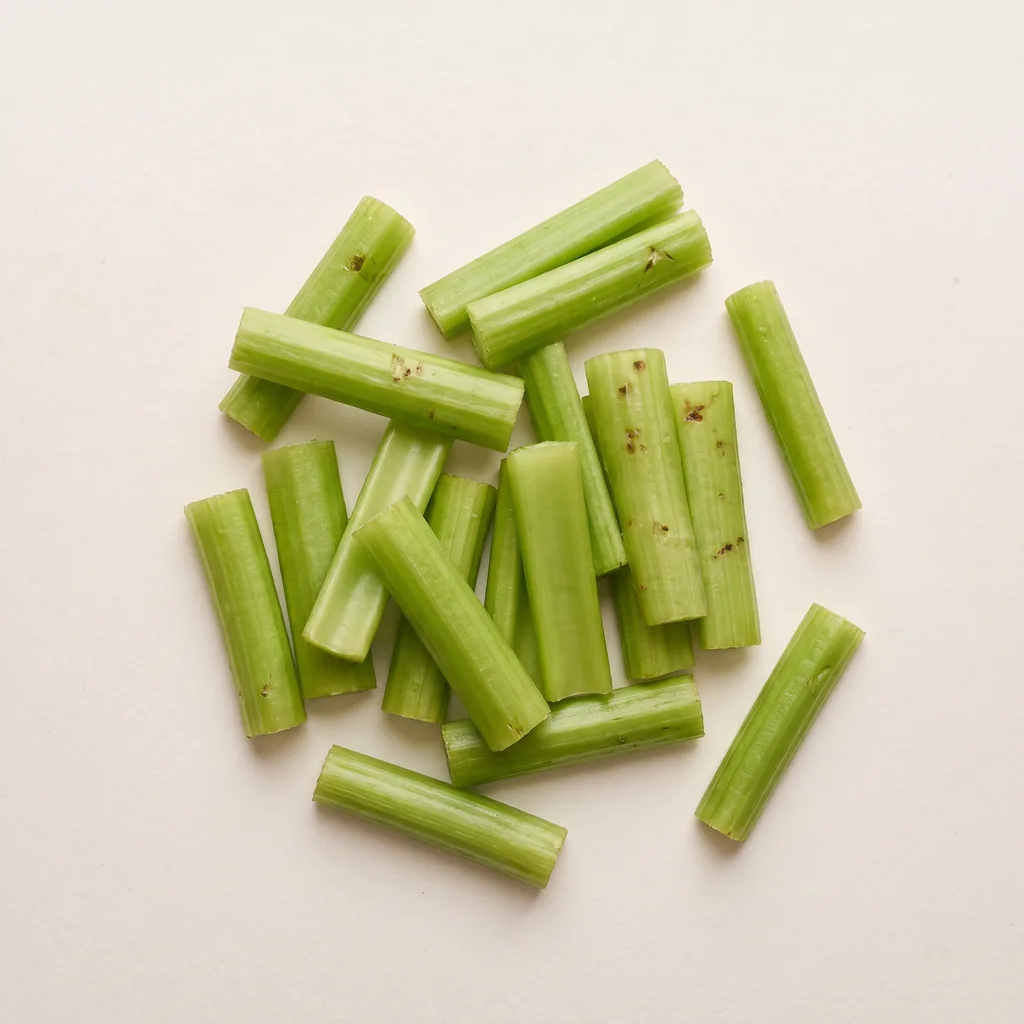
Celery stalks can start when your baby is about 6 months old and ready for solids. Raw stalk is a high choking risk, so it needs age-appropriate preparation. Celery comes from wild greens around the Mediterranean. Leaf celery is common in Asia and stalk celery in the Americas.
- Vitamin K
- Folate
- Carotenoids
- Antioxidants
About celery
Celery gives vitamin K, some folate, and carotenoids that turn into vitamin A. It also carries antioxidant compounds.
Sodium content
Celery stalk contains more natural sodium than some vegetables. This amount does not make celery a high-salt food, though.
It can be offered in baby-appropriate portions as part of a varied diet. There is no need to add salt when cooking or serving it.
Also known as: sap kereviz, kereviz sapı, celery
- Gluten-free
- Vegan
How to prepare it by age
Age-by-age prep is in the Lokmini app
See how to cut, texture and serve celery at 6, 9 and 12 months in the app.
Join LokminiChoking risk
- Low
- Medium
- High
Raw celery stalk is a choking risk for babies and young children because it is hard and stringy. Hard, stringy pieces bitten off the stalk can be especially hard to chew and swallow.
To lower the risk, remove the thick outer strings of the stalk, chop it into small pieces and cook it until it is soft enough to squash easily between your fingers. Do not offer babies a whole raw celery stalk or hard sticks.
Your baby should sit upright while eating, and an adult should stay close the whole time, within arm's reach.
High risk
Do not give young babies raw celery pieces or large raw chopped stalk. Cook it first or slice it very thin.
Allergen information
Celery stalk is not on our app's common allergen list, but it is an important food that can cause allergic reactions. In the European Union, celery is one of the allergens that must be declared on labels.
Symptoms of celery allergy can range from itching and tingling in the mouth to hives, swelling and, rarely, anaphylaxis.
Some people allergic to birch or mugwort pollen may cross-react with celery. Cross-reactions are also possible with foods from the same plant family, such as carrot, fennel, parsley, dill and cilantro. Being allergic to one of these foods does not necessarily mean an allergy to celery will develop, though.
Cooking can reduce the effect of some allergenic proteins, but it does not remove all the allergens in celery. So people with celery allergy may react to cooked celery too.
Sun exposure after skin contact with celery can, in some cases, cause phytophotodermatitis, with redness, blisters and later dark patches. This is different from a food allergy. Wash the skin that touched celery and keep it out of the sun.
When you offer celery stalk for the first time, start with a small amount. If there are no allergy signs, you can increase the amount at later meals.
If you see signs such as hives, lip swelling or repeated vomiting, stop giving celery and get a medical assessment. For serious signs such as trouble breathing or swelling of the tongue or throat, call emergency services right away.
Frequently asked questions
What age can babies eat celery?
Is celery a common allergen?
Is celery a choking hazard for babies?
Can babies have celery juice?
Should I worry about nitrates in celery?
When can my child eat raw celery sticks?
Sources
- World Health Organization (WHO), Guideline for complementary feeding of infants and young children 6-23 months of age (2023)
- National Health Service (NHS), Preparing food safely for babies
- CDC, Infant and Toddler Nutrition, Choking Hazards
- Frontiers in Plant Science, Celery and Celeriac: A Critical View on Present and Future Breeding (2020)
- Pediatrics, Greer FR, Shannon M. Infant methemoglobinemia: the role of dietary nitrate in food and water (2005)
Want to add this food to your baby's solid food calendar?
Join Lokmini to learn how this food is served at each age and to keep track of every food your baby tries.