Dietitian's view
Chicken feet are not a necessary food in infant feeding.
Lokmini is not a healthcare provider and does not offer health services. For your baby's specific needs, talk to your doctor or a dietitian.
- Proteins
- 6 mo+
- High choking risk
Chicken feet for babies: when to start
Well-cooked chicken feet prepared for your baby's age and eating skills can be offered when your baby is ready for solids, around 6 months.
- Protein
- Fat
- Folate
- Collagen
- Iron (a little)
- Selenium
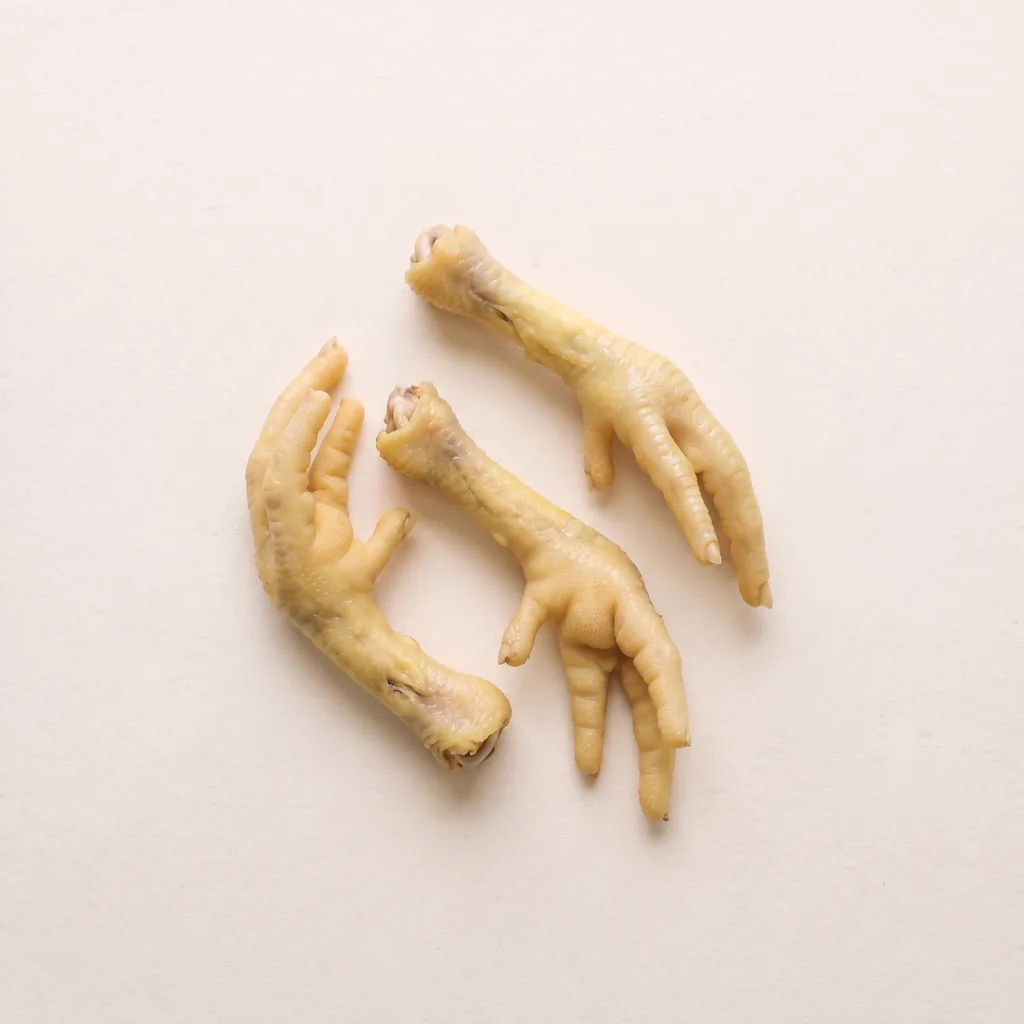
About chicken feet
Chicken feet are loved around the world. Everything but the bones and nails is eaten. They are roasted as snacks, coated in rich sauces, added to soups or simmered in stock. People value them for texture. Eaten whole, they offer chewy gristle to gnaw, wobbly tendons full of collagen to suck on, and small bones you spit out.
Nutrition
A baby will not eat much of the foot. Protein, fat and folate are plentiful in feet. They carry a little iron, selenium and zinc. They are also rich in collagen. There is not enough research on how collagen affects bone development.
Also known as: tavuk ayağı, tavuk paçası, piliç ayağı, tavuk ayağı çorbası
- Gluten-free
- Contains meat
How to prepare it by age
Age-by-age prep is in the Lokmini app
See how to cut, texture and serve chicken feet at 6, 9 and 12 months in the app.
Join LokminiChoking risk
- Low
- Medium
- High
Chicken feet hold tiny bones and cartilage that must be spat out, and firm parts that need thorough chewing. In a whole bone-in foot, small hard pieces can break off in the mouth. Small bones can be swallowed, but they can get stuck in the soft lining of the throat or airway. That does not block breathing but needs medical care. Prepare feet for the child's age and stay within arm's reach.
Bone and nails
Do not give babies bony pieces or nails. Test a teether leg bone by bending it first.
Allergen information
FPIES warning
It is one of the known triggers of FPIES (a delayed-onset food allergy). In this condition, repeated severe vomiting, pallor and lethargy may occur, usually 1-4 hours after the food is eaten. Diarrhea may appear later. These symptoms require urgent medical evaluation.
Chicken feet rarely cause allergy. Still, poultry allergy has been reported. Chicken can trigger a delayed allergy called FPIES. Vomiting appears 2 to 4 hours after eating, and diarrhea may follow.
People with fish allergy are rarely more likely to react to chicken. Some people with feather and egg allergy test positive to chicken meat. The allergy-causing protein is heat sensitive, and well-cooked meat usually causes no symptoms. Routine testing for chicken meat is not advised in egg allergy.
Give a small amount for the first servings. If there is no reaction, raise it slowly.
Frequently asked questions
What age can babies eat chicken feet?
Is chicken feet a common allergen?
Is chicken feet a choking hazard for babies?
Can babies have chicken feet broth?
Are the bones in chicken feet dangerous?
Do chicken feet help bone development?
Sources
- World Health Organization (WHO), Guideline for complementary feeding of infants and young children 6-23 months of age (2023)
- CDC, Infant and Toddler Nutrition, Choking Hazards
- American Academy of Pediatrics (AAP), HealthyChildren, Choking Prevention for Babies and Children
- foodsafety.gov, Safe Minimum Internal Temperature Chart
Prepared by the Lokmini team | Last updated November 17, 2026
Want to add this food to your baby's solid food calendar?
Join Lokmini to learn how this food is served at each age and to keep track of every food your baby tries.