Dietitian's view
Clams carry a heavy metal risk.
Lokmini is not a healthcare provider and does not offer health services. For your baby's specific needs, talk to your doctor or a dietitian.
- Shellfish allergen
- Proteins
- Not recommended for babies
- High choking risk
Can babies have Clams?
Clams are not recommended for babies. They carry a risk of heavy metals.
- Protein
- Choline
- Vitamin B12
- Zinc
- Iron
- Calcium
 Allergen, day 1/3
About clams
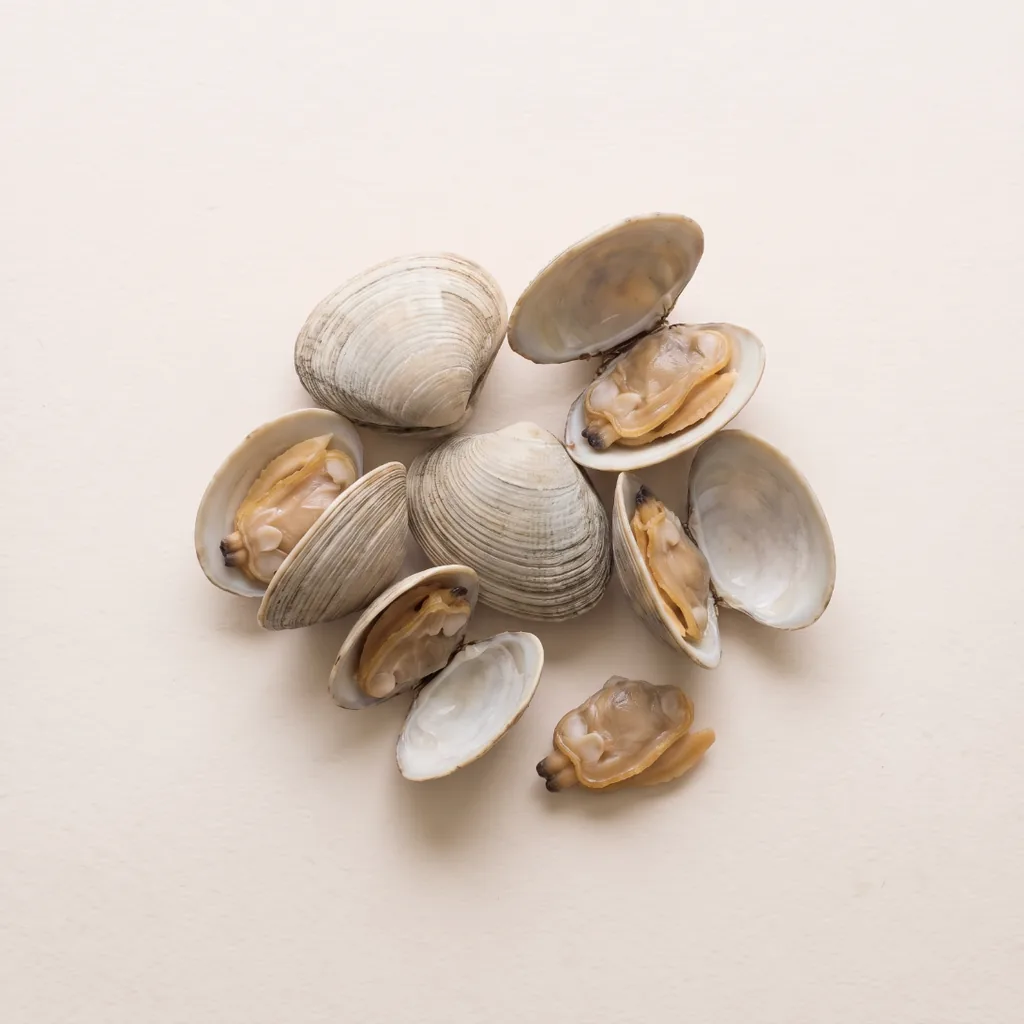
Clams live in fresh water and in tidal coastal waters worldwide. There are many kinds. North America has quahogs and soft-shell clams, and Asia has geoducks and hamaguri.
Nutrition
Clams are a good source of protein. Clams contribute vitamin B12, choline, zinc, calcium and iron too. The level of cadmium depends on the waters where they grew. Cadmium is a heavy metal that can affect nervous system development in large amounts.
Always cook them
Raw or undercooked clams carry a risk of illness from bacteria such as Vibrio. The inside should reach 145 F (63 C).
Also known as: klam, vongole, deniz kestanesi değil kum midyesi, tarak midyesi, kum istiridyesi, konserve klam
- Gluten-free
- Contains shellfish
Choking risk
- Low
- Medium
- High
Clams are a choking risk. They are chewy, slippery and often round.
About clams allergy
Clams are mollusks. The World Health Organization counts only crustaceans, such as shrimp and crab, as priority allergens. Still, many regulators around the world label mollusks as allergens too. So the app marks clams as a shellfish allergen.
Shellfish allergy most often begins in adulthood. When it starts in childhood, it usually stays. A person allergic to clams may also react to mussels, octopus, oysters, scallops, snails and squid. The chance of reacting to crustaceans like shrimp and crab is above 70 percent.
Shellfish allergy does not mean fish allergy. But cross-contact can happen when foods share a kitchen and tools.
Frequently asked questions
What age can babies eat clams?
Is clams a common allergen?
Is clams a choking hazard for babies?
Can babies eat canned clams?
At what age can babies eat steamed clams?
How do I know clams are fresh?
Can babies have raw clams?
Sources
- Centers for Disease Control and Prevention, Vibrio species causing vibriosis (2019)
- Lopata AL, O'Hehir RE, Lehrer SB. Clinical and Experimental Allergy, Shellfish allergy (2010)
- Environ Anal Health Toxicol, Developmental toxicity of cadmium in infants and children: a review (2021)
- J Allergy Clin Immunol Pract, Clinical Relevance of Cross-Reactivity in Food Allergy (2021)
- Food Allergy Research & Education, Shellfish allergy (2022)
Prepared by the Lokmini team | Last updated November 17, 2026