6 monthsMash
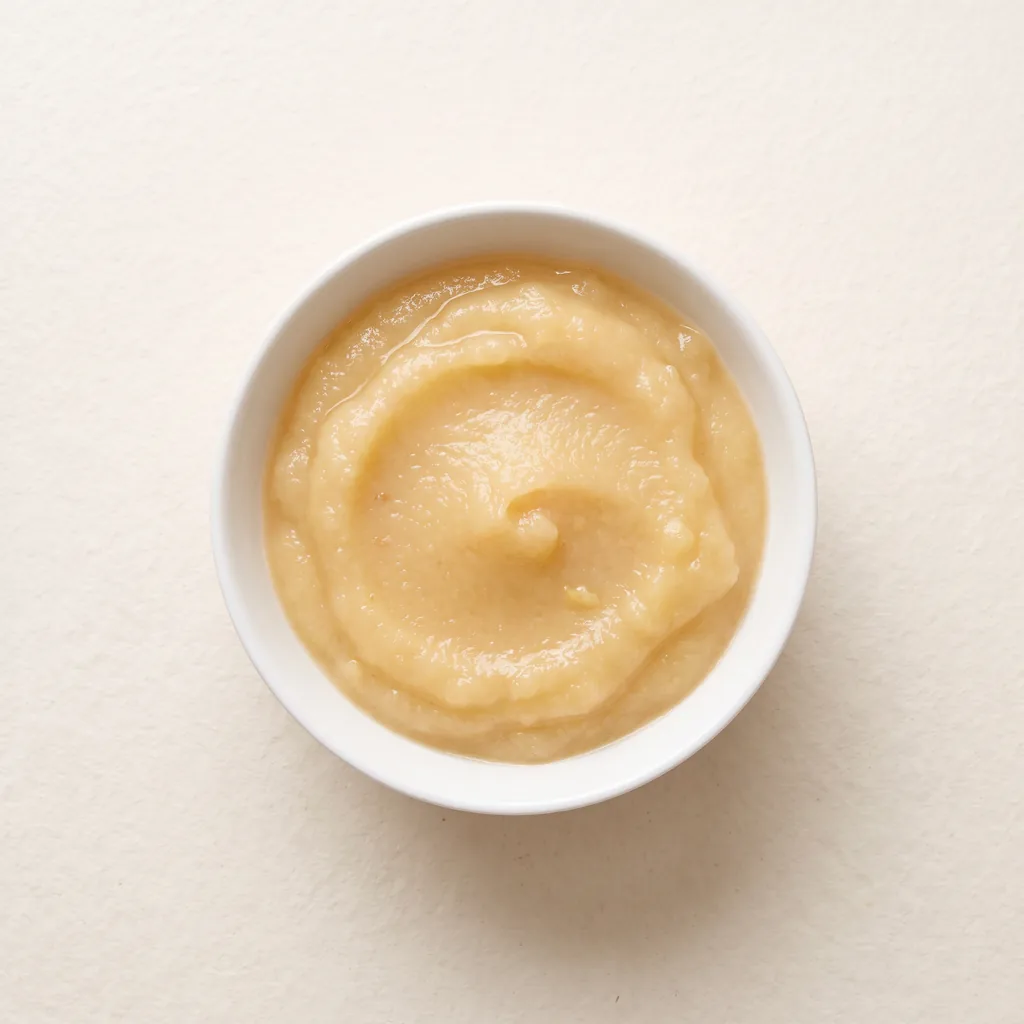
Peel the quince, remove the core, cut into small pieces and simmer in a little water until a fork goes in easily. Mash with a fork or blend; stir into yogurt or oat porridge. Raw quince is hard and astringent, so it is not given.
Quince cooked until soft can be offered once baby is ready for solids, around 6 months. A few types can be eaten raw, but most are very firm even when ripe. To be safe for a baby it must be cooked.
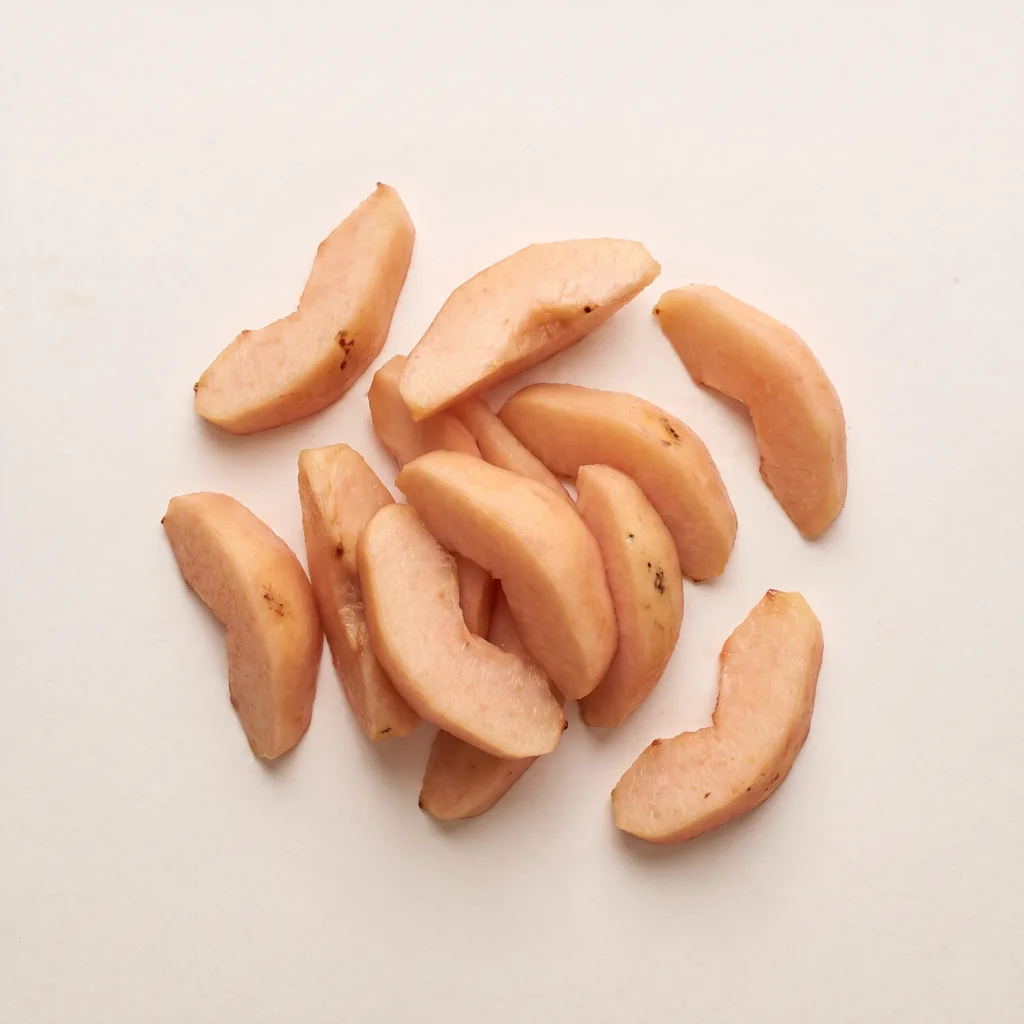
Quince is related to the apple and comes from a region between the Black Sea and the Caspian Sea. Most types are astringent and hard when raw, then soften and sweeten with cooking. Today it is eaten as jam, jelly and paste. It also serves as a sweet partner to savory dishes such as meat stews and tagines.
Quince stands out for its vitamin B6 and zinc. It also gives small amounts of iron, potassium, carotenoids and polyphenols. It is high in fiber, mainly pectin. It carries strong antioxidants.
Also known as: fırın ayva, pişmiş ayva
6 monthsMash
Peel the quince, remove the core, cut into small pieces and simmer in a little water until a fork goes in easily. Mash with a fork or blend; stir into yogurt or oat porridge. Raw quince is hard and astringent, so it is not given.
9 monthsCube
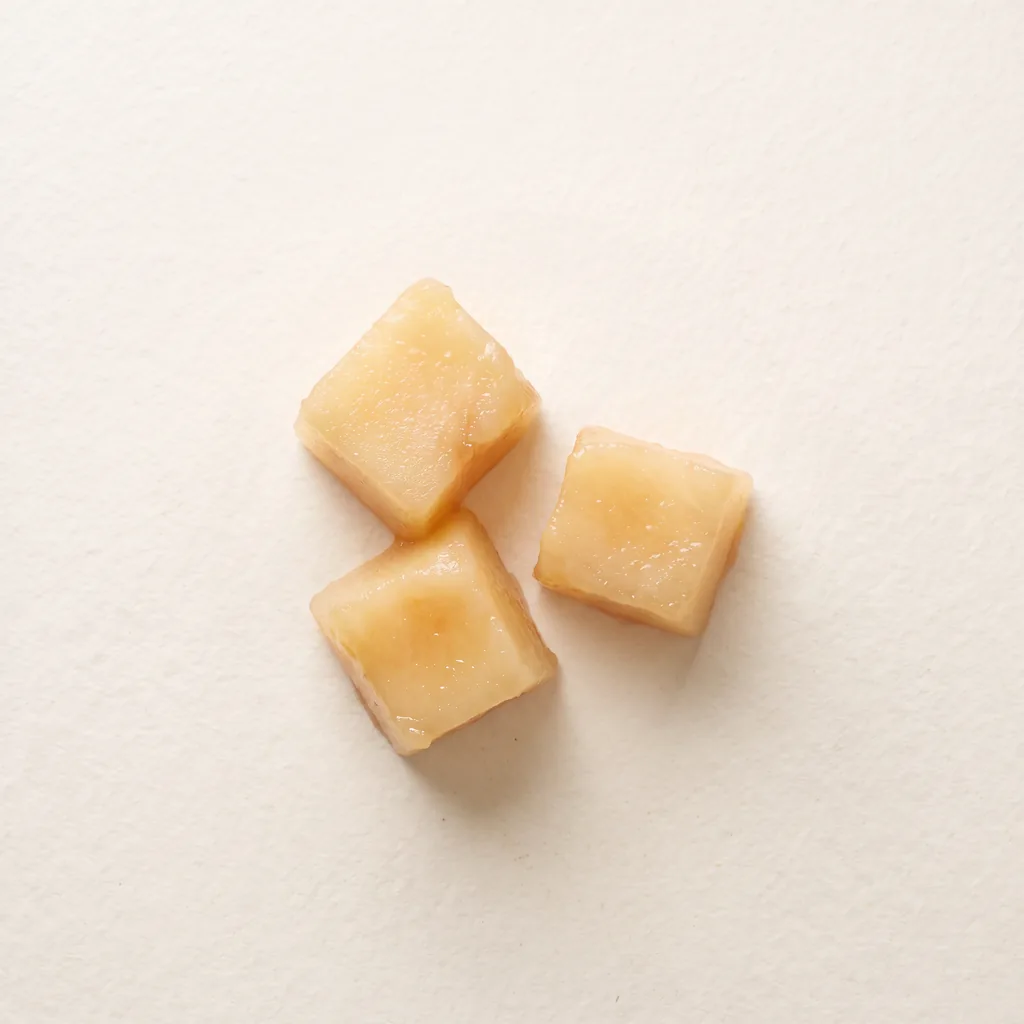
Cut: Bite sized piece
Give cooked, softened quince in small bite-sized cubes. A piece should squash between two fingers. Cook without sugar; quince dessert and syrup are not suitable at this age.
12 monthsCube
Keep serving cooked quince as cubes or thin slices. You can set aside portions from sugar-free baked quince. Raw quince is too hard and is not suitable until age 4.
Raw quince is very firm, so choking risk is high. Take out the seeds and cook the quince until soft.
You can eat the skin and it adds little choking risk, but it may be hard to chew. Peel it if baby struggles. Stay beside baby during meals.
Raw quince
No raw quince. Cook it until it squashes between two fingers.
Quince rarely causes allergy, although some cases have been reported. Information is limited. People sensitive to other fruits of the rose family (Rosaceae), such as apple, apricot, almond and plum, may react to quince in a similar way. Those with oral allergy syndrome to these fruits, especially birch pollen allergy, could in theory be sensitive to quince. This syndrome gives a short spell of itching, tingling or burning around the mouth, and a dangerous reaction is not expected. Cooking or peeling the fruit may reduce the reaction.
Give a small amount at the first servings and watch baby closely. If there is no reaction, raise it slowly.
Prepared by the Lokmini team | Last updated November 17, 2026
Join Lokmini to learn how this food is served at each age and to keep track of every food your baby tries.
Lokmini builds a day-by-day plan for your baby's age. Leave your email for new guides and our newsletter.
Start Your Journey