Dietitian's view
Parmesan is a very salty and hard cheese. The grated form is also not needed.
Lokmini is not a healthcare provider and does not offer health services. For your baby's specific needs, talk to your doctor or a dietitian.
- Cow's milk allergen
- Dairy
- 6 mo+
- Medium choking risk
Parmesan cheese for babies: when to start
You can offer dishes with parmesan once your baby is ready for solids, usually around 6 months. The cheese is salty, so use it now and then and in small amounts. Choose a pasteurized product.
- Protein
- Fat
- Calcium
- Selenium
- Zinc
- Vitamin A
 Allergen, day 1/3
About Parmesan cheese
Parmesan belongs to the grana family from Italy. These are hard grating cheeses. Parmesan is made in many places, but Parmigiano Reggiano is a different product. In Italy, Parmigiano Reggiano is protected by its name of origin. Its milk must come from cows that graze around Bologna, Mantua, Modena or Parma. Big wheels are brined and aged. The rind is used to flavor soups and stews.
Parmesan supplies protein, fat and minerals such as calcium, selenium and zinc, plus vitamins A and B12.
Also known as: parmesan, parmesan peyniri, parmigiano reggiano, rendelik peynir
- Gluten-free
- Vegetarian
- Contains dairy
Parmesan cheese is offered 3 days in a row
So that any reaction can be linked to the right food, Parmesan cheese is offered 3 days in a row and no other new food is tried on those days.
- 1/3
First taste
Start with a small amount in the morning or around midday. Your baby is watched closely for 5 to 10 minutes after the first bite.
- 2/3
Same food, same calm
Parmesan cheese is offered again the same way. No other new food is tried today.
- 3/3
Introduction done
If no reaction was seen, Parmesan cheese is now part of your baby's meals. It keeps being offered regularly.
Emergency
If your baby has trouble breathing or swelling of the face or tongue, call 911 (or your local emergency number) right away.
About Parmesan cheese allergy
FPIES warning
It is one of the known triggers of FPIES (a delayed-onset food allergy). In this condition, repeated severe vomiting, pallor and lethargy may occur, usually 1-4 hours after the food is eaten. Diarrhea may appear later. These symptoms require urgent medical evaluation.
Parmesan is a common allergen. It is made from cow's milk. Cow's milk causes about one in five childhood food allergies. Cheeses from sheep, goat and buffalo milk may cause a similar reaction.
The good news is that milk allergy often goes away. Most children with cow's milk allergy outgrow it by age 6. Babies with mild milk protein allergy symptoms may restart milk around the first birthday under a doctor's guidance. Aged cheeses contain histamine, which can cause a rash in sensitive children.
Milk also triggers a delayed allergy called FPIES. It shows up as repeated vomiting and diarrhea a few hours after eating. Untreated, it can lead to dehydration. Most children outgrow it between ages 3 and 5.
Lactose intolerance is not an allergy and is uncommon in babies. Aged cheeses are low in lactose, so most people tolerate them better.
If you suspect a milk allergy
Talk to an allergist before offering cheese. They may order tests or have the first try done in the office. If milk was already introduced without trouble, you can serve pasteurized cheese directly.
How to prepare it by age
Age-by-age prep is in the Lokmini app
See how to cut, texture and serve Parmesan cheese at 6, 9 and 12 months in the app.
Join LokminiChoking risk
- Low
- Medium
- High
Hard cheeses such as parmesan can clump in the mouth and be hard to manage. That raises the choking risk.
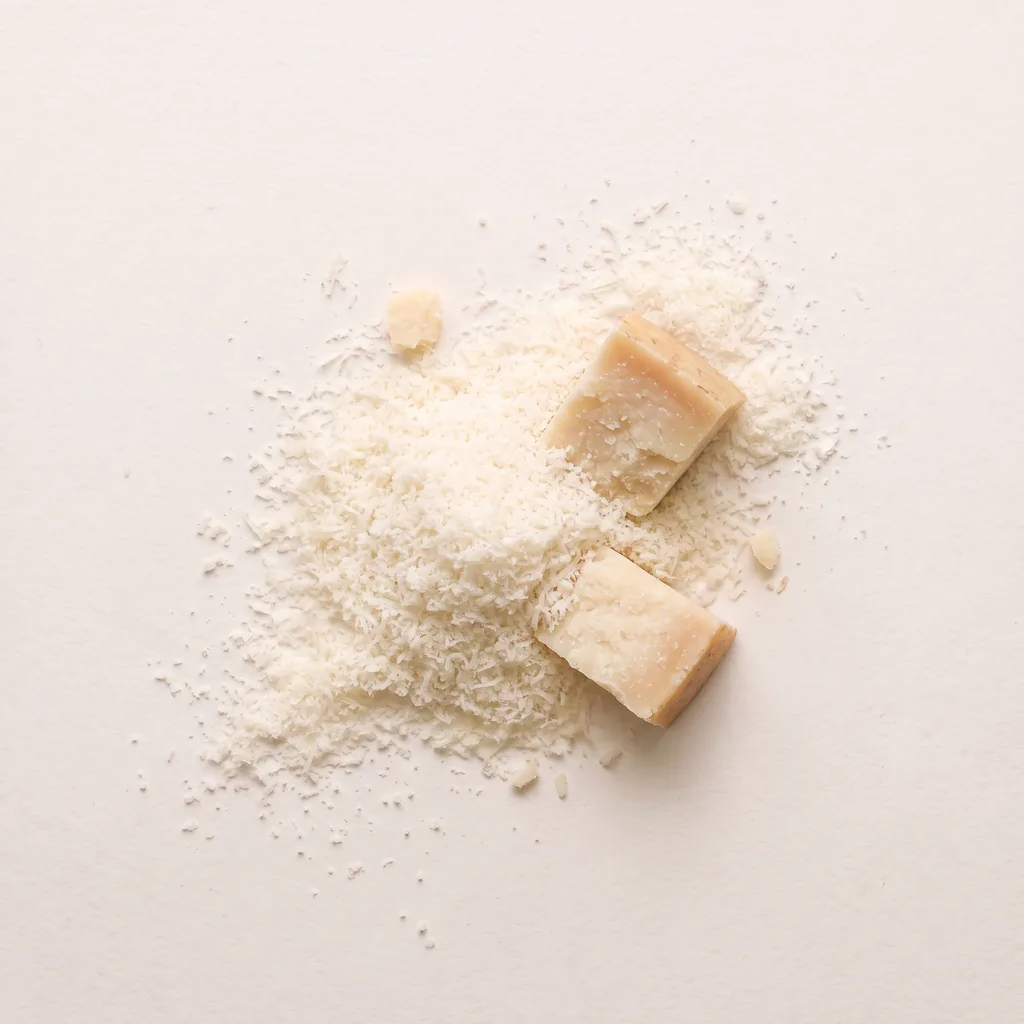
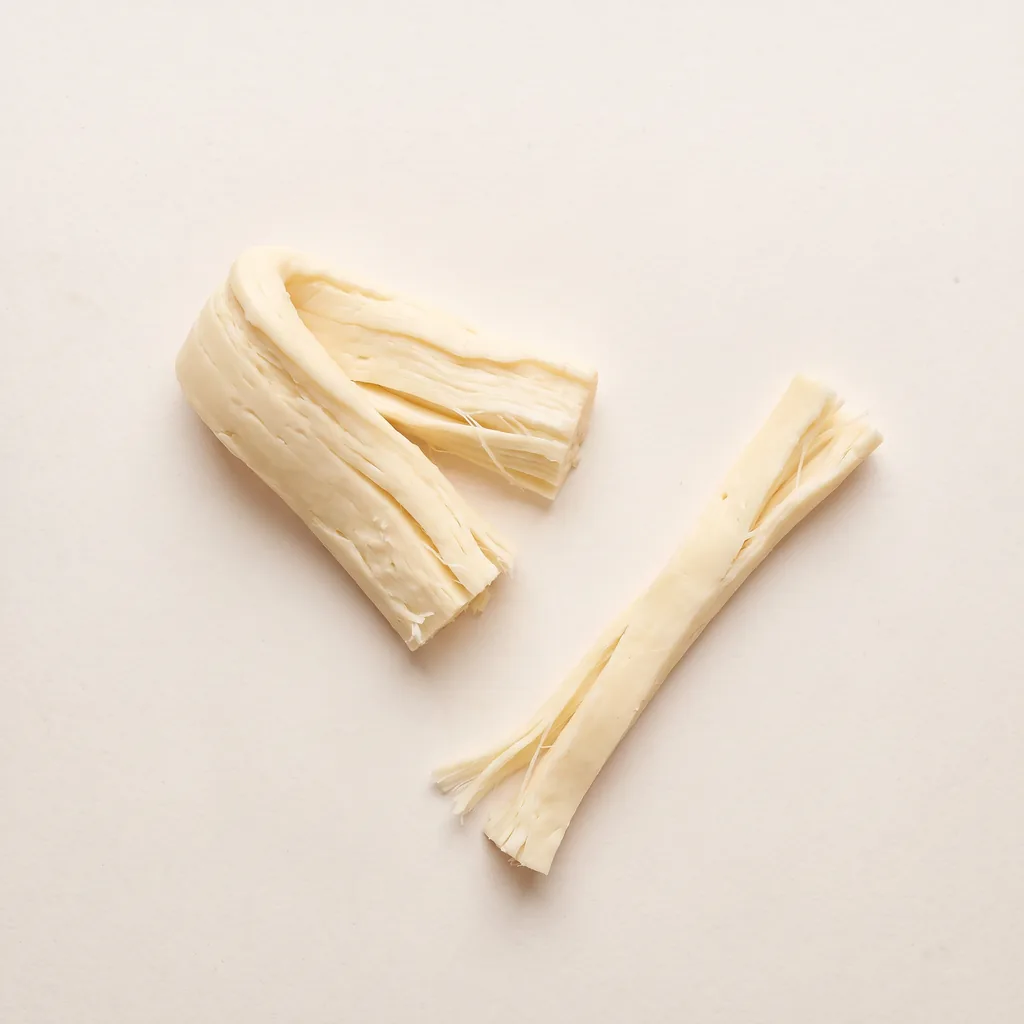
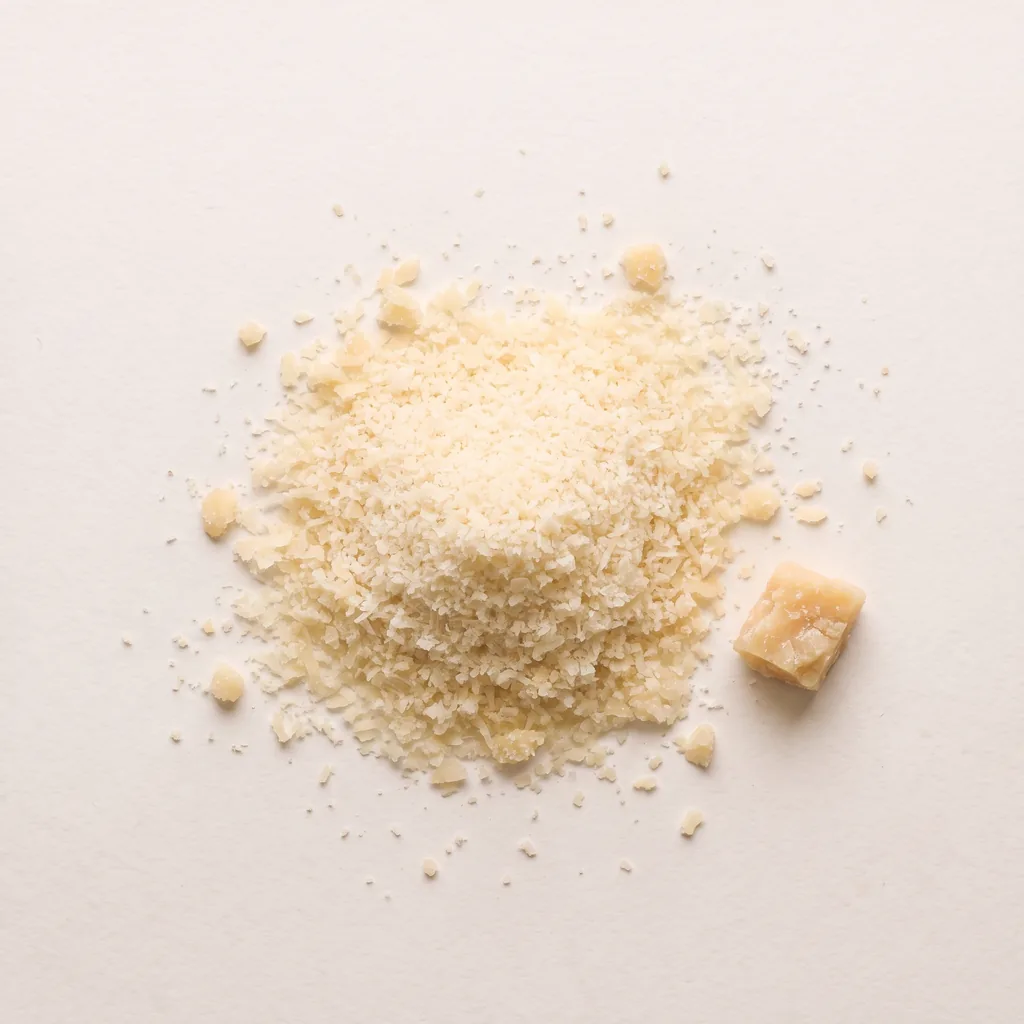
Prepare the cheese to suit your baby's age: grated at 6 months, thin long slices at 9, small flat pieces at 12. Avoid cubes and large melted clumps. Stay close while your baby eats and keep them upright.
Frequently asked questions
What age can babies eat Parmesan cheese?
Is Parmesan cheese a common allergen?
Is Parmesan cheese a choking hazard for babies?
Are parmesan and Parmigiano Reggiano the same?
Is parmesan suitable for lactose intolerance?
Sources
- Annals of Allergy, Asthma and Immunology, The epidemiology of milk allergy in US children (2013)
- Journal of Allergy and Clinical Immunology, The natural history of milk allergy in an observational cohort (2013)
- Biomolecules, Histamine Intolerance: The Current State of the Art (2020)
- Small Ruminant Research, El-Agamy EI. Small Ruminant Research 68:64-72 (2007)
- Allergy and Asthma Proceedings, Nowak-Węgrzyn A. Allergy and Asthma Proceedings 36(3):172-184 (2015)
Prepared by the Lokmini team | Last updated November 17, 2026
Want to add this food to your baby's solid food calendar?
Join Lokmini to learn how this food is served at each age and to keep track of every food your baby tries.