Skip to content

Dietitian's view

You can give strained yogurt pasteurized and unsweetened. Do not give sweetened ones.

Uzm. Dyt. Berk AysanPrepared the latest update, November 14, 2026

Lokmini is not a healthcare provider and does not offer health services. For your baby's specific needs, talk to your doctor or a dietitian.

  • Cow's milk allergen
  • Dairy
  • 6 mo+
  • Low choking risk

Strained yogurt for babies: when to start

Strained yogurt can be given once your baby is ready for solids, usually around 6 months. Because it contains milk, it is one of the common food allergens.

  • Protein
  • Calcium
  • Phosphorus
  • B vitamins
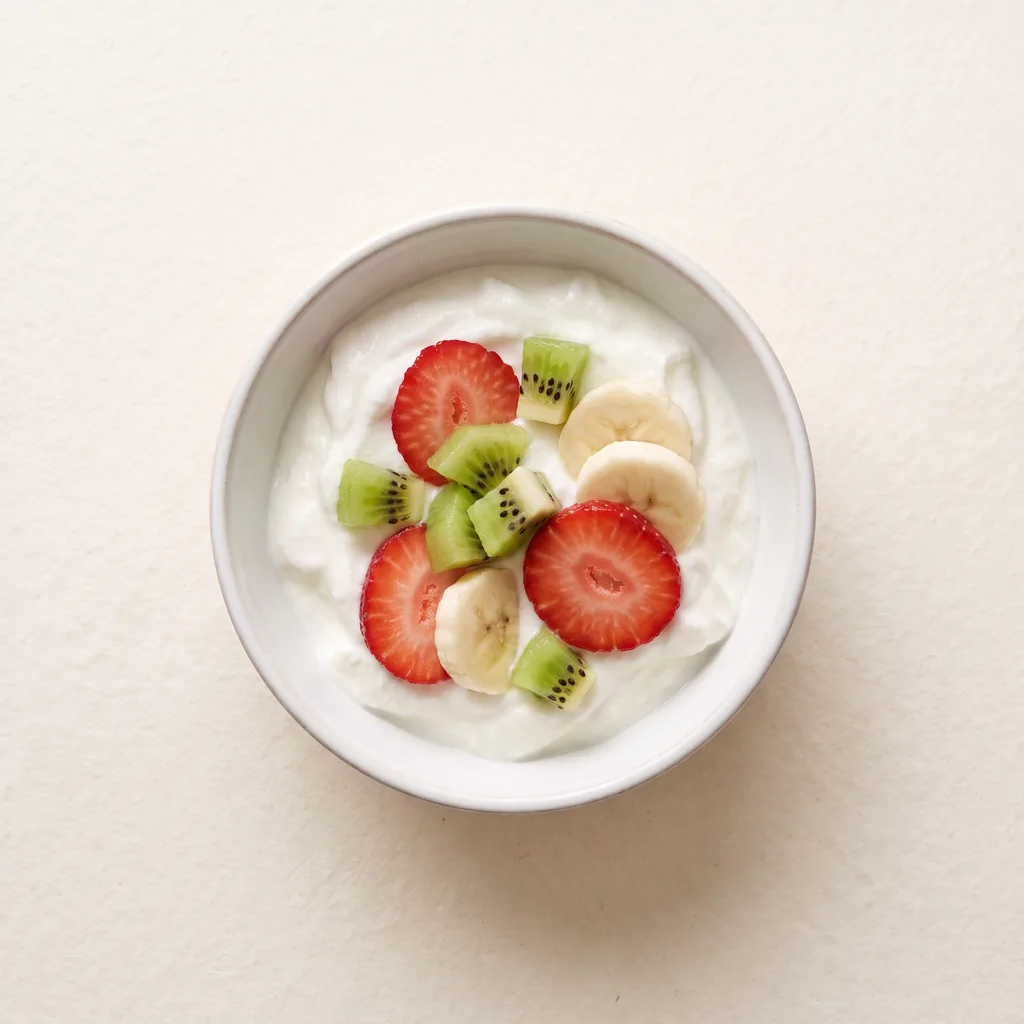
Strained yogurt prepared for a babyAllergen, day 1/3

About strained yogurt

Strained yogurt is a thick dairy product made by removing part of the liquid from yogurt. In Türkiye it is also known as torba yoğurdu or kese yoğurdu.

Because it is thicker than regular yogurt, it can cling to a spoon more easily and make it easier for your baby to feed themselves.

For babies, choose plain, full-fat strained yogurt with no added sugar, made from pasteurized milk.

Nutrition

Strained yogurt provides protein, fat and carbohydrate. It also contains various nutrients such as calcium, phosphorus, potassium, riboflavin (vitamin B2) and vitamin B12.

During straining, part of the liquid in the yogurt is removed. So strained yogurt can often contain more protein than the same weight of regular yogurt.

But the amount of protein varies with the type of milk, how much it is strained and the production method. Not every strained yogurt has the same nutritional value.

Some of the calcium can be lost with the liquid during straining. So strained yogurt cannot be said to always contain more calcium than regular yogurt.

Full-fat types can add to your baby's energy and fat intake. But strained yogurt alone does not meet all of your baby's nutritional needs.

Vitamin D content varies by product. Unfortified strained yogurt should not be counted on as a reliable source of vitamin D.

Is strained yogurt more nutritious than regular yogurt?

Strained yogurt is thicker because part of its liquid has been removed. It can often contain more protein than the same weight of regular yogurt. But some minerals can be lost with the liquid during straining. So strained yogurt cannot be said to be better than regular yogurt for every nutrient. Both types of yogurt can suit babies. What matters most is that it is plain, full-fat, has no added sugar and is produced safely. One of the main practical advantages of strained yogurt is that its thick texture can make self-feeding with a spoon easier.

Also known as: Yunan yoğurdu, kese yoğurdu, süzme yogurt, süzme yoğurt, süzülmüş yoğurt, torba yoğurdu

  • Gluten-free
  • Vegetarian
  • Contains dairy

Strained yogurt is offered 3 days in a row

So that any reaction can be linked to the right food, strained yogurt is offered 3 days in a row and no other new food is tried on those days.

  1. 1/3

    First taste

    Start with a small amount in the morning or around midday. Your baby is watched closely for 5 to 10 minutes after the first bite.

  2. 2/3

    Same food, same calm

    Strained yogurt is offered again the same way. No other new food is tried today.

  3. 3/3

    Introduction done

    If no reaction was seen, strained yogurt is now part of your baby's meals. It keeps being offered regularly.

Emergency

If your baby has trouble breathing or swelling of the face or tongue, call 911 (or your local emergency number) right away.

About strained yogurt allergy

FPIES warning

It is one of the known triggers of FPIES (a delayed-onset food allergy). In this condition, repeated severe vomiting, pallor and lethargy may occur, usually 1-4 hours after the food is eaten. Diarrhea may appear later. These symptoms require urgent medical evaluation.

Allergen status

Strained yogurt contains milk proteins, so it counts as a **milk allergen**.

Straining does not remove milk proteins. So standard strained yogurt is not suitable for babies with cow's milk allergy.

Cow's milk allergy and lactose intolerance are different conditions. Milk allergy is an immune system reaction to milk proteins. Lactose intolerance is about difficulty digesting milk sugar.

The amount of lactose in strained yogurt can vary with the production method. A lower lactose content does not mean it is safe for babies with a milk allergy.

Dairy foods can be introduced once your baby is ready for solids, usually around 6 months. Start with a small amount the first time and watch how your baby responds.

Signs of an allergic reaction can include hives, lip swelling, vomiting, coughing or wheezing. With some milk allergies, symptoms can appear later.

For serious signs such as trouble breathing or swelling of the tongue or throat, call emergency services right away.

If your baby has a diagnosed milk allergy or has reacted to dairy before, do not try strained yogurt before talking to your doctor or a dietitian.


How to prepare it by age

6 monthsMash

Strained yogurt prepared for 6 months

Offer plain, unsweetened strained yogurt made from pasteurized milk on a preloaded spoon, or stir it into fruit and vegetable purées. The thick texture also works for dipping age-appropriate foods. Cow's milk protein is a new allergen, so give a small amount the first time, in the morning.

9 monthsMash

Strained yogurt prepared for 9 months

Keep serving strained yogurt on a spoon or as a dip. The thick texture makes it easier for baby to self-feed with their own spoon. Flavored ready-made yogurts contain sugar, so mash fruit into plain strained yogurt instead.

12 monthsMash

Strained yogurt prepared for 12 months

Serve strained yogurt on its own, in salt-free cacık, or in vegetable mixes similar to haydari. Cow's milk as a drink starts after 12 months. Yogurt and cheese are suitable from 6 months, independent of that.

Choking risk

  1. Low
  2. Medium
  3. High

Strained yogurt is soft and smooth, so it carries a low choking risk for babies.

But it is important to serve very thick products in a way your baby can eat comfortably. If needed, you can adjust the texture with a little water or fruit puree.

Other foods added to yogurt can change the choking risk. Foods such as whole nuts, hard pieces of raw vegetables and whole grapes should be prepared in a suitable way.

If you use nut butters, they should be smooth and mixed well into the yogurt. Do not serve thick, sticky lumps of nut butter on their own.

Your baby should sit upright and supported during meals, eat at their own pace and never be left unattended.

Frequently asked questions

Is strained yogurt a common allergen?

Strained yogurt contains milk proteins, so it counts as a **milk allergen**.

How do you prepare strained yogurt for babies?

For a 6-month-old: Offer plain, unsweetened strained yogurt made from pasteurized milk on a preloaded spoon, or stir it into fruit and vegetable purées. The thick texture also works for dipping age-appropriate foods. Cow's milk protein is a new allergen, so give a small amount the first time, in the morning.

Is strained yogurt a choking hazard for babies?

Strained yogurt is soft and smooth, so it carries a low choking risk for babies.

When can babies have strained yogurt?

It can be given once your baby is ready for solids, usually around 6 months. Choose plain types with no added sugar, made from pasteurized milk.

What is the difference between strained yogurt and regular yogurt?

Strained yogurt is thicker because part of its liquid has been removed. Protein and mineral content can vary with the production method.

Can strained yogurt replace breast milk or formula?

No. Strained yogurt is a complementary food. In the first 12 months, breast milk or a suitable infant formula remains the main milk source.

Can I make cacık with strained yogurt?

Yes. You can offer a cacık-style mix without added salt, with the cucumber prepared to suit your baby's eating skills.

Can a baby with a milk allergy eat strained yogurt?

Standard strained yogurt should not be given to babies with a diagnosed milk allergy. For suitable alternatives, talk to your doctor or a dietitian.

Is strained yogurt lactose-free?

No. The amount of lactose can vary, but standard strained yogurt usually contains lactose.
Share:WhatsApp

Want to add this food to your baby's solid food calendar?

Join Lokmini to learn how this food is served at each age and to keep track of every food your baby tries.

Join Lokmini

Recipes with strained yogurt

Starting Solids

When and how to start solids, and what happens in the first week?

Read the guide

Similar foods

Let's get ready for the first bite together

Lokmini builds a day-by-day plan for your baby's age. Leave your email for new guides and our newsletter.

Start Your Journey