Dietitian's view
Never give shallot raw to your baby.

Uzm. Dyt. Berk AysanPrepared the latest update, November 14, 2026
Lokmini is not a healthcare provider and does not offer health services. For your baby's specific needs, talk to your doctor or a dietitian.
- Vegetables
- 6 mo+
- Medium choking risk
Shallot for babies: when to start
Shallots can be offered once your baby is about 6 months old and ready for solids, cooked until fully soft. They belong to the same plant family as onion and garlic. They are known for their small size and add a mildly sweet flavor to dishes. They can be used in soups, vegetable dishes and purées. Once cooked they turn soft and help your baby get to know different vegetable flavors.
- Fiber
- Folate
- Potassium
- Vitamin B6
- Iron
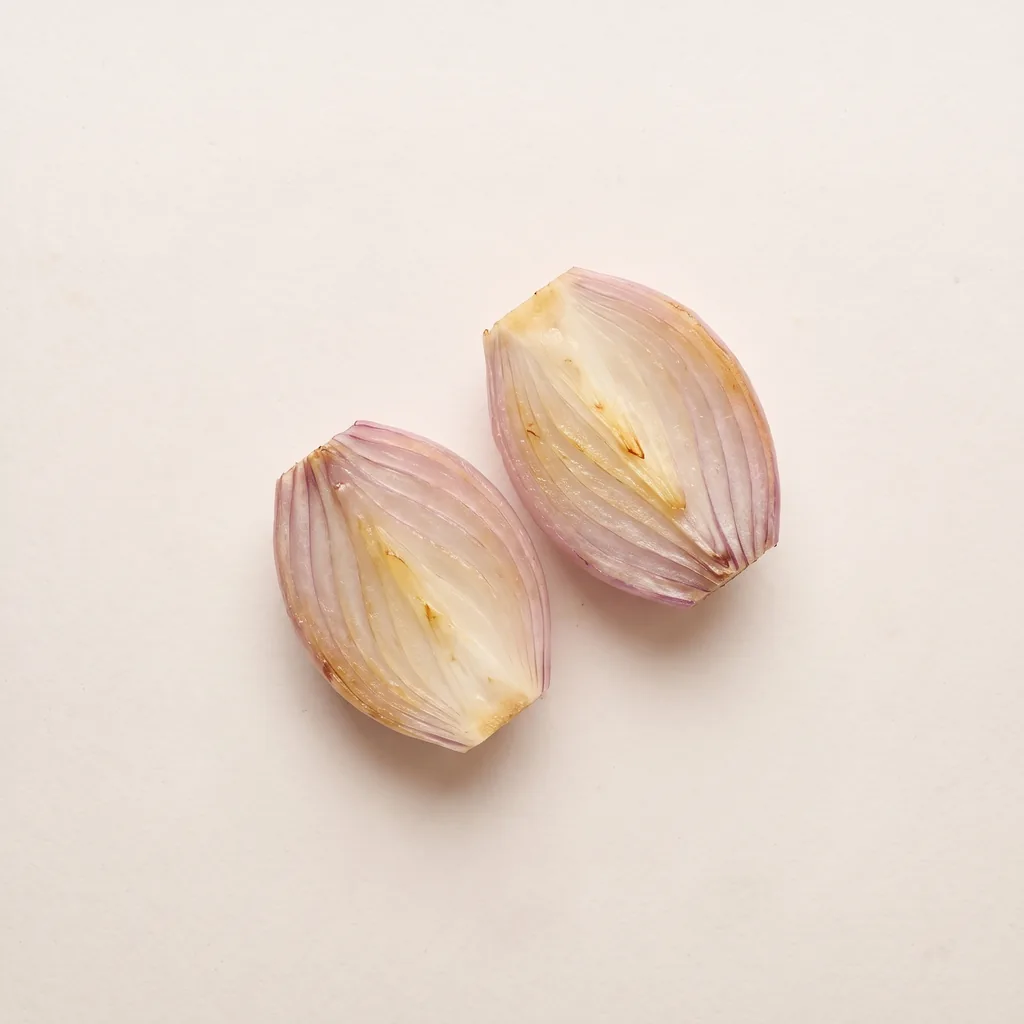
About shallot
Nutrition
They contain fiber, folate, potassium and vitamin B6, with a little iron. They also carry plant compounds such as kaempferol, carotenoids and polyphenols.
Also known as: arpacık soğanı, arpacık, şalot, eşkalot
- Gluten-free
- Vegan
How to prepare it by age
Age-by-age prep is in the Lokmini app
See how to cut, texture and serve shallot at 6, 9 and 12 months in the app.
Join LokminiChoking risk
- Low
- Medium
- High
Choking risk
Raw shallot can be firm and slippery, which raises the risk. Prepare it for the child's age and stay within arm's reach during meals.
Raw pieces
Do not give raw shallot slices or large raw pieces to young babies.
Allergen information
Allergen status
Shallots are not a common allergen. Reactions are rare, but allergy to other onion-family members has occasionally been reported. People sensitive to garlic or onion may react to shallots too.
Cut raw shallot releases a compound called thiopropanal sulfoxide. It is not an allergen, but it can irritate eyes, airways and skin. Cooking breaks it down and reduces irritation. Start with a small amount.
Frequently asked questions
What age can babies eat shallot?
Is shallot a common allergen?
Is shallot a choking hazard for babies?
How is shallot different from onion?
Can I give pickled shallot?
Shallots sting my eyes. Will they bother baby?
Sources
- Molecules, Kaempferol: A Key Emphasis to Its Anticancer Potential (2019)
- Journal of Agricultural and Food Chemistry, Simple Saponification Method for the Quantitative Determination of Carotenoids in Green Vegetables (2005)
- Postepy Dermatologii i Alergologii, Immunological characterization of onion (Allium cepa) allergy (2019)
- American Academy of Pediatrics (AAP), HealthyChildren.org, Choking Prevention
Want to add this food to your baby's solid food calendar?
Join Lokmini to learn how this food is served at each age and to keep track of every food your baby tries.