Skip to content

Dietitian's view

You can give oyster mushroom when you cook it well.

Uzm. Dyt. Berk AysanPrepared the latest update, November 14, 2026

Lokmini is not a healthcare provider and does not offer health services. For your baby's specific needs, talk to your doctor or a dietitian.

  • Vegetables
  • 6 mo+
  • Medium choking risk

Oyster mushroom for babies: when to start

Oyster mushrooms can be introduced once your baby is about 6 months old and ready for solids. Cook them well before serving and make sure they are soft enough to chew easily.

  • Choline
  • Folate
  • Zinc
  • Vitamin B6
  • Fiber
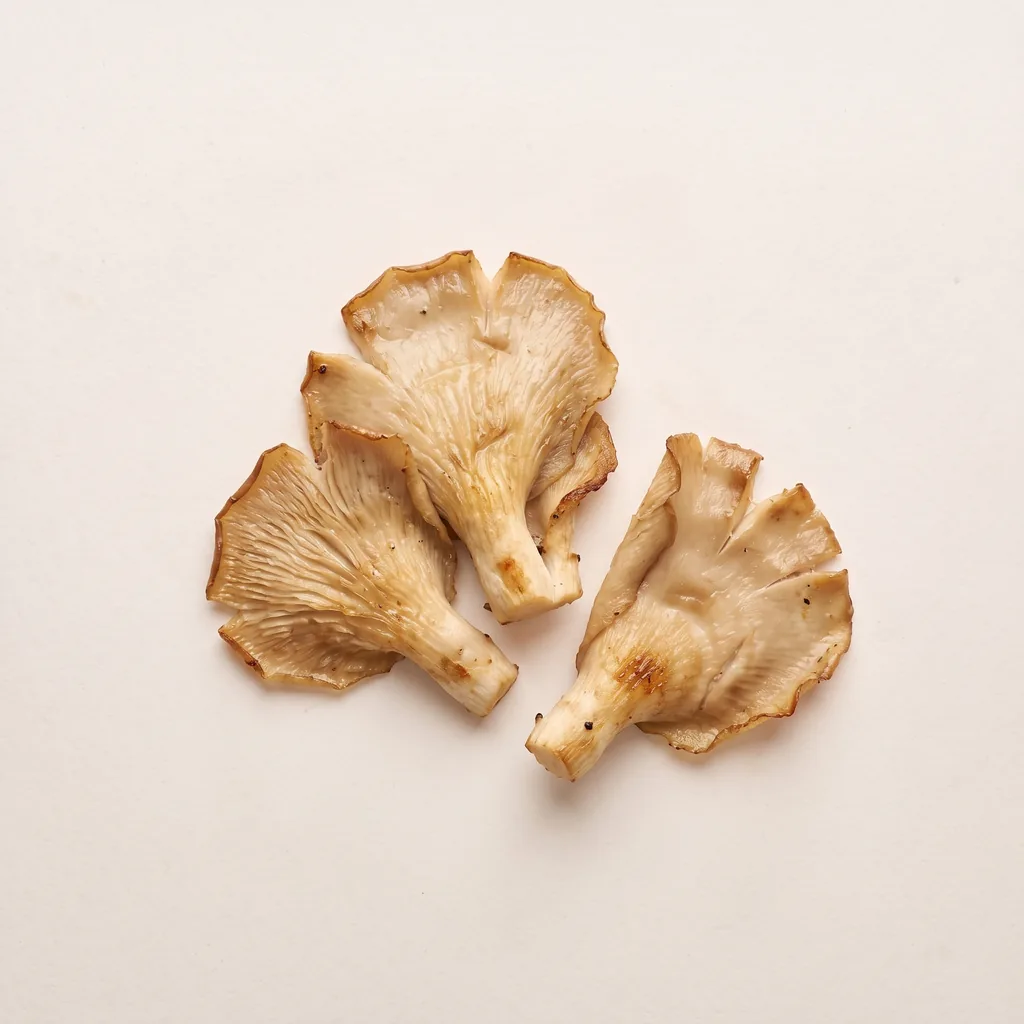
Oyster mushroom prepared for a baby

About oyster mushroom

In the wild, oyster mushrooms grow on rotting trees. Today they are widely farmed and are especially common in Asian cooking.

They are named for their cap, which is shaped like an oyster shell. There are different types of oyster mushroom in shades of white, cream, pink and yellow.

Nutrition

Oyster mushrooms contain water, fiber and a little protein. Among the B vitamins, they provide niacin, riboflavin, folate and vitamin B6 in particular. They also contain potassium, phosphorus, copper, zinc and choline.

Oyster mushrooms also contain beta-glucans and various natural bioactive compounds. Their effects on health are being studied, but no specific health benefit has been shown in babies.

Do not forage

Poisonous look-alikes are common in the wild. Unless you are a trained mycologist, do not pick wild mushrooms for your baby. Buy them from a reliable seller.

Also known as: istiridye mantarı, pleurotus, dhingri

  • Gluten-free
  • Vegan
  • Mushroom

How to prepare it by age

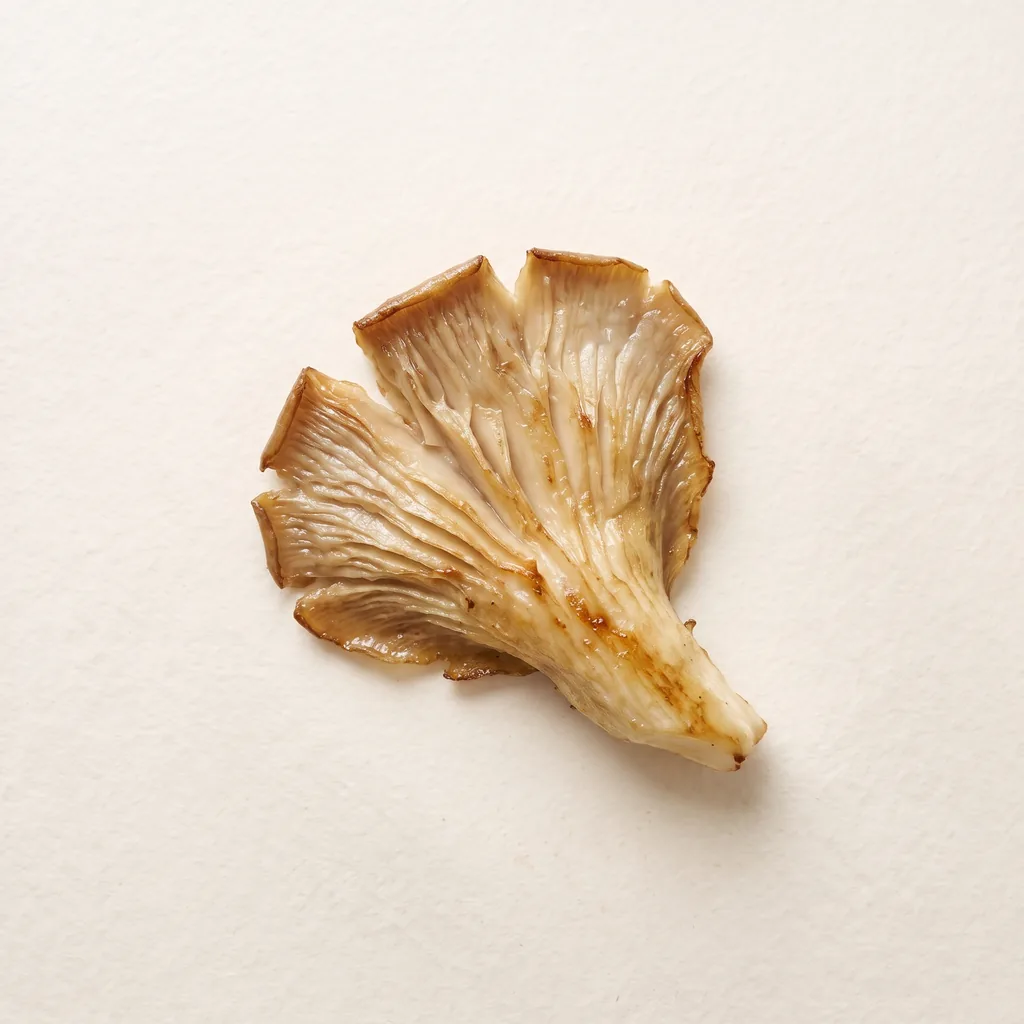
6 monthsMash

Oyster mushroom prepared for 6 months

Cut: Finely chopped

Cook the mushroom and chop it very finely. Stir it into foods that baby can grab or scoop with ease. Rice porridge, strips of omelet, mashed vegetables and oatmeal all work well. Do not leave large separate pieces of mushroom.
9 monthsCube

Cut: Bite sized piece

Cut the cooked mushroom into small bite-size pieces. Offer them alone or inside a meal. For spoon practice, keep stirring finely chopped mushroom into a soft food.

12 monthsCube

Oyster mushroom prepared for 12 months

Cut: Bite sized piece

Offer cooked mushroom in small bites, on its own or mixed into a meal. Soup, omelet and pasta are good places for it. After 18 months, if your child chews well, you can try larger pieces. If they do not overfill the mouth, whole cooked mushrooms are an option.

Choking risk

  1. Low
  2. Medium
  3. High

Oyster mushroom can be a choking risk when it is not prepared properly. Because of its fibrous, springy texture, undercooked or large pieces in particular can be hard for babies whose chewing skills are still developing.

To lower the risk, cook the mushroom well until soft. Remove hard, fibrous parts and chop the rest finely to suit your baby's chewing skills.

Make sure your baby sits upright while eating, sit with them and stay within arm's reach.

Dried mushrooms

Soften dried mushrooms completely in boiling water and chop them before serving.

Allergen information

Oyster mushroom is not a common allergen. But allergic reactions to mushrooms can occur. Scientific data on how often oyster mushroom allergy appears, especially in babies, are limited.

Cross-reactions have been reported in some people sensitive to mold or other fungi. But this should not be seen as a common risk for babies who eat oyster mushrooms. Cooking also does not fully stop possible allergic reactions.

If you use dried mushrooms, check the label for preservatives such as sulfites.

When you first offer oyster mushroom, give a small amount. If there is no reaction, you can increase the amount gradually at later meals.

If you see signs such as hives, swelling of the lips or vomiting, stop giving the mushroom and contact a health professional. If you see serious signs such as trouble breathing, swelling of the tongue or throat, or sudden marked weakness, call emergency services right away.

Frequently asked questions

Is oyster mushroom a common allergen?

Oyster mushroom is not a common allergen. But allergic reactions to mushrooms can occur. Scientific data on how often oyster mushroom allergy appears, especially in babies, are limited.

How do you prepare oyster mushroom for babies?

For a 6-month-old: Cook the mushroom and chop it very finely. Stir it into foods that baby can grab or scoop with ease. Rice porridge, strips of omelet, mashed vegetables and oatmeal all work well. Do not leave large separate pieces of mushroom.
Is oyster mushroom a choking hazard for babies?

Oyster mushroom can be a choking risk when it is not prepared properly. Because of its fibrous, springy texture, undercooked or large pieces in particular can be hard for babies whose chewing skills are still developing.

When can babies have oyster mushrooms?

There is no scientifically set start age for oyster mushrooms. Once your baby is about 6 months old and ready for solids, cultivated mushrooms from a reliable source can be served well cooked and prepared in a suitable texture. They do not need to be one of the first foods.

Do oyster mushrooms offer babies any benefit?

Yes, it can be part of a balanced diet. It contains choline, folate, zinc, vitamin B6 and fiber. Other health effects of mushrooms are still being studied.

Can I pick mushrooms myself for my baby?

This is not recommended. Wild mushrooms are easily confused with poisonous species, and cooking does not always destroy mushroom toxins. For your baby, choose cultivated mushrooms bought from reliable places. Do not give mushrooms raw. Always cook them well.
Share:WhatsApp

Want to add this food to your baby's solid food calendar?

Join Lokmini to learn how this food is served at each age and to keep track of every food your baby tries.

Join Lokmini

Starting Solids

When and how to start solids, and what happens in the first week?

Read the guide

Similar foods

Let's get ready for the first bite together

Lokmini builds a day-by-day plan for your baby's age. Leave your email for new guides and our newsletter.

Start Your Journey