Skip to content
  • Fruits
  • 6 mo+
  • Medium choking risk

Nectarine for babies: when to start

Nectarines can be offered once baby is about 6 months old and ready for solids. The fruit must be very ripe and soft, or cooked until it turns tender.

  • Carbohydrates
  • Fiber
  • Potassium
  • Vitamin A
  • Vitamin C
  • Vitamin E
Nectarine prepared for a baby

About nectarine

Genetically, nectarines and peaches are nearly the same. They differ in skin alone. Peaches are fuzzy, while nectarines have smooth, shiny skin. Both are native to East Asia.

They give carbohydrates, fiber and fluid, plus potassium and a mix of vitamins: A, C, E, K.

Also known as: nektarin, tüysüz şeftali, nektar

  • Gluten-free
  • Vegan

How to prepare it by age

6 monthsSlice or mash
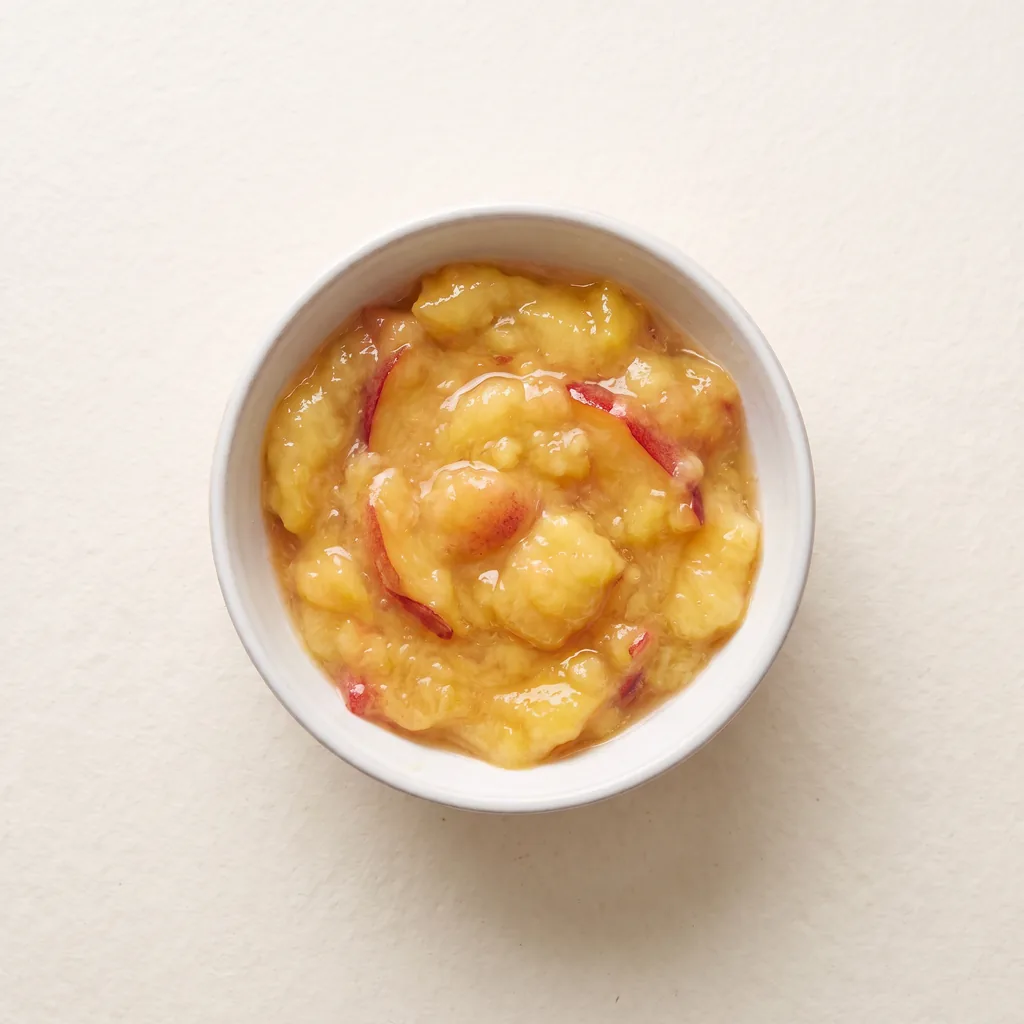
Nectarine prepared for 6 months

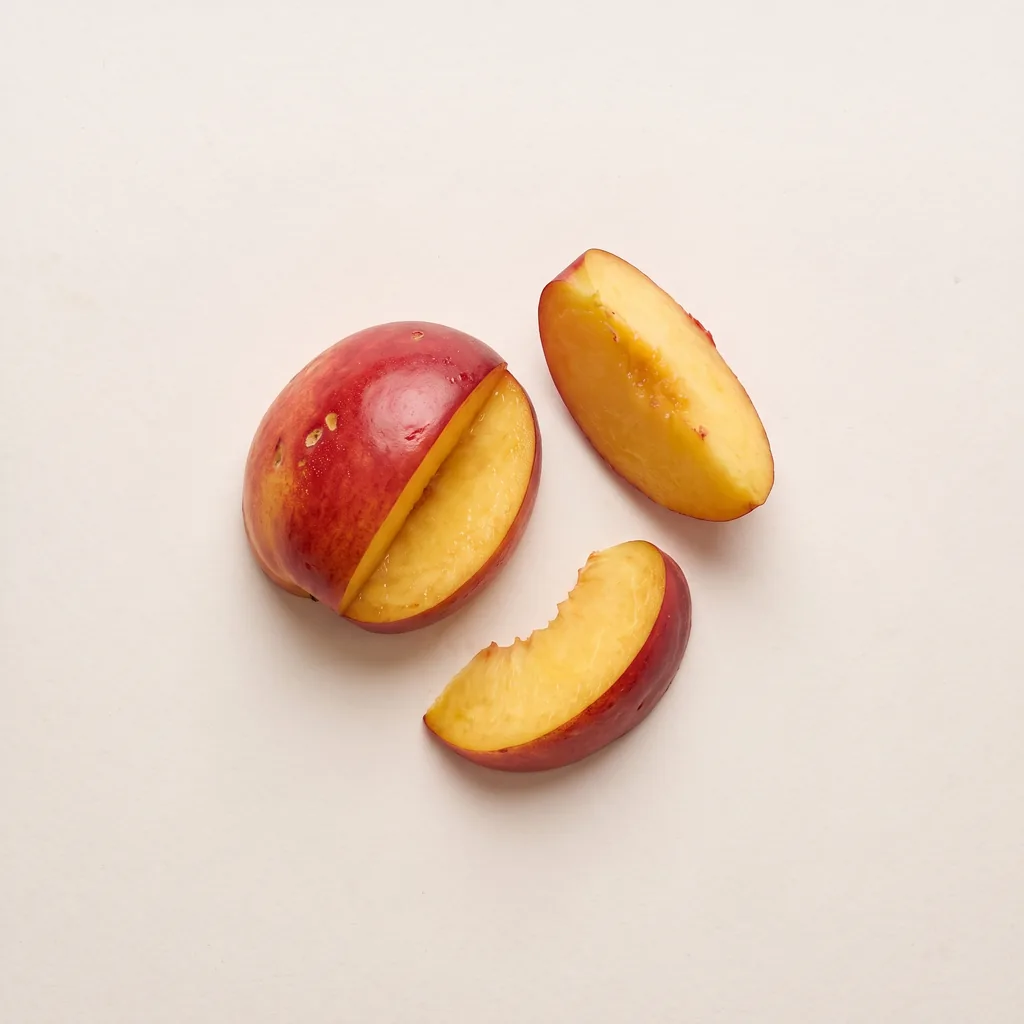
Cut: Halved

Halve a very ripe nectarine and take out the pit. The flesh should mash easily when pressed between thumb and forefinger. The skin helps baby grip. If it worries you, peel the fruit and coat it with shredded coconut or finely ground seeds. If baby bites off a large piece, do not put a finger in the mouth. Get down in front of baby, let the head tip forward, and let gravity help.

Cut: Fork mashed

Mash the nectarine and stir it into a soft food such as porridge or yogurt.
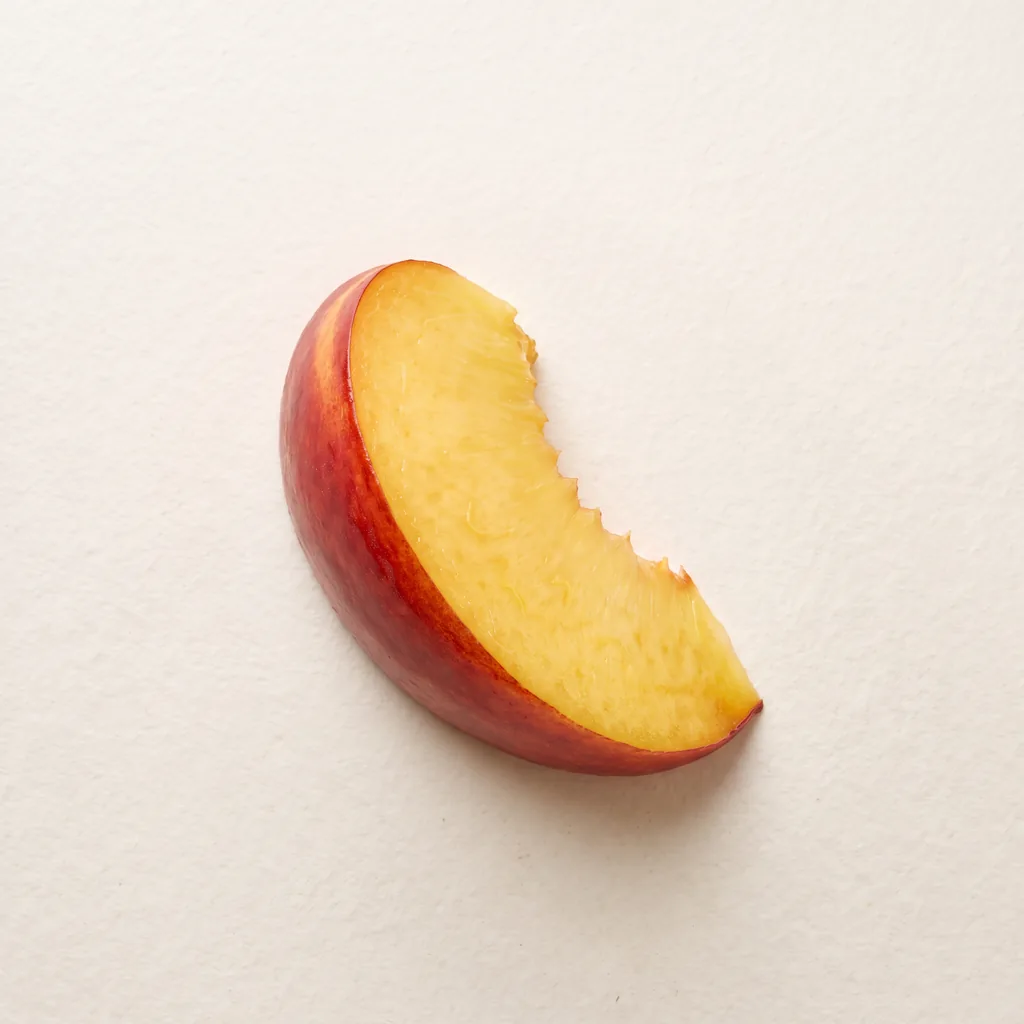
9 monthsSlice

Nectarine prepared for 9 months

Cut: Thin slice

Cut soft, ripe nectarine into thin slices, skin on or off. If your baby cannot pick up slices yet, keep offering pitted halves. Nectarines are slippery, so do not cut the pieces too small.

12 monthsCube

Cut ripe nectarine into thin slices or bite-sized pieces for hands or a fork. Soft halves still work for biting practice. From 18 months, if you are comfortable with it, you can hand over a whole ripe nectarine. Take a bite of your own first, point out the pit, and tell your child it is not food.

Choking risk

  1. Low
  2. Medium
  3. High

Nectarines are slippery, and firm when underripe, so they carry a choking risk. Choose very ripe, soft fruit. Always remove the pit.

If baby bites a large chunk off, do not reach into the mouth with your fingers. Get down in front of baby, let the head lean forward, and give the piece a chance to come out by itself.

Should you give a whole fruit after 18 months, take a bite of your own first and show the pit. If the child puts the pit in the mouth, stay calm, cup your hand under the chin and show how to spit.

Pits are not food

The pit is hard and round. Be ready for a child to put it in the mouth when you serve a whole fruit.

Allergen information

Nectarine allergy is uncommon. People with sensitivity to birch and certain grass pollens may get pollen food syndrome, which feels like a short itch, tingle, or burn in the mouth. It is usually not dangerous.

Anyone sensitive to rose-family relatives like apricot, peach, plum or almond may react to nectarines in a similar way. Cooking, canning or peeling can ease the reaction.

Offer a small amount on its own for the first few servings. If nothing happens, increase it slowly.

Frequently asked questions

What age can babies eat nectarine?

Nectarines can be offered once baby is about 6 months old and ready for solids. The fruit must be very ripe and soft, or cooked until it turns tender.

Is nectarine a common allergen?

Nectarine allergy is uncommon. People with sensitivity to birch and certain grass pollens may get pollen food syndrome, which feels like a short itch, tingle, or burn in the mouth. It is usually not dangerous.

How do you prepare nectarine for babies?

For a 6-month-old: Halve a very ripe nectarine and take out the pit. The flesh should mash easily when pressed between thumb and forefinger. The skin helps baby grip. If it worries you, peel the fruit and coat it with shredded coconut or finely ground seeds. If baby bites off a large piece, do not put a finger in the mouth. Get down in front of baby, let the head tip forward, and let gravity help.

Is nectarine a choking hazard for babies?

Nectarines are slippery, and firm when underripe, so they carry a choking risk. Choose very ripe, soft fruit. Always remove the pit.

What is the difference between a nectarine and a peach?

They are almost genetically the same. A peach has fuzzy skin and a nectarine has smooth, glossy skin.

Do I need to peel the nectarine?

No. Leaving the skin on gives baby a better hold on the slick fruit. If it bothers you, peel it and coat the fruit with shredded coconut or finely ground seeds.

Can babies drink nectarine juice?

Wait until after 12 months. Regular juice raises the risk of cavities and can lower interest in other foods.

Prepared by the Lokmini team | Last updated November 17, 2026

Share:WhatsApp

Want to add this food to your baby's solid food calendar?

Join Lokmini to learn how this food is served at each age and to keep track of every food your baby tries.

Join Lokmini

Starting Solids

When and how to start solids, and what happens in the first week?

Read the guide

Similar foods

Let's get ready for the first bite together

Lokmini builds a day-by-day plan for your baby's age. Leave your email for new guides and our newsletter.

Start Your Journey