Skip to content

Dietitian's view

Give olives washed, unsalted and pitted, in small amounts.

Lokmini is not a healthcare provider and does not offer health services. For your baby's specific needs, talk to your doctor or a dietitian.

  • Fruits
  • 6 mo+
  • High choking risk

Olive for babies: when to start

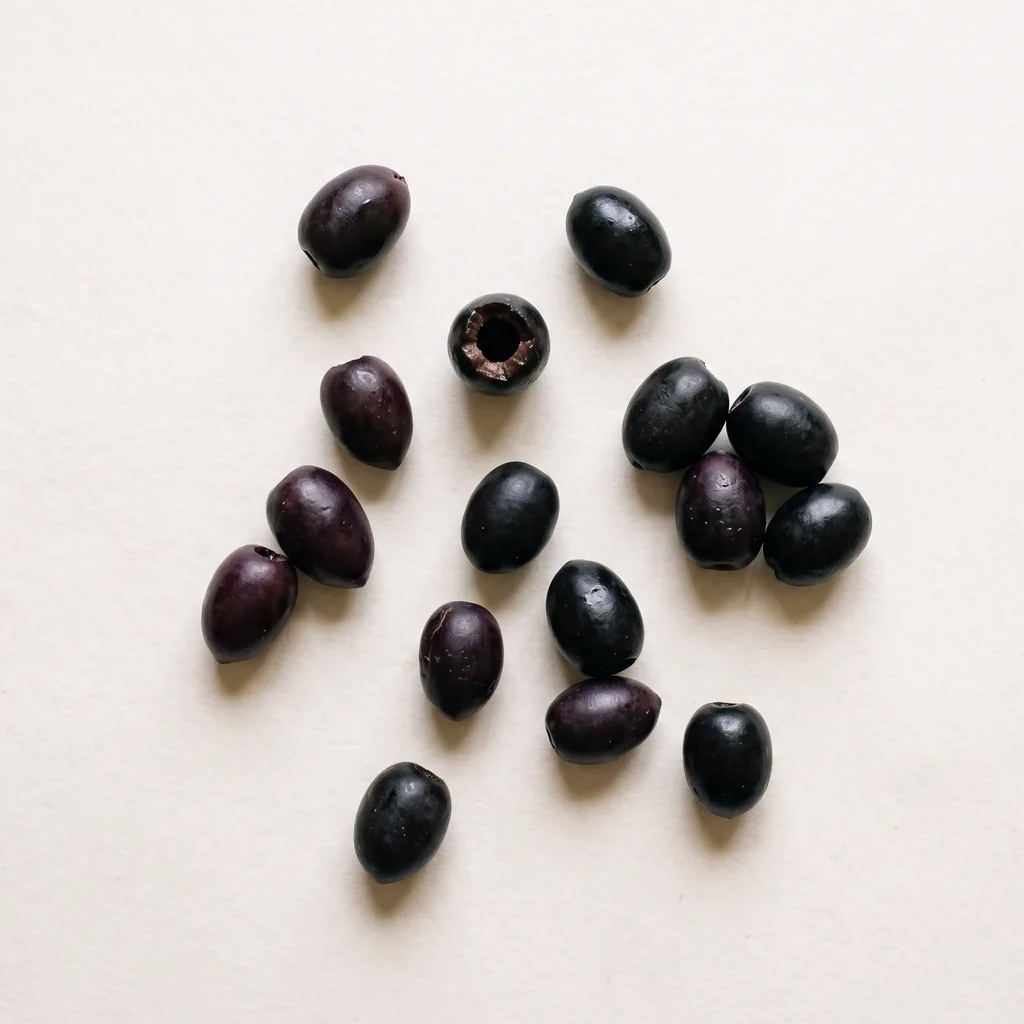
Olives can be offered once baby is about 6 months old and ready for solids. They are a fruit native to the lands around the Mediterranean. Many varieties grow today in sunny, warm regions across the world. Spain's Arbequina is fruity, Morocco's Beldi is meaty, Italy's Castelvetrano is buttery and Greece's Kalamata is dark. Colors go through brown, green and black, which depends on ripeness and how the olive is processed. Fresh olives are very bitter, so they are cured to take the bitterness out.

  • Healthy fats
  • Omega-3
  • Omega-6
  • Fiber
  • Calcium
  • Iron
Olive prepared for a baby

About olive

Olives supply healthy fats, omega-3 and omega-6, fiber, plus calcium, iron, vitamin E and vitamin K. They also hold plant compounds.

Also known as: siyah zeytin, tapenad, yeşil zeytin, zeytin, zeytin ezmesi

  • Gluten-free
  • Vegan

How to prepare it by age

6 monthsMash

Olive prepared for 6 months

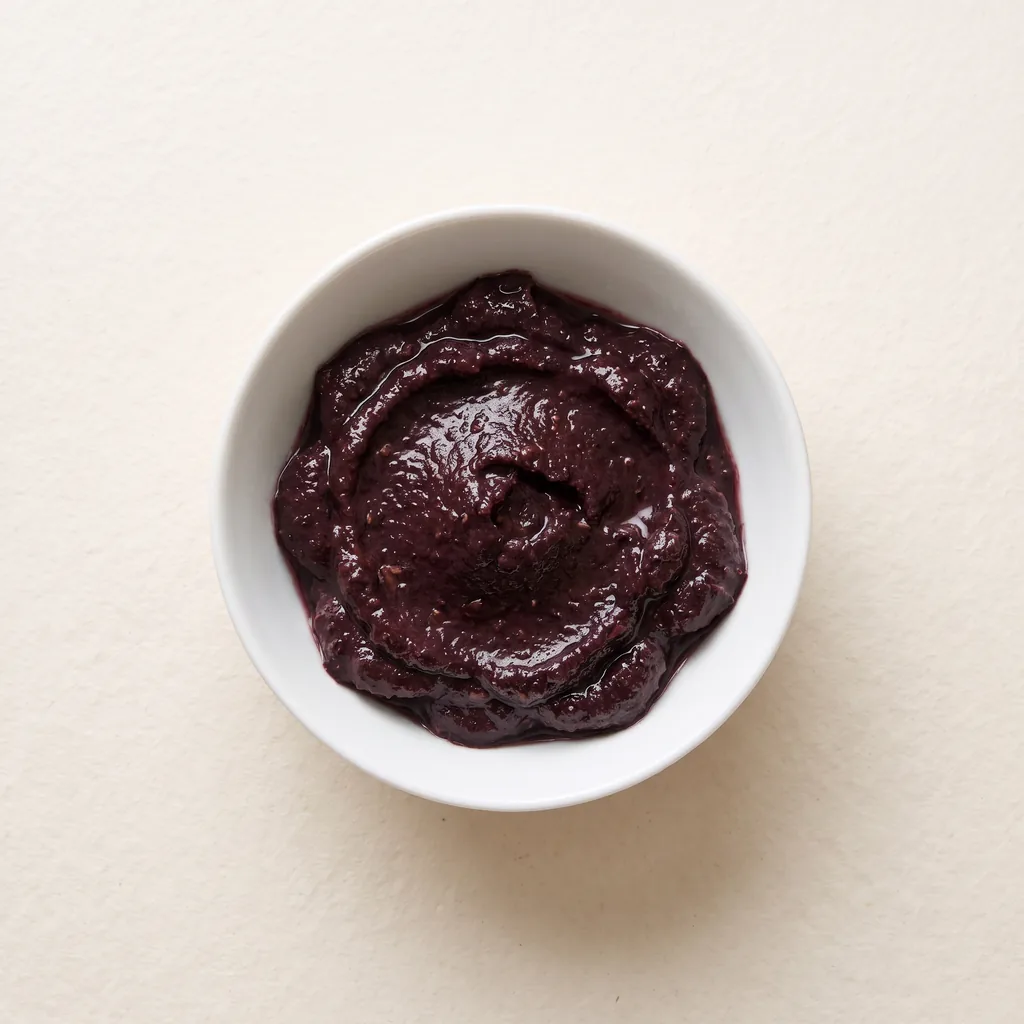
Cut: Smooth puree

Purée pitted olives and spread them on toast strips, or stir them into vegetable purée. Another way is to chop olives very fine and mix them into soft, spoonable meals. Whole olives are round and slippery, so they are not served at this age. Check the pit of every olive you use.
9 monthsSlice

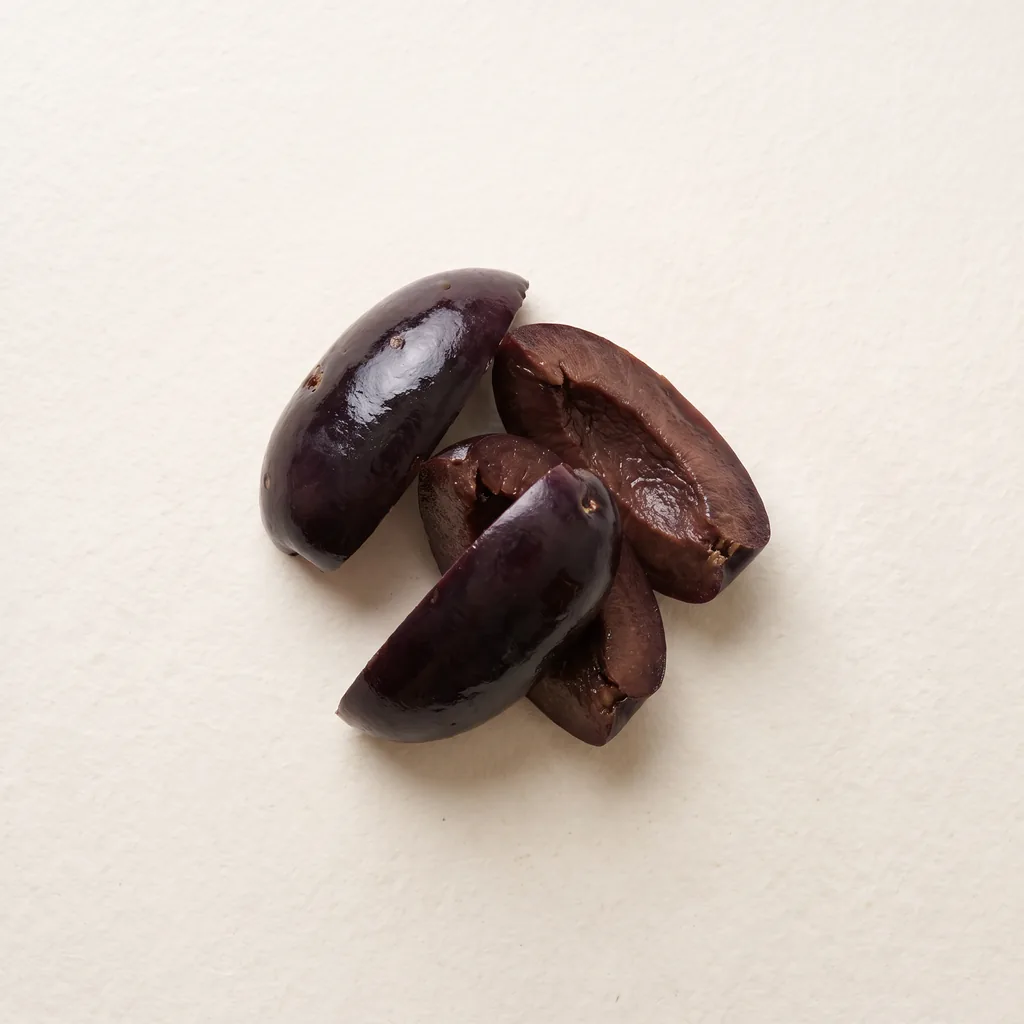
Cut: Quartered

Cut pitted olives lengthwise into quarters. This shape suits a baby who is learning the finger-and-thumb grasp. You can keep mixing finely chopped olives into meals or spreading olive paste on toast.

12 monthsSlice

Olive prepared for 12 months

Cut: Quartered

Offer olives cut lengthwise into quarters. You can keep serving olive paste. Give it with an age-appropriate fork, loading the fork ahead of time and laying it on the rim of the bowl when needed. Even olives sold as pitless can have a pit, so check each one.

Choking risk

  1. Low
  2. Medium
  3. High

Olives are round, slippery, sometimes firm or springy, and may hold a hard pit, so the choking risk is high. Always remove the pit. Even olives sold as pitted can still hold one, so check each olive.

Should a child get a pit in the mouth, stay calm. A pit may be swallowed, spat out, or pushed forward by a gag. Kneel in front of your child, stick out your tongue, calmly ask them to spit it out and cup a hand under the chin.

No whole olives

A whole olive is a choking hazard for young children. Serve a spread, thin rings or lengthwise pieces.

Allergen information

Olives rarely cause allergy. In regions where olives are harvested, contact dermatitis and olive allergy have rarely been seen.

People allergic to olive tree pollen or with pollen food syndrome may be sensitive to olives. The olive's plant family also includes ash, privet, jasmine and forsythia. The reaction is a passing itch, burn, or tingle in the mouth, and it is not usually dangerous. In theory it could reach cold-pressed oil, but most people allergic to the fruit tolerate olive oil.

Give a small amount for the first few servings. If nothing happens, increase it slowly.

Frequently asked questions

What age can babies eat olive?

Olives can be offered once baby is about 6 months old and ready for solids. They are a fruit native to the lands around the Mediterranean. Many varieties grow today in sunny, warm regions across the world. Spain's Arbequina is fruity, Morocco's Beldi is meaty, Italy's Castelvetrano is buttery and Greece's Kalamata is dark. Colors go through brown, green and black, which depends on ripeness and how the olive is processed. Fresh olives are very bitter, so they are cured to take the bitterness out.

Is olive a common allergen?

Olives rarely cause allergy. In regions where olives are harvested, contact dermatitis and olive allergy have rarely been seen.

How do you prepare olive for babies?

For a 6-month-old: Purée pitted olives and spread them on toast strips, or stir them into vegetable purée. Another way is to chop olives very fine and mix them into soft, spoonable meals. Whole olives are round and slippery, so they are not served at this age. Check the pit of every olive you use.
Is olive a choking hazard for babies?

Olives are round, slippery, sometimes firm or springy, and may hold a hard pit, so the choking risk is high. Always remove the pit. Even olives sold as pitted can still hold one, so check each olive.

Can babies eat olives?

Yes. From about 6 months, give pitted olive paste or finely chopped olives. Do not give whole olives.

Olives are salty. Are they OK for babies?

They can be high in sodium, but babies eat little. Start with small portions. You can pick a lower-salt kind.

Can pitted olives still have pits?

Yes. Even olives sold as pitted may keep a pit, so check each one.

How long does an open jar of olives keep?

About 4 weeks in the fridge. Olives from a self-service counter follow the same rule.

Prepared by the Lokmini team | Last updated November 17, 2026

Share:WhatsApp

Want to add this food to your baby's solid food calendar?

Join Lokmini to learn how this food is served at each age and to keep track of every food your baby tries.

Join Lokmini

Starting Solids

When and how to start solids, and what happens in the first week?

Read the guide

Similar foods

Let's get ready for the first bite together

Lokmini builds a day-by-day plan for your baby's age. Leave your email for new guides and our newsletter.

Start Your Journey