Skip to content

Uzm. Dyt. Berk AysanPrepared the latest update, November 14, 2026

Lokmini is not a healthcare provider and does not offer health services. For your baby's specific needs, talk to your doctor or a dietitian.

  • Vegetables
  • 6 mo+
  • Medium choking risk

Cucumber for babies: when to start

Cucumber can be offered when your baby is about 6 months old and ready for solids. But because it is firm and slippery, it is important to prepare it to suit your baby's developmental skills.

  • Water
  • Fiber
  • Vitamin C
  • Vitamin K
Cucumber prepared for a baby

About cucumber

Cucumber (Cucumis sativus) is a vegetable that comes from South Asia and is now grown in many parts of the world. Botanically, it is classed as a fruit.

There are many types of cucumber with different shapes, sizes and skins. Some of them are the small, thin-skinned Persian, the long Japanese, the round lemon, the English, and the Kirby, which is also used for pickling.

With its mild taste and high water content, cucumber is a refreshing food you can use at different meals.

Nutrition

About 95% of cucumber is water, so it can add to daily fluid intake. It is low in energy density and contains a little fiber.

Cucumber provides vitamin K and a little vitamin C.

Cucumber also contains minerals and vitamins such as potassium, magnesium, folate, calcium, iron and zinc, in varying but usually low amounts.

Cucumber also contains plant compounds that can act as antioxidants, such as flavonoids and other phenolic compounds. But eating cucumber has not been shown to give babies specific health benefits from these.

Cucumber can add variety and water to the diet. Still, it should not be counted as a major source of vitamins, minerals or energy on its own.

Also known as: cucumber, hıyar, kornişon, salatalık turşusu, İran salatalığı

  • Gluten-free
  • Vegan

How to prepare it by age

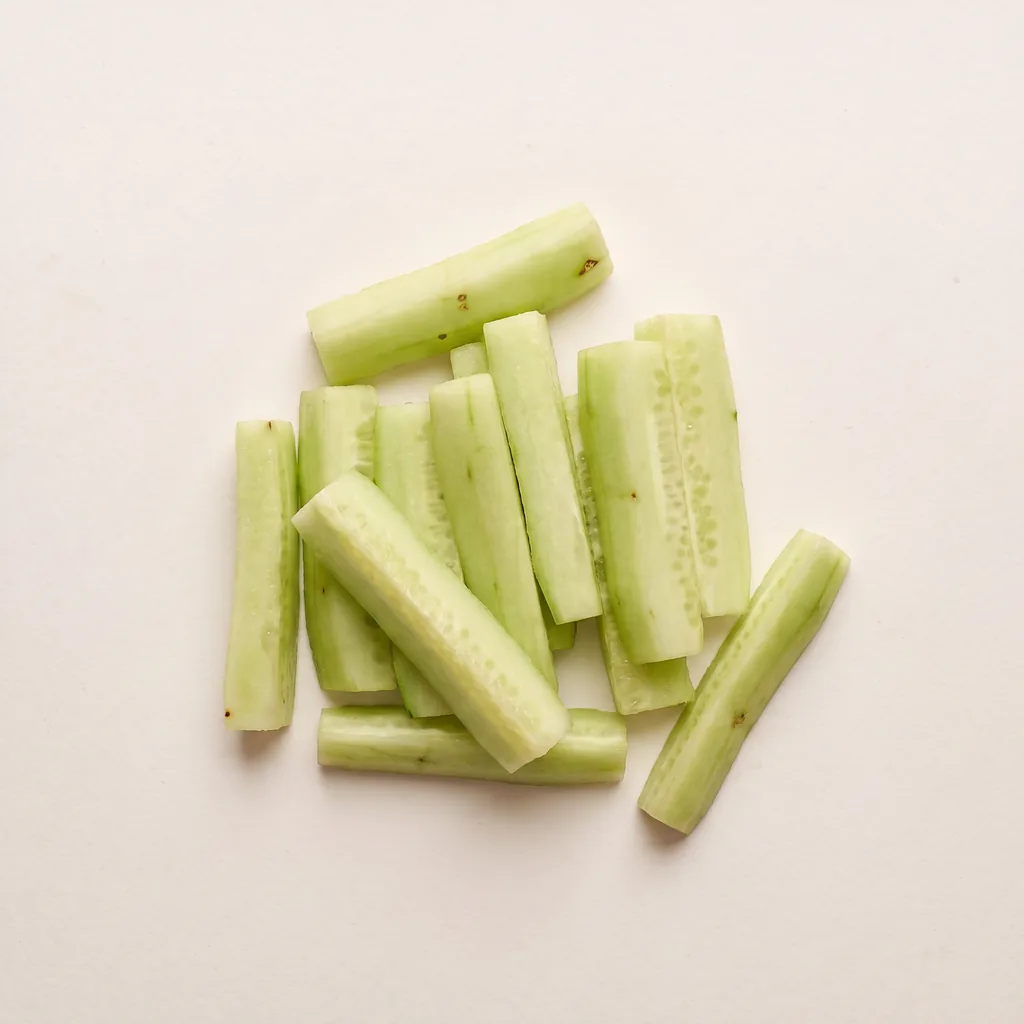
6 monthsStrip or mash
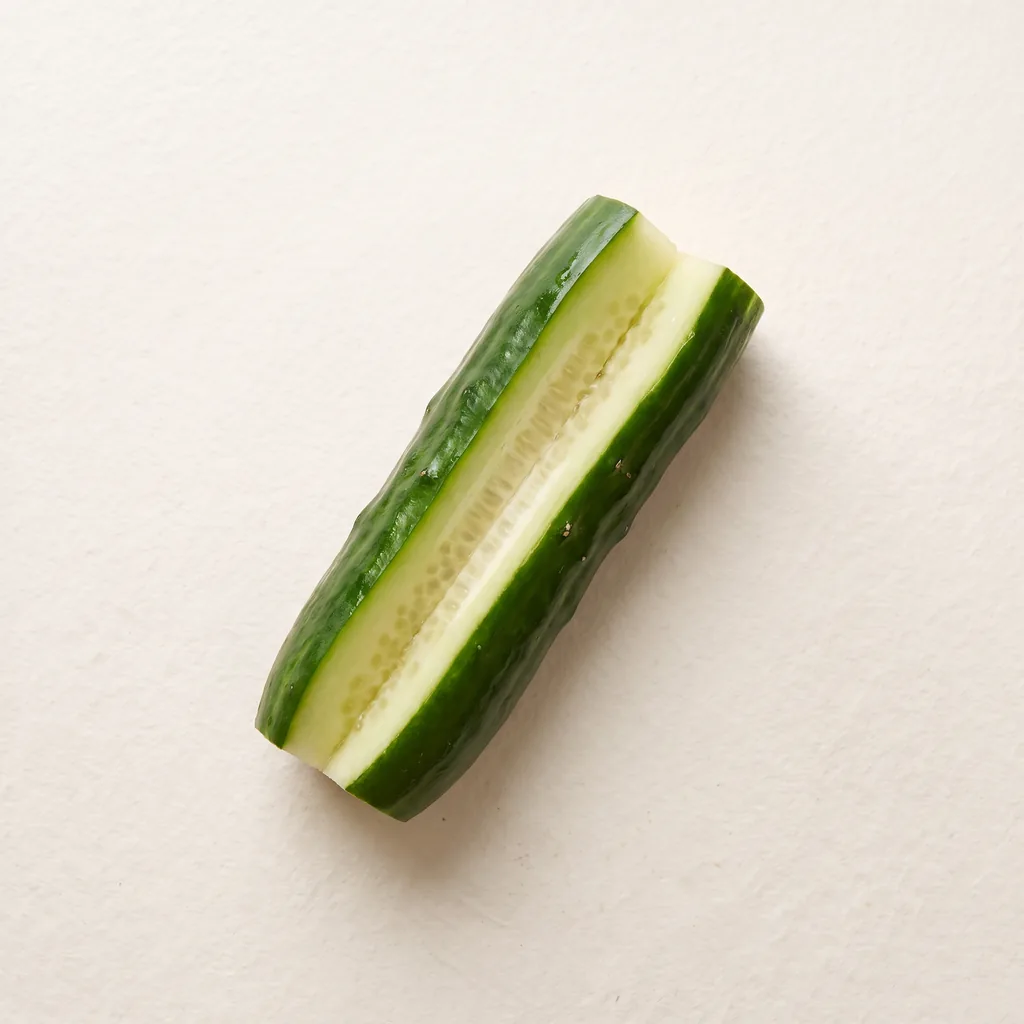
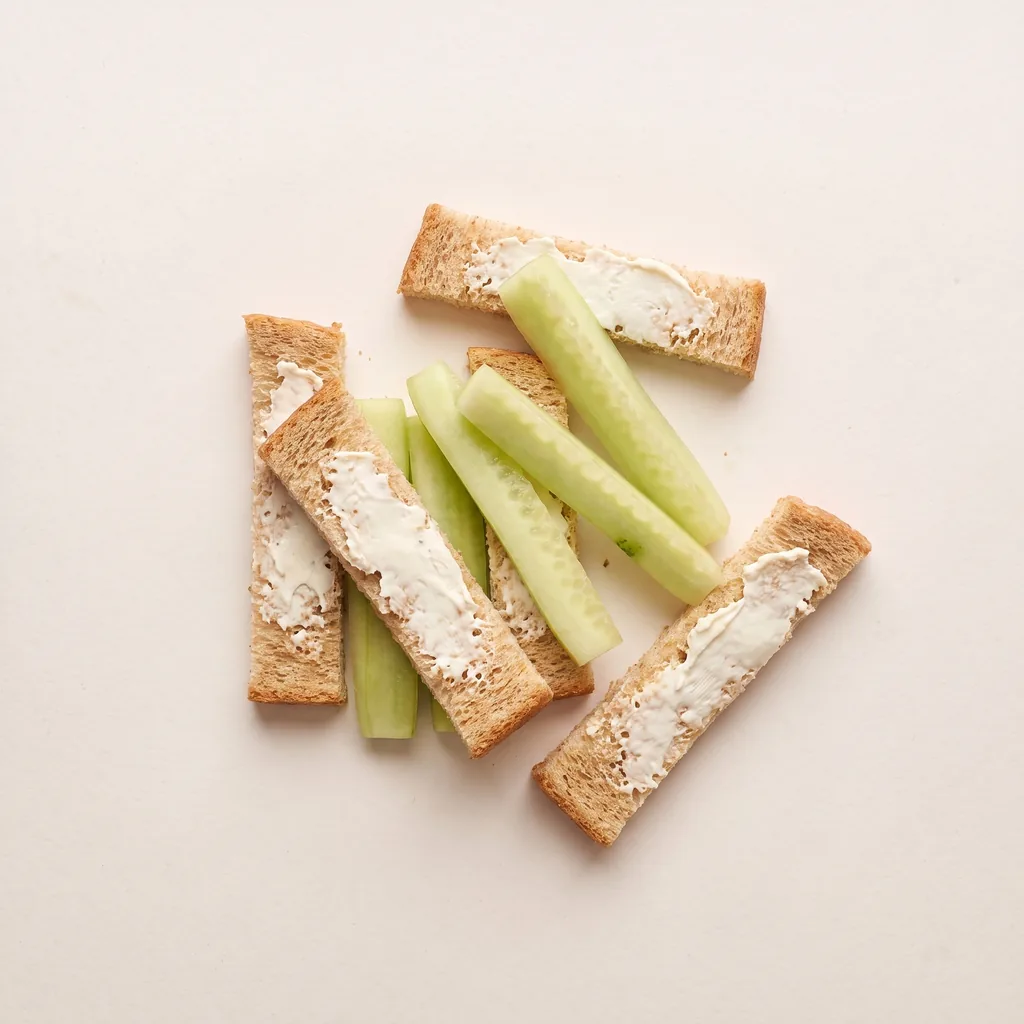
Cucumber prepared for 6 months

Cut: Quartered

Wash the cucumber well and cut it lengthwise into quarters, keeping the seeded center and the skin. A thick palm-long piece is gnawed by baby's gums. It is hard, so biting pieces off is difficult. Stay beside your baby and watch every piece.

Cut: Grated

Grate the cucumber and squeeze out a little of the juice. Stir it into a spoonable food such as yogurt. Your baby can eat it by hand or with a spoon.
9 monthsCube

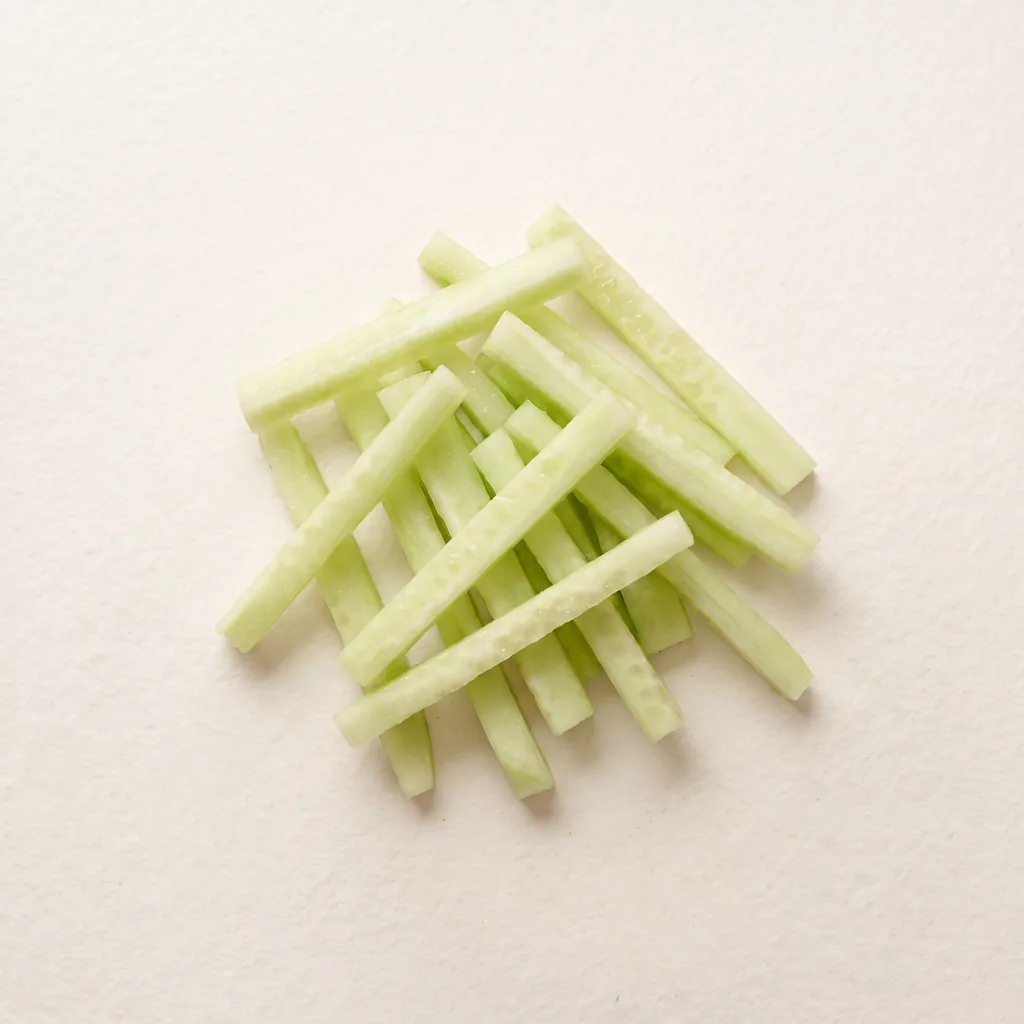
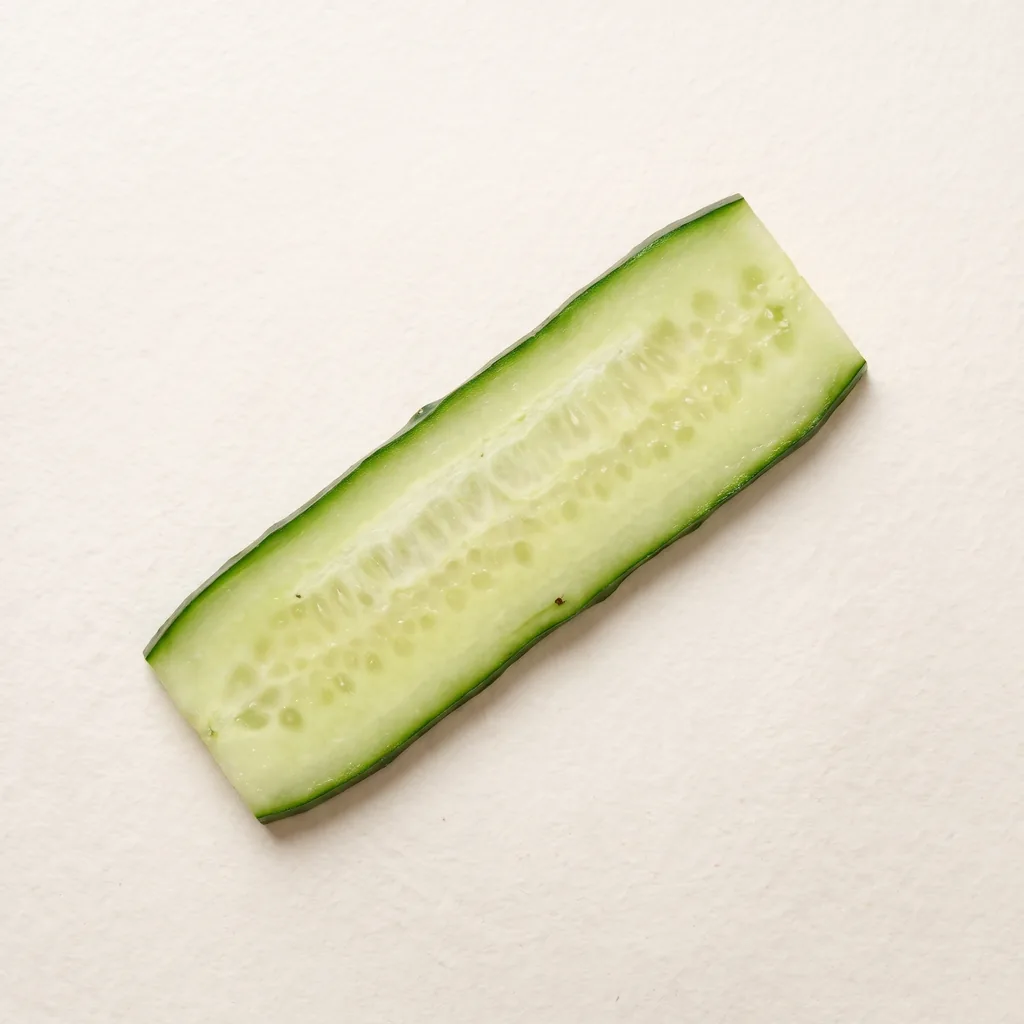
Cucumber prepared for 9 months

Peel the skin and serve long thin strips or very thin slices. A thick round slice can roll into the throat, so cut slices thin and flat. You can stir grated cucumber into yogurt for a cacık-like dish.

12 monthsCube or strip

Cucumber prepared for 12 months

Serve cucumber as thin half-moon slices or small cubes. Thick round slices and whole mini cucumbers are not suitable until age 4.

Cut: Finger strip

Serve cucumber in long, thin rectangular slices, with or without skin. Avoid bite-sized cubes and sticks that can break apart. After 18 months, a child with biting experience can have a long spear or a mini cucumber trimmed at both pointed ends. Trimming those ends lowers the choking risk.

Choking risk

  1. Low
  2. Medium
  3. High

Because raw cucumber is firm and slippery, it can be a choking risk for babies. Thick, round slices and large bites that do not break down easily in the mouth are especially risky.

To lower the choking risk, prepare cucumber to suit your baby's chewing and swallowing skills. When your baby is starting solids, you can serve finely grated or very finely chopped cucumber mixed into soft foods. Peel tough skins and avoid thick, round slices.

Your baby should sit upright while eating, with an adult always beside them within arm's reach. If you see choking signs such as being unable to breathe, make a sound or cough effectively, act right away.

Cutting rule

From about 6 months, you can serve cucumber finely grated or mixed into soft foods. From 9 months, depending on chewing skills, thin half-moon slices work, and after 12 months, thin slices. Avoid hard cubes, thick round slices, pieces with pointed ends and sticks that can break off into big bites. Always choose the cut based on your baby's developmental skills.

Allergen information

Cucumber is not a common food allergen. Allergic reactions to cucumber are rare.

Some people allergic to ragweed pollen may cross-react to cucumber because of pollen food allergy syndrome. This usually shows up as itching, tingling or burning in the mouth, lips or throat after eating raw cucumber.

Symptoms are usually mild and short-lived. But more serious allergic reactions can rarely happen. Cooking can reduce the effect of some allergens, but it does not fully remove the risk of an allergic reaction.

When you offer cucumber to your baby for the first time, start with a small amount. If no allergy signs appear, you can increase the amount at later meals.

If you see signs such as hives, repeated vomiting or swollen lips, stop giving cucumber and get a medical assessment. For serious signs such as trouble breathing or swelling of the tongue or throat, call emergency services right away.

Frequently asked questions

What age can babies eat cucumber?

Cucumber can be offered when your baby is about 6 months old and ready for solids. But because it is firm and slippery, it is important to prepare it to suit your baby's developmental skills.

Is cucumber a common allergen?

Cucumber is not a common food allergen. Allergic reactions to cucumber are rare.

How do you prepare cucumber for babies?

For a 6-month-old: Wash the cucumber well and cut it lengthwise into quarters, keeping the seeded center and the skin. A thick palm-long piece is gnawed by baby's gums. It is hard, so biting pieces off is difficult. Stay beside your baby and watch every piece.

Is cucumber a choking hazard for babies?

Because raw cucumber is firm and slippery, it can be a choking risk for babies. Thick, round slices and large bites that do not break down easily in the mouth are especially risky.

Do I need to peel cucumber?

Not always. The skin makes cucumber less slippery, which can make it easier for your baby to hold. But thick or tough skin can make chewing harder. You can peel it depending on the type of cucumber and your baby's chewing skills.

Are cucumber seeds dangerous?

The small, soft seeds inside cucumber usually do not pose a choking risk. Because they sit in the soft middle of the fruit, you often do not need to remove them. What matters most is how firm the cucumber is and how you cut it.

Can babies eat pickles?

Pickled cucumbers are usually high in salt, so they are not recommended, especially when your baby is starting solids. Do not add salt to your baby's food. If you offer pickles to older babies and young children, choose low-sodium options, and make sure their firmness and cut suit your child's chewing skills. Avoid thick, round, firm pickle slices.
Share:WhatsApp

Want to add this food to your baby's solid food calendar?

Join Lokmini to learn how this food is served at each age and to keep track of every food your baby tries.

Join Lokmini

Recipes with cucumber

Starting Solids

When and how to start solids, and what happens in the first week?

Read the guide

Similar foods

Let's get ready for the first bite together

Lokmini builds a day-by-day plan for your baby's age. Leave your email for new guides and our newsletter.

Start Your Journey