6 monthsStrip
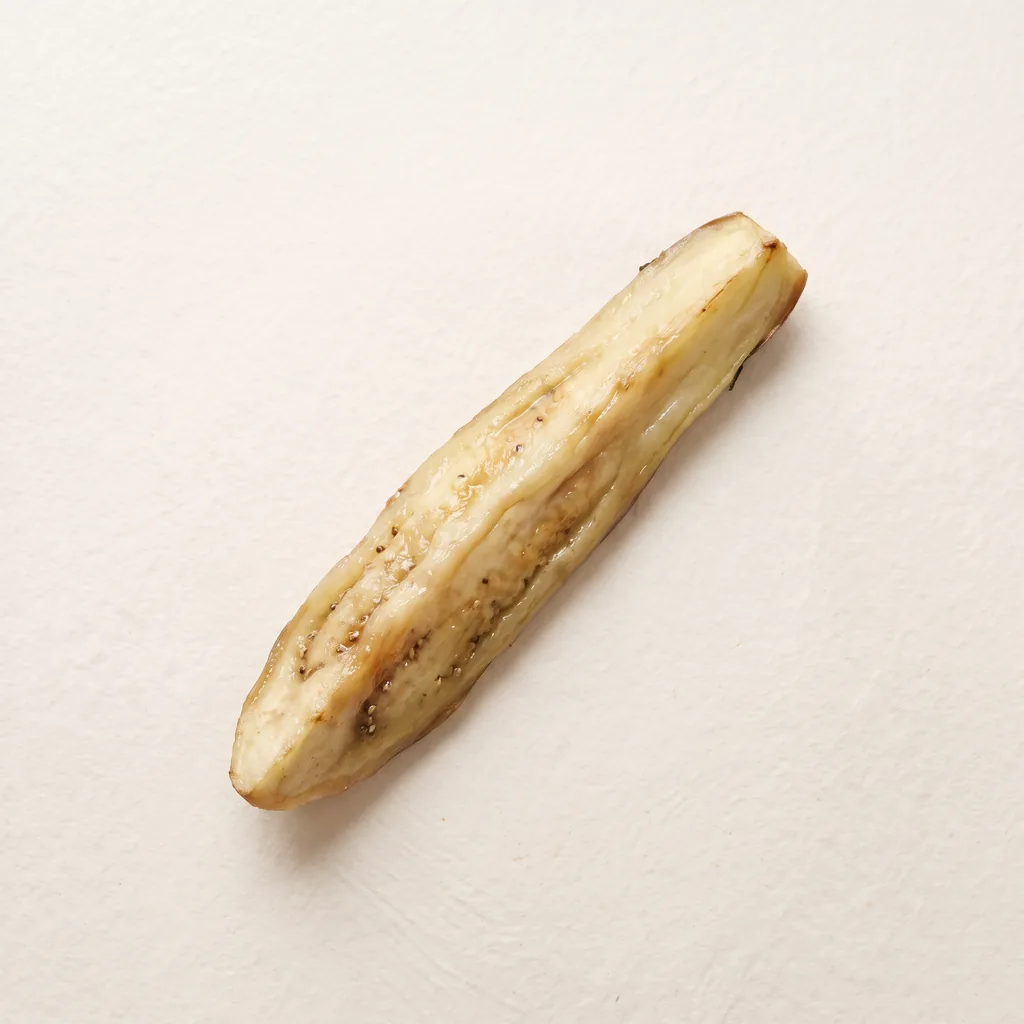
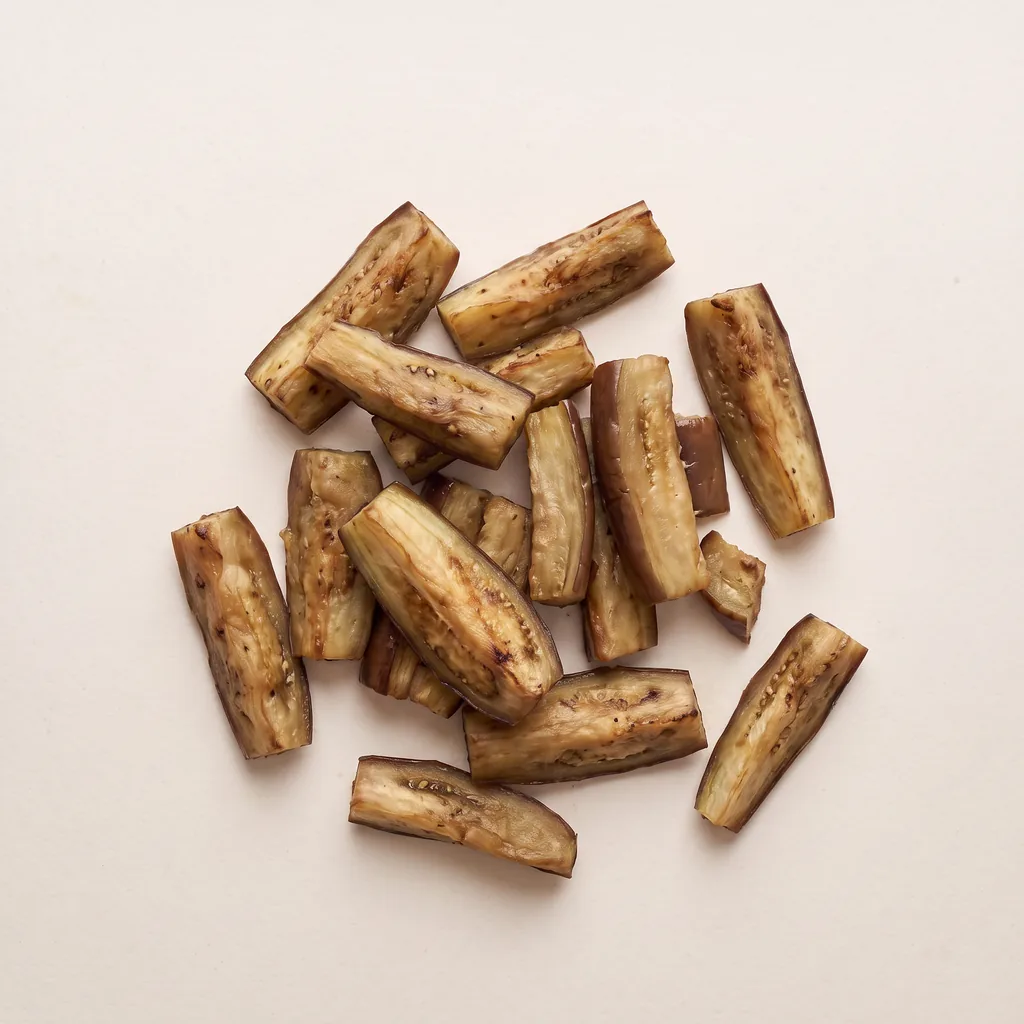
Roast or char the eggplant until soft, then peel it. Serve in long finger-thick strips, or mash with a fork and mix in olive oil, then offer on a pre-loaded spoon. Do not add salt.
Eggplant can be offered from about 6 months, once baby is ready for solids. In many kitchens around the world it adds a creamy, meaty texture. It also goes by names like anara, aubergine, and brinjal. The English name comes from a white variety the size of an egg.
Eggplant brings fiber plus folate and the vitamins B6, C, and K.
Also known as: baba ganuş, közlenmiş patlıcan, patlıcan
6 monthsStrip
Roast or char the eggplant until soft, then peel it. Serve in long finger-thick strips, or mash with a fork and mix in olive oil, then offer on a pre-loaded spoon. Do not add salt.
9 monthsCube
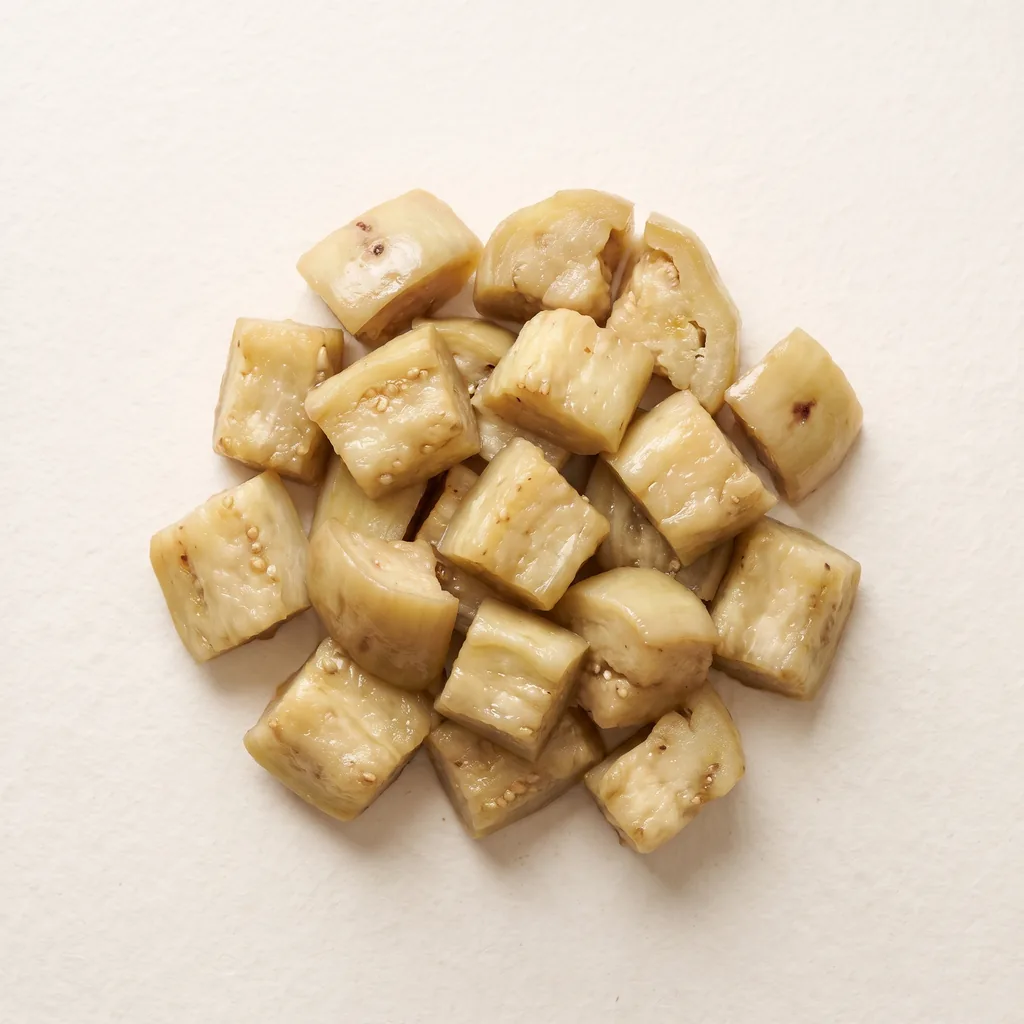
Cut: Bite sized piece
Cut the cooked, peeled eggplant into bite-sized pieces. Choose baking or boiling over frying, because fried eggplant soaks up a lot of oil.
12 monthsCube
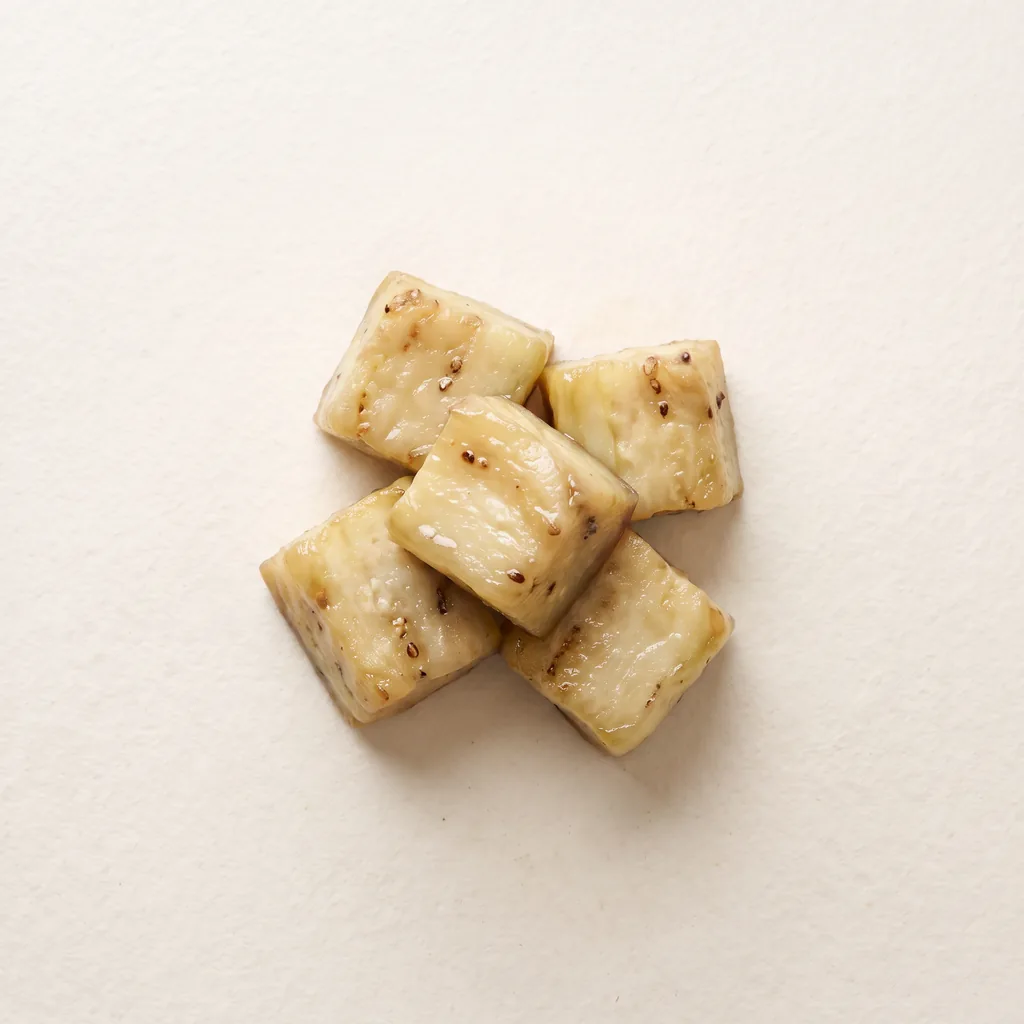
Keep serving small cubes or thin slices. You can set aside salt-free charred eggplant mash, the filling of karnıyarık, or a portion of moussaka.
Raw or undercooked eggplant is firm, which can raise the choking risk for babies. Pieces of skin that stay tough after cooking can also make chewing and swallowing harder.
To lower the choking risk, cook eggplant until it is soft enough to squash easily between your fingers. If the skin stays tough, peel it.
For babies around 6 months, you can offer long, thick, fully soft wedges or a mash. As your baby gets better at picking up small pieces, you can give soft, bite-sized pieces.
Your baby should sit upright while eating, with an adult always nearby.
Eggplant is not a common food allergen. Allergic reactions to eggplant are rare but have been reported in the medical literature.
Eggplant belongs to the nightshade family (Solanaceae), along with tomato, potato and pepper. But being in the same plant family does not mean that someone allergic to one of these foods will definitely react to the others.
Cross-allergic reactions with eggplant have been reported in some people sensitive to certain pollens or natural rubber latex. These reactions can show up as an itchy or burning mouth or mild lip swelling. But how often such cross-reactions happen in babies is not known.
Redness or irritation around the mouth can also appear after eating eggplant. These signs do not always mean a food allergy.
It has been suggested that eggplant can cause histamine-related reactions, but there is not enough consistent scientific evidence about its histamine content or how these reactions work.
When you offer eggplant for the first time, start with a small amount. If you see no allergy signs, you can increase the amount at later meals.
If you see signs such as hives, repeated vomiting or lip swelling, stop giving eggplant and get a medical assessment. If you see serious signs such as trouble breathing or swelling of the tongue or throat, call emergency services right away.
Prepared by the Lokmini team | Last updated November 19, 2026
Join Lokmini to learn how this food is served at each age and to keep track of every food your baby tries.
Lokmini builds a day-by-day plan for your baby's age. Leave your email for new guides and our newsletter.
Start Your Journey