Dietitian's view
Fennel is a risky food for babies.
Lokmini is not a healthcare provider and does not offer health services. For your baby's specific needs, talk to your doctor or a dietitian.
- Vegetables
- Not recommended for babies
- Medium choking risk
Can babies have Fennel?
Fennel is not recommended for babies. It is considered a risky food for babies. Fennel is native to the Mediterranean region. Today it grows in sandy fields and by roadsides in sunny places around the world.
- Fiber
- Folate
- Magnesium
- Potassium
- Vitamin C
- Vitamin K
About fennel
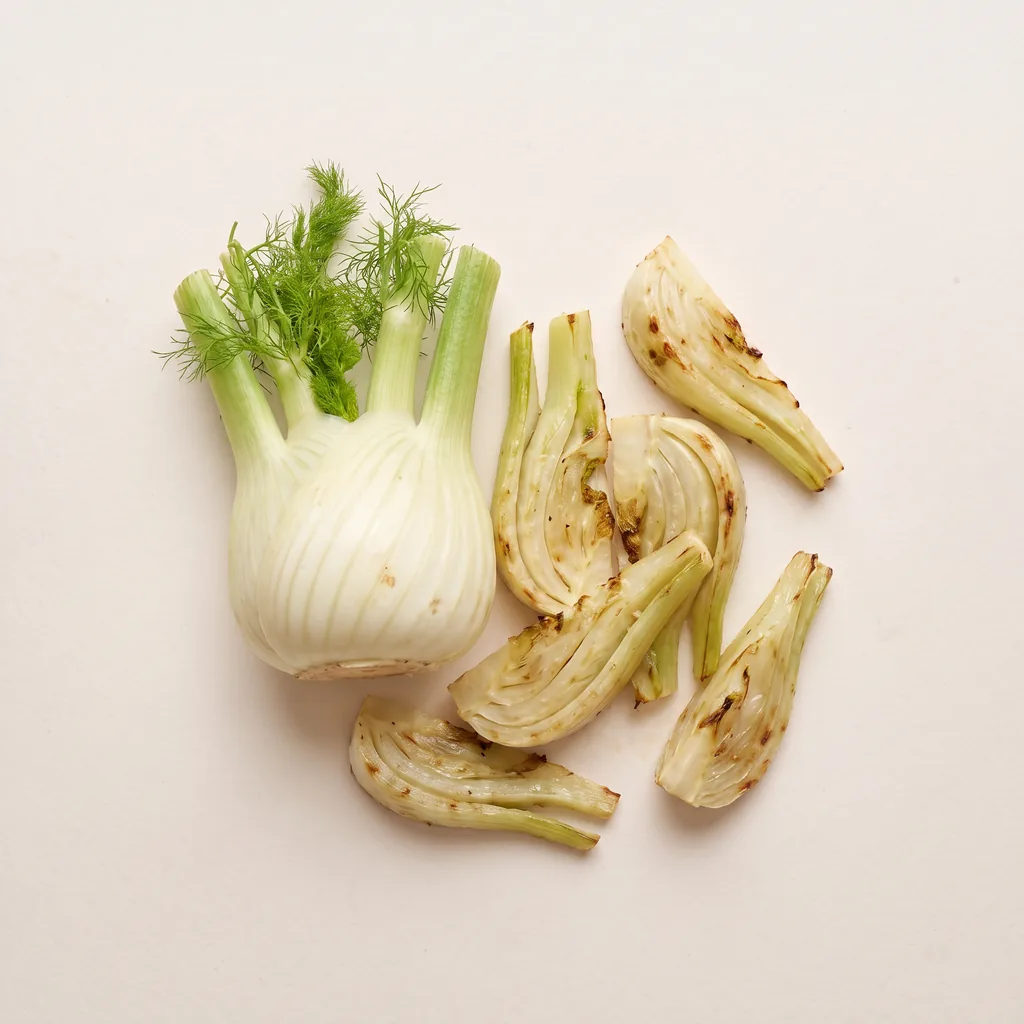
The onion-like stem, stalks, and lacy fronds are eaten cooked or raw. People grind the flowers and seeds to flavor stews, sauces and spice blends.
Nutrition
Fennel supplies potassium, magnesium, folate, fiber and fluid. It carries vitamins C and K as well. It holds plant compounds that act as antioxidants.
Also known as: rezene, rezene soğanı, rezene tohumu, rezene çayı, fennel
- Gluten-free
- Vegan
Choking risk
- Low
- Medium
- High
Fennel bulb is firm and hard to chew, especially raw or undercooked. This raises the choking risk.
Allergen information
Fennel is not a common allergen. Allergy is rare but has been reported. Eating, breathing in, or skin contact with fennel has been linked to allergic reactions in some people. People with pollen food allergy syndrome may be sensitive to fennel too. Higher risk applies to people with birch or mugwort pollen allergy, to those who react to carrot-family foods such as carrot and celery, and to those who react to peaches. This usually means a brief itch, tingle, or burn in the mouth. It is not expected to be dangerous. Cooking lowers the reaction.
Emergency
If there is trouble breathing, facial swelling, widespread hives, or repeated vomiting, call emergency services right away.
Frequently asked questions
What age can babies eat fennel?
Is fennel a common allergen?
Is fennel a choking hazard for babies?
Should I worry about nitrates in fennel?
Can fennel tea or gripe water ease colic?
At what age can babies drink fennel tea?
Can I use fennel seed?
Sources
- World Health Organization (WHO), Guideline for complementary feeding of infants and young children 6-23 months of age (2023)
- National Health Service (NHS), Preparing food safely for babies
- CDC, Infant and Toddler Nutrition, Choking Hazards
- Cochrane, Dietary modifications for infantile colic (2018)
- Pediatrics, Greer FR, Shannon M. Pediatrics 116(3), 784-786 (nitrates) (2005)
- American Journal of Clinical Nutrition, Food sources of nitrates and nitrites: the physiologic context for potential health benefits (2009)
- Pediatric Emergency Care, Severe Methemoglobinemia Due to Food Intoxication in Infants (2005)
- British Journal of Clinical Pharmacology, Vascular effects of dietary nitrate (as found in green leafy vegetables and beetroot) via the nitrate‐nitrite‐nitric oxide pathway (2013)
Prepared by the Lokmini team | Last updated November 17, 2026