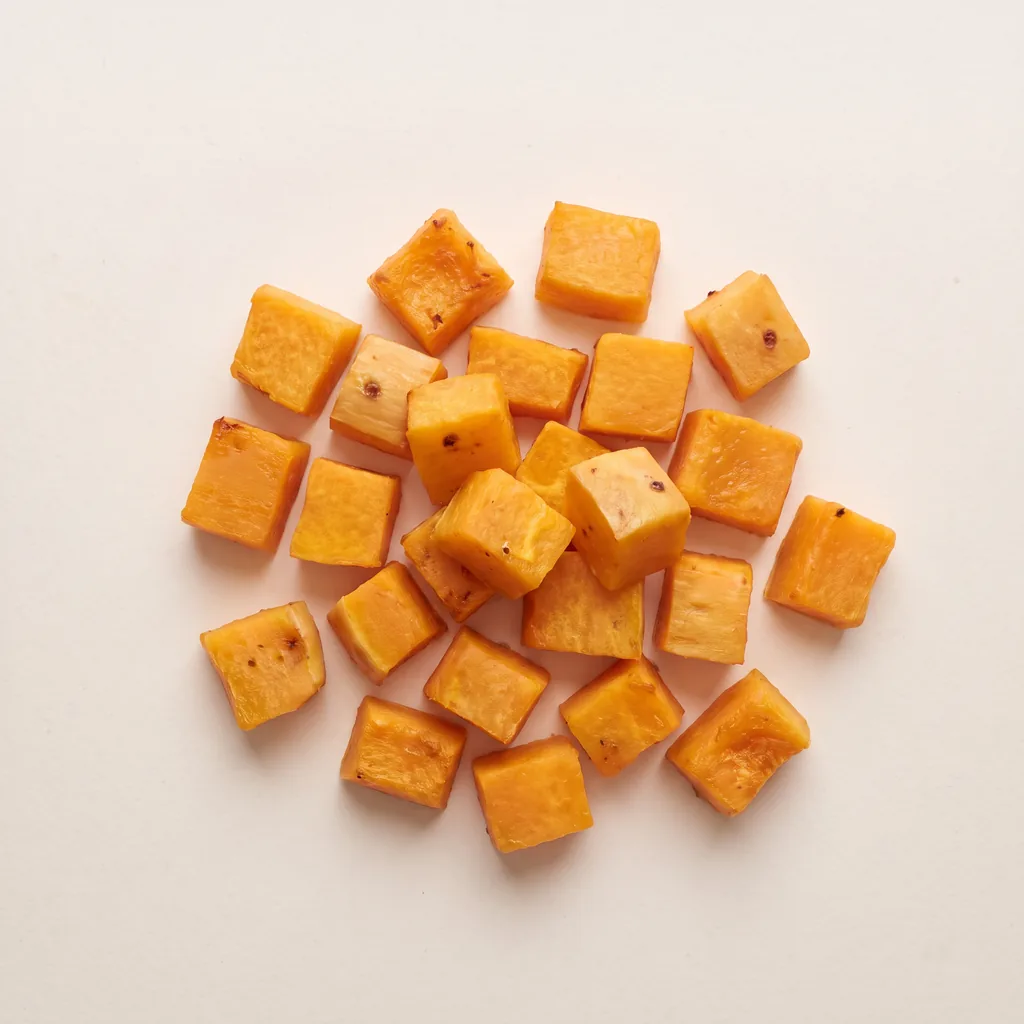
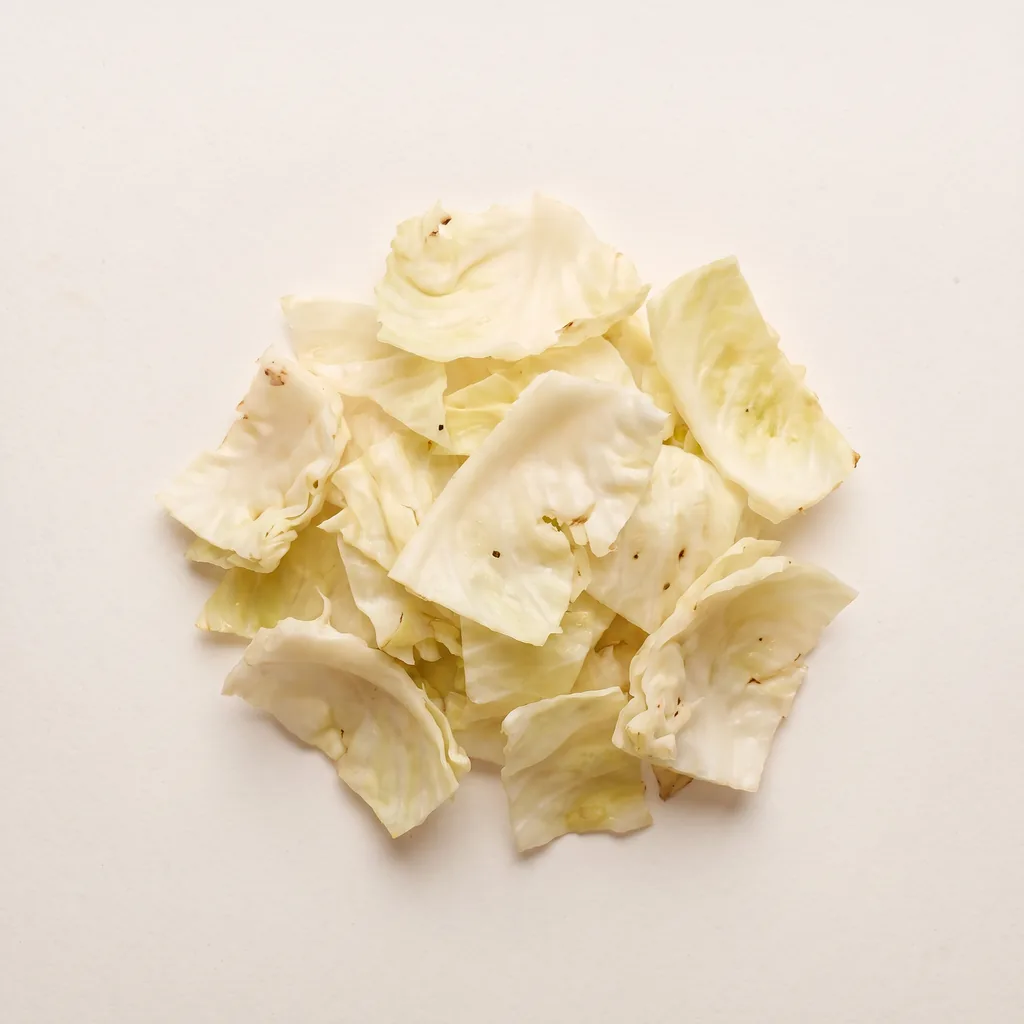
6 monthsStrip
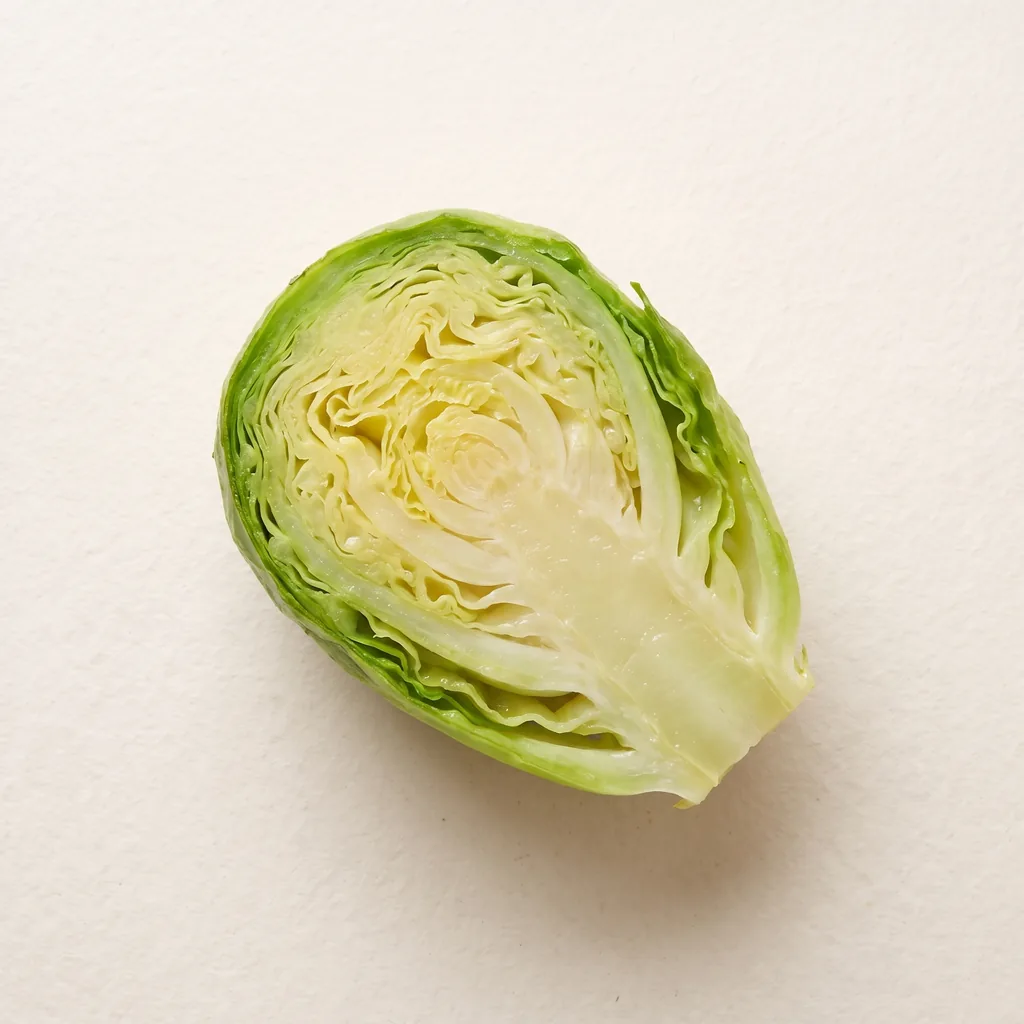
Cut: Halved
Remove the outer leaves and steam the sprout until soft. Halve a whole sprout lengthwise and offer a piece that fits in the palm. Never serve it whole and round.
Brussels sprouts can start when your baby is about 6 months old and ready for solids. They belong to the same plant family as cabbage and broccoli, bred from wild cabbage around the Mediterranean. They like cool weather. They are named after the Belgian city of Brussels. They can taste bitter. Newer varieties are less bitter, sweeter and a bit nutty.
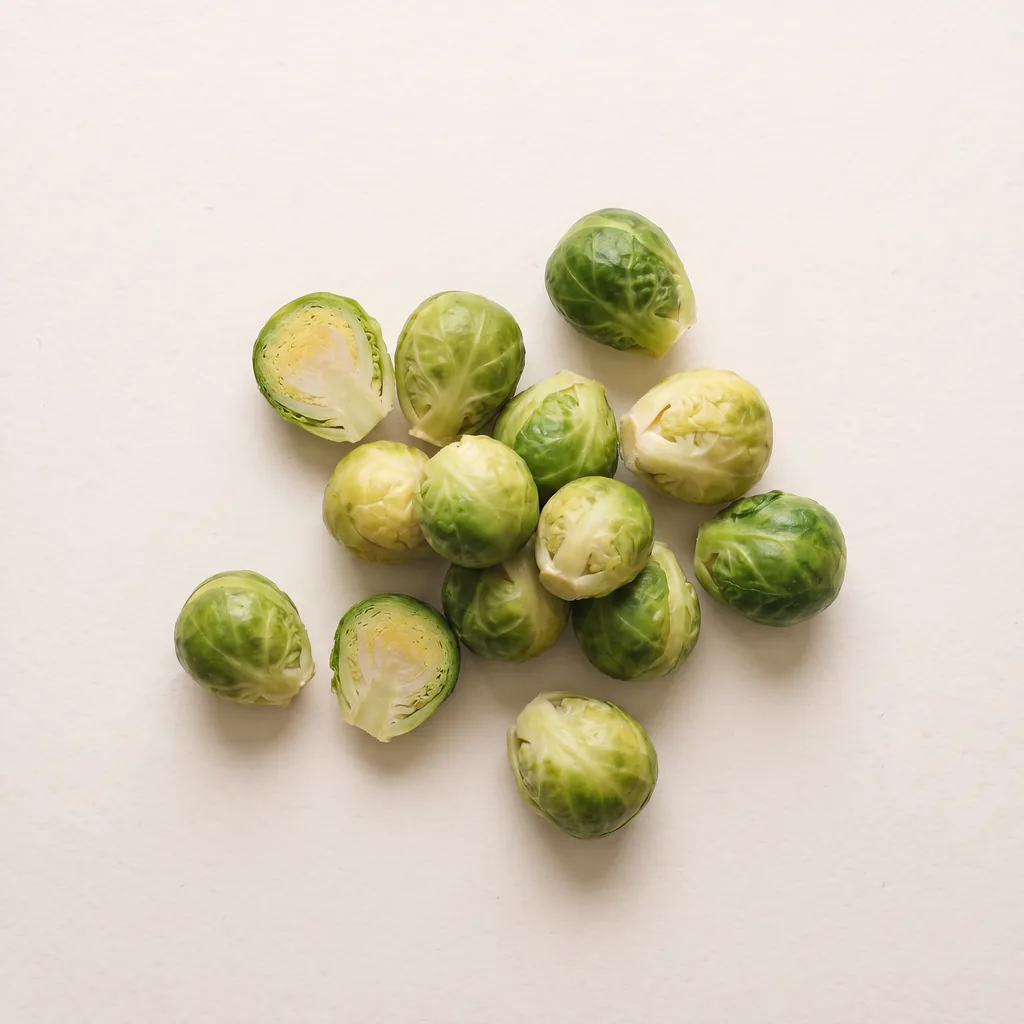
Fiber, folate, potassium, vitamin K and B vitamins are plentiful. They also supply vitamin E, choline, iron, zinc, calcium, vitamin A, vitamin C and magnesium. It also has a small amount of plant omega-3 (ALA).
Also known as: bruksel lahanası, brüksel lahana, minik lahana
6 monthsStrip
Cut: Halved
Remove the outer leaves and steam the sprout until soft. Halve a whole sprout lengthwise and offer a piece that fits in the palm. Never serve it whole and round.
9 monthsCube
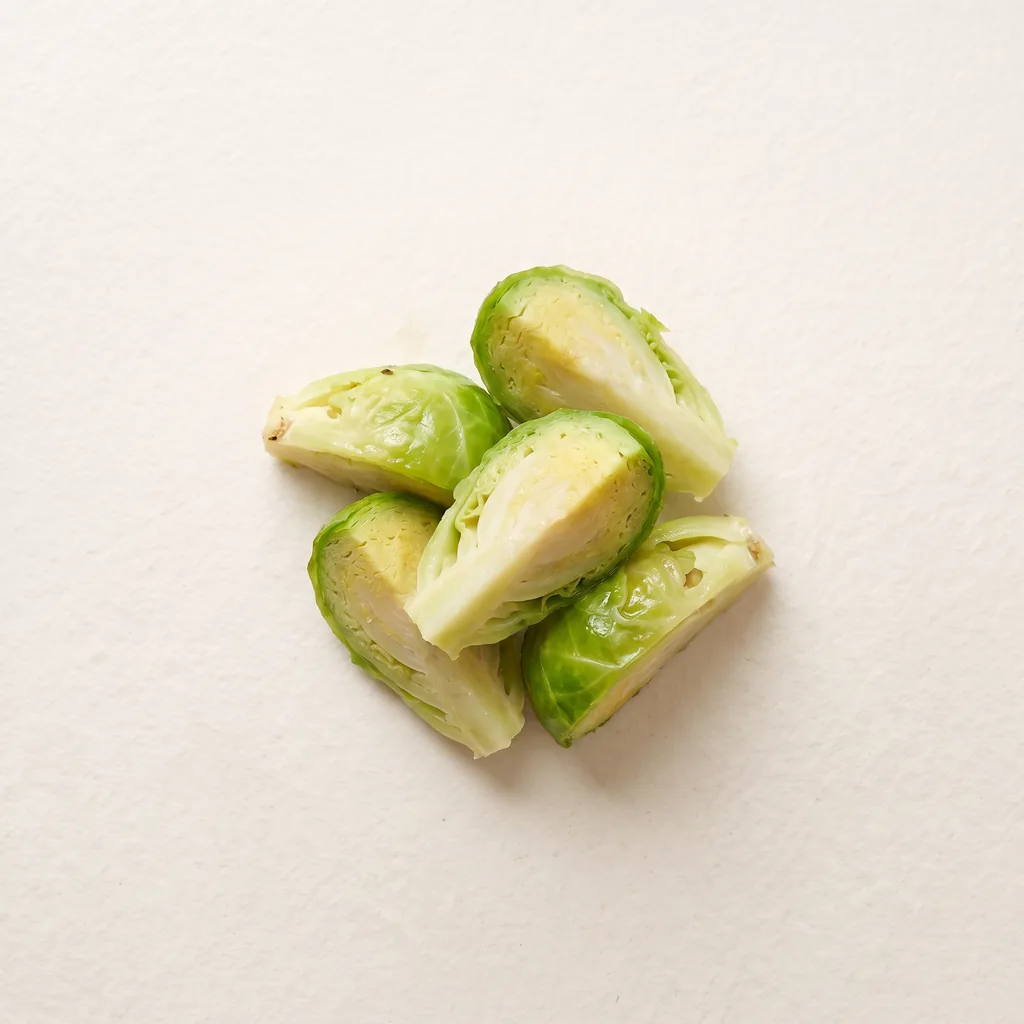
Quarter the cooked sprout lengthwise, or separate the leaves and chop them finely. A small whole sprout is round, so it is never served without cutting it down to bite size.
12 monthsCube
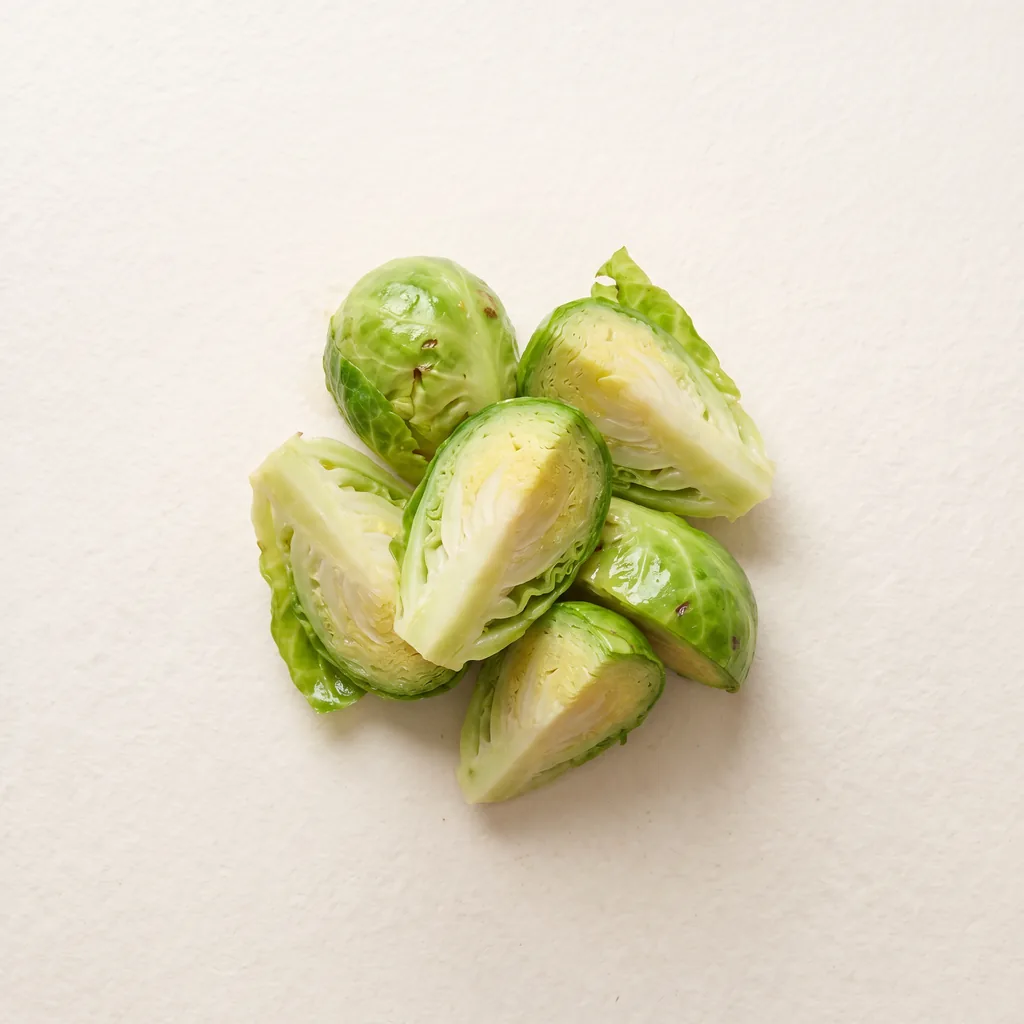
Keep serving cooked sprouts quartered or finely chopped. Keep quartering whole sprouts until age 4.
Raw or undercooked Brussels sprouts can be hard and fibrous. This can make them harder to chew and raise the choking risk.
Cook Brussels sprouts until they are soft enough to squash easily between your fingers. Because they are small and round, do not give them whole. Mash them or break them into soft pieces to suit your baby's development.
Make sure your baby sits upright during the meal, and stay next to them, within arm's reach.
Round shape
Do not serve a small, round sprout whole. Halve or quarter it lengthwise.
Brussels sprouts are not a common food allergen. But allergic reactions can happen. Scientific data on how often they occur is limited.
Brussels sprouts are in the same plant family as broccoli, cauliflower, cabbage and mustard. Some people allergic to these foods may have a cross-reaction. But being in the same family does not mean an allergic reaction will always develop.
With some pollen allergies, cross-reactions with foods can cause signs such as itching or tingling in the mouth. This is also called pollen food allergy syndrome. But direct evidence on a link between Brussels sprouts and mugwort pollen is limited.
When you offer Brussels sprouts for the first time, start with a small amount and watch your baby. If signs such as hives, swelling of the lips or vomiting develop, stop giving them and see a health professional.
For serious signs such as trouble breathing, swelling of the tongue or throat, sudden marked weakness or loss of consciousness, call emergency services right away.
Prepared by the Lokmini team | Last updated November 19, 2026
Join Lokmini to learn how this food is served at each age and to keep track of every food your baby tries.
Lokmini builds a day-by-day plan for your baby's age. Leave your email for new guides and our newsletter.
Start Your Journey