Skip to content

Dietitian's view

Cantaloupe is not common in Türkiye.

Lokmini is not a healthcare provider and does not offer health services. For your baby's specific needs, talk to your doctor or a dietitian.

  • Fruits
  • 6 mo+
  • High choking risk

Cantaloupe for babies: when to start

Cantaloupe can start when your baby is about 6 months old and ready for solids. Be careful: melon balls and large chunks are a choking risk.

  • Potassium
  • Folate
  • Vitamin A
  • Vitamin B6
  • Vitamin C
  • Carotenoids
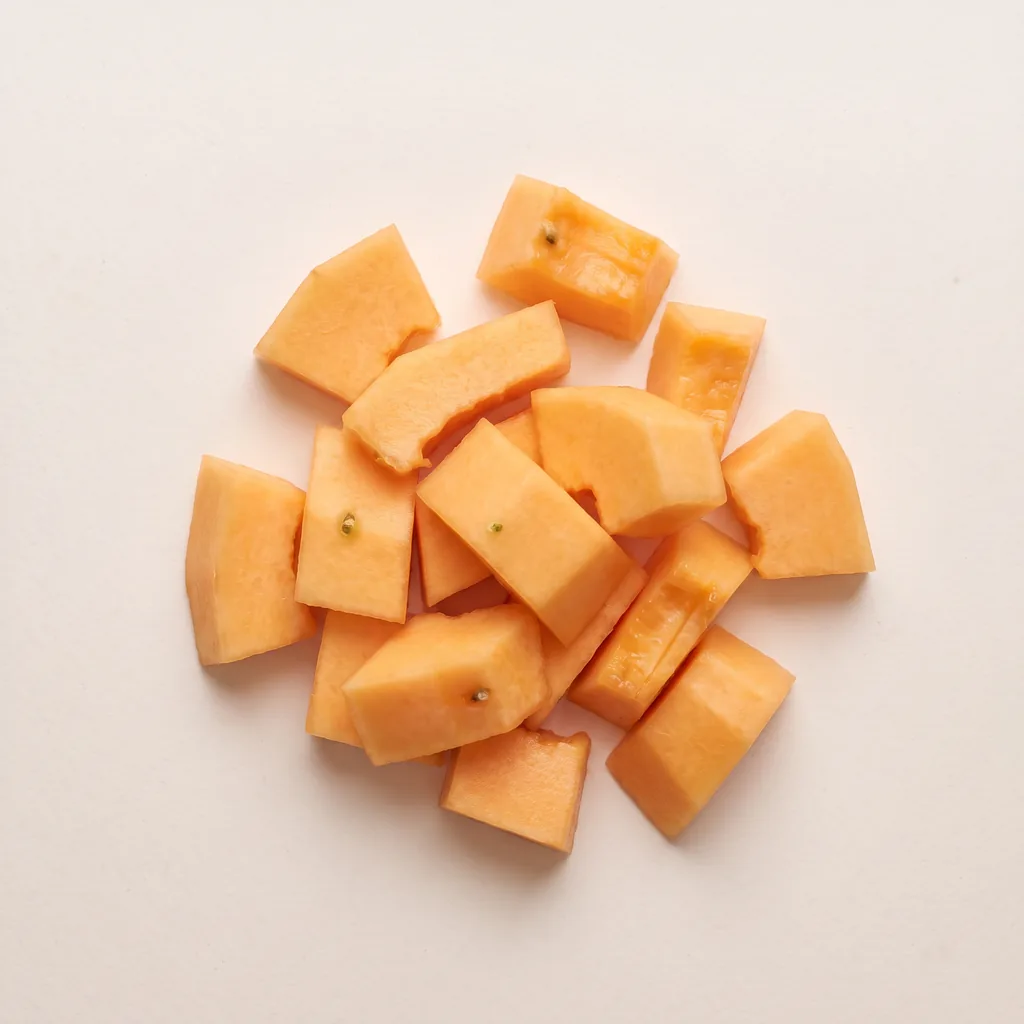
Cantaloupe prepared for a baby

About cantaloupe

Cantaloupe belongs to the muskmelon family, which has many varieties. Its exact origin is unknown, but it has grown in the warm parts of Africa and Asia for a long time. Today it is grown worldwide and has local names. Names differ by place: rock melon (Southeast Asia, Australia), spanspek (South Africa), cantaloupe (North America). Some European types have smooth white rind with green ribs and sweeter orange flesh.

Cantaloupe offers plenty of potassium, folate and vitamins A, B6 and C. Beta carotene, lutein and zeaxanthin belong to the carotenoids it holds. It also has antioxidants, phenolic compounds and flavonoids.

Also known as: kavun, kantalup, kantalop, kış kavunu, cantaloupe

  • Gluten-free
  • Vegan

How to prepare it by age

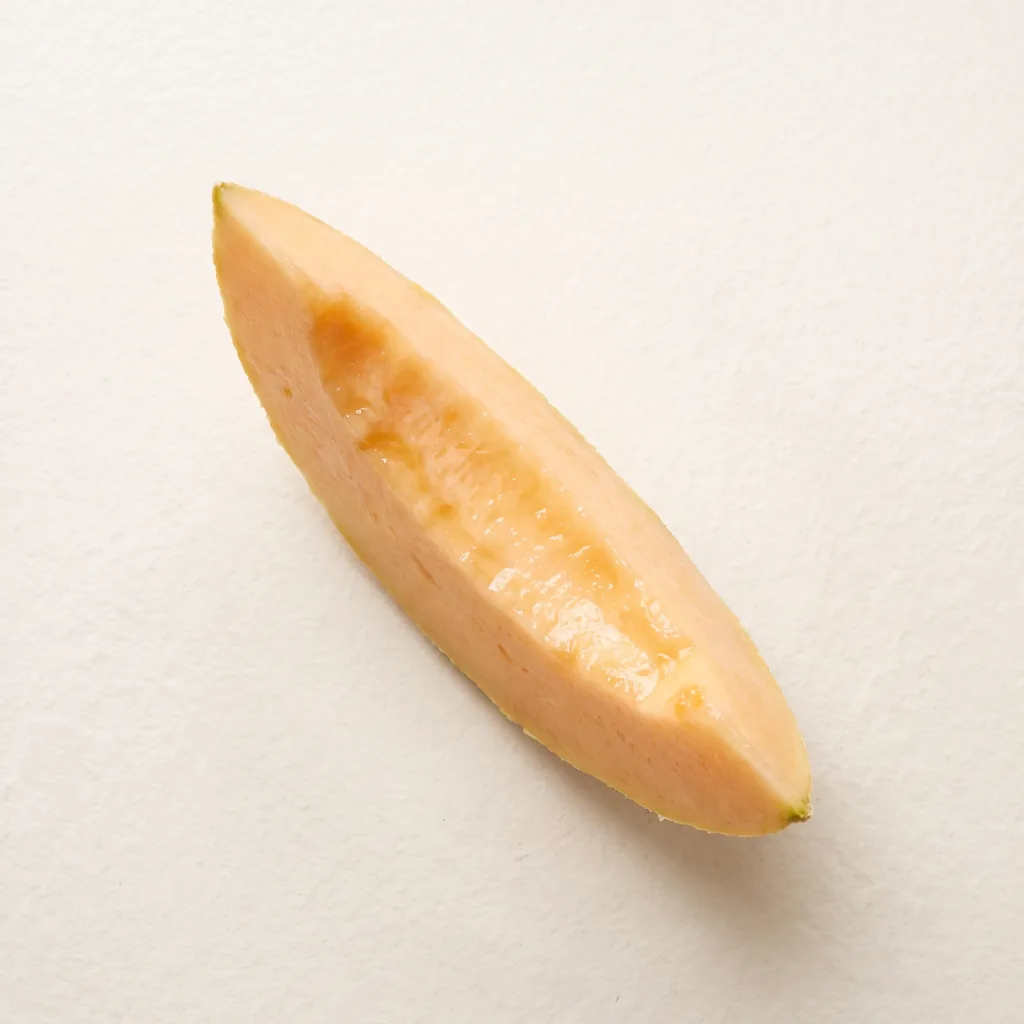
6 monthsSlice

Cantaloupe prepared for 6 months

Cut: Thick wedge

Remove the rind and seeds from soft, ripe melon. Cut long, flat crescents or rectangles. Hold a slice in the air so your baby grabs it and brings it to the mouth. Even ripe melon is hard to chew, so do not worry if little gets eaten. Avoid balls and big chunks.
9 monthsStrip

Cut: Finger strip

Cut ripe melon, rind and seeds removed, into flat rectangles about as wide as two adult fingers side by side. You can keep serving crescents. Still avoid melon balls and big chunks.

12 monthsSlice

Cut: Finger strip

Offer ripe melon in long, flat slices to bite from, with rind and seeds removed. Large wedges with rind wait until after 18 months, when your child follows directions and chews well. Pre-cut melon chunks wait until around age 2.

Choking risk

  1. Low
  2. Medium
  3. High

Cantaloupe is firm and slippery, which raises the choking risk. The risk is highest with melon balls, large chunks and underripe, firmer fruit. Pick ripe fruit and cut it to suit your child's age. Stay with your baby during meals.

Allergen information

Cantaloupe rarely causes allergy. People with oral allergy syndrome, especially those allergic to ragweed pollen, may react to it. The mouth itches, tingles or burns for a short time, which is usually not dangerous. Cooking the melon may lessen or remove the reaction.

A contact rash can appear on the hands and face. Wash your hands right after handling melon. A barrier ointment such as plain petroleum jelly on baby's face before eating may also help.

Offer a small amount for the first few meals. If there is no reaction, increase gradually.

Frequently asked questions

What age can babies eat cantaloupe?

Cantaloupe can start when your baby is about 6 months old and ready for solids. Be careful: melon balls and large chunks are a choking risk.

Is cantaloupe a common allergen?

Cantaloupe rarely causes allergy. People with oral allergy syndrome, especially those allergic to ragweed pollen, may react to it. The mouth itches, tingles or burns for a short time, which is usually not dangerous. Cooking the melon may lessen or remove the reaction.

How do you prepare cantaloupe for babies?

For a 6-month-old: Remove the rind and seeds from soft, ripe melon. Cut long, flat crescents or rectangles. Hold a slice in the air so your baby grabs it and brings it to the mouth. Even ripe melon is hard to chew, so do not worry if little gets eaten. Avoid balls and big chunks.
Is cantaloupe a choking hazard for babies?

Cantaloupe is firm and slippery, which raises the choking risk. The risk is highest with melon balls, large chunks and underripe, firmer fruit. Pick ripe fruit and cut it to suit your child's age. Stay with your baby during meals.

Can I give melon balls?

No. They are firm and slippery, so melon balls and big chunks are a choking risk. Offer long, flat slices.

How should I wash melon?

Scrub the rind with water right before cutting, then dry it. You do not need a special wash.

Is melon eaten raw?

Ripe melon is eaten raw. For oral allergy syndrome, cooking it may lessen the reaction.

Prepared by the Lokmini team | Last updated November 17, 2026

Share:WhatsApp

Want to add this food to your baby's solid food calendar?

Join Lokmini to learn how this food is served at each age and to keep track of every food your baby tries.

Join Lokmini

Starting Solids

When and how to start solids, and what happens in the first week?

Read the guide

Similar foods

Let's get ready for the first bite together

Lokmini builds a day-by-day plan for your baby's age. Leave your email for new guides and our newsletter.

Start Your Journey