Dietitian's view
Do not give packaged crackers to your baby.
Lokmini is not a healthcare provider and does not offer health services. For your baby's specific needs, talk to your doctor or a dietitian.
- Wheat and gluten allergen
- Grains
- 12 mo+
- High choking risk
Crackers for babies: when to start
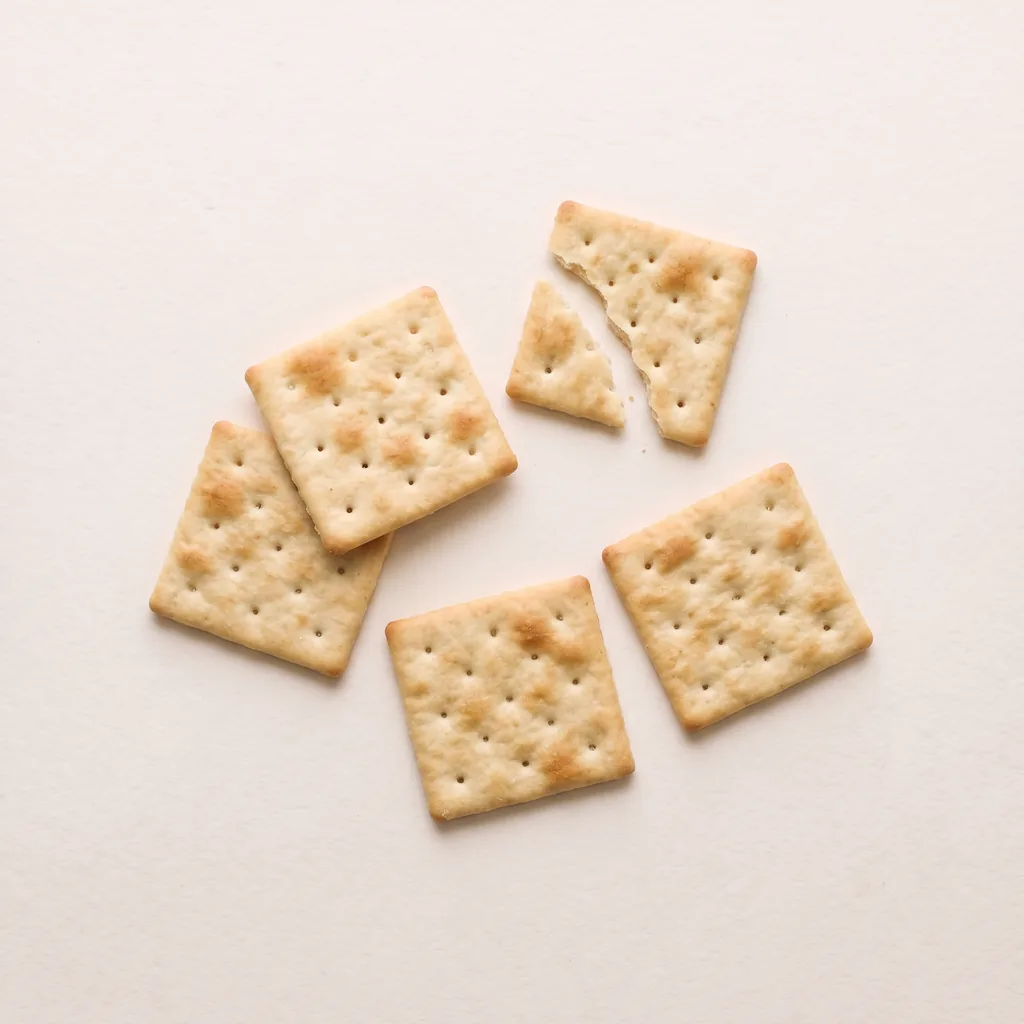
The answer depends on the type. Crackers are a common cause of choking. That is why soft crackers such as Goldfish, Ritz, Saltines and water biscuits come after the first birthday. These melt in the mouth or crumble under light pressure. Hard, brittle and sharp crackers are for more advanced eating skills, usually around 24 months.
- Carbohydrates
 Allergen, day 1/3
About crackers
Crackers often contain common allergens such as dairy, egg, sesame, soy, tree nuts and wheat. They may also contain honey. Babies younger than 12 months should not eat honey, since it can cause infant botulism.
People eat crackers in many forms around the world. Among them are crispbread, graham crackers, prawn crackers (kropek), matzah, oat cakes and papadum. Certain kinds rise with baking soda, others use no leavening at all. Some are pricked with holes before baking. The holes stop them puffing up in the oven and keep them flat and crisp. Almond flour, puffed rice and wheat flour are some of the ingredients. Many are eaten with cheese or a spread. Some are served beside a meal for dipping.
Also known as: bisküvi, tuzlu bisküvi, diş bisküvisi, pirinç keki, su bisküvisi, galeta
- Vegan
Crackers is offered 3 days in a row
So that any reaction can be linked to the right food, crackers is offered 3 days in a row and no other new food is tried on those days.
- 1/3
First taste
Start with a small amount in the morning or around midday. Your baby is watched closely for 5 to 10 minutes after the first bite.
- 2/3
Same food, same calm
Crackers is offered again the same way. No other new food is tried today.
- 3/3
Introduction done
If no reaction was seen, crackers is now part of your baby's meals. It keeps being offered regularly.
Emergency
If facial swelling, trouble breathing, widespread hives or fainting follow a serving, call emergency services.
About crackers allergy
Crackers are mostly made from wheat and other grains with gluten. Other common allergens may be in them too, such as dairy, egg, sesame, soy and tree nuts. Read the ingredient list closely before serving.
Before giving crackers, introduce common food allergens one at a time and rule out allergy. That way, if your baby reacts, you know which allergen is responsible. When you serve crackers, you can be sure your child has already eaten the allergens inside safely. Begin with a small portion, as you would with any first-time food, and watch how your baby responds.
How to prepare it by age
Age-by-age prep is in the Lokmini app
See how to cut, texture and serve crackers at 12 months in the app.
Join LokminiChoking risk
- Low
- Medium
- High
Crackers are a common cause of choking. Most are hard and sharp. They are hard to chew and can scratch or poke the mouth. Pick a type suited to the age, not stale, and give it when your child is seated and focused on eating. Stay within reach at meals.
Cutting rule
Before 12 months, give nothing except baby crackers and teething rusks. At 12 months, give only crackers with no sharp edges that soften in the mouth. Hold off on hard, brittle and sharp ones until 24 months and mature eating skills.
Frequently asked questions
Is crackers a choking hazard for babies?
When can babies have crackers?
Are crackers safe for babies?
Can babies have rice cakes?
Do crackers contain allergens?
Sources
Prepared by the Lokmini team | Last updated November 17, 2026
Want to add this food to your baby's solid food calendar?
Join Lokmini to learn how this food is served at each age and to keep track of every food your baby tries.