Dietitian's view
Do not give popcorn to your baby.

Uzm. Dyt. Berk AysanPrepared the latest update, November 14, 2026
Lokmini is not a healthcare provider and does not offer health services. For your baby's specific needs, talk to your doctor or a dietitian.
- Grains
- 36 mo+
- High choking risk
Popcorn for babies: when to start
Popcorn is not suitable for babies and children under 4 years. Its small, hard, irregular pieces can be a serious choking risk.
- Fiber
- Carbohydrates
- Magnesium
- Zinc
- B vitamins
- Polyphenols
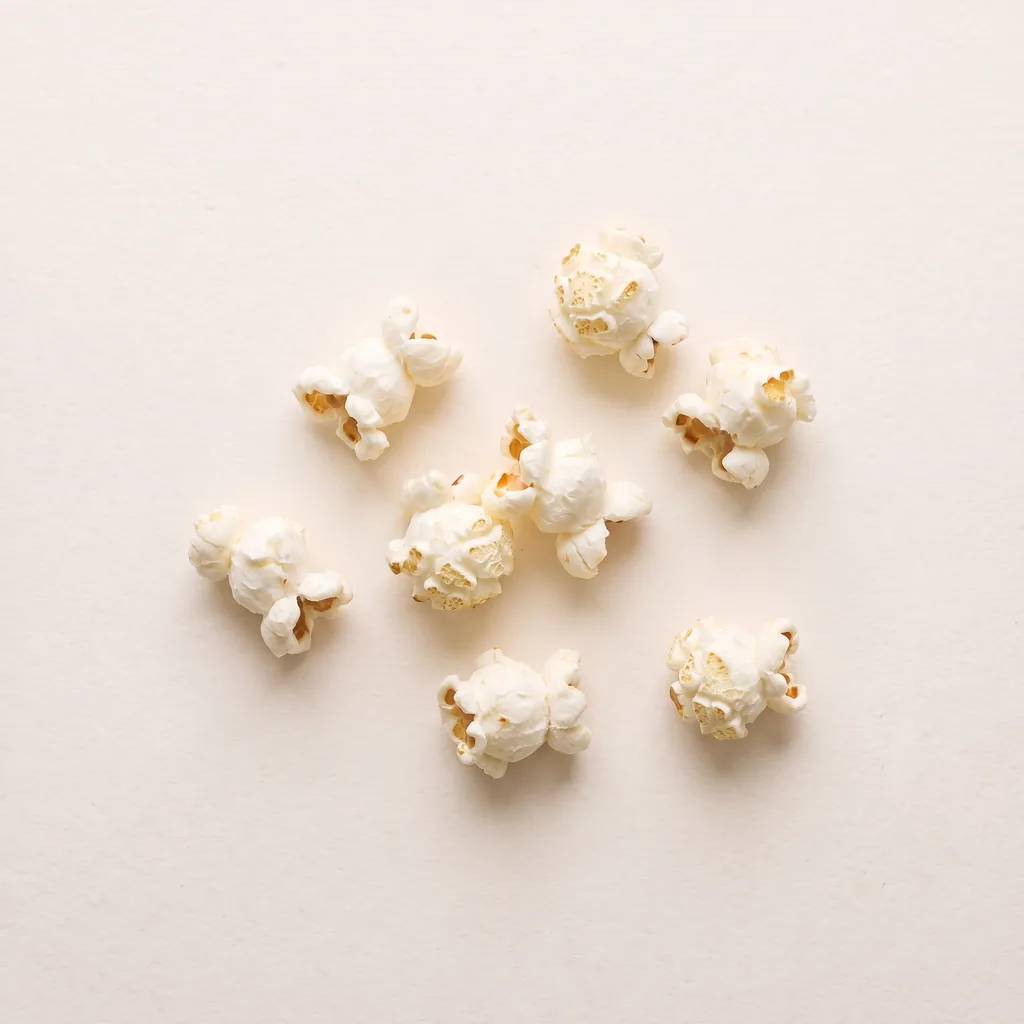
About popcorn
Popcorn is made by heating special corn kernels until they pop. It is a snack made from corn, which is native to the Americas, and it is eaten widely around the world.
After 4 years, if your child's chewing and swallowing skills are well developed, it can be offered under suitable conditions. But the risk never goes away completely.
Nutrition
Popcorn is a whole grain. It mainly provides carbohydrates and fiber. It also contains magnesium, phosphorus, zinc and some B vitamins.
It also contains plant compounds called polyphenols, which can act as antioxidants. But these compounds have not been shown to give children any special health benefit.
Plain popcorn with no added fat or salt differs in nutrition from products with added sugar, caramel, butter or a lot of salt.
Being nutritious does not mean it is safe for young children.
Also known as: popcorn, patlamış mısır, mısır patlağı
- Gluten-free
- Vegan
Choking risk
- Low
- Medium
- High
Popcorn is one of the foods with a high choking risk for young children.
Unpopped or half-popped kernels are hard. Fully popped pieces can also break apart in the mouth and slip into the airway. Thin pieces of hull can cause problems too.
The AAP (American Academy of Pediatrics, a professional body for child health) recommends not giving popcorn to children under 4 years.
After 4 years, your child should still sit upright while eating, be able to focus on the food and be watched by an adult.
If you see serious choking signs such as trouble breathing or being unable to cough effectively, call emergency services right away.
Allergen information
Corn is not one of the common food allergens. But in rare cases an allergic reaction to corn proteins can happen.
Corn is naturally gluten free. However, ready-made popcorn products may contain milk, soy or other allergens. Check the ingredient list on packaged products.
Allergic reactions can include hives, swollen lips, vomiting, coughing or wheezing. If you see serious signs such as trouble breathing or swelling of the tongue or throat, call emergency services right away.
The main reason popcorn is not recommended before 4 years is the choking risk, not allergy.
Frequently asked questions
What age can babies eat popcorn?
Is popcorn a common allergen?
Is popcorn a choking hazard for babies?
Can I give popcorn to my baby?
My child is 3. Can I give popcorn?
What can I serve instead of popcorn?
Why are unpopped kernels dangerous?
Sources
- American Academy of Pediatrics (AAP), HealthyChildren, Choking Prevention for Babies and Children
- CDC, Infant and Toddler Nutrition, Choking Hazards
- Antioxidants, Analysis of Popcorn (Zea Mays L. var. Everta) for Antioxidant Capacity and Total Phenolic Content (2019)
- Clinical and Experimental Allergy, Maize food allergy: a double‐blind placebo‐controlled study (2008)
- International Journal of Pediatric Otorhinolaryngology, Rigid tracheobronchoscopy in the management of airway foreign bodies: 10 years experience in Kosovo (2006)
Want to add this food to your baby's solid food calendar?
Join Lokmini to learn how this food is served at each age and to keep track of every food your baby tries.