Skip to content

Dietitian's view

It is hard to find a bagel option suitable for babies.

Lokmini is not a healthcare provider and does not offer health services. For your baby's specific needs, talk to your doctor or a dietitian.

  • Wheat and gluten allergen
  • Grains
  • 6 mo+
  • High choking risk

Bagel for babies: when to start

You can offer bagel once your baby is ready for solids, usually around 6 months. Serve it with care, though. Bagels and similar breads are a common choking hazard. They also contain wheat and may contain other common allergens. Do not give kinds made with honey before 12 months, because of the risk of infant botulism.

  • Carbohydrate
  • Fiber
  • Protein
  • Iron
  • Folate
  • Selenium
Bagel prepared for a babyAllergen, day 1/3

About bagel

The bagel comes from Eastern Europe. A traditional bagel is made from yeasted dough. The dough is shaped into a ring, boiled first, then baked. Today you can find sweet and savory kinds in many regions.

A bagel made with enriched flour supplies iron, folate, selenium and B vitamins.

Also known as: bagel, beygıl, simit benzeri halka ekmek

  • Vegan

Bagel is offered 3 days in a row

So that any reaction can be linked to the right food, bagel is offered 3 days in a row and no other new food is tried on those days.

  1. 1/3

    First taste

    Start with a small amount in the morning or around midday. Your baby is watched closely for 5 to 10 minutes after the first bite.

  2. 2/3

    Same food, same calm

    Bagel is offered again the same way. No other new food is tried today.

  3. 3/3

    Introduction done

    If no reaction was seen, bagel is now part of your baby's meals. It keeps being offered regularly.

Emergency

If your baby has trouble breathing or swelling of the face or tongue, call 911 (or your local emergency number) right away.

About bagel allergy

Yes, bagels contain common allergens. They contain wheat. Some kinds add sesame, egg or dairy, so read the label. Introduce each allergen on the ingredient list safely on its own first, then offer the bagel.

The World Health Organization lists wheat as a global priority allergen. It is among the most common food allergies in children. Luckily, two out of three children outgrow it by age 12.

Wheat allergy and celiac disease are different conditions. Wheat allergy may pass. Celiac disease needs a strict gluten-free diet for life. What people call gluten allergy is often celiac disease.

A rare condition is wheat-dependent, exercise-induced anaphylaxis. Working out in the hours right after eating wheat can bring on a severe allergic reaction. These people should avoid wheat in the 4 hours before hard exercise.

People with pollen food allergy syndrome, especially those allergic to grass pollen, may be sensitive to wheat. A mild, passing tingle, itch or sting around the lips and tongue is the usual sign. Sometimes belly pain, cramps, bloating or diarrhea join in. It is uncomfortable, but a dangerous reaction is unlikely.

If you suspect a wheat allergy, ask a child health professional before offering bagels at home. As with any new food, start with a small amount and watch closely. If nothing unusual happens, raise it gradually.

Read the label

Make sure every common allergen on the ingredient list has been tried safely before you move on to the bagel.
How to prepare it by age

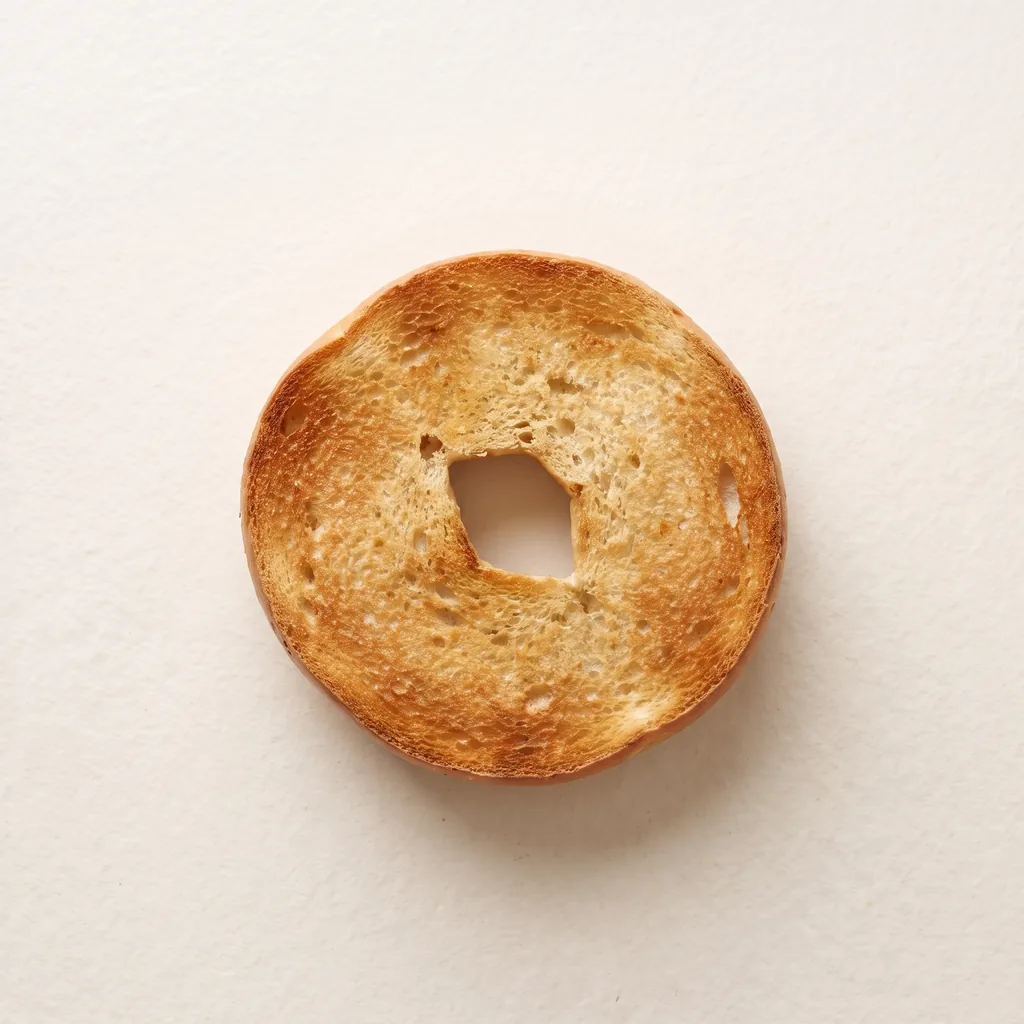
6 monthsSlice

Bagel prepared for 6 months

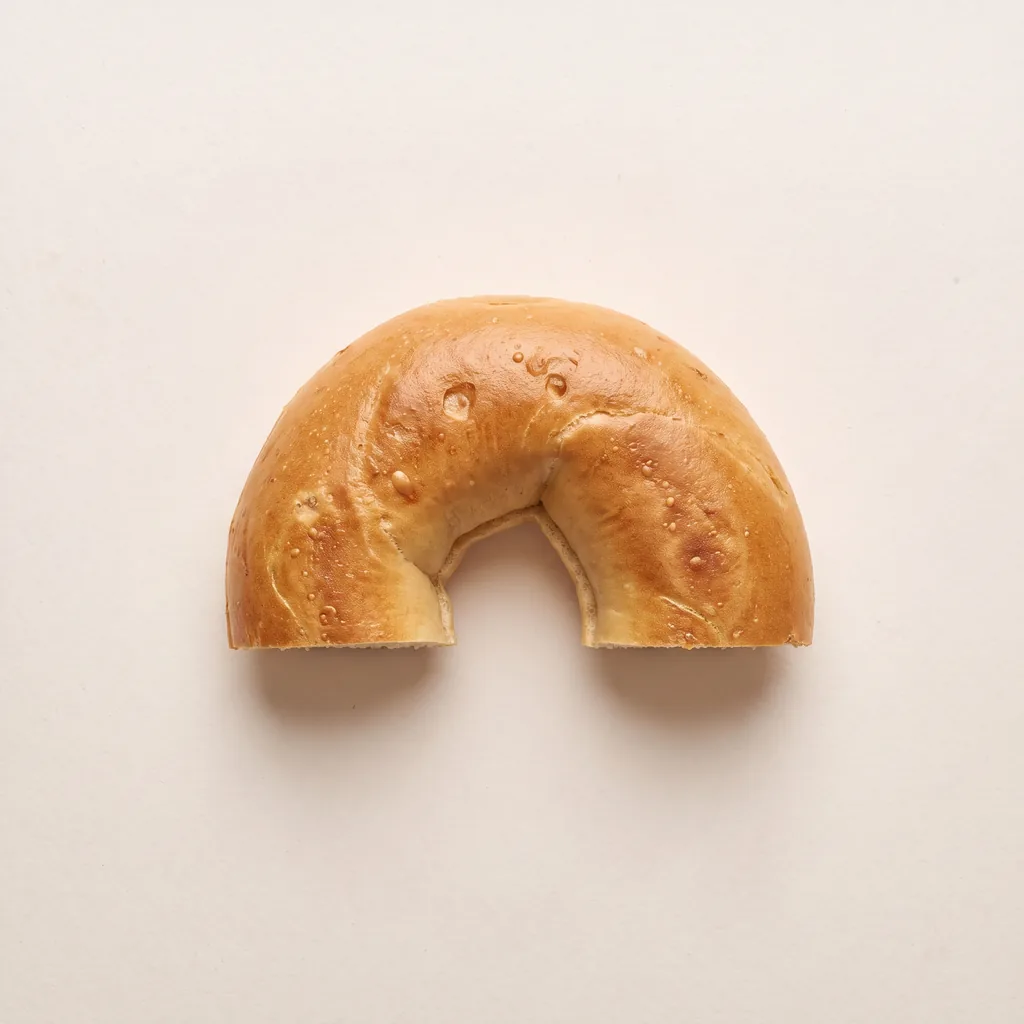
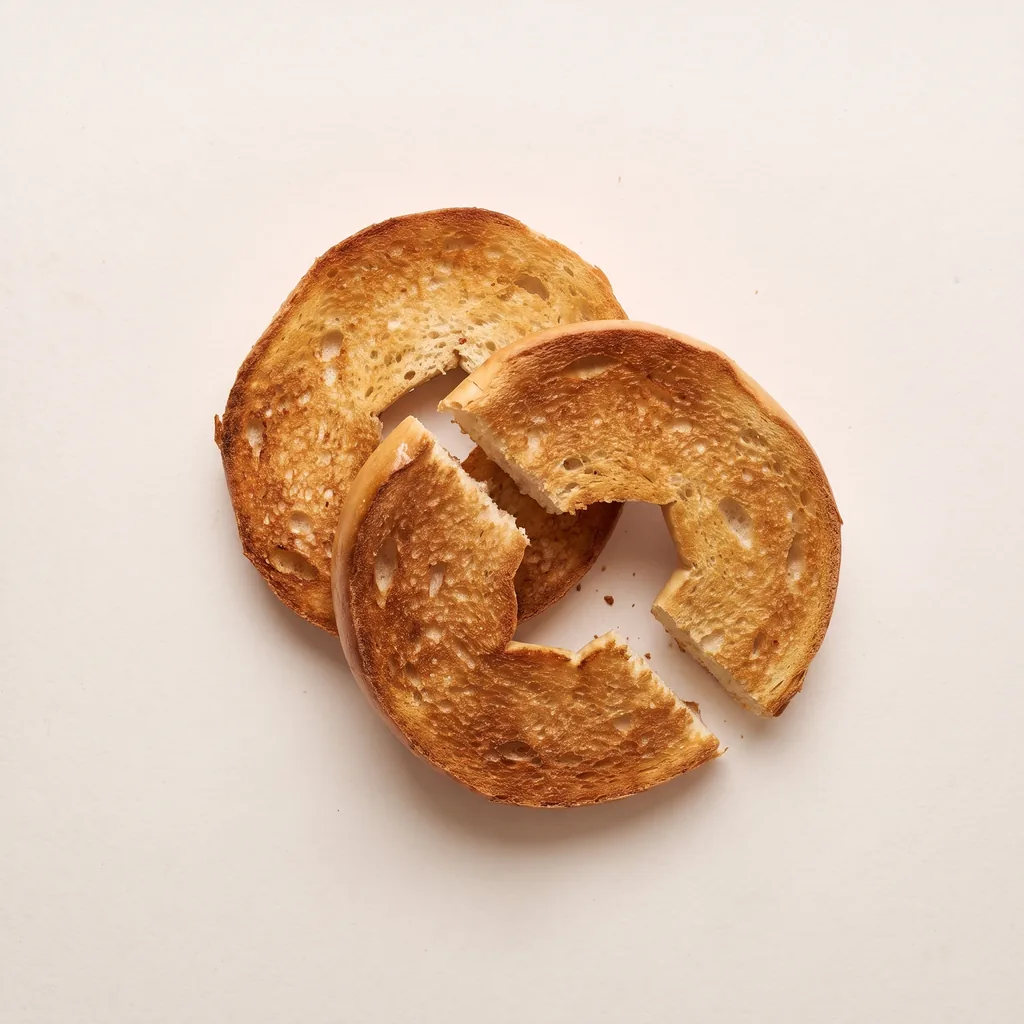
Toast the bagel well. Serve one half, or cut it into a half-ring shape. An untoasted bagel turns sticky with saliva and causes gagging. At this age the bagel works more as a chewing exercise than a filling meal. You can spread labneh, ricotta, whipped cream cheese, yogurt or a thinned nut or seed butter (without honey) on it. If a piece worries you, take it away and put something else down. Skip bagels with raisins, dried fruit or large seeds. Do not give bagels made with honey.

9 monthsCube

Offer a well-toasted half so your child can practice biting and tearing, or cut it into bite-size pieces. Untoasted bagel turns sticky. Good toppings include mashed avocado, fresh ricotta, hummus, whipped cream cheese and yogurt. A smooth nut or seed spread works too if it has no honey. Loosen it first and apply a film. Avoid kinds with dried fruit, large seeds or honey.

12 monthsSlice

Bagel prepared for 12 months

Keep serving the well-toasted bagel as halves or slices with a soft spread. At 18 months bagels can be toasted or not, and served as sandwiches. Kinds with dried fruit, candied citrus and large seeds can be tried as chewing skills improve. Watch closely a child who is not used to mixed textures.

Choking risk

  1. Low
  2. Medium
  3. High

Yes, bagels carry a choking risk. They resist chewing and tend to bunch into a sticky ball in the mouth.

Toast them well. Avoid kinds with dried fruit or large seeds. Stay close and within arm's reach while your baby eats.

Untoasted bagel

An untoasted bagel turns into a sticky lump in the mouth. Toast it well through 9 months.

Frequently asked questions

What age can babies eat bagel?

You can offer bagel once your baby is ready for solids, usually around 6 months. Serve it with care, though. Bagels and similar breads are a common choking hazard. They also contain wheat and may contain other common allergens. Do not give kinds made with honey before 12 months, because of the risk of infant botulism.

Is bagel a common allergen?

Yes, bagels contain common allergens. They contain wheat. Some kinds add sesame, egg or dairy, so read the label. Introduce each allergen on the ingredient list safely on its own first, then offer the bagel.

How do you prepare bagel for babies?

For a 6-month-old: Toast the bagel well. Serve one half, or cut it into a half-ring shape. An untoasted bagel turns sticky with saliva and causes gagging. At this age the bagel works more as a chewing exercise than a filling meal. You can spread labneh, ricotta, whipped cream cheese, yogurt or a thinned nut or seed butter (without honey) on it. If a piece worries you, take it away and put something else down. Skip bagels with raisins, dried fruit or large seeds. Do not give bagels made with honey.

Is bagel a choking hazard for babies?

Yes, bagels carry a choking risk. They resist chewing and tend to bunch into a sticky ball in the mouth.

Can babies eat gluten?

Yes, unless your child has celiac disease, a wheat allergy, or gluten sensitivity short of celiac. If you are concerned, ask a health professional.

Can I give a bagel with dried fruit?

Not to a young baby. Dried fruit and large seeds raise the choking risk. These kinds can be tried once chewing skills improve, around 18 months.

When can toddlers have bagel chips?

Save them for around 24 months, since they are hard, brittle and sharp. Your child should sit to eat and not be distracted.

Prepared by the Lokmini team | Last updated November 17, 2026

Share:WhatsApp

Want to add this food to your baby's solid food calendar?

Join Lokmini to learn how this food is served at each age and to keep track of every food your baby tries.

Join Lokmini

Starting Solids

When and how to start solids, and what happens in the first week?

Read the guide

Similar foods

Let's get ready for the first bite together

Lokmini builds a day-by-day plan for your baby's age. Leave your email for new guides and our newsletter.

Start Your Journey