Skip to content
  • Vegetables
  • 6 mo+
  • Low choking risk

Sweet potato for babies: when to start

Sweet potato (Ipomoea batatas) can be given once your baby is about 6 months old and ready for solids. In the early days, it can be cooked until fully soft and served mashed, pureed or as soft pieces that suit your baby's developmental skills.

  • Vitamin A
  • Vitamin C
  • Vitamin B6
  • Potassium
  • Zinc
  • Fiber
Sweet potato illustration

About sweet potato

Sweet potato is a root vegetable native to Central and South America and is grown in many parts of the world. It is known by different names such as camote, kumara, goguma and satsumaimo.

In some countries sweet potato is called yam, but true yams (Dioscorea species) are botanically different from sweet potato.

Nutrition

Sweet potato is a root vegetable that mainly provides carbohydrate and contains fiber. It also contains potassium, vitamin C, vitamin B6 and smaller amounts of some other vitamins and minerals.

Orange-fleshed varieties in particular are rich in beta-carotene, which the body can convert into vitamin A.

Sweet potato should not be seen as a food rich in zinc.

The nutrient makeup of sweet potato can vary with the variety and growing conditions. Purple-fleshed varieties can also contain other plant pigments such as anthocyanins.

Soil contaminants

Like other root vegetables, sweet potato can be exposed to contaminants in the soil it grows in, such as lead and arsenic. This cannot be fully ruled out for organically grown produce either.

But this possibility does not mean you need to avoid sweet potato. Wash it well and peel it, and include a variety of vegetables in your baby's diet. Variety can help limit ongoing exposure to contaminants that may come from the same food.

Also known as: batates, camote, ipomea, kumara, tatlı patates

  • Gluten-free
  • Vegan

How to prepare it by age

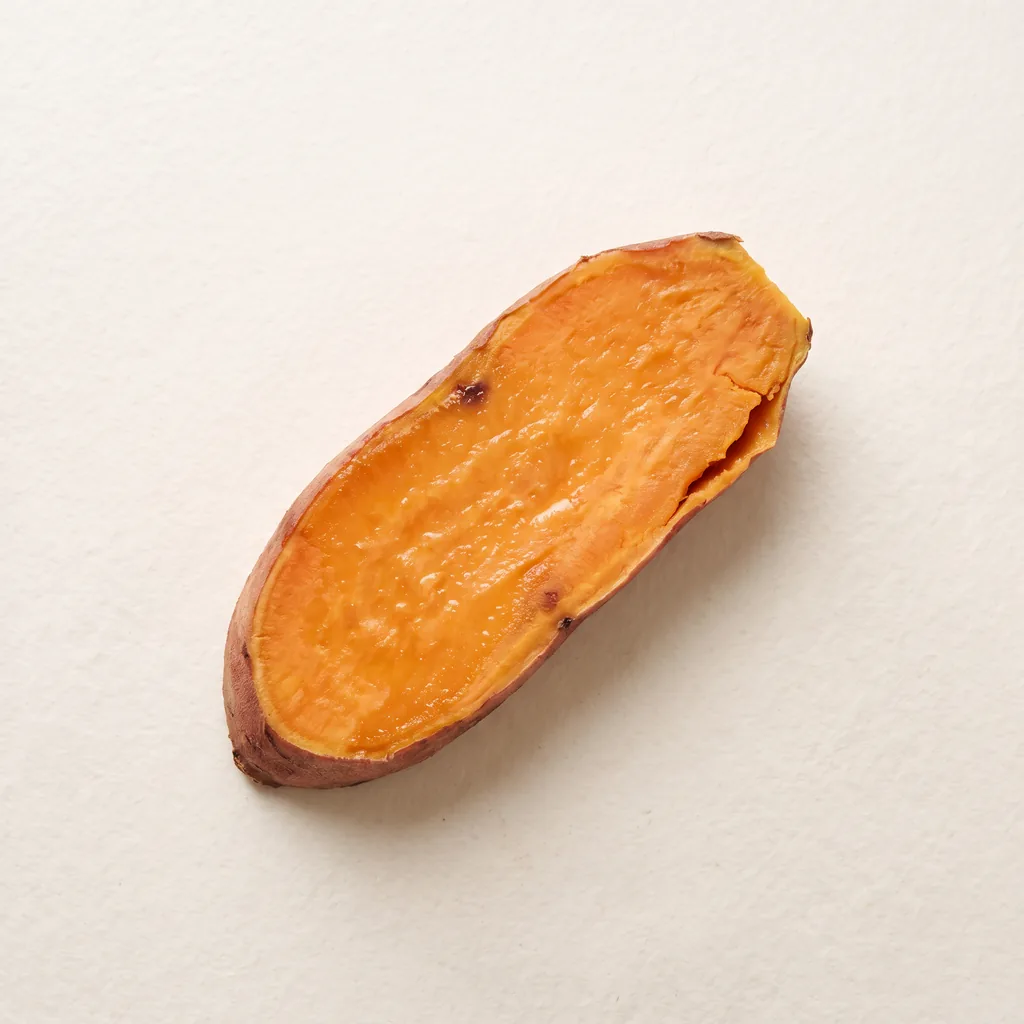
6 monthsSlice

Sweet potato prepared for 6 months

Cut: Thick wedge

Cook the sweet potato until completely soft and serve it in thick wedges your baby can hold. It does not matter whether the skin is on or off. If you serve it as a purée, you can loosen it with breast milk, formula, yogurt or butter. Pre-load the spoon and place it beside your baby to pick up.
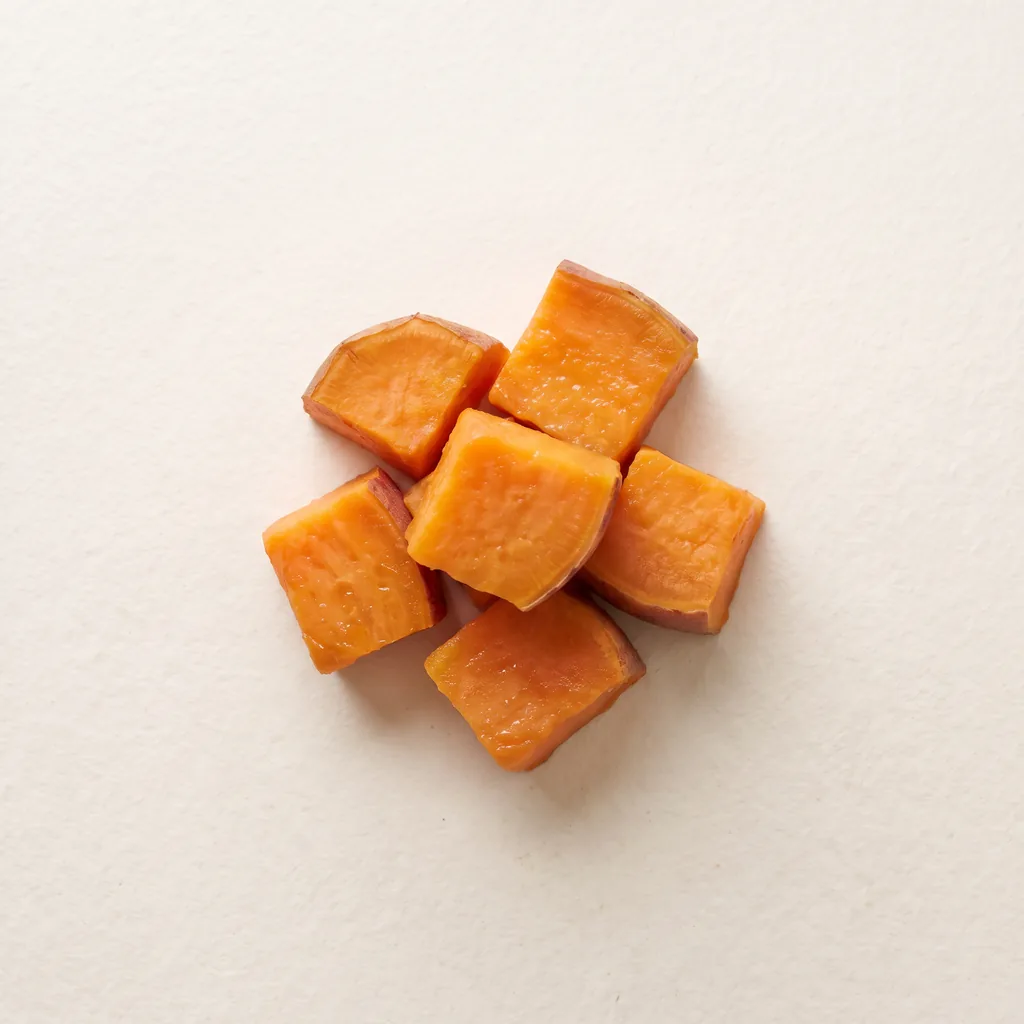
9 monthsCube

Sweet potato prepared for 9 months

Cut: Bite sized piece

Cut cooked sweet potato into bite-sized pieces for serving. You can also offer thick sticks so your baby practices biting. The pieces can be left unpeeled or peeled. You can keep serving purée.

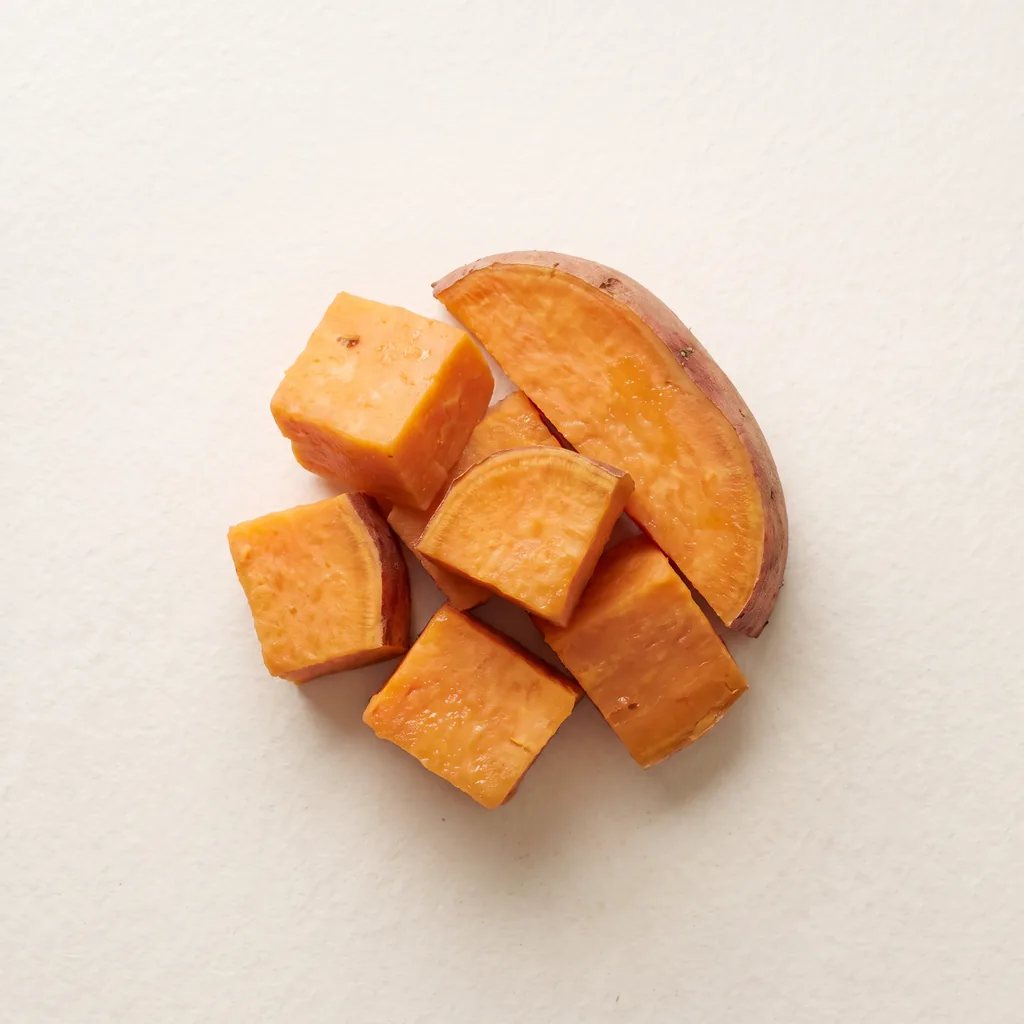
12 monthsCube

Sweet potato prepared for 12 months

Keep serving bite-sized pieces and larger wedges. Pre-load the fork and hand it to your child. Sweet potato spears onto a fork easily, so it is a comfortable food for learning fork use.

Choking risk

  1. Low
  2. Medium
  3. High

Fully cooked, soft sweet potato carries a low choking risk for babies when prepared properly. But no food is completely risk-free.

Do not give raw, undercooked or hard pieces of sweet potato. Cook sweet potato until it is soft enough to squash easily between your fingers. Remove tough or stringy skin and serve it in a way that suits your baby's developmental skills.

Make sure your baby sits upright during meals, avoid distractions, and always stay within arm's reach to watch them.

Allergen information

FPIES warning

It is one of the known triggers of FPIES (a delayed-onset food allergy). In this condition, repeated severe vomiting, pallor and lethargy may occur, usually 1-4 hours after the food is eaten. Diarrhea may appear later. These symptoms require urgent medical evaluation.

Sweet potato is not a usual cause of IgE-mediated allergy. Some allergy cases have been reported. Oral allergy syndrome has also been reported. It gives a brief itch in the mouth and is not expected to be dangerous. Cooking may ease the reaction.

FPIES warning

Sweet potato can trigger a delayed allergy called FPIES. It is uncommon in children but can be severe. The reaction comes hours later, not within minutes. Vomiting can start 1 to 4 hours after eating, and diarrhea 5 to 10 hours after. Pallor, low body temperature, low blood pressure and fluid loss can follow. Most children outgrow it fully in early childhood. A child with a diagnosis needs close follow-up by an allergist. If your baby has FPIES to another food, ask the allergist before adding new solids.

Start with a small amount for the first servings. If there is no reaction, increase it slowly.

Delayed reaction

If repeated vomiting starts hours after eating, get urgent help.

Frequently asked questions

What age can babies eat sweet potato?

Sweet potato (Ipomoea batatas) can be given once your baby is about 6 months old and ready for solids. In the early days, it can be cooked until fully soft and served mashed, pureed or as soft pieces that suit your baby's developmental skills.

Is sweet potato a common allergen?

Sweet potato is not a usual cause of IgE-mediated allergy. Some allergy cases have been reported. Oral allergy syndrome has also been reported. It gives a brief itch in the mouth and is not expected to be dangerous. Cooking may ease the reaction.

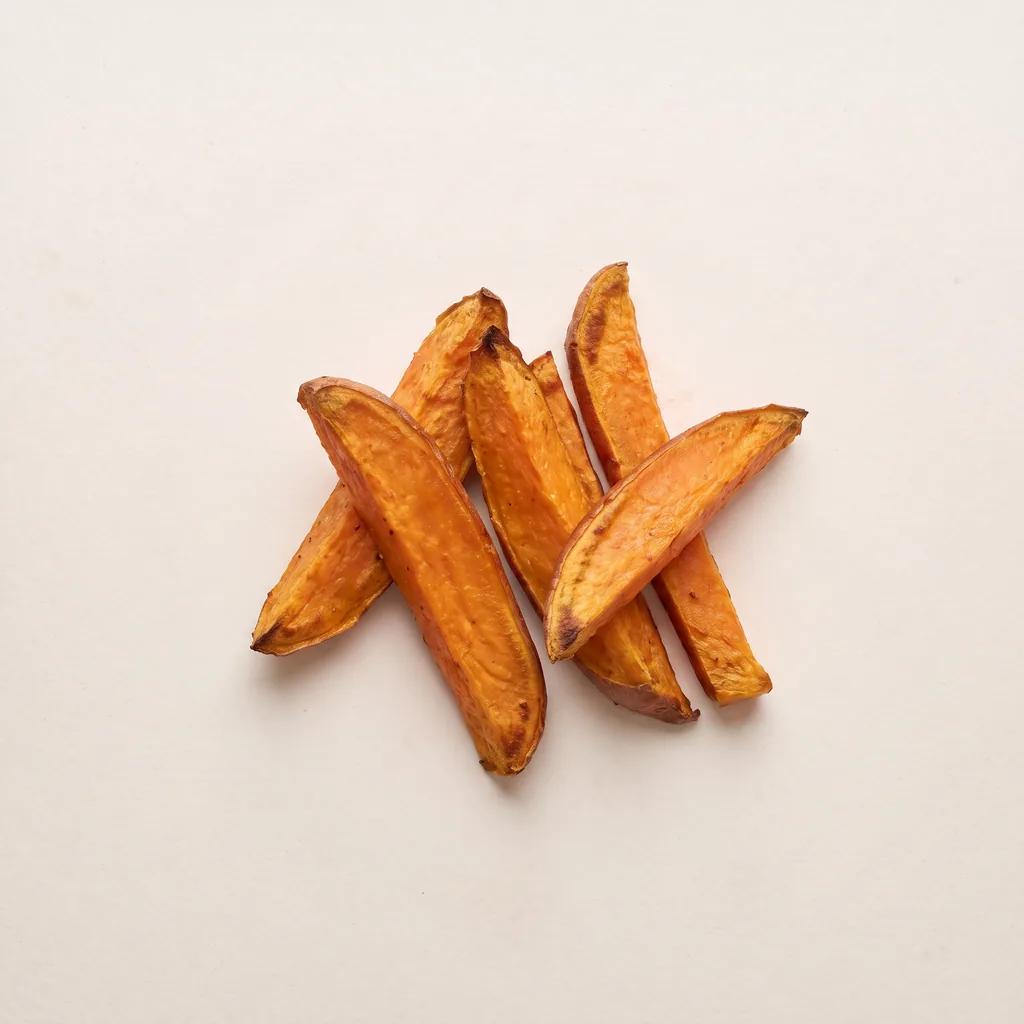
How do you prepare sweet potato for babies?

For a 6-month-old: Cook the sweet potato until completely soft and serve it in thick wedges your baby can hold. It does not matter whether the skin is on or off. If you serve it as a purée, you can loosen it with breast milk, formula, yogurt or butter. Pre-load the spoon and place it beside your baby to pick up.
Is sweet potato a choking hazard for babies?

Fully cooked, soft sweet potato carries a low choking risk for babies when prepared properly. But no food is completely risk-free.

Do I need to peel sweet potato?

No, you do not have to peel it. But removing the skin can make it easier to eat, especially when starting solids. If the skin is fully soft, it can stay on. Remove skin that is tough, stringy or comes apart in the mouth and makes chewing harder.

Is sweet potato the same as yam?

No. Sweet potato (Ipomoea batatas) and yam (Dioscorea species) are botanically different plants. The mix-up comes from the name yam being used for some sweet potato varieties in North America.

Does sweet potato contain heavy metals?

Like other root vegetables, sweet potato can be exposed to contaminants in the soil it grows in, such as lead and arsenic. This cannot be fully ruled out for organic produce either. But it does not mean every sweet potato contains harmful amounts of heavy metals. You do not need to avoid sweet potato. Wash it well, peel it when needed, and include a variety of vegetables in your baby's diet.

Prepared by the Lokmini team | Last updated November 19, 2026

Share:WhatsApp

Want to add this food to your baby's solid food calendar?

Join Lokmini to learn how this food is served at each age and to keep track of every food your baby tries.

Join Lokmini

Starting Solids

When and how to start solids, and what happens in the first week?

Read the guide

Similar foods

Let's get ready for the first bite together

Lokmini builds a day-by-day plan for your baby's age. Leave your email for new guides and our newsletter.

Start Your Journey