Skip to content

Dietitian's view

Give mango well ripened and peeled.

Lokmini is not a healthcare provider and does not offer health services. For your baby's specific needs, talk to your doctor or a dietitian.

  • Fruits
  • 6 mo+
  • Medium choking risk

Mango for babies: when to start

Mango (Mangifera indica) can be offered once your baby is about 6 months old and ready for solids. Choose ripe, soft mangoes that mash easily. Remove the hard pit and the skin, and prepare it to suit your baby's developmental skills.

  • Vitamin A
  • Vitamin B6
  • Vitamin C
  • Vitamin E
  • Vitamin K
  • Potassium
Mango prepared for a baby

About mango

Mango comes from South Asia and is now grown in many tropical regions of the world. There are hundreds of varieties, and their color, texture and sweetness differ. Tommy Atkins, Ataulfo and Kesar are among the well-known varieties.

Nutrition

Besides its high water content, mango provides carbohydrates, fiber and vitamin C. It also contains beta-carotene (a provitamin A), folate, vitamin B6, and small amounts of vitamins E and K and potassium.

Mango also contains mangiferin and various phenolic compounds. Their antioxidant properties are being studied, but they have not yet been shown to give babies a direct health benefit.

Also known as: mango, mango çekirdeği, yeşil mango, ham mango

  • Gluten-free
  • Vegan

How to prepare it by age

6 monthsStrip or mash
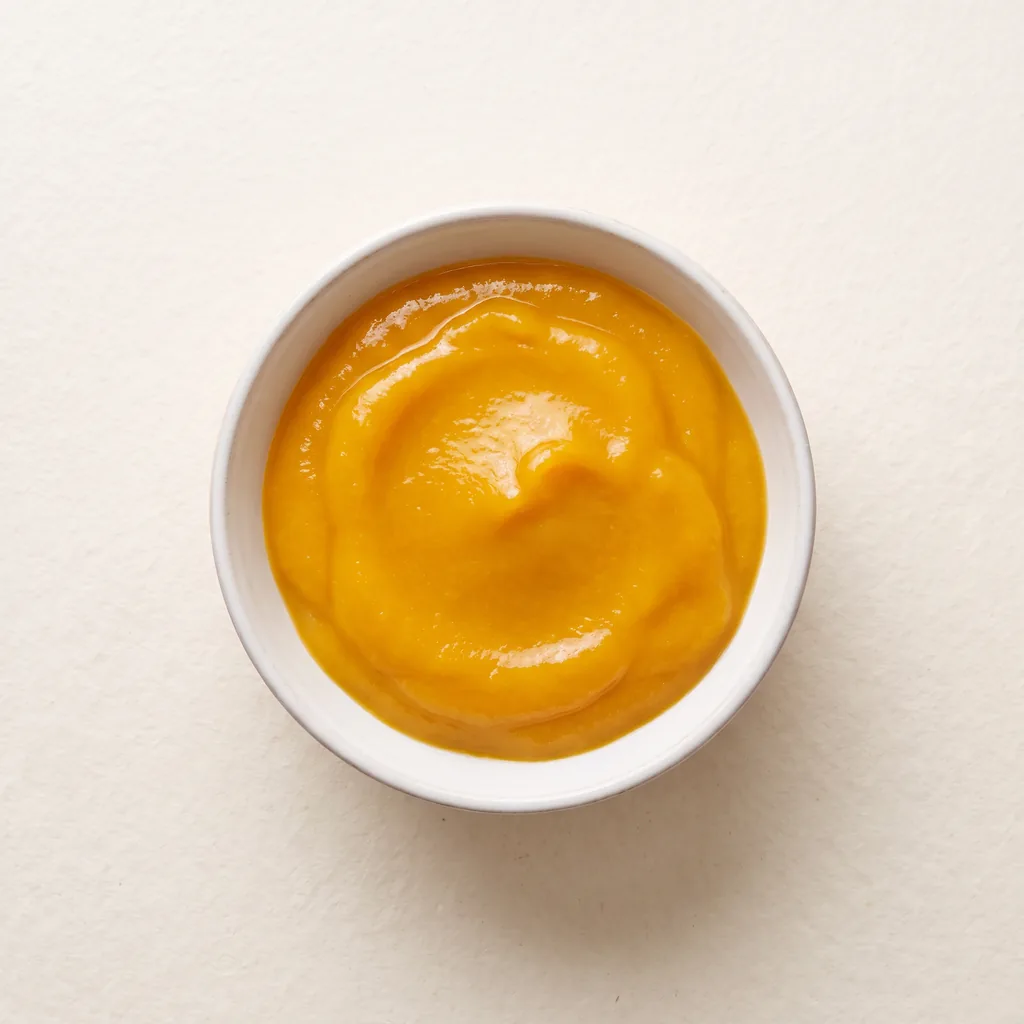
Mango prepared for 6 months

Cut: Finger strip

Peel a ripe mango. Cut the flesh off the pit into long spears. The fruit should be ripe enough to squash when pressed lightly between thumb and forefinger. Holding the spear out in the air helps baby grab it. To cut the slipperiness, roll the spear in grated coconut or crushed whole grain cereal.

Cut: Finely chopped

Mince the mango very fine and place it on a scoopable food such as yogurt or ricotta. A peeled pit with most of the flesh scraped off is also a low-risk mouth workout at this age. It helps baby build mouth movements. If the pit slips, roll it in grated coconut or infant cereal.
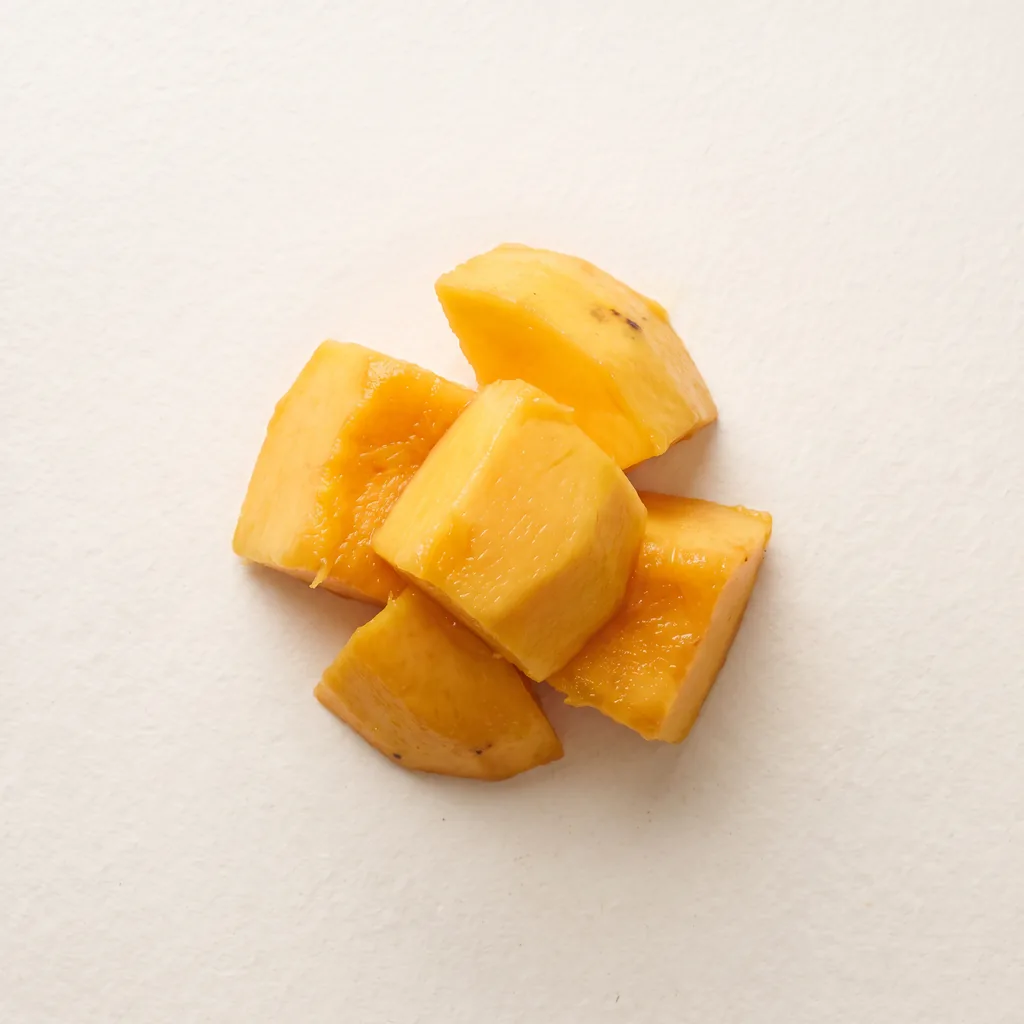
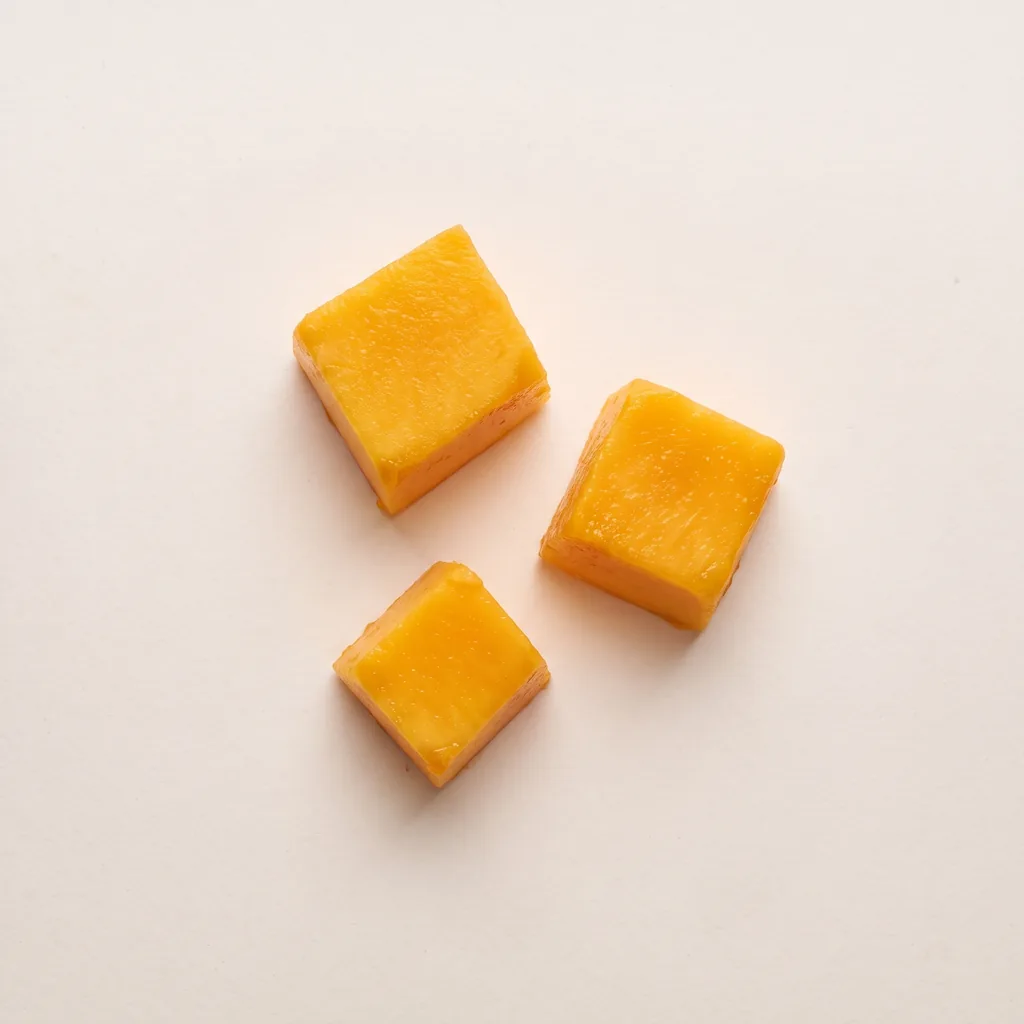
9 monthsCube

Mango prepared for 9 months

Cut: Bite sized piece

Keep offering spears and pits. Once baby's pincer grasp has developed, offer bite-sized pieces by hand or on a fork you have loaded in advance. The mango should still be ripe enough to squash easily.

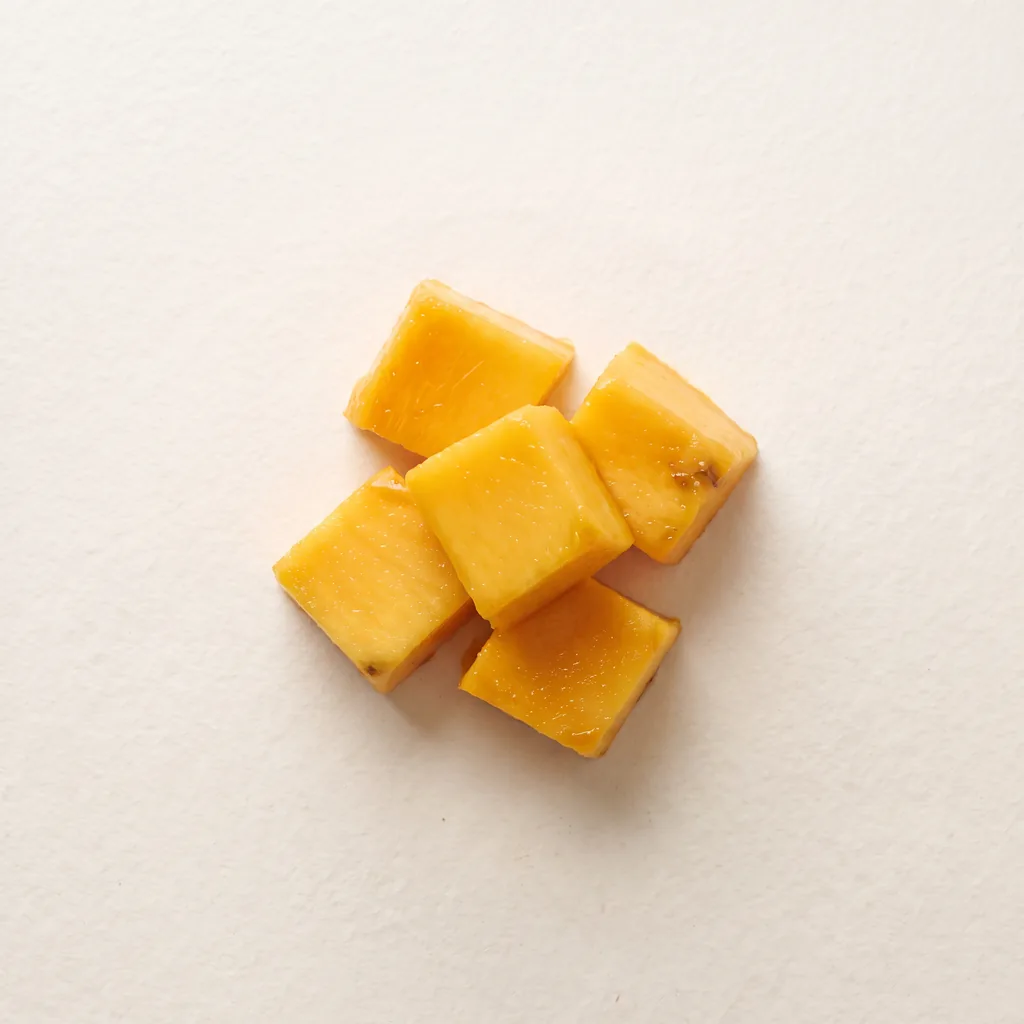
12 monthsCube

Mango prepared for 12 months

Cut: Bite sized piece

Serve ripe mango in small cubes as finger food. Add a fork to encourage using utensils. Spear a piece ahead of time and rest the fork beside the fruit so the child can try to pick it up.

Choking risk

  1. Low
  2. Medium
  3. High

The firm texture of unripe mango and the slippery texture of ripe mango can raise the choking risk for babies. The hard pit is also a hazard.

Offer your baby fully ripe mango that squashes easily between your fingers. Remove the skin and the pit. Prepare the fruit mashed or in soft pieces that suit your baby's developmental skills.

Your baby should sit upright throughout the meal and always be supervised.

Allergen information

Mango allergy is rare, but it can cause allergic reactions in some people. Cross-reactions can occur in people sensitive to latex or certain pollens. Signs can include itching in the mouth, swollen lips, hives or digestive complaints.

Mango is in the same plant family as cashew and pistachio. Although cross-reactions between some allergens have been reported, this does not mean everyone with a cashew or pistachio allergy will also be allergic to mango. If your baby has a known serious nut allergy, talk to an allergy specialist before the first serving.

When you first offer mango, start with a small amount and watch how your baby responds. If marked swelling, hives or repeated vomiting develop, stop giving mango and see a health professional. If your baby has trouble breathing, call emergency services right away.

Skin contact

Mango skin and the sap near the skin can cause contact dermatitis, with itching, redness and a rash, in sensitive people. This reaction can also happen in people who are sensitive to poison ivy. When serving mango to your baby, peel it and separate the flesh from the skin.

Frequently asked questions

What age can babies eat mango?

Mango (Mangifera indica) can be offered once your baby is about 6 months old and ready for solids. Choose ripe, soft mangoes that mash easily. Remove the hard pit and the skin, and prepare it to suit your baby's developmental skills.

Is mango a common allergen?

Mango allergy is rare, but it can cause allergic reactions in some people. Cross-reactions can occur in people sensitive to latex or certain pollens. Signs can include itching in the mouth, swollen lips, hives or digestive complaints.

How do you prepare mango for babies?

For a 6-month-old: Peel a ripe mango. Cut the flesh off the pit into long spears. The fruit should be ripe enough to squash when pressed lightly between thumb and forefinger. Holding the spear out in the air helps baby grab it. To cut the slipperiness, roll the spear in grated coconut or crushed whole grain cereal.

Is mango a choking hazard for babies?

The firm texture of unripe mango and the slippery texture of ripe mango can raise the choking risk for babies. The hard pit is also a hazard.

Can I give my baby a mango pit?

Yes, a peeled pit with most flesh scraped off is a low-risk mouth workout at 6 months. Do not give the pit to a baby who is allergic to cashew or pistachio.

Can babies have dried mango?

Hold off until close to age 2. It carries choking risk and may contain sulfites. A feeding therapist may use it for chewing practice.

Why can mango skin cause a rash?

Mango skin and the sap near the skin contain compounds that can cross-react with urushiol from poison ivy. In sensitive people, touching it can cause redness, itching and a rash. The risk is usually lower in the flesh of the fruit, but it is not zero. Peel the mango before serving it to your baby.

Prepared by the Lokmini team | Last updated November 19, 2026

Share:WhatsApp

Want to add this food to your baby's solid food calendar?

Join Lokmini to learn how this food is served at each age and to keep track of every food your baby tries.

Join Lokmini

Starting Solids

When and how to start solids, and what happens in the first week?

Read the guide

Similar foods

Let's get ready for the first bite together

Lokmini builds a day-by-day plan for your baby's age. Leave your email for new guides and our newsletter.

Start Your Journey