Dietitian's view
Herring is not a reliable food.
Lokmini is not a healthcare provider and does not offer health services. For your baby's specific needs, talk to your doctor or a dietitian.
- Fish allergen
- Proteins
- 6 mo+
- Low choking risk
Herring for babies: when to start
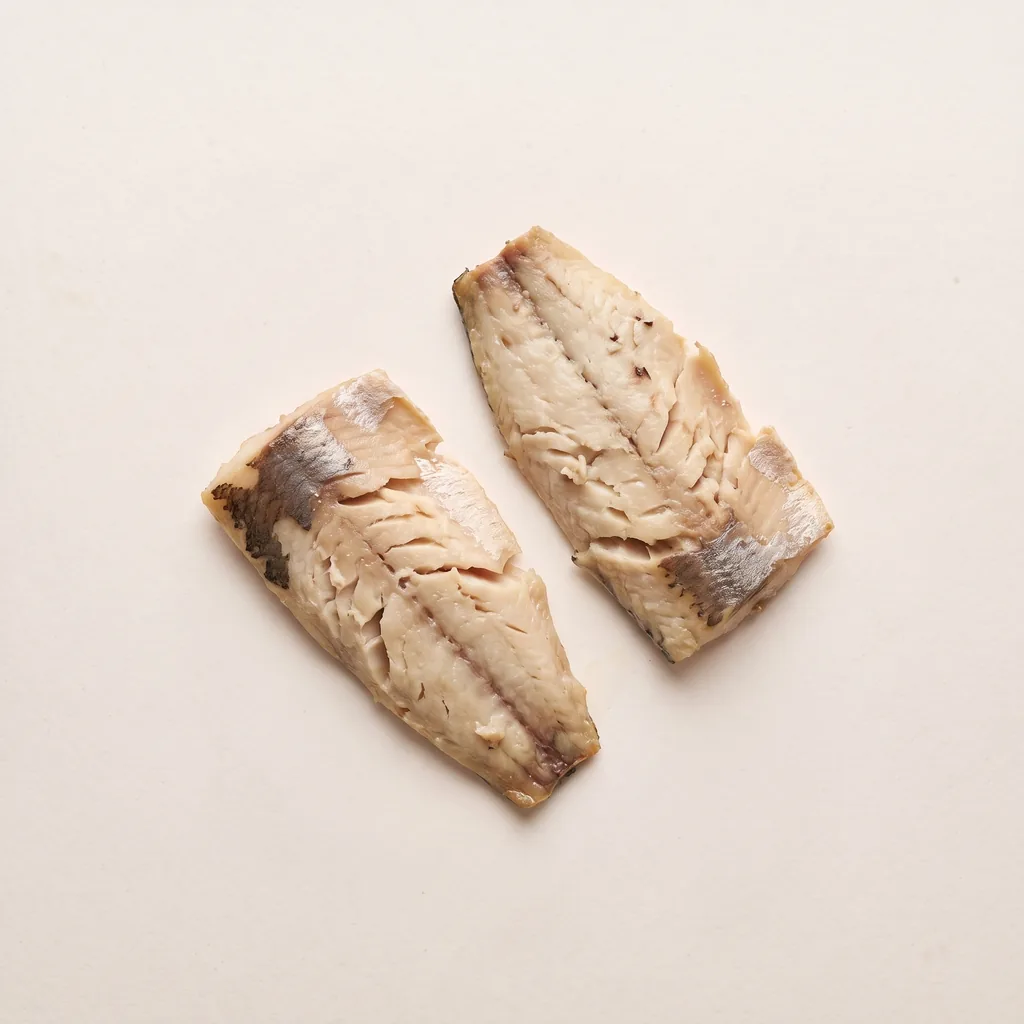
Herring can be offered once your baby is ready for solids, usually around 6 months. Pick Pacific herring over Atlantic when you can. Avoid herring caught in the Baltic Sea. A rinse under running water lowers the sodium in canned fish.
- Protein
- Omega-3 (DHA)
- Vitamin B12
- Vitamin D
- Vitamin E
- Selenium
 Allergen, day 1/3
About herring
When to start
Herring is a small forage fish that lives in cold water. It migrates in huge schools along coasts and in open sea. Most commercial herring comes from northern waters. Its shiny skin earned it the nickname silver of the sea. For hundreds of years it has been a staple for Jewish communities and for coastal regions in the north. Pickled herring is still a favorite on holiday tables. It is sold under many names, such as bloater, kipper, matjes, rollmops, sild, and surströmming.
Why it matters
Herring gives plenty of protein and all the essential amino acids. It carries omega-3 fats, including DHA. DHA contributes to the maintenance of normal vision. Herring is a very rich source of vitamin B12 and has other B vitamins too. Few foods contain vitamin D naturally, and herring is one of them. Vitamin D is needed for normal growth and development of bone in children. It also has vitamin E, selenium, and iron.
Herring has less mercury than many other fish. Mercury is a heavy metal that babies are very sensitive to. Herring is among the low-mercury fish.
Mercury and the Baltic Sea
Atlantic herring is low in mercury, though it can carry a little more than Pacific herring. Baltic herring has been found to hold more dioxins and PCBs than herring from other regions. These compounds can disturb thyroid hormone function.
Also known as: ringa, salamura ringa, füme ringa, kipper, matjes, rollmops
- Gluten-free
- Contains fish
Herring is offered 3 days in a row
So that any reaction can be linked to the right food, herring is offered 3 days in a row and no other new food is tried on those days.
- 1/3
First taste
Start with a small amount in the morning or around midday. Your baby is watched closely for 5 to 10 minutes after the first bite.
- 2/3
Same food, same calm
Herring is offered again the same way. No other new food is tried today.
- 3/3
Introduction done
If no reaction was seen, herring is now part of your baby's meals. It keeps being offered regularly.
Emergency
If your baby has trouble breathing or swelling of the face or tongue, call 911 (or your local emergency number) right away.
About herring allergy
FPIES warning
It is one of the known triggers of FPIES (a delayed-onset food allergy). In this condition, repeated severe vomiting, pallor and lethargy may occur, usually 1-4 hours after the food is eaten. Diarrhea may appear later. These symptoms require urgent medical evaluation.
Finned fish are on the World Health Organization's list of global priority allergens. Only about 0.2 percent of people worldwide are thought to be allergic to finned fish. Rates in children are even lower than in adults. About 40 percent of people with fish allergy have their first reaction as adults. Most do not outgrow it.
Some people also react to proteins that float into the air while fish cooks. If that is the case for your baby, you may want to avoid cooking fish at home while the baby is present.
About half of people allergic to one fish react to other fish as well. The main allergen, beta-parvalbumin, is found in most fish. Because of cross-contact and mislabeling, allergists often advise people allergic to one finned fish to avoid all of them. If your baby is allergic to herring, ask an allergist before offering any other fish.
FPIES
FPIES is a slow-onset allergy, and fish is one of its recognized triggers. Repeated vomiting and diarrhea begin a few hours after eating. Untreated, it can cause serious fluid loss. FPIES to fish can show up later in life and often lasts for life.
Scombroid poisoning is not an allergy
Histamine builds up in fish that was not kept cold enough. Someone who eats it can get symptoms that look like an allergy. Keeping fish properly cold lowers this risk.
First try
If you suspect fish allergy in your baby, talk to an allergist before offering herring. The first time, give a small amount and watch closely. When it goes well, raise the portion slowly. Once a common allergen has been introduced, it helps to keep it in the diet, about twice a week if possible. That does not mean each species must appear several times a week. All finned fish carry the same main proteins, so you can rotate the fish by availability and preference.
How to prepare it by age
Age-by-age prep is in the Lokmini app
See how to cut, texture and serve herring at 6 and 12 months in the app.
Join LokminiChoking risk
- Low
- Medium
- High
Choking on the fish itself is unusual, yet the small bones can cause trouble. Herring, sardines and other small fish have such fine bones that even a fishmonger cannot take them out of fresh or frozen fish. Canning softens the bones and makes them safe for babies and toddlers.
With bones or without, stay near your baby during meals. Set up a safe eating space. In theory, any food can cause choking.
Frequently asked questions
What age can babies eat herring?
Is herring a common allergen?
Is herring a choking hazard for babies?
Can babies have canned herring?
Which herring should I choose?
How often should I serve herring?
Sources
- Pediatric Allergy and Immunology, Fish and shellfish allergy in children: Review of a persistent food allergy (2012)
- Current Allergy and Asthma Reports, James JM, Crespo JF. Current Allergy and Asthma Reports 7:167-174 (2007)
- Journal of Preventive Medicine and Public Health, Environmental Mercury and Its Toxic Effects (2014)
- Environmental Health Perspectives, Mercury Exposure from Domestic and Imported Estuarine and Marine Fish in the U.S. Seafood Market (2007)
- Allergy Proceedings, Sensitization to Inhalant Allergens in Children Diagnosed with Food Hypersensitivity (1995)
Prepared by the Lokmini team | Last updated November 17, 2026
Want to add this food to your baby's solid food calendar?
Join Lokmini to learn how this food is served at each age and to keep track of every food your baby tries.