Skip to content

Dietitian's view

Halibut is an allergen food and may contain mercury.

Lokmini is not a healthcare provider and does not offer health services. For your baby's specific needs, talk to your doctor or a dietitian.

  • Fish allergen
  • Proteins
  • 6 mo+
  • Medium choking risk

Halibut for babies: when to start

Halibut can be offered in moderation once your baby is ready for solids, usually around 6 months. It holds a moderate level of mercury. Mercury is a toxic metal that babies are especially sensitive to, and no safe level of exposure is known.

  • Protein
  • Omega-3
  • Vitamin D
  • Selenium
  • B vitamins
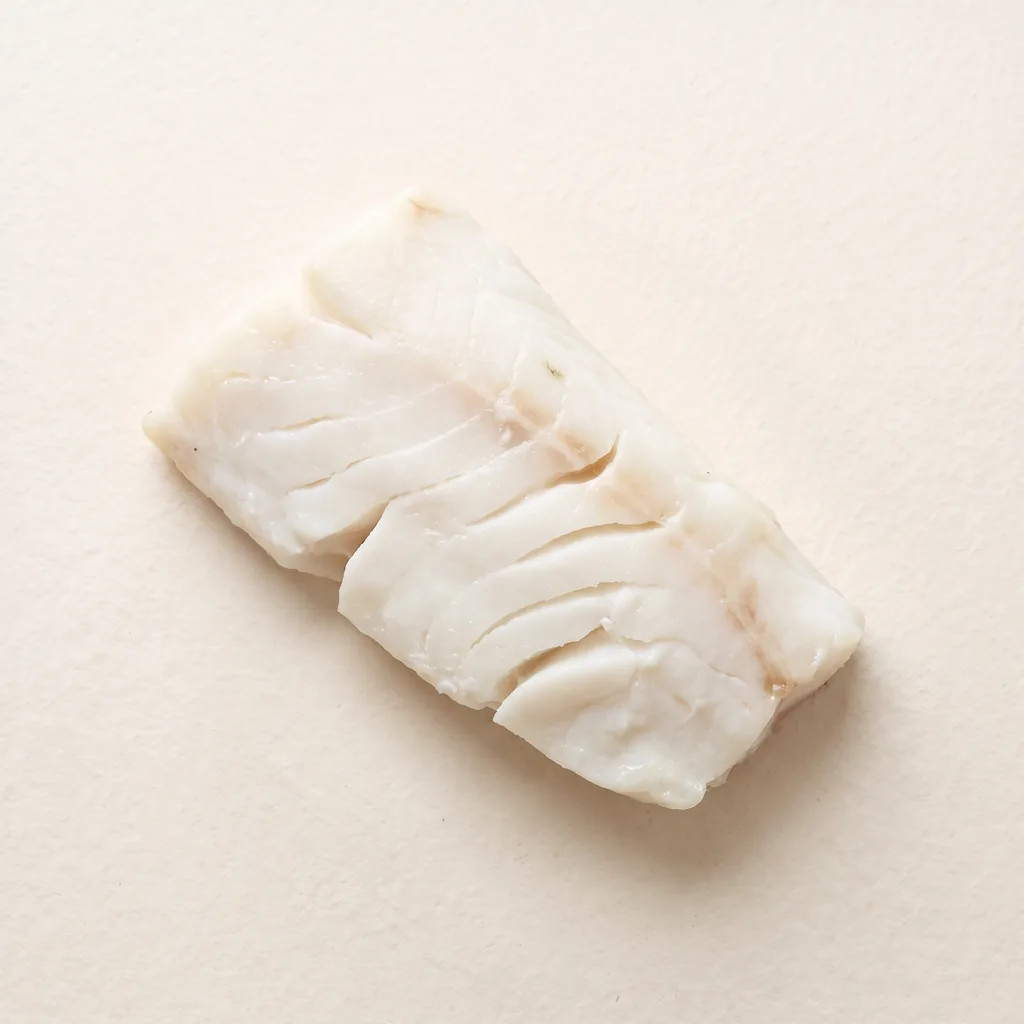
Halibut prepared for a babyAllergen, day 1/3

About halibut

Note

FDA lists halibut as a good choice: up to 1 serving a week (about 1 oz for ages 1 to 3).

When to start

Halibut is a flatfish of northern coastal waters. Wild halibut grows quite large, and it is also raised in tanks and offshore farms. Larger fish live longer, so they take in more mercury and other toxins.

Why it matters

Protein and omega-3 fats are plentiful in halibut. It also has B vitamins, vitamin D and selenium.

Also known as: halibut balığı, pisi halibut, büyük pisi

  • Gluten-free
  • Contains fish

Halibut is offered 3 days in a row

So that any reaction can be linked to the right food, halibut is offered 3 days in a row and no other new food is tried on those days.

  1. 1/3

    First taste

    Start with a small amount in the morning or around midday. Your baby is watched closely for 5 to 10 minutes after the first bite.

  2. 2/3

    Same food, same calm

    Halibut is offered again the same way. No other new food is tried today.

  3. 3/3

    Introduction done

    If no reaction was seen, halibut is now part of your baby's meals. It keeps being offered regularly.

Emergency

If your baby has trouble breathing or swelling of the face or tongue, call 911 (or your local emergency number) right away.

About halibut allergy

FPIES warning

It is one of the known triggers of FPIES (a delayed-onset food allergy). In this condition, repeated severe vomiting, pallor and lethargy may occur, usually 1-4 hours after the food is eaten. Diarrhea may appear later. These symptoms require urgent medical evaluation.

Yes. The World Health Organization lists finned fish as a global priority allergen, and halibut is among the fish that most often cause allergy, along with cod, salmon, and tuna. About 0.2 percent of people worldwide are estimated to have a finned fish allergy, and in children it is often lower still. Around 40 percent of those with the allergy first react in adulthood. Most do not outgrow it.

Some people react to proteins that rise into the air while fish cooks. If this applies to your baby, you may skip cooking fish at home while the baby is there.

About half of people allergic to one fish react to others. The main allergen, beta-parvalbumin, is found in most fish. Because of cross-contact and mislabeling risks, allergists often advise avoiding all finned fish until it is clear which are safe. If your baby is allergic to halibut, ask your allergist before offering any other fish.

Finned fish can trigger FPIES, a delayed reaction. Repeated vomiting and diarrhea start a few hours after eating, and without treatment it can cause serious dehydration. FPIES to fish can begin later in life and usually stays for good.

Scombroid poisoning can be mistaken for fish allergy. When fish is not kept cold enough, histamine builds up in it and causes allergy-like symptoms. Proper cold storage lowers the risk.

If seafood allergy runs in your family, or you suspect a fish allergy, see an allergist before halibut. Give a small amount the first time and watch your baby. If all is well, raise the portion slowly. Once an allergen is in, keep it in the diet, twice a week if possible. Finned fish share the same main proteins, so rotating varieties is enough.

If in doubt, ask first

If seafood allergy runs in the family, or you suspect a fish allergy, talk to an allergist before starting halibut.
How to prepare it by age

6 monthsStrip or mash

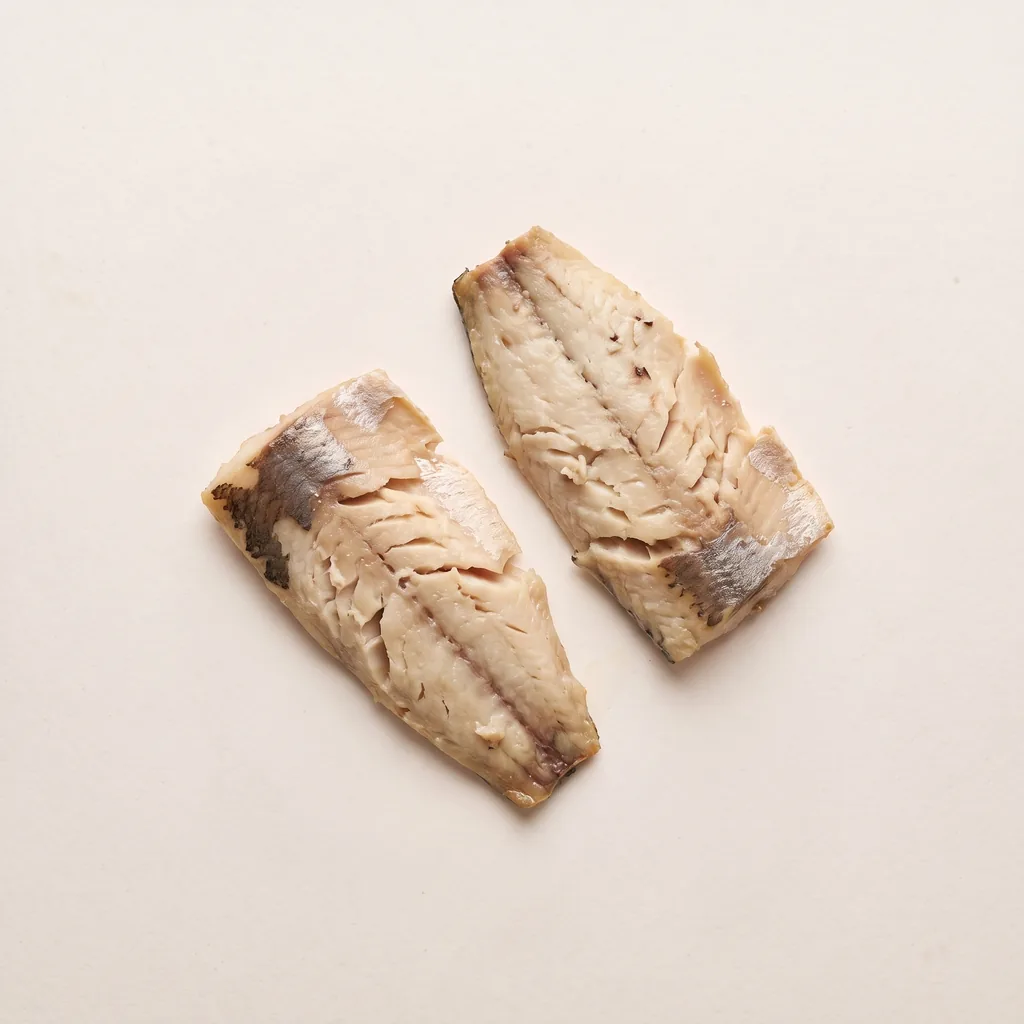
Halibut prepared for 6 months

Cut: Finger strip

Offer well-cooked halibut, skin and bones removed, as strips roughly two adult pinkies wide, laid together.

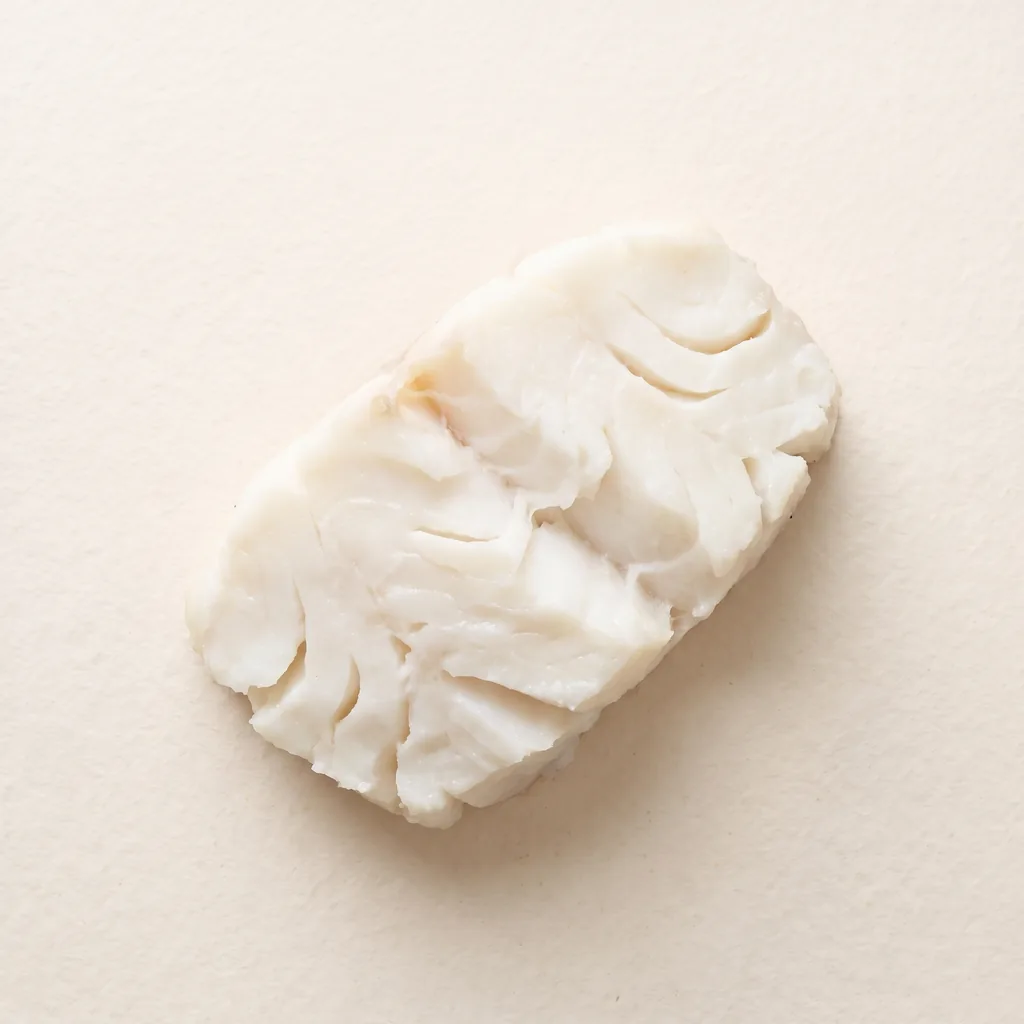
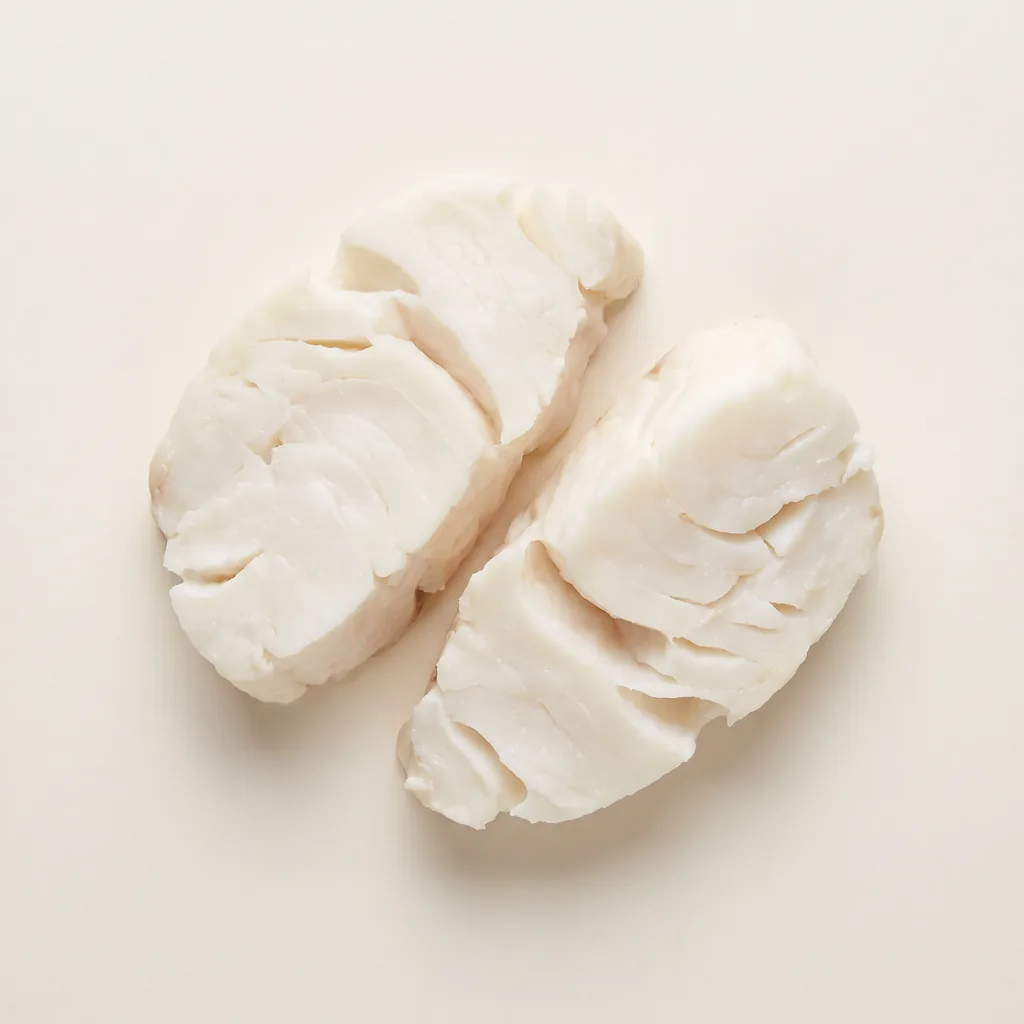
Cut: Shredded

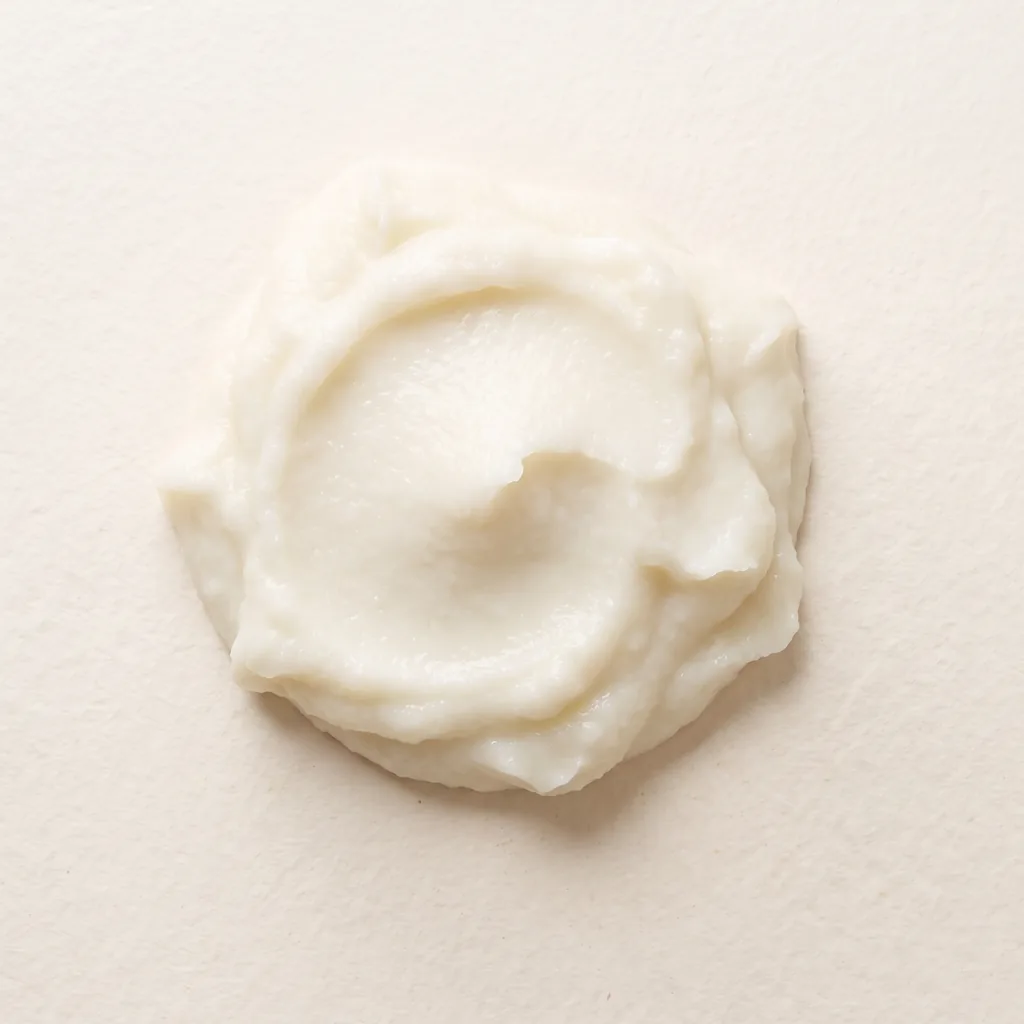
Flake the cooked halibut into grains, mashed potato, or another dish your baby can scoop up by hand.

9 monthsCube

Halibut prepared for 9 months

Cut: Bite sized piece

When your baby starts to pinch, offer smaller pieces. Remember to take off the skin and bones.

12 monthsSlice

Halibut prepared for 12 months

Toddlers like disc-shaped cakes because they are easy to grab. Try homemade fish cakes. Now and then, serve plain flaked halibut too, so your child learns the taste and texture on its own.

Choking risk

  1. Low
  2. Medium
  3. High

The fish itself rarely causes choking. Its bones are another story. Before serving freshly cooked halibut, remove any bones left behind. Stay near your baby during the meal.

Frequently asked questions

What age can babies eat halibut?

Halibut can be offered in moderation once your baby is ready for solids, usually around 6 months. It holds a moderate level of mercury. Mercury is a toxic metal that babies are especially sensitive to, and no safe level of exposure is known.

Is halibut a common allergen?

Yes. The World Health Organization lists finned fish as a global priority allergen, and halibut is among the fish that most often cause allergy, along with cod, salmon, and tuna. About 0.2 percent of people worldwide are estimated to have a finned fish allergy, and in children it is often lower still. Around 40 percent of those with the allergy first react in adulthood. Most do not outgrow it.

How do you prepare halibut for babies?

For a 6-month-old: Offer well-cooked halibut, skin and bones removed, as strips roughly two adult pinkies wide, laid together.

Is halibut a choking hazard for babies?

The fish itself rarely causes choking. Its bones are another story. Before serving freshly cooked halibut, remove any bones left behind. Stay near your baby during the meal.

Is halibut safe regarding mercury?

It holds a moderate level of mercury, so serve it in moderation. Limit fish overall to once or twice weekly. Lower-mercury fish are often the better pick.

Can I serve the skin?

No. Remove the skin and the bones.

Is frozen halibut fine?

Yes. Check that the label lists no added salt or sodium.

Prepared by the Lokmini team | Last updated November 17, 2026

Share:WhatsApp

Want to add this food to your baby's solid food calendar?

Join Lokmini to learn how this food is served at each age and to keep track of every food your baby tries.

Join Lokmini

Starting Solids

When and how to start solids, and what happens in the first week?

Read the guide

Similar foods

Let's get ready for the first bite together

Lokmini builds a day-by-day plan for your baby's age. Leave your email for new guides and our newsletter.

Start Your Journey