Skip to content

Dietitian's view

Artichoke is not an essential food in infant feeding. If you will give it, give it very well cooked.

Uzm. Dyt. Berk AysanPrepared the latest update, November 14, 2026

Lokmini is not a healthcare provider and does not offer health services. For your baby's specific needs, talk to your doctor or a dietitian.

  • Vegetables
  • 6 mo+
  • Medium choking risk

Artichoke for babies: when to start

You can start artichoke once your baby is ready for solids, usually around 6 months, cooked until well softened.

  • Fiber
  • Folate
  • Potassium
  • Magnesium
  • Vitamin C
  • Vitamin K
Artichoke prepared for a baby

About artichoke

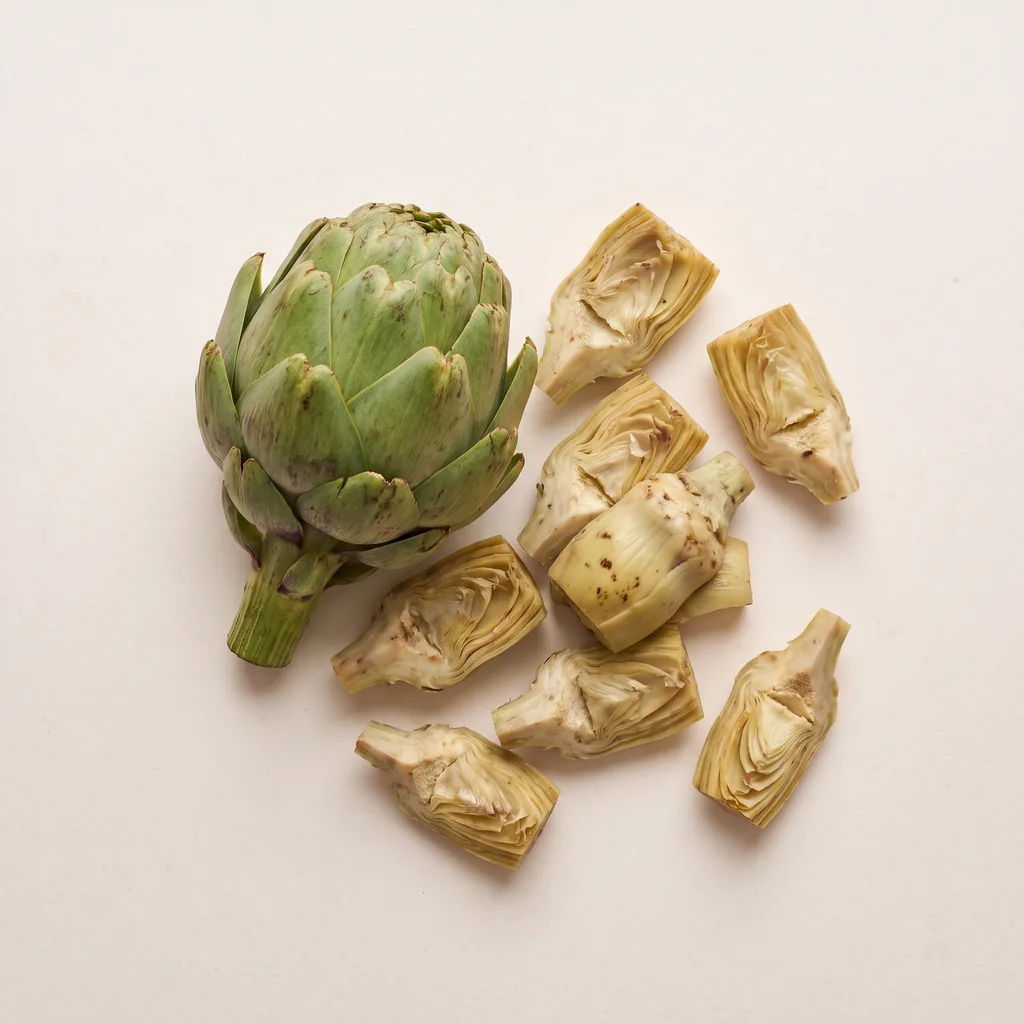
Artichoke is a plant of Mediterranean origin, closely related to wild cardoon. It belongs to the sunflower family. Varieties range in color from green to deep purple.

The part of the artichoke that is eaten is the unopened flower head. Under the tough outer petals is a fleshy, edible base. The taste is mildly herbal, and the texture turns soft when cooked.

Nutrition

Artichoke supplies carbohydrate, fiber, fluid and a little protein. It also contains folate, potassium, magnesium, copper, iron, zinc, B vitamins and vitamins C and K.

Artichoke also contains natural plant compounds such as cynarin and chlorogenic acid. Their antioxidant properties are being studied, but it has not been shown that eating artichoke gives babies any specific health benefit.

Also known as: enginar kalbi, artichoke, enginar yaprağı

  • Gluten-free
  • Vegan

How to prepare it by age

6 monthsStrip or mash
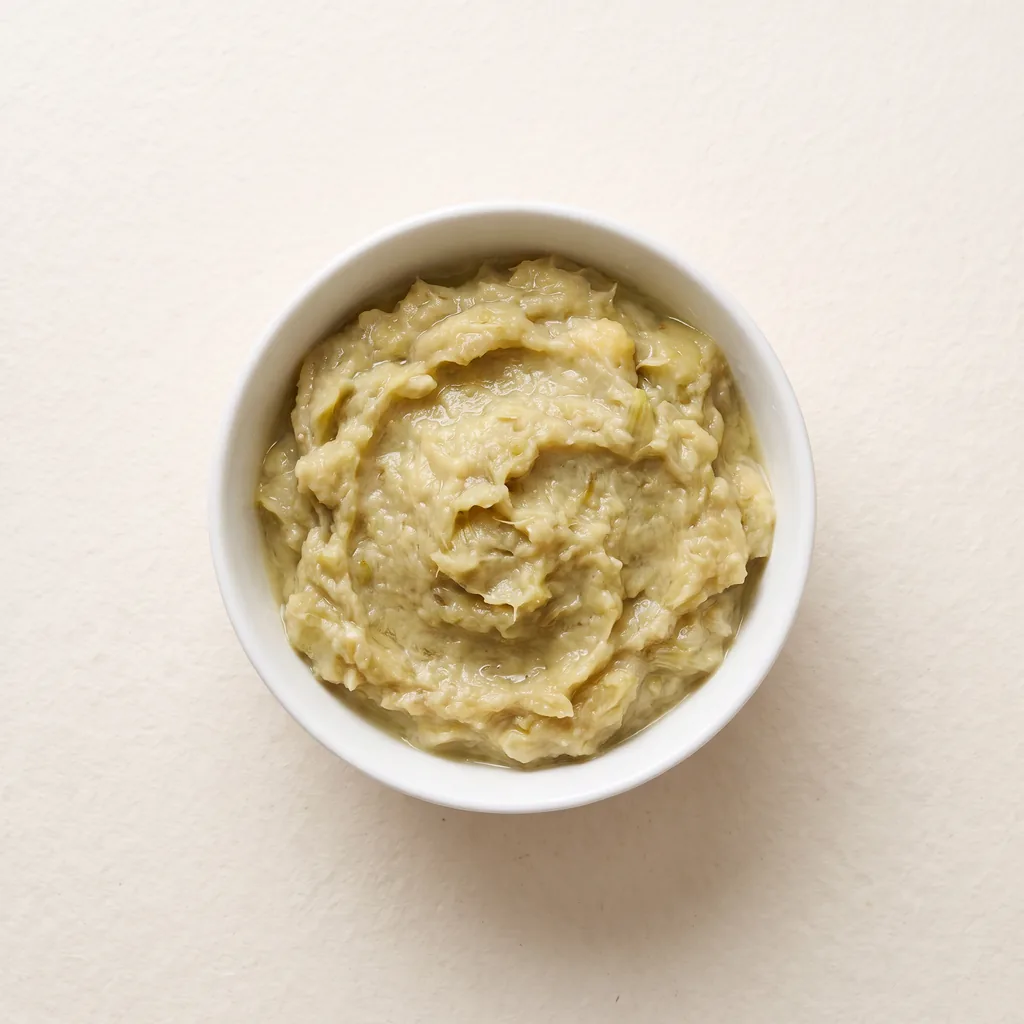
Artichoke prepared for 6 months

Cook a large artichoke heart until completely soft. Scrape out the inner fuzz and take off every petal. Leave the stem attached so baby has a handle. Serve the heart whole or cut in half.

Mash or finely chop a well-cooked or canned artichoke heart. Remove the tough outer petals and the inner fuzz completely. Stir it into mashed avocado or yogurt so baby can scoop it up.
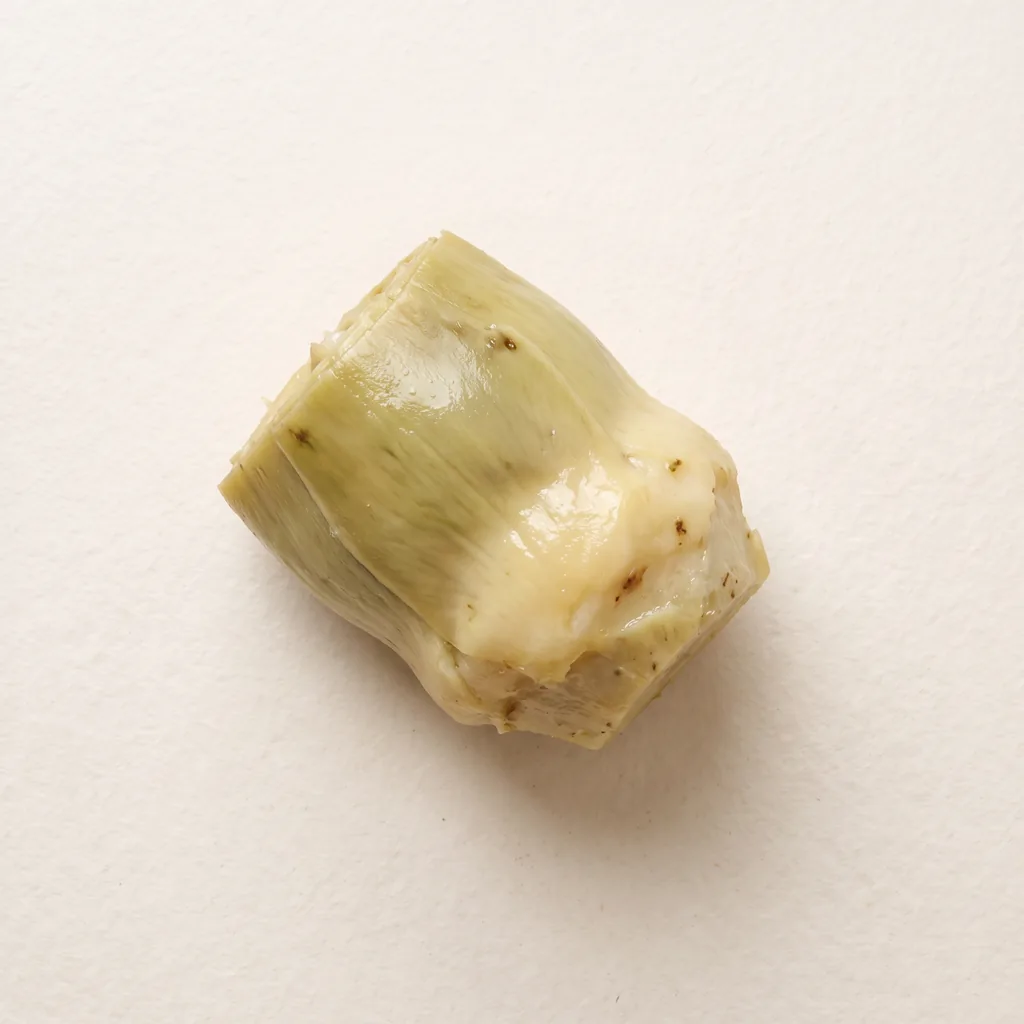
9 monthsCube

Artichoke prepared for 9 months

When your baby starts picking up small bits with fingertips, slice the cooked heart thin or cut it into bite-size pieces. No petals or fuzz. You can still offer the whole heart on its stem. A mashed or finely chopped version also works.

12 monthsCube

Quarter the soft cooked or canned heart or cut it into bites. Your child can eat it by hand or with a child-sized fork. The soft inner petals can stay on now. If your child struggles, load the fork and rest it on the bowl's edge. Chopped heart also goes into grain dishes, pasta, spreads and stews.

Choking risk

  1. Low
  2. Medium
  3. High

Yes, artichoke can be a choking risk when it is not prepared properly. Cooked well, it becomes soft and mashable. But the tough, fibrous parts of undercooked artichoke can be hard to chew and can raise the choking risk.

Make sure the heart is cooked all the way and soft enough to mash easily between your fingers. Remove the tough outer petals, the fibrous parts and the inner fuzz completely.

Make sure your baby sits upright while eating. Sit with them and stay within arm's reach.

Petals and fuzz

Before 12 months, remove all petals and the inner fuzz completely. Do not serve undercooked artichoke.

Allergen information

Artichoke is not a common allergen, but allergic reactions can happen. There is limited scientific data on how often artichoke allergy occurs. Reported reactions include contact dermatitis from skin contact.

As with any new food, offer a small amount the first time you give artichoke and watch your baby. If there is no reaction, you can raise the amount slowly over later meals.

If signs such as hives, swollen lips or vomiting appear, stop giving artichoke and get medical advice. If there are serious signs such as trouble breathing, swelling of the tongue or throat, sudden marked weakness or loss of consciousness, call emergency services right away.

Frequently asked questions

What age can babies eat artichoke?

You can start artichoke once your baby is ready for solids, usually around 6 months, cooked until well softened.

Is artichoke a common allergen?

Artichoke is not a common allergen, but allergic reactions can happen. There is limited scientific data on how often artichoke allergy occurs. Reported reactions include contact dermatitis from skin contact.

How do you prepare artichoke for babies?

For a 6-month-old: Cook a large artichoke heart until completely soft. Scrape out the inner fuzz and take off every petal. Leave the stem attached so baby has a handle. Serve the heart whole or cut in half.

Can babies eat canned artichoke?

Yes, canned or jarred artichoke hearts can be used. Choose products with no added salt or low sodium. If they are packed in salty brine, drain and rinse them. Make sure the artichoke is soft enough. Remove the tough petals, fibrous parts and the inner fuzz.

Can babies eat artichoke petals?

Yes, you can serve the soft, edible inner petals of well-cooked artichoke. Do not give the tough, fibrous petals. Once your child's chewing skills have developed, you can show how to scrape the soft flesh off the base of the petal with the teeth. Also teach them to set aside the part of the petal that is not eaten.

When can toddlers have fried artichoke?

There is no set age for fried artichoke. Frying can create hard, crunchy pieces that are harder to chew and can raise the choking risk. In the early months, choose well-softened artichoke. Later, you can offer pieces that have not turned hard on the outside and are easy to chew, in a way that suits your baby's development.
Share:WhatsApp

Want to add this food to your baby's solid food calendar?

Join Lokmini to learn how this food is served at each age and to keep track of every food your baby tries.

Join Lokmini

Starting Solids

When and how to start solids, and what happens in the first week?

Read the guide

Similar foods

Let's get ready for the first bite together

Lokmini builds a day-by-day plan for your baby's age. Leave your email for new guides and our newsletter.

Start Your Journey