Skip to content

Dietitian's view

Asian pear is a hard fruit and is not common in Türkiye.

Lokmini is not a healthcare provider and does not offer health services. For your baby's specific needs, talk to your doctor or a dietitian.

  • Fruits
  • 6 mo+
  • High choking risk

Asian pear for babies: when to start

You can start Asian pear once your baby is ready for solids, usually around 6 months.

  • Fiber
  • Vitamin C
  • Copper
  • Antioxidants
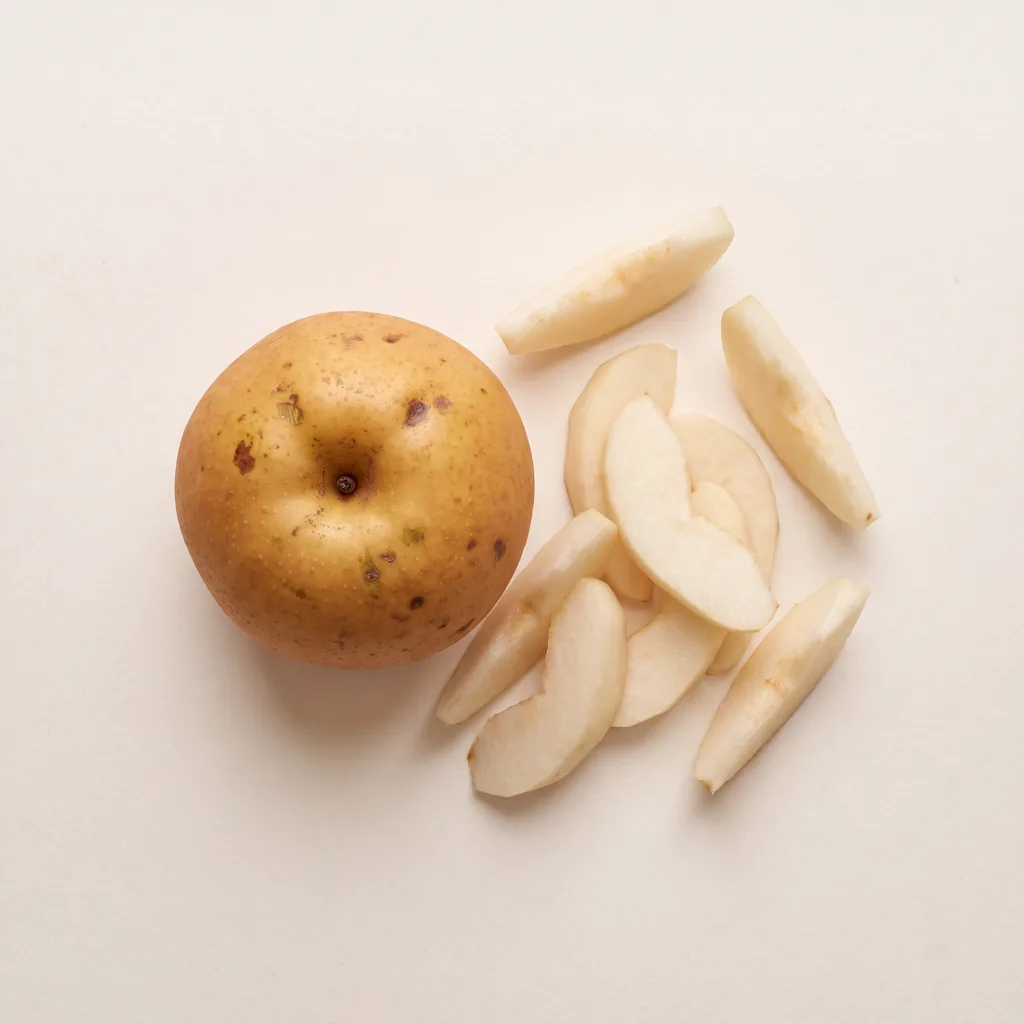
Asian pear prepared for a baby

About Asian pear

This pear comes from the mountain regions of Central Asia. Today there are thousands of varieties. Ripe fruit can be sandy and spotted, golden, or bronze.

Asian pear gives fiber, vitamin C and copper. Antioxidants are plentiful in the skin.

Also known as: asya armutu, nashi armudu, japon armudu, çin armudu, asian pear

  • Gluten-free
  • Vegan

How to prepare it by age

6 monthsSlice or mash
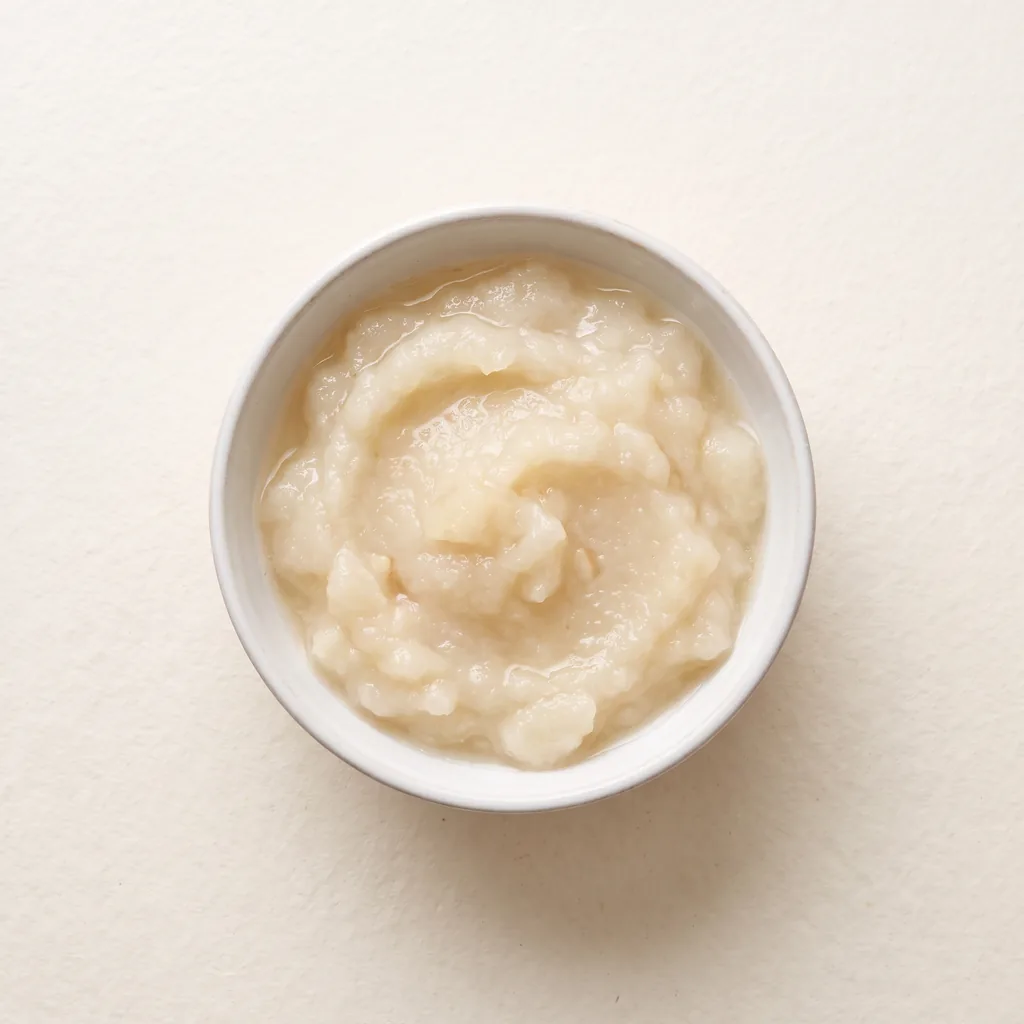
Asian pear prepared for 6 months

Cook the pear until soft. Remove the core and stem. Peeling is up to you. Serve large wedges or halves. To help baby grip the slippery fruit, coat it lightly with hemp seed, fine coconut or ground nut powder. Keep nut allergy risk in mind.

Cut: Fork mashed

Mash the cooked pear. Baby can scoop it with hands or a spoon. You can also stir the mash into spoonable foods such as yogurt.
9 monthsSlice

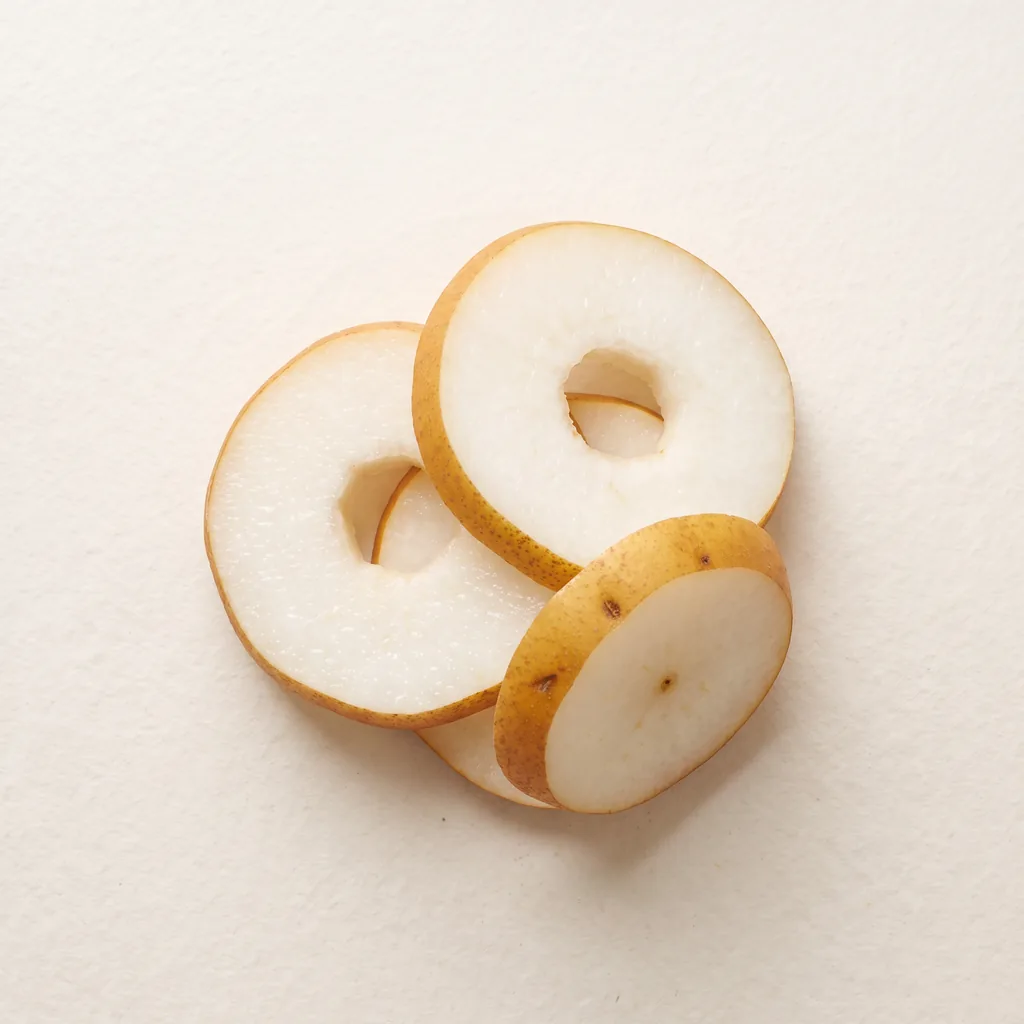
Cooked soft halves can still be offered. Serve raw pear as thin rounds or half-rounds about 1 cm thick, with or without skin. Your baby may chew the skin and then spit it out. It looks wasteful, but it builds familiarity with skin and supports mouth skills. If your baby takes a large bite, do not put your fingers in their mouth. Wait a moment for baby to chew and swallow or spit. A hand on the back and a gentle forward lean helps the piece come toward the front of the mouth.

12 monthsSlice

Asian pear prepared for 12 months

Keep offering soft cooked slices and thin raw rounds. A whole raw pear can be tried at 18 months, if your child chews well and stays seated. A bite from the whole fruit usually leaves a flat piece. A bite from a wedge can leave a small, firm, pointed piece, which adds risk. If the skin is hard for your child, peel it or peel it in stripes. After age 2, a child who is ready can try thick raw sections.

Choking risk

  1. Low
  2. Medium
  3. High

Yes, Asian pear can be a choking risk. Even ripe, it stays hard and slippery, and both qualities raise the risk.

For a young baby, serve soft cooked pear. If raw, slice it paper-thin. Hold off on a whole raw fruit until 18 months. Stay within arm's reach while your baby eats.

Firm and slippery

Do not serve raw pear as thick slices or small hard pieces.

Allergen information

Asian pear is not a common allergen. People with birch pollen allergy or pollen food allergy syndrome (oral allergy syndrome) may react to raw pear. The usual symptom is mild itching in the mouth, and a dangerous reaction is unlikely.

Start with a small amount at the first meals. If nothing unusual happens, raise it slowly over later meals.

Frequently asked questions

What age can babies eat Asian pear?

You can start Asian pear once your baby is ready for solids, usually around 6 months.

Is Asian pear a common allergen?

Asian pear is not a common allergen. People with birch pollen allergy or pollen food allergy syndrome (oral allergy syndrome) may react to raw pear. The usual symptom is mild itching in the mouth, and a dangerous reaction is unlikely.

How do you prepare Asian pear for babies?

For a 6-month-old: Cook the pear until soft. Remove the core and stem. Peeling is up to you. Serve large wedges or halves. To help baby grip the slippery fruit, coat it lightly with hemp seed, fine coconut or ground nut powder. Keep nut allergy risk in mind.

Is Asian pear a choking hazard for babies?

Yes, Asian pear can be a choking risk. Even ripe, it stays hard and slippery, and both qualities raise the risk.

Should I peel the skin?

It is optional. The skin may get chewed and spat out by your baby. The skin also keeps the fruit together. If your child struggles with it, peel it or peel in stripes.

How many meals a day should baby have?

It is flexible. Plan one sit-down meal a day at 6 to 7 months, two daily at 8 to 9 months, and three daily from about 10 months.

Prepared by the Lokmini team | Last updated November 17, 2026

Share:WhatsApp

Want to add this food to your baby's solid food calendar?

Join Lokmini to learn how this food is served at each age and to keep track of every food your baby tries.

Join Lokmini

Starting Solids

When and how to start solids, and what happens in the first week?

Read the guide

Similar foods

Let's get ready for the first bite together

Lokmini builds a day-by-day plan for your baby's age. Leave your email for new guides and our newsletter.

Start Your Journey