In short:
Do not give your baby honey until they are 12 months old. Foods and drinks that contain honey are not suitable during this time either. [1,2]
Honey can carry spores of the bacterium Clostridium botulinum. These spores can multiply in a baby's gut and make a toxin. [2,3]
Infant botulism can show up with signs such as constipation, trouble feeding, a weak cry and muscle weakness. [3,4]
Breastfeeding mothers can eat honey. Honey eaten by the mother does not pass botulism to the baby through breast milk. [5]
The short rule: no honey before 12 months!
Do not give your baby honey until they are 12 months old. Cakes, cookies and other foods that contain honey are not suitable during this time either. Putting honey on a pacifier or adding it to your baby's food is not safe either. [1,2]
The World Health Organization (WHO) recommends not giving honey before the first birthday, to avoid the risk of botulism in babies. After 12 months, honey can be added to the diet. [3]
What is infant botulism?
Infant botulism is a rare but serious illness. It can develop when spores of a bacterium called Clostridium botulinum reach a baby's gut.
These spores multiply in the baby's gut and make botulinum toxin. The toxin acts on the nervous system and can cause muscle weakness and, in serious cases, paralysis. If the breathing muscles are affected, it can be life-threatening. [3,4]
The illness is most common in babies under 6 months, but all babies under 12 months are at risk. [4]
Why honey in particular?
Clostridium botulinum spores can be found in the environment, such as in soil and dust. Honey is one of the foods that can carry these spores. [3,4]
Not all cases of infant botulism are linked to honey. But honey is a known source that families can avoid to keep their baby safe.
Cooking honey or baking it into foods has not been shown to reliably get rid of the spores. So baked goods that contain honey should not be given before 12 months either. [6]
What to watch for at home
Do not give your baby honey directly. Do not use foods or drinks that contain honey, or pacifiers dipped in honey.
When you set aside food from the family table for your baby, check whether it contains honey. Keep kitchen tools used for honey and surfaces your baby may touch clean.
Breastfeeding mothers can eat honey. Honey eaten by the mother does not pass botulism spores or toxin to the baby through breast milk. [5]
Which signs are warning signs?
Infant botulism often starts with constipation. But constipation alone is not a sign of botulism.
Other signs to watch for are: * Trouble sucking and feeding * A weak cry or a cry that sounds different than usual * Drooping eyelids * Less facial expression * Trouble holding up the head * Floppy arms and legs, marked muscle weakness * Unusual tiredness and less movement * Difficulty breathing [3,4]
Signs can appear about 3 to 30 days after the spores are taken in. [4]
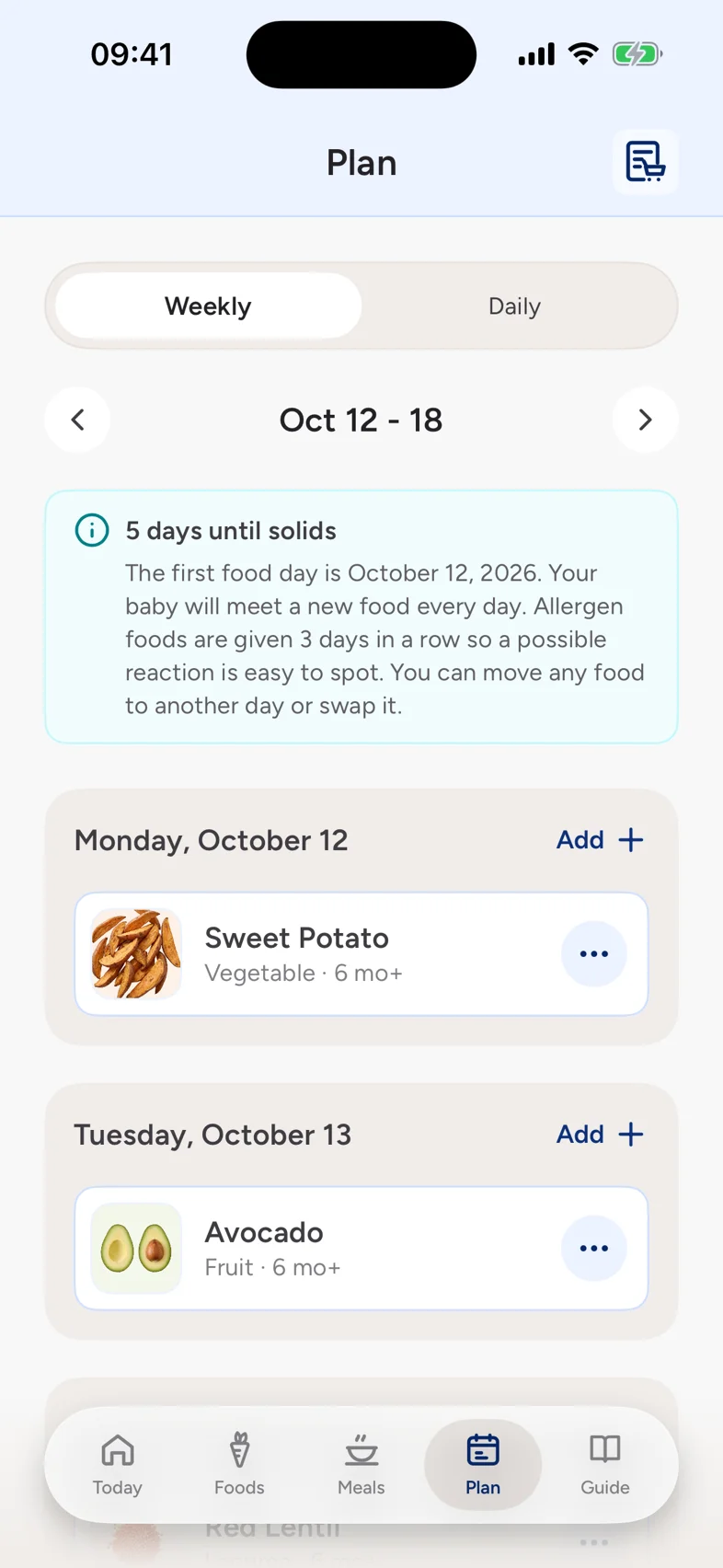
A starting solids calendar by age
Lokmini sets up a day-by-day starting solids calendar for your baby's age, introduces allergens one at a time and shows how to prepare every food by age.
Start with LokminiFrequently asked questions
What should I do if my baby ate honey by accident?
If your baby ate honey by accident, try not to panic. Not every exposure to honey leads to infant botulism. But because there is a risk for babies under 12 months, let your child's doctor know and keep an eye on your baby. If signs such as constipation, refusing to suck or feed, a weak cry, floppy muscles or less head control appear, get a medical check without delay. If there is difficulty breathing or a marked change in consciousness, call emergency services right away.

Uzm. Dyt. Özge Uğur ErciyasPrepared the latest update, November 14, 2026
Sources
- CDC. (2026). Botulism Prevention.
- CDC. (2024). Symptoms of Botulism.
- National Health Service (NHS). (2026). Botulism.
- American Academy of Pediatrics (AAP). (2025). Botulism: Causes, Signs, Symptoms and Treatment.
Lokmini is not a healthcare provider and does not offer health services. Lokmini shares information and does not diagnose. This information does not replace medical advice. Talk to your baby's doctor.