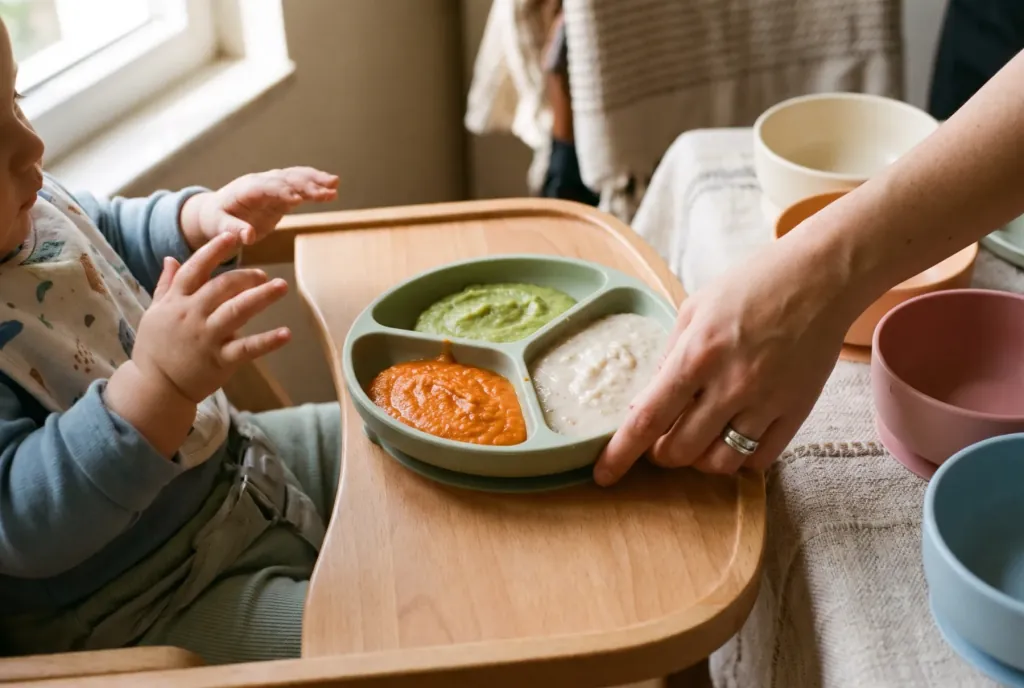
Expectation versus reality
Most parents start out thinking their baby will eat a scaled-down version of an adult plate, but the reality is very different. A baby's stomach is about the size of their own fist, and in the first months of solid food the main source of nutrition is still breast milk or formula. Solid food only plays a complementary role. So the first portions should really stay spoon-sized, not plate-sized.
A rough guide by age
The numbers below are not rules but a rough direction. Every baby moves at their own pace and can vary a lot from one day to the next.
Appetite changes from day to day
Even an adult's appetite goes up and down with the day, sleep quality or things like teething. In babies this fluctuation is much more noticeable. A baby who finishes the whole plate today may turn away after a few spoonfuls tomorrow. This is not a sign of illness or a feeding problem but the natural rhythm of growth.
Fullness signals matter more than a fixed number
Turning the head away, keeping the mouth closed, pushing the spoon away or getting distracted are reliable signs of fullness. Respecting these signals is much more important than trying to hit the amount a baby of that age "should" eat. Insisting on one last spoonful can, over time, teach a baby to ignore their own sense of fullness.
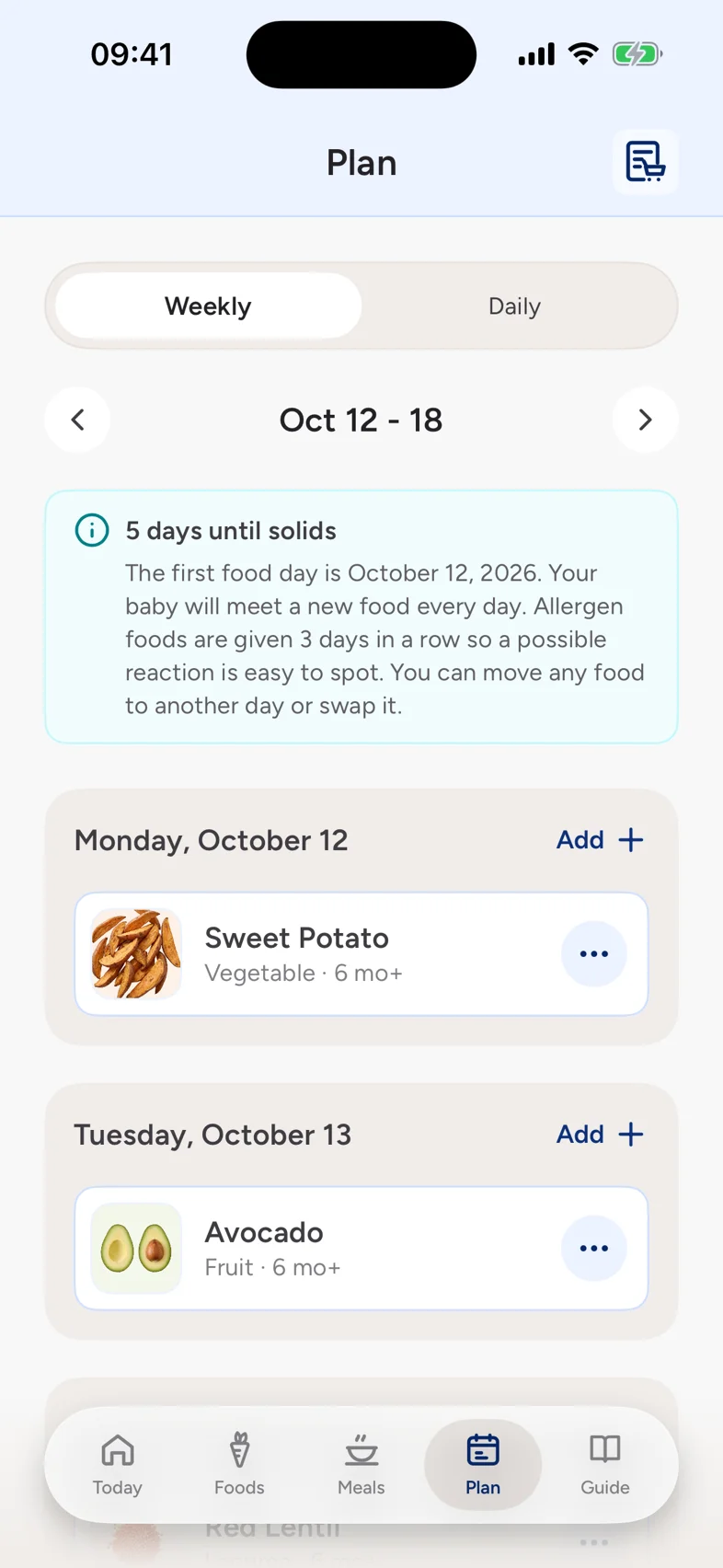
A starting solids calendar by age
Lokmini sets up a day-by-day starting solids calendar for your baby's age, introduces allergens one at a time and shows how to prepare every food by age.
Start with LokminiWritten by the Lokmini teamLast updated November 14, 2026
Sources
- World Health Organization (WHO). (2023). Guideline for complementary feeding of infants and young children 6-23 months of age.
- ESPGHAN. (2017). Complementary Feeding position paper, porsiyon ve öğün sıklığı.
Lokmini is not a healthcare provider and does not offer health services. Lokmini shares information and does not diagnose. This information does not replace medical advice. Talk to your baby's doctor.