Why fish is worth it
According to the FDA, fish has nutrients that support a child's brain development. These include omega-3 fats (DHA and EPA), iron and choline. Fish also provides protein, vitamin B12, vitamin D and selenium. The FDA says fish can join your baby's diet at around 6 months.
Why mercury matters
Some kinds of fish carry more mercury than others. The National Health Service (NHS) says the mercury in these fish can affect how a baby's nervous system develops. Mercury is spread throughout the flesh of the fish. The FDA says cleaning or cooking does not lower it. So the real safeguard is picking a low-mercury kind.
Lists differ by country
In the US, the FDA lists these as choices to avoid: shark, swordfish, marlin, king mackerel, orange roughy, tilefish from the Gulf of Mexico and bigeye tuna. In the UK, the NHS says children under 16 should not eat shark, swordfish or marlin. The FDA's best choices include salmon, sardines, anchovies, freshwater trout and canned light tuna. Check the list from the official authority where you live.
How much and how
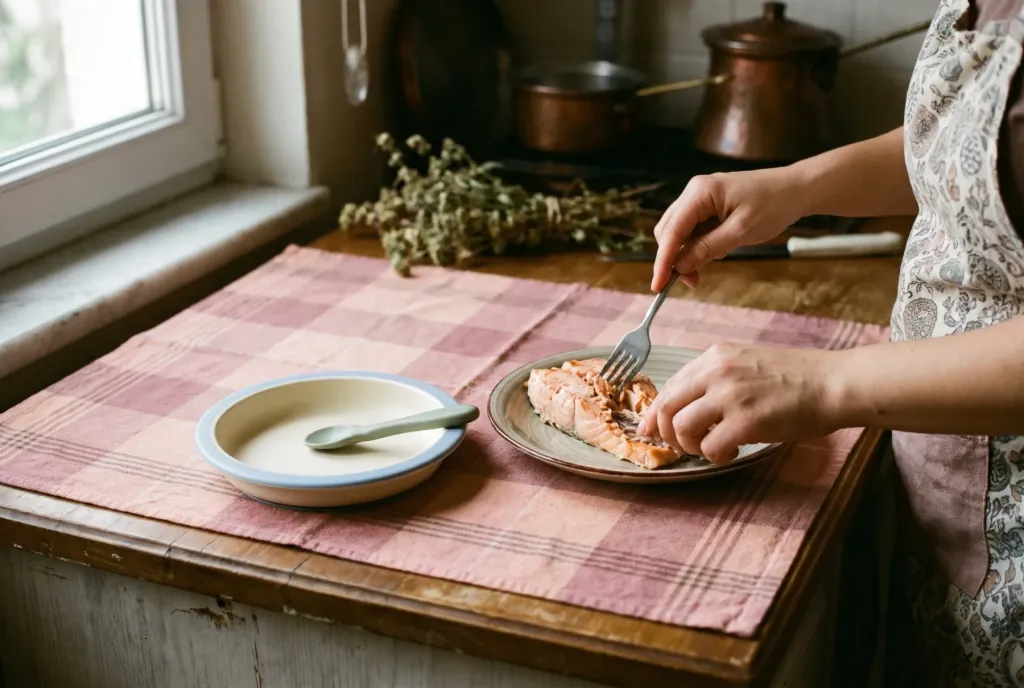
The FDA puts a serving for a child aged 1 to 3 at about 1 ounce (about 28 grams) on average. Children this age are advised to have 2 servings of low-mercury fish a week. The FDA does not give a separate serving size for babies under 1. Cook fish to a safe internal temperature and do not serve it raw. The NHS advises removing the bones before giving fish to your baby.
Do not give raw or lightly cooked shellfish such as mussels and oysters, because they raise the risk of food poisoning. For fish caught by your family, check local fish advisories. Ask your doctor if you have questions about your baby's diet.
A starting solids calendar by age
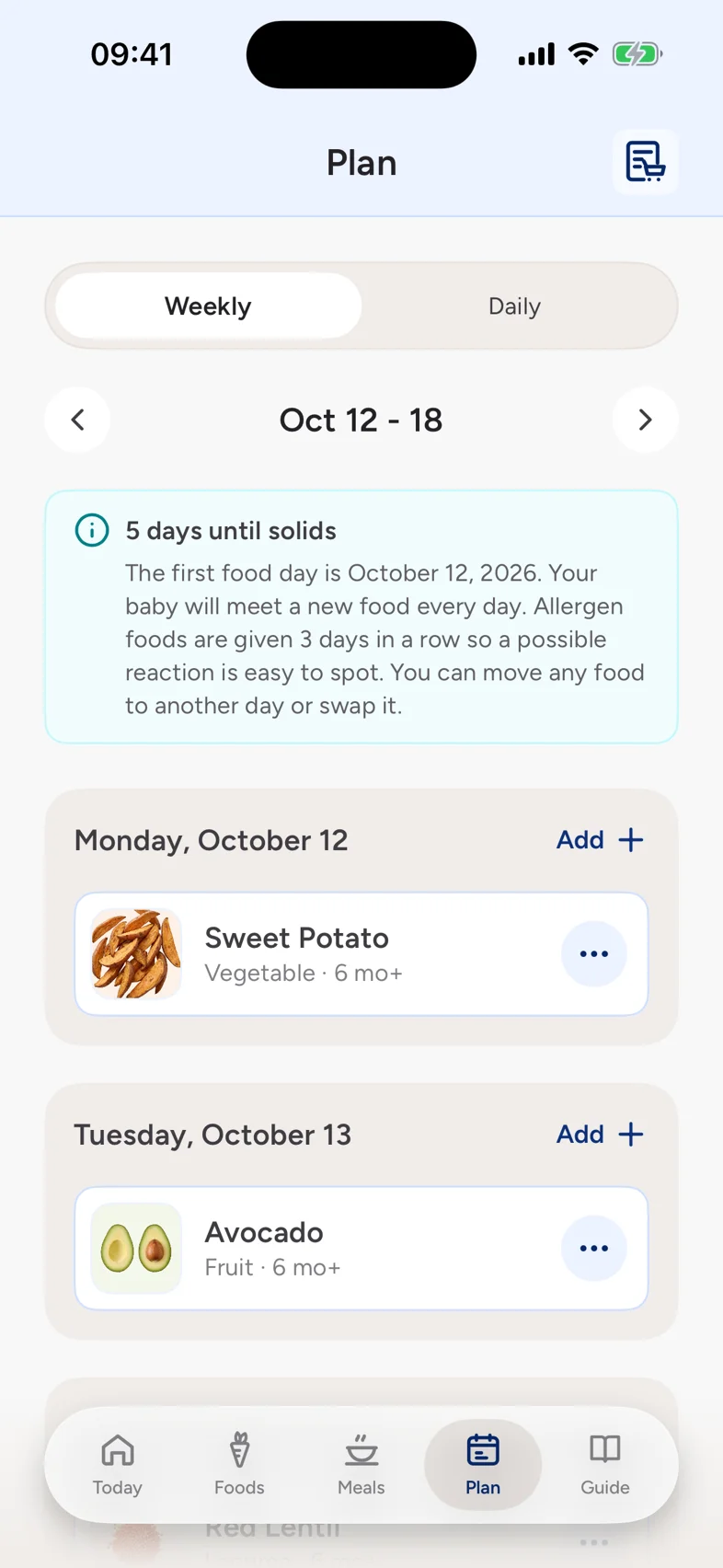
Lokmini sets up a day-by-day starting solids calendar for your baby's age, introduces allergens one at a time and shows how to prepare every food by age.
Start with LokminiFrequently asked questions
From what age can I give my baby fish?
Fish can be added to the diet of babies who are ready for solids from about 6 months. [2,4]
Which fish are lower in mercury?
The FDA's low-mercury choices include anchovies, sardines, salmon and freshwater trout. But mercury levels in fish can vary by region and species. [1,2]
Does cooking fish reduce mercury?
No. Mercury is in the flesh of the fish, so cleaning or cooking does not remove it. Choose types that are low in mercury. [2]
Can I give my baby canned tuna?
Canned light tuna is among the FDA's low-mercury choices. But the kind of tuna matters. Bigeye tuna is in the group to avoid. Check the type of tuna and the label on the can. [1,2]
Written by the Lokmini teamLast updated November 19, 2026
Sources
- U.S. Food and Drug Administration. (2024). Advice about Eating Fish.
- U.S. Food and Drug Administration. (2022). Questions & Answers from the FDA/EPA Advice about Eating Fish for Those Who Might Become or Are Pregnant or Breastfeeding and Children Ages 1 to 11 Years.
- National Health Service (NHS). (2026). Foods to avoid giving babies and young children.
- National Health Service (NHS). (2026). Your baby's first solid foods.
Lokmini is not a healthcare provider and does not offer health services. Lokmini shares information and does not diagnose. This information does not replace medical advice. Talk to your baby's doctor.