Why so much care?
Your baby's immune system is not yet as strong as an adult's. Powdered formula is not sterile, and even sealed packs can sometimes contain bacteria. Made-up formula at room temperature is a place where bacteria can grow quickly. So the safest way is to make each feed fresh, when your baby needs it.
Hands, surface and bottle
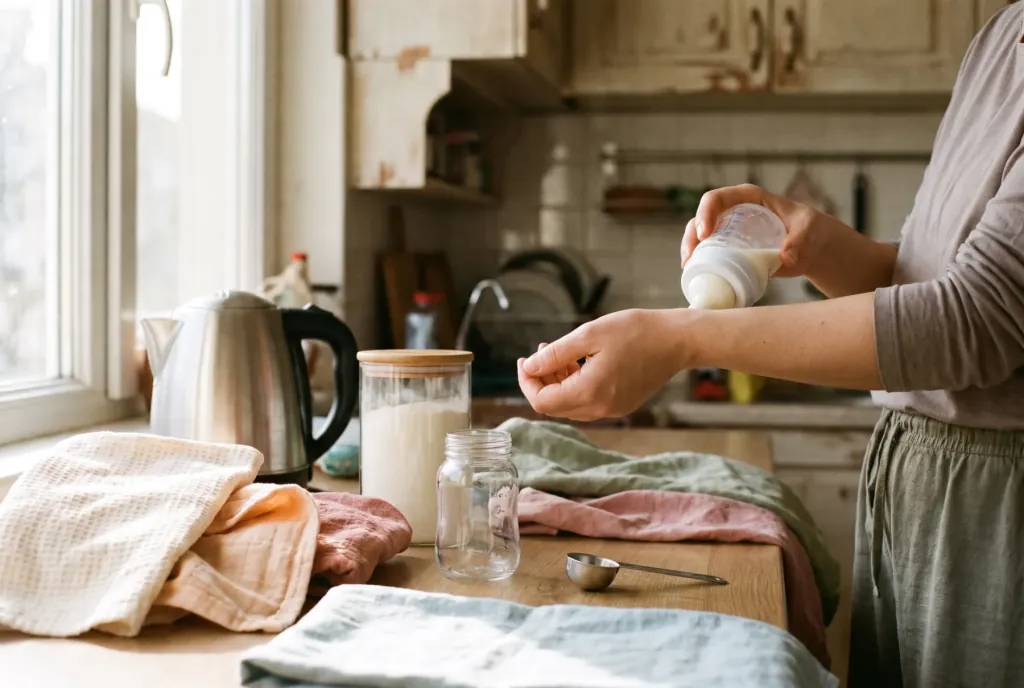
Wash your hands with soap and water before you start. Clean the surface you will work on. Wash bottles, teats and other equipment in hot soapy water with a brush and rinse them well. Then sterilise the equipment. If you use a steriliser, follow the maker's instructions.
Follow the label for water and powder
Measure the amount of water written on the label. Add the water first, then the powder. Use only the scoop that comes with the formula, fill it loosely and level it off. Too much powder can cause constipation or dehydration. Too much water may not give enough nourishment, so never dilute or concentrate the formula.
Water temperature can differ by country
The World Health Organization and the National Health Service (NHS) advise making up powdered formula with water that has boiled and cooled for no more than 30 minutes, so it is still at least 70°C. This temperature kills harmful bacteria in the powder. In the US, the CDC says that for most babies, when tap water is safe, following the maker's instructions is enough. For babies younger than 2 months, born early or with a weakened immune system, the CDC advises boiling the water and waiting about 5 minutes before mixing. Follow the formula label and the advice of your local health authority.
Cooling, storing and leftovers
After making up the feed, hold the capped bottle under cold running water to cool it quickly. Before feeding, test a few drops on the inside of your wrist: it should feel warm, not hot. Do not warm formula in a microwave, because it heats unevenly and can burn your baby's mouth. Throw away any formula left at room temperature for more than two hours. The CDC adds that a feed should be finished within one hour of starting, and any formula left in the bottle should be poured away.
These steps are for powdered formula. If your baby is younger than 2 months, was born early or has a weakened immune system, talk to your baby's doctor about how to prepare formula.
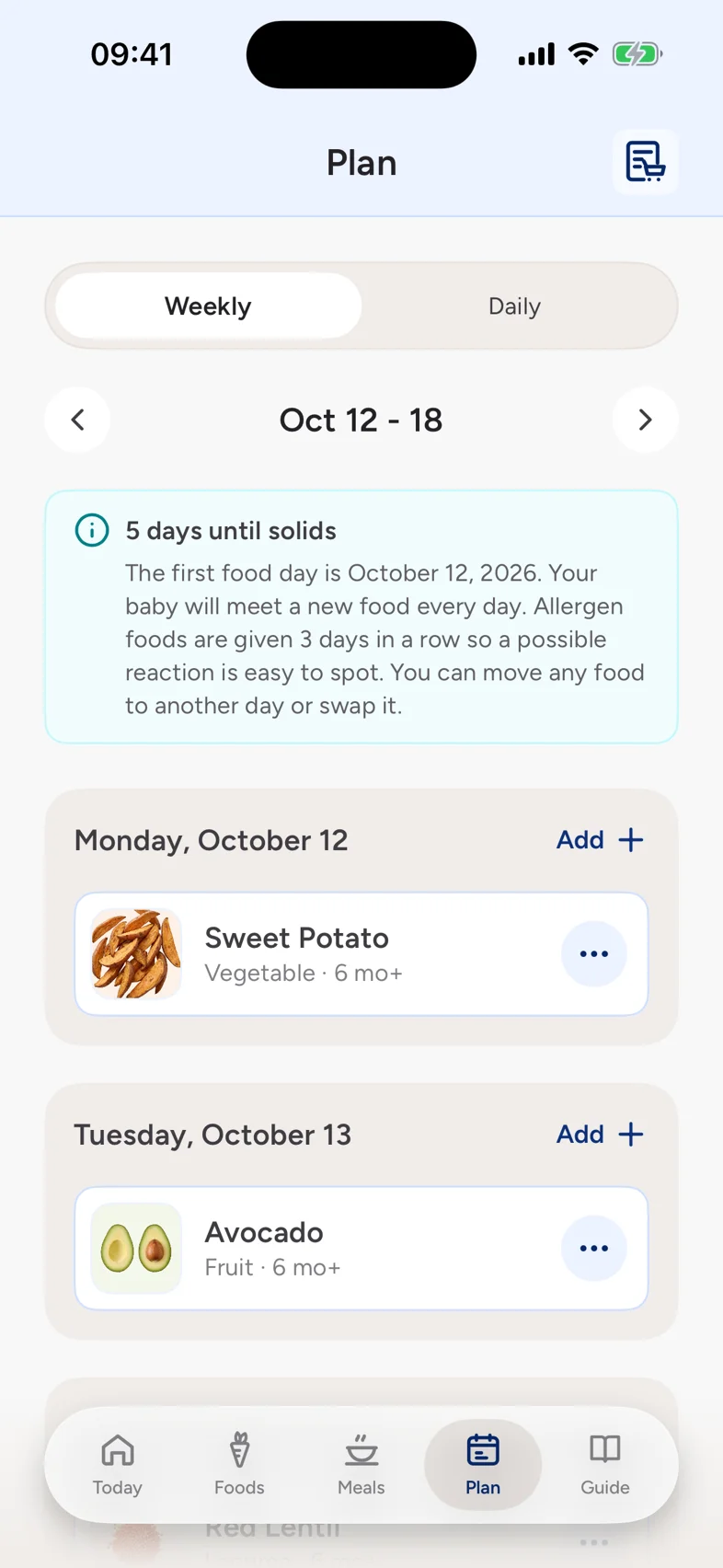
A starting solids calendar by age
Lokmini sets up a day-by-day starting solids calendar for your baby's age, introduces allergens one at a time and shows how to prepare every food by age.
Start with LokminiWritten by the Lokmini teamLast updated November 13, 2026
Sources
- World Health Organization (WHO). (2007). Safe preparation, storage and handling of powdered infant formula: guidelines.
- National Health Service (NHS). (2023). How to make up baby formula.
- CDC. (2026). Infant Formula Preparation and Storage.
Lokmini is not a healthcare provider and does not offer health services. Lokmini shares information and does not diagnose. This information does not replace medical advice. Talk to your baby's doctor.