Texture and consistency mistakes
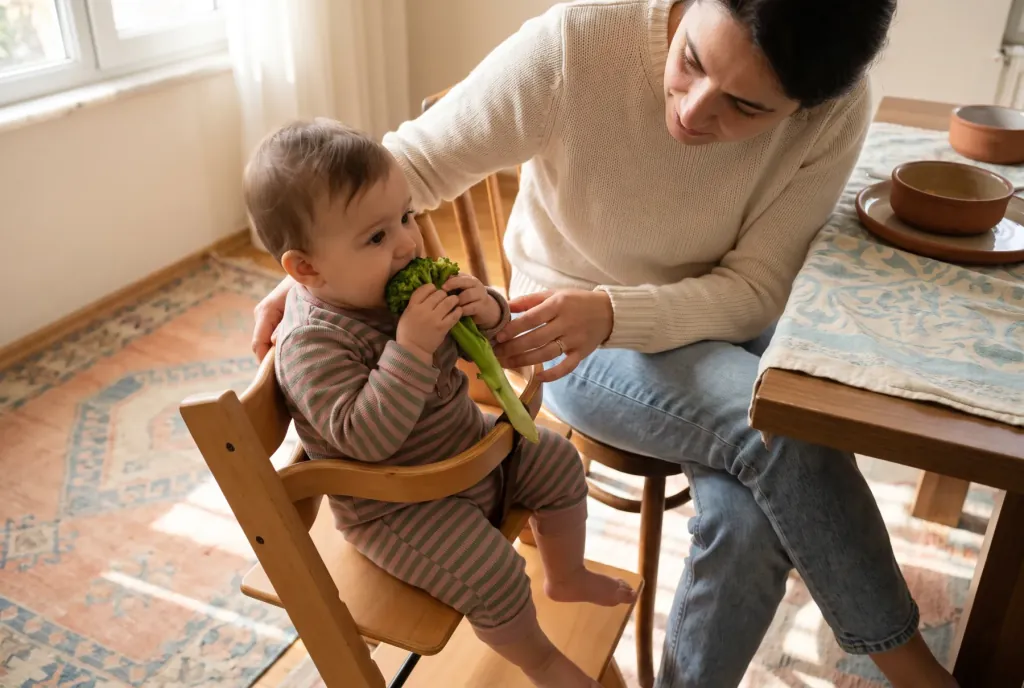
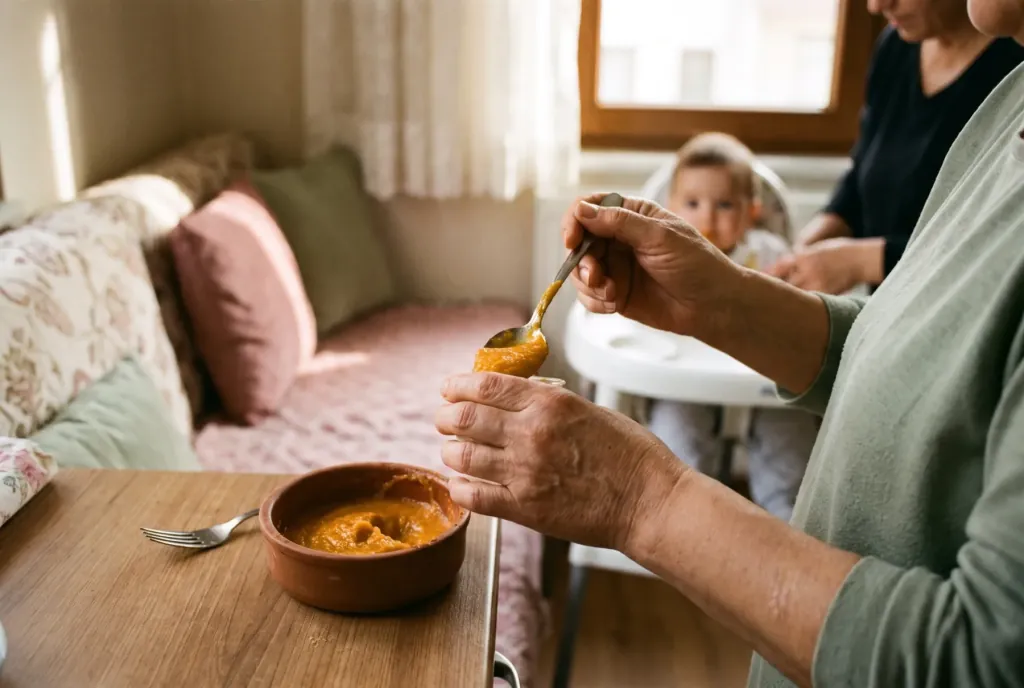
Two of the most common mistakes are linked: thinning purees with more water than needed and relying on ready-made fruit or vegetable pouches for a long time. A puree that is too watery does not work the chewing muscles and delays the move to new textures. Pouches are convenient, but because they are sucked, they cannot support the development of spoon use, chewing and tolerance of textures. Ideally, from 6 months the texture is thickened gradually over weeks, moving to lumpy foods and then to foods with soft pieces.
Salt and sugar too early
A baby's kidneys cannot handle salt like an adult's in the first year, so it is advised not to add salt to solid foods. Sugar adds no nutritional value and only shapes taste preferences. More importantly, taste preferences formed in this early period tend to last. A palate that gets used to salty or sweet tastes early may find plain vegetables and grains less appealing in later years.
Stopping allergen introduction after one try
Offering a common allergen (such as egg, peanut or sesame) once, seeing no reaction and thinking "done", goes against the recommended approach. Current guidelines advise offering the food again and again at regular intervals, a few times a week for several weeks, to make sure it is really tolerated, because a single try does not guarantee lasting tolerance.
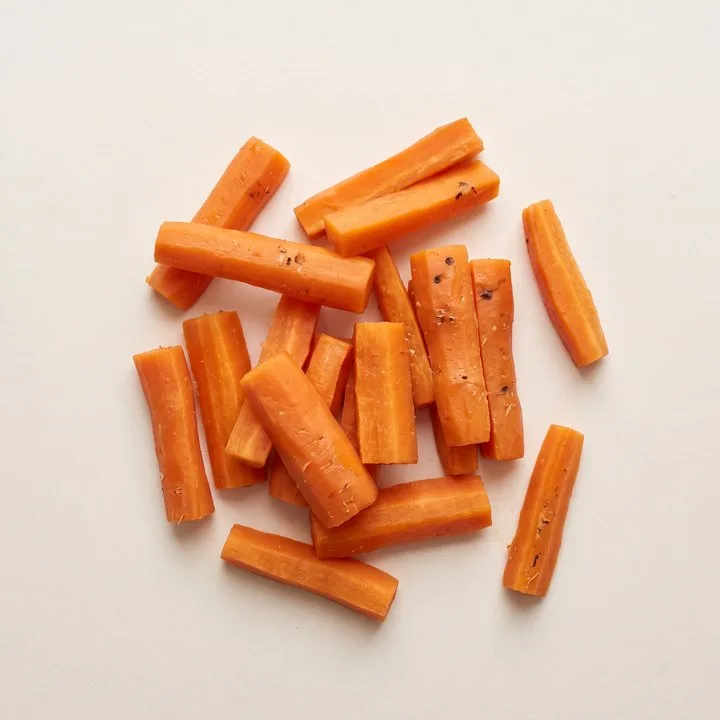
Whole grapes, nuts and hard raw vegetables (carrot, apple slices) carry a high choking risk. This risk does not end at 12 months. The National Health Service (NHS) advises cutting small round fruits such as grapes, cherries and cherry tomatoes into quarters and cutting hard vegetables such as carrots into thin sticks. The American Academy of Pediatrics (AAP) advises chopping round and hard foods into very small pieces and serving high-risk foods this way until at least 4 years of age. Whole nuts are not given before 5 years of age because of the choking risk (NHS). Crushed or finely ground nuts can be added to food. Learn when and how you can make these foods safe.
Sources: AAP Complementary Feeding report (2021), ESPGHAN position paper (2017) and the allergen introduction protocol of the LEAP study (2015). Last reviewed: 12 August 2026, source comparison content audit.
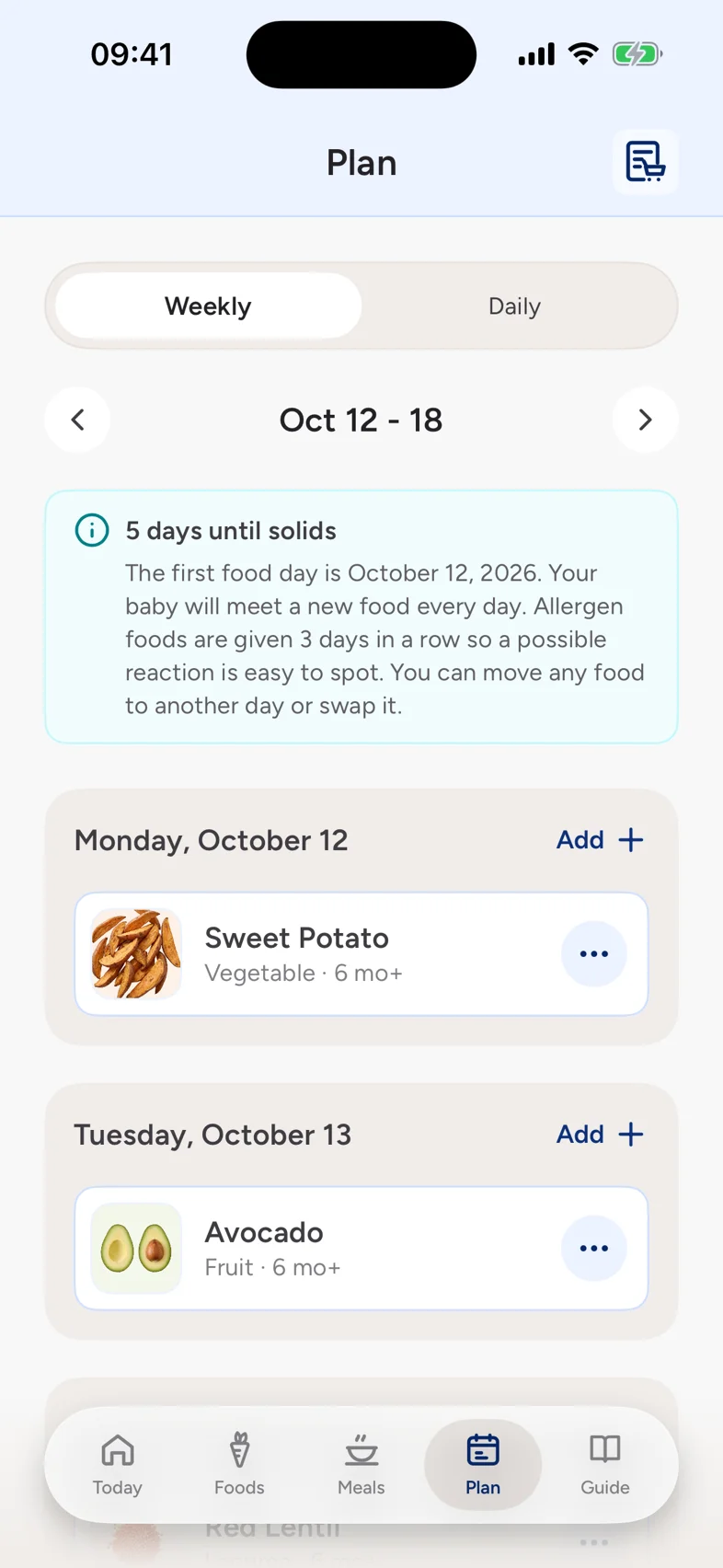
A starting solids calendar by age
Lokmini sets up a day-by-day starting solids calendar for your baby's age, introduces allergens one at a time and shows how to prepare every food by age.
Start with LokminiFrequently asked questions
1. Bebeğime püreyi ne zamana kadar vermeliyim?
Püreler ek gıdaya başlangıçta kullanılabilir. Ancak bebeğiniz farklı dokuları yönetebildikçe ezilmiş, pütürlü ve yumuşak parmak besinlere geçişi geciktirmeyin. Yaklaşık 6–7. aydan itibaren gelişimine uygun farklı kıvamlarla tanışmasını destekleyin. [1,5]
2. Alerjen besinleri haftada kaç kez sunmalıyım?
2026 ASCIA rehberi, sorunsuz tolere edilen yaygın alerjenlerin en az haftada bir kez yaşa uygun porsiyonlarla sunulmasını önerir. Ancak bu öneri tüm besinler için belirlenmiş kesin bir doz veya tüketim sıklığı anlamına gelmez. [6]
3. Üzüm ve kuruyemiş bebeğime nasıl verilmeli?
Üzüm dörde bölünerek sunulmalıdır. Bütün kuruyemişler 5 yaşından önce verilmemelidir. Kuruyemişlerin ince öğütülmüş hâli veya uygun şekilde inceltilmiş ezmeleri, bebeğinizin gelişimine uygun besinlere karıştırılarak kullanılabilir. [2,3]

Uzm. Dyt. Özge Uğur ErciyasPrepared the latest update, November 25, 2026
Sources
- American Academy of Pediatrics (AAP). (2021). Complementary Feeding.
- ESPGHAN. (2017). Complementary Feeding position paper.
- Du Toit et al., NEJM. (2015). LEAP study, alerjen giriş protokolü.
- National Health Service (NHS). (2026). Preparing food safely.
- American Academy of Pediatrics (AAP). (2026). Choking Prevention for Babies & Children: What Every Parent Needs to Know.
Lokmini is not a healthcare provider and does not offer health services. Lokmini shares information and does not diagnose. This information does not replace medical advice. Talk to your baby's doctor.