The right time: around 6 months
The World Health Organization (WHO) recommends starting complementary feeding at about 6 months. The American Academy of Pediatrics (AAP) and the UK National Health Service (NHS) also support starting solids at about 6 months. [1,2,3]
During this time, breast milk or formula continues and stays one of your baby's main sources of energy and nutrients. To start solids, look not only at your baby's age in months but also at whether they are developmentally ready. [1,2,3]
Why not before 4 months?
Starting solids before 4 months is not recommended. Current advice is to start solids at about 6 months. Until then, breast milk or a suitable formula meets your baby's energy and nutrient needs. [1,2,3,4]
Waiting until about 6 months also gives your baby time to develop the skills to move food around the mouth, chew and swallow. This way they are more ready to meet new tastes and textures. [3]
If your baby was born early, decide when to start solids together with your child's doctor. [3]
Signs your baby is ready
According to the NHS, these three signs together show that your baby is ready for solids: [3]
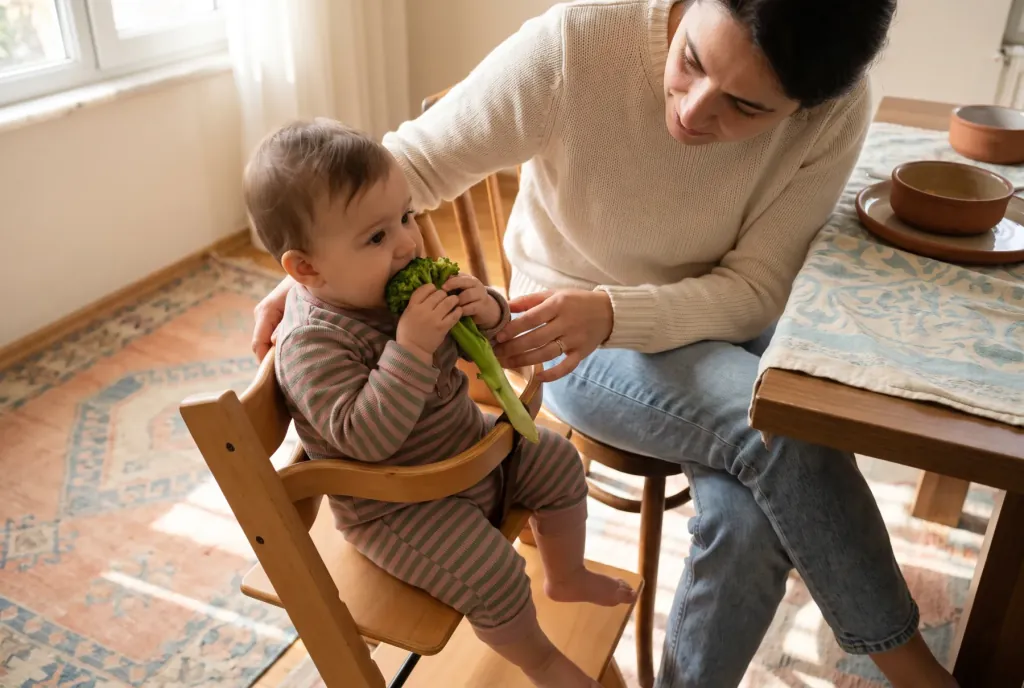
- Can sit upright and hold their head steady: they should have head control during feeding. - Has developing hand-eye-mouth coordination: they should be able to look at food, reach for it, pick it up and bring it to their own mouth. - Can swallow food: they should move food to the back of the mouth and swallow it instead of pushing it out with their tongue all the time.
The AAP also lists head control, reaching for food, opening the mouth when food is offered and being able to swallow food among the signs to consider when judging readiness. [2]
These signs usually appear together at around 6 months. Your baby showing interest in food or opening their mouth is not, on its own, a sign that they are ready for solids.
Behaviors mistaken for readiness
Families may read some baby behaviors as signs of readiness for solids. But these behaviors are not, on their own, signs of readiness: [3]
- Bringing fists or hands to the mouth and chewing on them - Waking at night more often than usual - Wanting breast milk or formula more often
These are normal behaviors in babies. Starting solids will not make your baby sleep longer at night. If your baby wants milk more often, you can keep feeding breast milk or formula until they are ready. [3]
What to expect at first
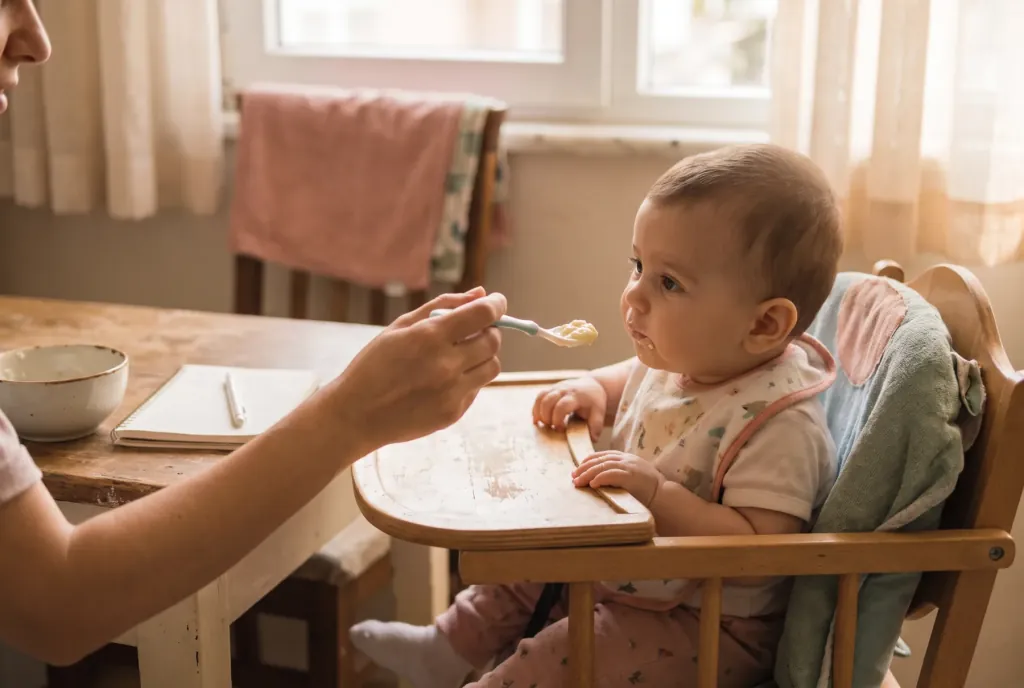
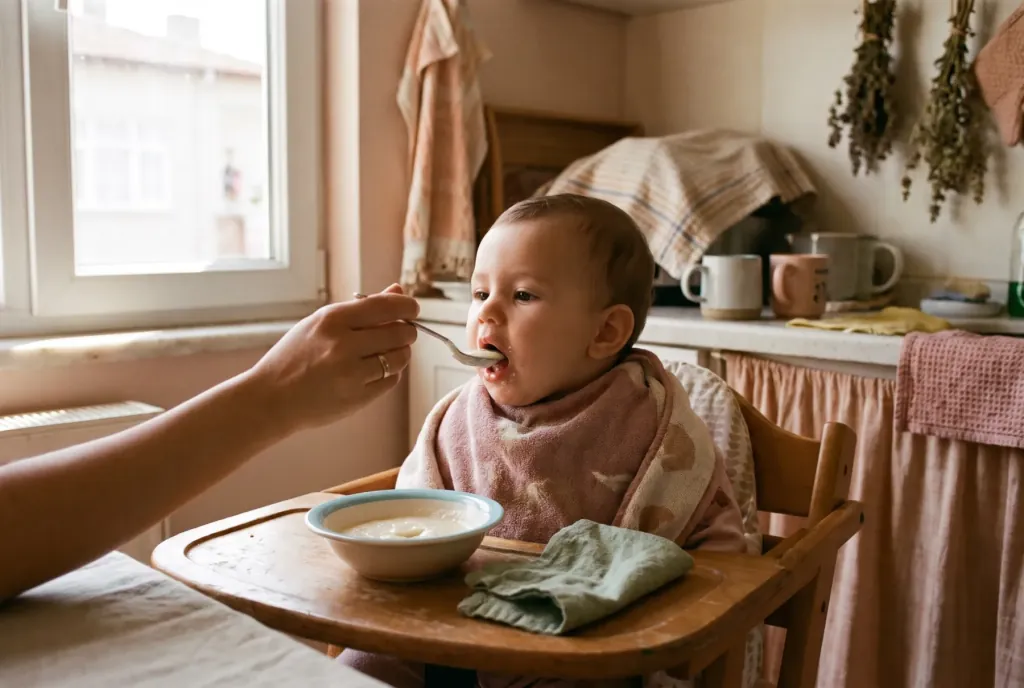
In the first tries, do not expect your baby to finish the whole serving. Some of the food may end up on their face, hands or bib. At this stage, the aim is not only feeding but also getting to know new tastes and textures and building the skill to move food around the mouth and swallow. [2,3]
Your baby may push food out with their tongue in the first tries. This can happen while they get used to a new way of eating. But if they struggle to move food to the back of the mouth and swallow it, they may not have developed this skill yet. The AAP notes that in that case you can wait a while and try again in a week or two. [2]
If your baby cries, closes their mouth or turns their head away, do not force them to eat. You can try again in a calm setting, following your baby's cues. [2,3]
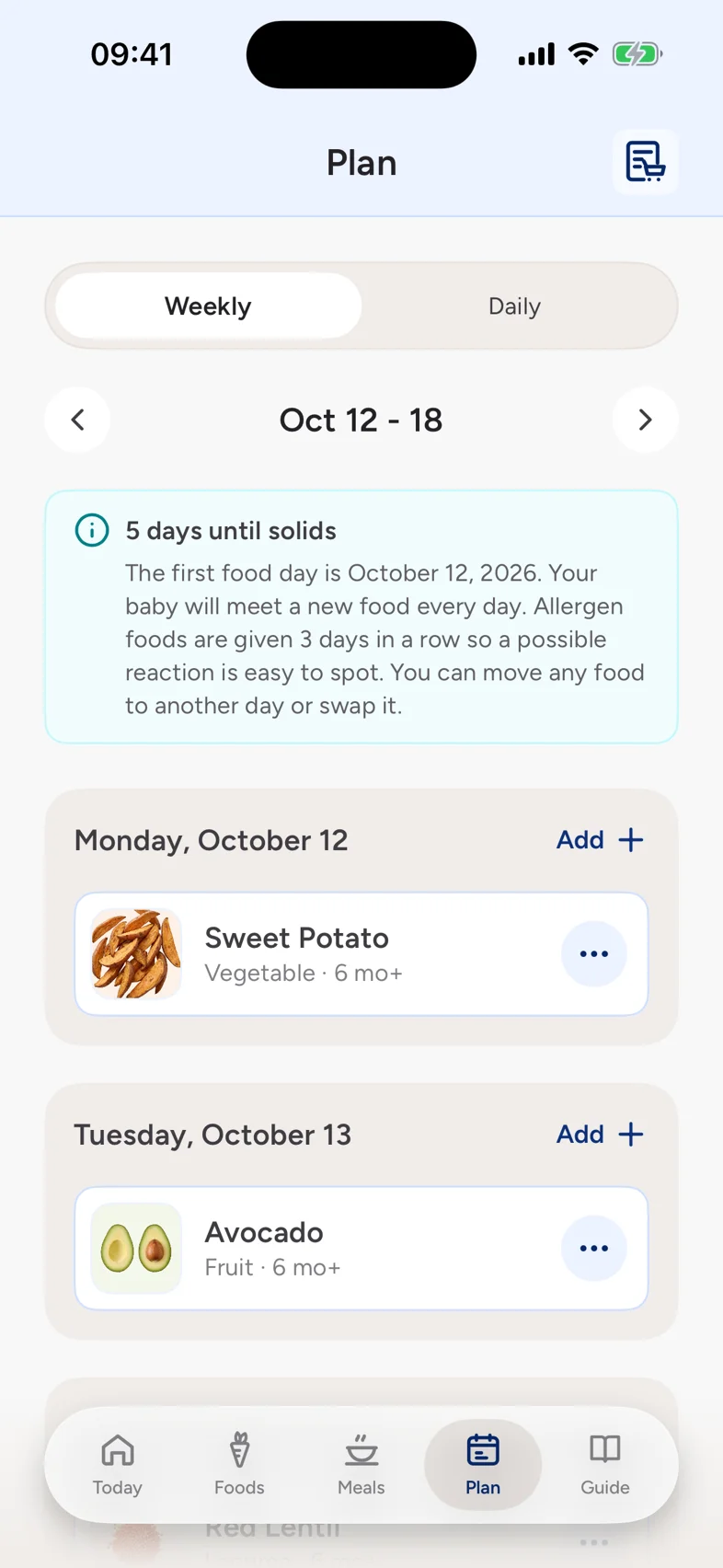
A starting solids calendar by age
Lokmini sets up a day-by-day starting solids calendar for your baby's age, introduces allergens one at a time and shows how to prepare every food by age.
Start with LokminiFrequently asked questions
My baby pushes food off the spoon with their tongue. What should I do?
This can happen in the first tries. Your baby may not yet have the skill to move food around the mouth and swallow it. Take a break for a while without forcing, then try again. [2]
Uzm. Dyt. Özge Uğur ErciyasPrepared the latest update, November 14, 2026
Sources
- World Health Organization (WHO). (2023). WHO Guideline for complementary feeding of infants and young children 6-23 months of age.
- American Academy of Pediatrics (AAP). (2026). When Can Babies Start Solid Foods? Readiness & Feeding Tips.
- National Health Service (NHS). (2026). Your baby's first solid foods.
- American Academy of Pediatrics. (2023). When Can Babies Start Solid Foods? Readiness & Feeding Tips. American Academy of Pediatrics (AAP) (HealthyChildren.org).
Lokmini is not a healthcare provider and does not offer health services. Lokmini shares information and does not diagnose. This information does not replace medical advice. Talk to your baby's doctor.