Skip to content
  • Fruits
  • 6 mo+
  • Medium choking risk

Watermelon for babies: when to start

Watermelon can start when your baby is ready for solids, at about 6 months. It is the classic summer treat. It comes from Africa, where in hot, dry country its thick rind and watery flesh gave people a precious supply of water.

  • Water
  • Potassium
  • Magnesium
  • Vitamin A
  • Vitamin C
  • Lycopene
Watermelon prepared for a baby

About watermelon

Watermelon provides carbohydrate, fiber and water, along with magnesium, potassium, vitamin A and vitamin C. It is also rich in the antioxidant lycopene.

Washing

The rind can carry bacteria from the soil. Just before cutting, scrub it well under water and pat it dry. Plain water is enough, with no special produce wash needed.

Also known as: karpuz dilimi, karpuz kabuğu, kırmızı karpuz, çekirdeksiz karpuz

  • Gluten-free
  • Vegan

How to prepare it by age

6 monthsStrip

Watermelon prepared for 6 months

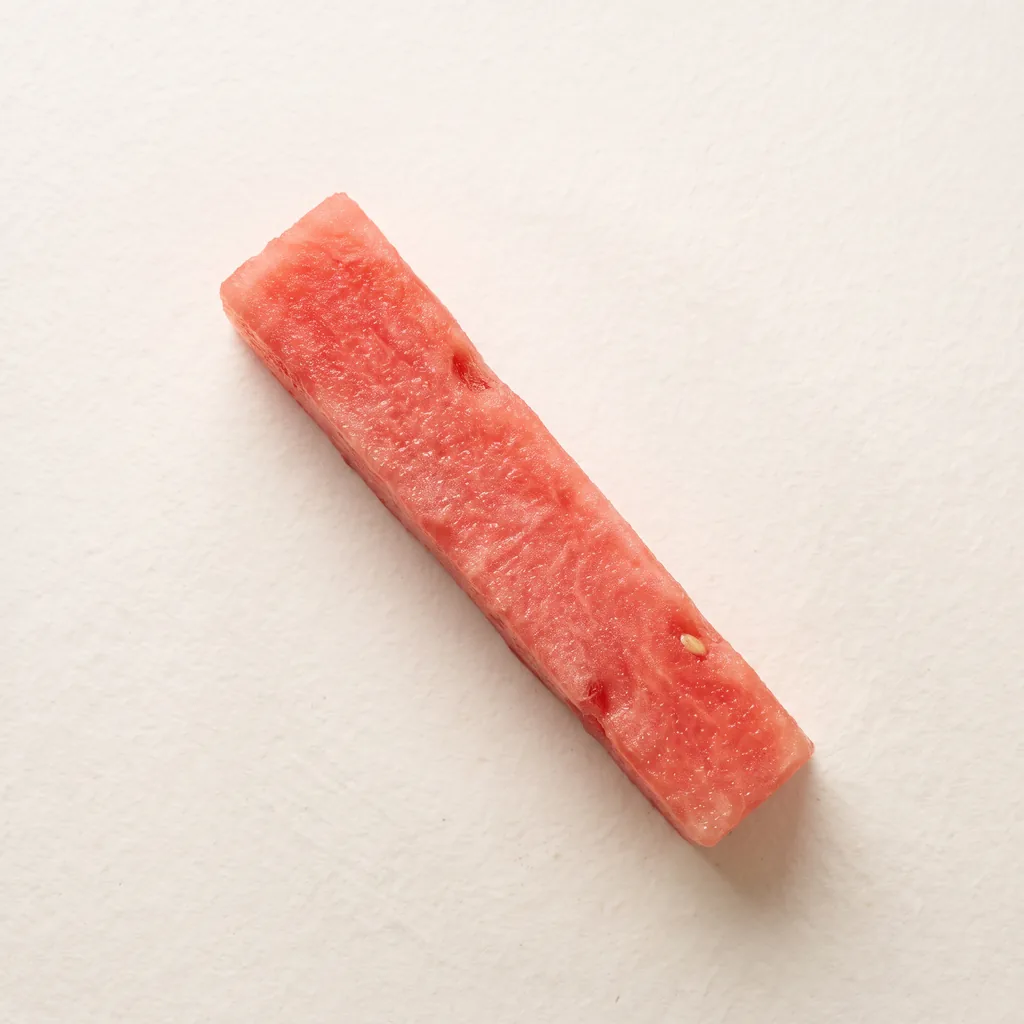
Cut: Finger strip

Cut seedless, ripe watermelon into finger-thick, palm-long sticks with the rind removed. Pick out every black seed one by one. The fruit is very juicy, so your baby may start by sucking on the stick. Watch as they grip and bite.
9 monthsCube

Cut: Bite sized piece

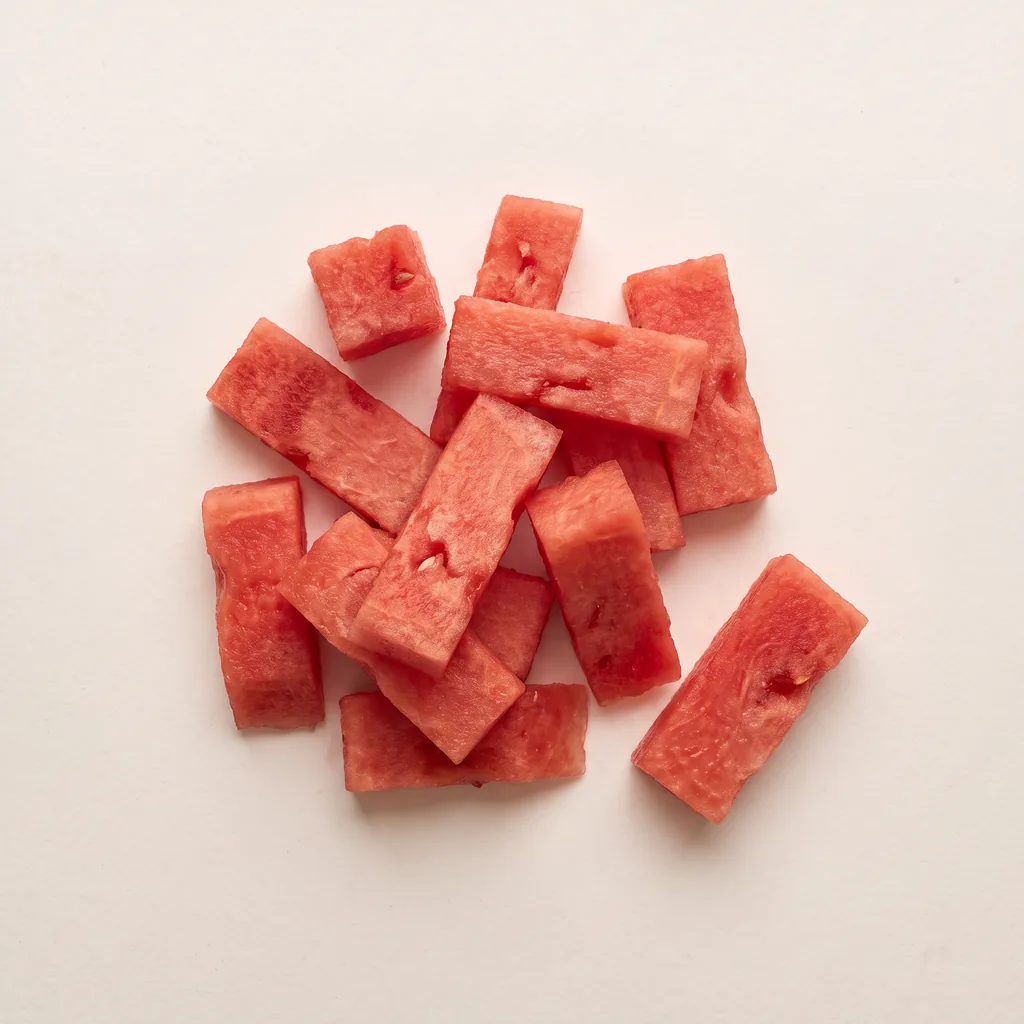
Offer seed-free watermelon in small, bite-sized cubes. Leave out the pale, firm part near the rind. If your baby struggles to grab the slippery cubes, go back to long thin sticks.

12 monthsCube

Watermelon prepared for 12 months

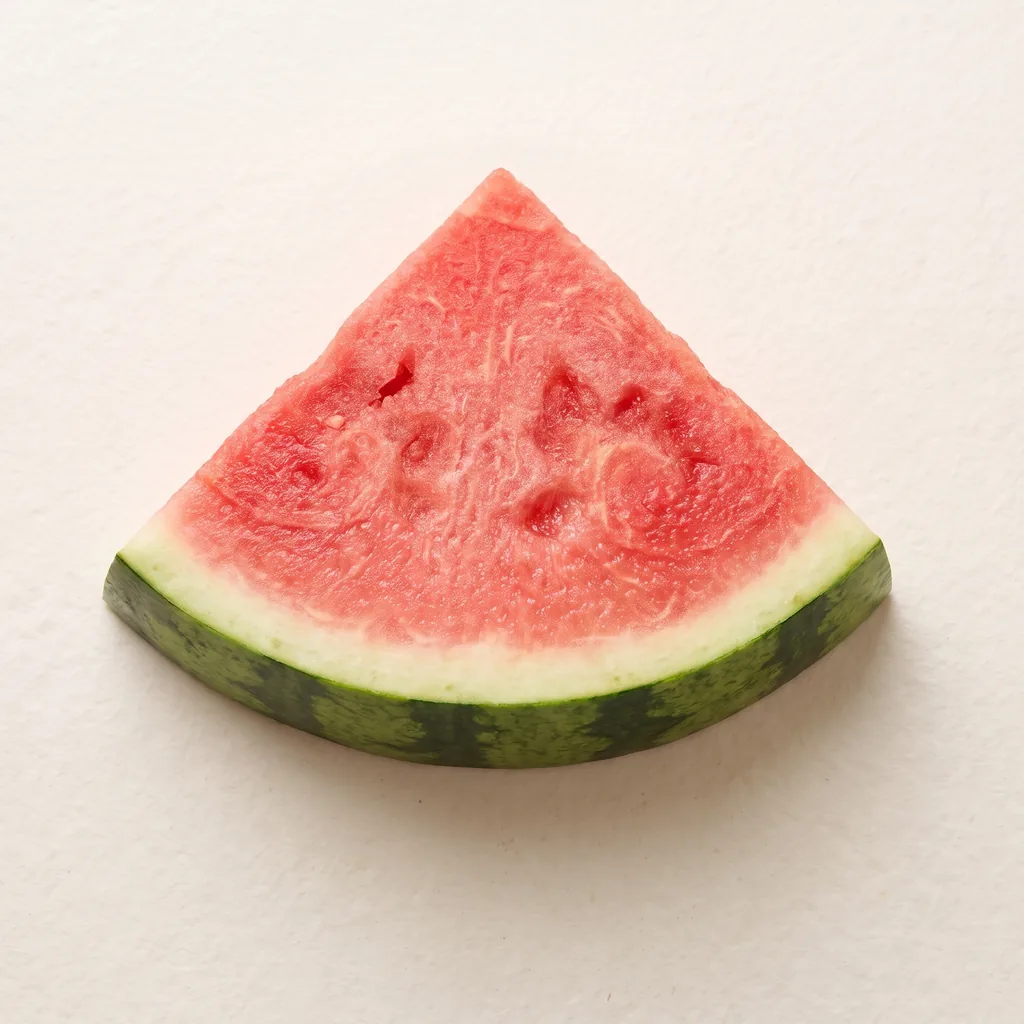
Keep serving cubes or thin slices. After 12 months you can hand over a triangular wedge with the rind on. Remove the seeds first and watch that your child does not bite into the green rind.

Choking risk

  1. Low
  2. Medium
  3. High

Although watermelon is soft, its high water content and slippery texture can cause coughing or gagging in babies who are just starting solids. Its seeds can be breathed into the windpipe. To lower the risk, remove the seeds and hard rind and serve watermelon in a way that suits your baby's age and chewing skills. Your baby should sit upright through the meal and stay under your constant watch. If your baby bites off a big piece, watch whether they can breathe. If they cannot cough well, cry or breathe, start choking first aid right away and call emergency services.

Watermelon seeds

Before serving watermelon to your baby, carefully pick out the black, hard seeds. Seeds can be breathed into the windpipe, so check the fruit even with seedless types.

Allergen information

Watermelon is not a common food allergen, but it can rarely cause allergic reactions. Cross-reactions linked to pollen food allergy syndrome can happen, especially in people allergic to grass or ragweed pollen. This usually shows up as itching, tingling or mild swelling in the mouth. Cross-sensitivity with some foods such as latex and melon has also been reported, but this does not mean everyone with these allergies will react to watermelon. When you give watermelon to your baby for the first time, start with a small amount and watch how they respond. If hives, swollen lips or repeated vomiting appear, stop serving it and see a health professional. If your baby has trouble breathing, call emergency services right away.

Frequently asked questions

What age can babies eat watermelon?

Watermelon can start when your baby is ready for solids, at about 6 months. It is the classic summer treat. It comes from Africa, where in hot, dry country its thick rind and watery flesh gave people a precious supply of water.

Is watermelon a common allergen?

Watermelon is not a common food allergen, but it can rarely cause allergic reactions. Cross-reactions linked to pollen food allergy syndrome can happen, especially in people allergic to grass or ragweed pollen. This usually shows up as itching, tingling or mild swelling in the mouth. Cross-sensitivity with some foods such as latex and melon has also been reported, but this does not mean everyone with these allergies will react to watermelon. When you give watermelon to your baby for the first time, start with a small amount and watch how they respond. If hives, swollen lips or repeated vomiting appear, stop serving it and see a health professional. If your baby has trouble breathing, call emergency services right away.

How do you prepare watermelon for babies?

For a 6-month-old: Cut seedless, ripe watermelon into finger-thick, palm-long sticks with the rind removed. Pick out every black seed one by one. The fruit is very juicy, so your baby may start by sucking on the stick. Watch as they grip and bite.
Is watermelon a choking hazard for babies?

Although watermelon is soft, its high water content and slippery texture can cause coughing or gagging in babies who are just starting solids. Its seeds can be breathed into the windpipe. To lower the risk, remove the seeds and hard rind and serve watermelon in a way that suits your baby's age and chewing skills. Your baby should sit upright through the meal and stay under your constant watch. If your baby bites off a big piece, watch whether they can breathe. If they cannot cough well, cry or breathe, start choking first aid right away and call emergency services.

Can watermelon cause diarrhea?

Watermelon is more than 90 percent water. Too much of it can loosen stools in some babies. Red watermelon can sometimes change the color of stool too. But do not assume red stool always comes from watermelon. If you suspect blood, see your doctor.

How should I wash watermelon?

Before cutting, scrub the rind well under running water with a clean vegetable brush, then pat it dry. You do not need soap, detergent or special produce washes.

How can watermelon help a teething toddler?

You can offer soft watermelon slices chilled in the fridge, with the seeds removed. Avoid fully frozen watermelon pieces and hard ice pops, as they can be a choking risk. Age-appropriate chilled teethers can also help soothe sore gums.

Prepared by the Lokmini team | Last updated November 19, 2026

Share:WhatsApp

Want to add this food to your baby's solid food calendar?

Join Lokmini to learn how this food is served at each age and to keep track of every food your baby tries.

Join Lokmini

Starting Solids

When and how to start solids, and what happens in the first week?

Read the guide

Similar foods

Let's get ready for the first bite together

Lokmini builds a day-by-day plan for your baby's age. Leave your email for new guides and our newsletter.

Start Your Journey