Dietitian's view
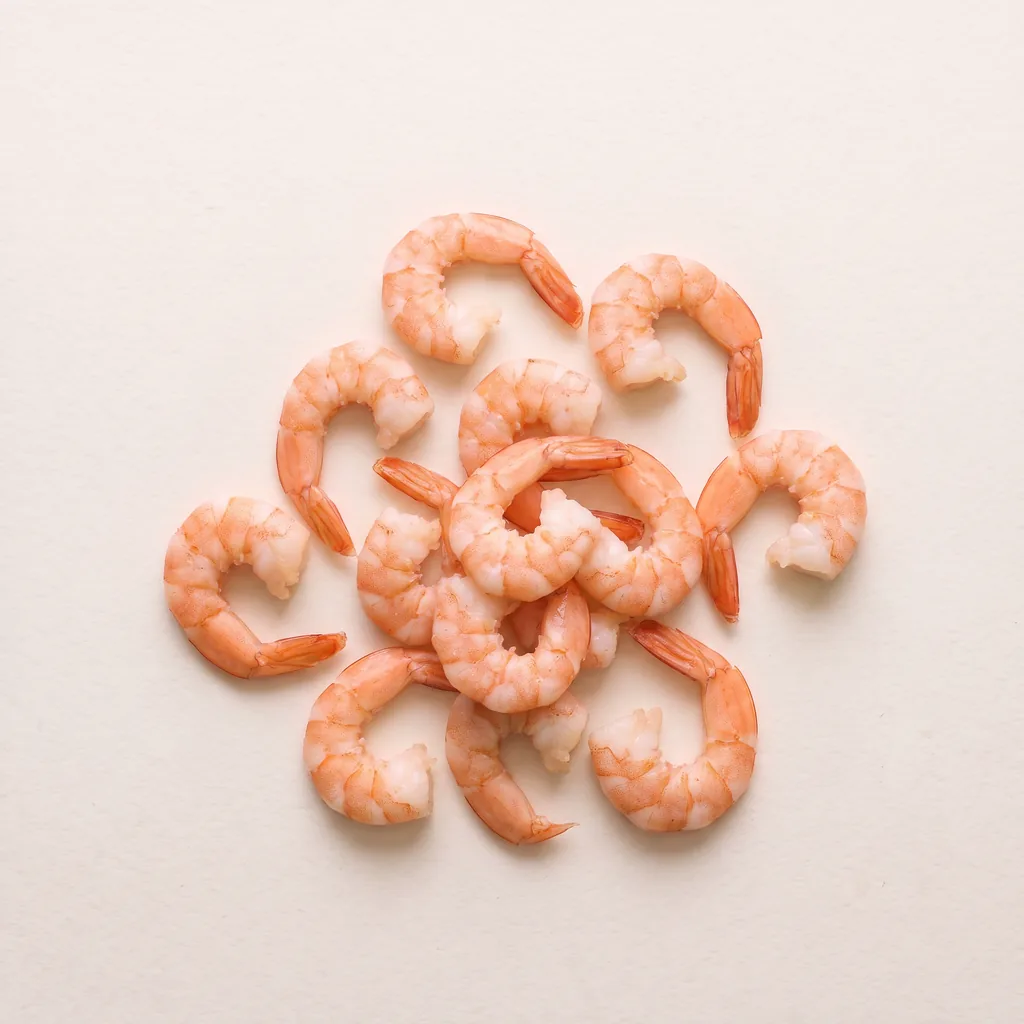
You can try shrimp cooked and on its own.

Uzm. Dyt. Berk AysanPrepared the latest update, November 25, 2026
Lokmini is not a healthcare provider and does not offer health services. For your baby's specific needs, talk to your doctor or a dietitian.
- Shellfish allergen
- Proteins
- 12 mo+
- High choking risk
Shrimp for babies: when to start
Lokmini suggests shrimp after 12 months. Shrimp belongs to the shellfish family. Hundreds of kinds live in oceans and fresh water. Some are tiny and some are very large. Colors run from pinkish red to dark brown.
- Protein
- Selenium
- Vitamin B12
- Iodine
- Omega-3
- Zinc
 Allergen, day 1/3
About shrimp
When to offer
Shrimp is a common allergen and a high choking risk. Pick the timing with your family. For your baby's specific needs, talk to your doctor or a dietitian.
Cook it through
Babies are more prone to food-borne illness. Cook shrimp until the inside is fully opaque.
Nutrition
Shrimp provides protein, omega-3 fats, and vitamins B6 and B12. It also has calcium, selenium, iodine, and zinc. Its mercury level is lower than many other seafoods.
Also known as: deniz karidesi, gambas, karides, kuzu karides, tatlı su karidesi
- Gluten-free
- Contains shellfish
Shrimp is offered 3 days in a row
So that any reaction can be linked to the right food, shrimp is offered 3 days in a row and no other new food is tried on those days.
- 1/3
First taste
Start with a small amount in the morning or around midday. Your baby is watched closely for 5 to 10 minutes after the first bite.
- 2/3
Same food, same calm
Shrimp is offered again the same way. No other new food is tried today.
- 3/3
Introduction done
If no reaction was seen, shrimp is now part of your baby's meals. It keeps being offered regularly.
Emergency
If your baby has trouble breathing or swelling of the face or tongue, call 911 (or your local emergency number) right away.
About shrimp allergy
Shrimp is a common allergen. The World Health Organization counts it among the global priority allergens. A child allergic to shrimp may also react to crab, lobster, and crayfish. Reactions to mollusks such as mussels, squid, and octopus are less common.
Shellfish allergy mostly begins in adulthood. In most children who develop it, it does not go away. If you suspect an allergy, do not give shrimp. For your baby's specific needs, talk to your doctor or a dietitian.
When introducing
Start with a small amount. Give it the first time in the morning, on its own, and watch for symptoms. If all goes well, raise the amount slowly over later meals. Once introduced, serving it weekly when possible helps keep the allergen in the routine. You do not need to try every shellfish type separately. Serve whichever you can find.
Other points
A shellfish allergy does not mean a fish allergy. Still, products made in the same facility can carry traces. Sulfites are sometimes used to preserve shrimp. In people with asthma, sulfites can trigger allergy-like reactions. Read the label.
How to prepare it by age
Age-by-age prep is in the Lokmini app
See how to cut, texture and serve shrimp at 12 months in the app.
Join LokminiChoking risk
- Low
- Medium
- High
Shrimp is a high choking risk for babies and young children. Its texture is rubbery and firm, and its shape is round.
How you cut it matters at every age. Leave no round pieces behind. Stay close while your baby eats and set up a safe eating space.
Never serve whole
Do not serve whole shrimp before age three. Always cut lengthwise or mince.
Frequently asked questions
What age can babies eat shrimp?
Is shrimp a common allergen?
Is shrimp a choking hazard for babies?
Can babies eat raw shrimp?
Can babies have canned shrimp?
At what age is fried shrimp okay for babies?
Should I worry about the cholesterol in shrimp?
Is shrimp high in sodium?
Sources
- World Health Organization (WHO), Guideline for complementary feeding of infants and young children 6-23 months of age (2023)
- National Health Service (NHS), Preparing food safely for babies
- CDC, Infant and Toddler Nutrition, Choking Hazards
- European Academy of Allergy and Clinical Immunology, EAACI guideline: Preventing the development of food allergy in infants and young children (2020 update) (2021)
- Turkish National Society of Allergy and Clinical Immunology, Besin Alerjisi, öncelikli 10 besin
- American Academy of Pediatrics (AAP), HealthyChildren, Choking Prevention for Babies and Children
- Nutrients, Dietary Cholesterol and the Lack of Evidence in Cardiovascular Disease (2018)
- Clinical and Experimental Allergy, Shellfish allergy (2010)
Want to add this food to your baby's solid food calendar?
Join Lokmini to learn how this food is served at each age and to keep track of every food your baby tries.