
This is more common than you think
When a child pushes away a vegetable they loved the day before, most parents worry, but it is actually a very common stage. Especially during the "food neophobia" phase at around 18 to 24 months, children develop a natural caution towards new or unfamiliar foods. This reflects an instinct to protect themselves from unknown substances. The reaction is not limited to this age range either. Some babies are selective about certain textures or tastes from the first months of solid food, and this is still within the normal range.
The 8 to 15 tries rule
Refusing a new food does not mean your baby will never like it. Research suggests a baby may need on average 8 to 15, sometimes more, pressure-free tries to really get used to a new taste. In practice, this means putting the same vegetable on the plate in different forms (boiled, roasted, or inside another dish) for several weeks in a row, without comments and without pressure.
The mealtime setting teaches more than behaviour
Babies notice tension at mealtimes and react to it. Seeing a parent eat the same food is a quiet way of persuading. Promising rewards or applying pressure usually has the opposite effect and labels that food as something "unwanted". A calm, routine and pressure-free table is one of the strongest factors in reducing picky eating in the long term.
A food refused today may be accepted in a few weeks. Simply continuing to offer it is progress. It does not have to be finished.
A starting solids calendar by age
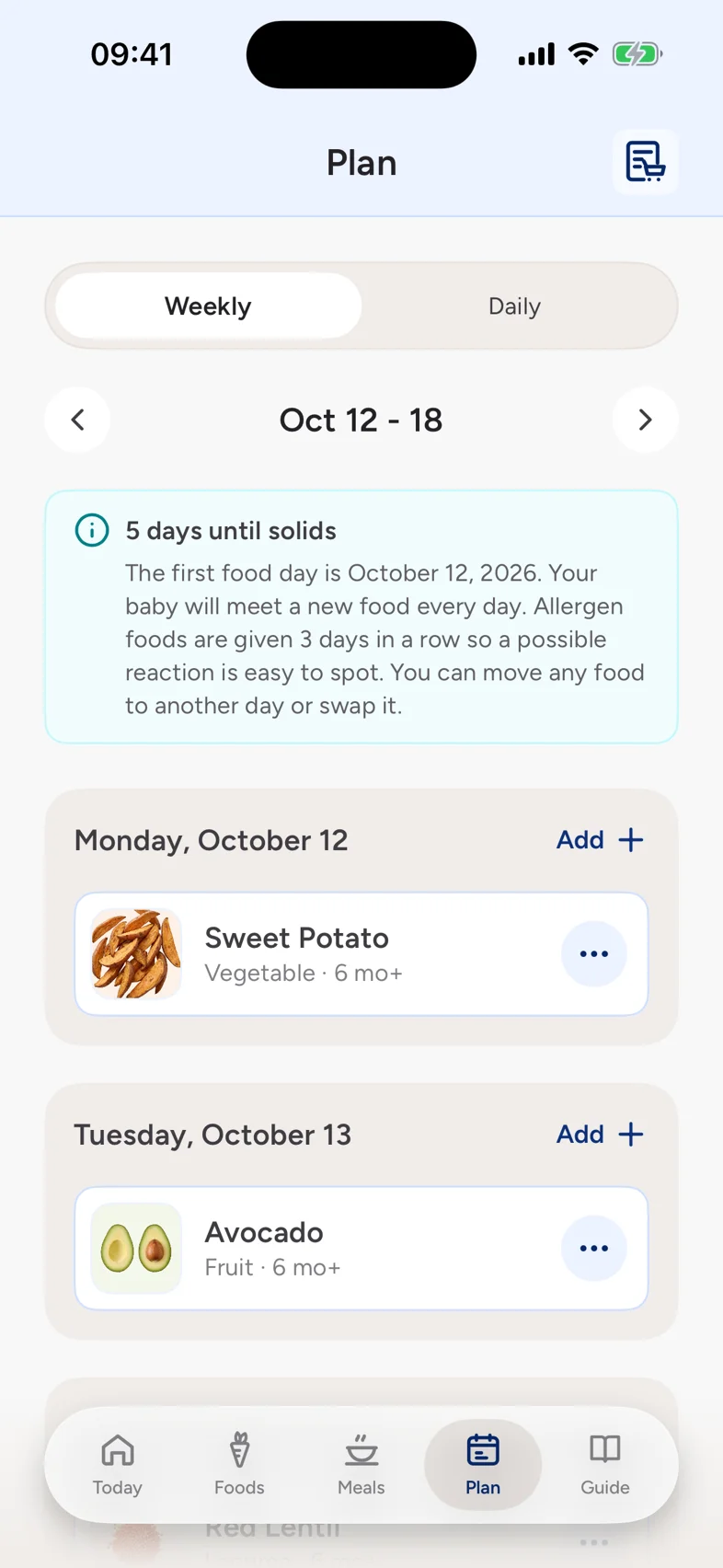
Lokmini sets up a day-by-day starting solids calendar for your baby's age, introduces allergens one at a time and shows how to prepare every food by age.
Start with LokminiWritten by the Lokmini teamLast updated November 14, 2026
Sources
- Ellyn Satter Institute. (n.d.). Division of Responsibility in Feeding.
- ESPGHAN. (2017). Complementary Feeding position paper.
Lokmini is not a healthcare provider and does not offer health services. Lokmini shares information and does not diagnose. This information does not replace medical advice. Talk to your baby's doctor.