In short
Even before learning to talk, your baby can show hunger and fullness cues through movements and sounds. Crying is usually one of the late signs of hunger. [1]
In the first 5 months, bringing a hand to the mouth and turning the head toward the breast or bottle are among the signs of hunger. [1]
Between 6 and 23 months, reaching for food, opening the mouth and getting excited at the sight of food can be signs of hunger. [1]
The World Health Organization (WHO) recommends responsive feeding for children aged 6 to 23 months. [2]
Your baby can tell you
Even though your baby cannot talk yet, they can show hunger and fullness through movements, facial expressions and sounds. Knowing these cues helps you understand when your baby wants to feed and when they are full.
Crying is often a late sign of hunger. If you catch the early cues, you can start feeding while your baby is still calm. [1,3]
Birth to 5 months
A hungry baby may bring a hand to their mouth and turn their head toward the breast or bottle. They may pucker, smack or lick their lips. Clenching their hands into tight fists can also be a sign of hunger.
A full baby may close their mouth, turn their head away from the breast or bottle and relax their hands. [1]
6 to 23 months
As your baby grows, their hunger and fullness cues change too.
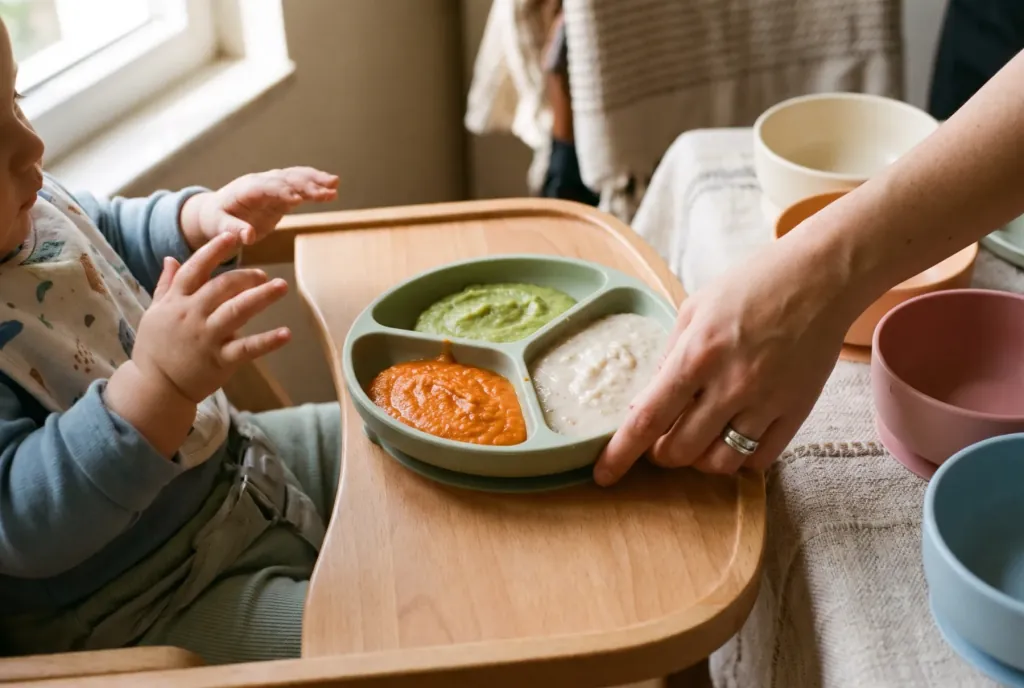
A hungry baby may reach for food or point at it. They may open their mouth when a spoon or food is offered and get excited when they see food. They may use hand movements and sounds to show they want more.
A full baby may push food away, close their mouth or turn their head. They may use hand movements and sounds to show they do not want any more. [1]
What is responsive feeding?
The World Health Organization recommends responsive feeding for children aged 6 to 23 months. In this approach, your baby gives hunger or fullness cues. The caregiver notices these cues and responds promptly, in a supportive way that suits the baby's stage of development. [2]
Responsive feeding helps your baby recognize their own hunger and fullness signals and learn to regulate how much they eat. In this way, it can help avoid both underfeeding and overfeeding. [2]
Trust instead of pressure
Respect your baby's hunger and fullness cues. They do not need to finish everything on the plate or in the bottle. If they show they are full, do not push them to eat.
Do not use food as a reward or a punishment at mealtimes. Support your baby in feeding themselves and make meals a pleasant, safe family time. [1,2]
Remember: you decide what to offer and when meals happen. Your baby shows how much they will eat through their own cues.
If you think your baby is not eating enough, their growth is affected, or they struggle all the time during feeds, talk to your child's doctor.
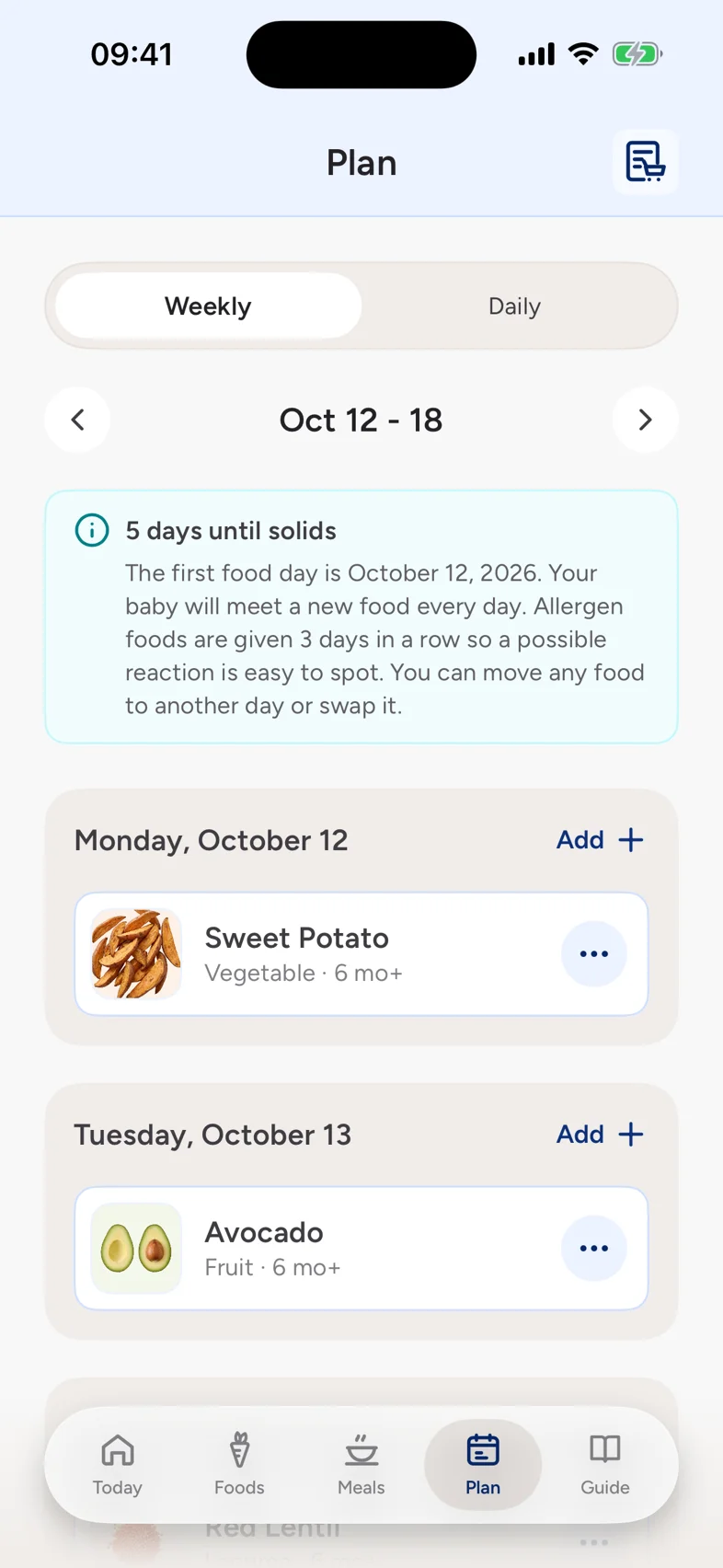
A starting solids calendar by age
Lokmini sets up a day-by-day starting solids calendar for your baby's age, introduces allergens one at a time and shows how to prepare every food by age.
Start with Lokmini
Uzm. Dyt. Özge Uğur ErciyasPrepared the latest update, November 14, 2026
Sources
- CDC. (2026). Signs Your Child Is Hungry or Full.
- World Health Organization (WHO). (2023). WHO Guideline for complementary feeding of infants and young children 6-23 months of age.
- World Health Organization (WHO). (2026). Infant and young child feeding (fact sheet).
Lokmini is not a healthcare provider and does not offer health services. Lokmini shares information and does not diagnose. This information does not replace medical advice. Talk to your baby's doctor.