When does a reaction start?
Allergic reactions usually start within a few minutes of a new food. Sometimes signs can take up to 2 hours to appear. In some cases, such as cow's milk allergy, signs can be delayed by up to 3 days. Try a new food when your baby is healthy and at home. Choose a time when you can watch them closely afterward.
Mild signs
A few hives may appear around the mouth or face. You may see a new redness, an itchy rash or worsening eczema. Sneezing, a runny nose or watery eyes can also occur. In this case, stop giving the new food and talk to your child's doctor. Keep watching your baby, because reactions can get worse.
Serious signs
Swelling of the lips, face or tongue is a serious sign. Trouble breathing, wheezing or repeated coughing are also serious. Hives spreading over the body and repeated vomiting need urgent attention. Paleness, bluish skin, sudden floppiness or unusual sleepiness are important signs. Babies may also show sudden drooling and crying that cannot be soothed.
What to do right away
If you see any serious sign, call your local emergency number right away. Follow the advice the operator gives you. If your doctor has prescribed an emergency adrenaline auto-injector for your baby, use it right away as your plan says, then call emergency services. Lay your baby on their back. If they are vomiting or struggling to breathe, lay them on their side.
This article does not replace a medical exam. Use any medicine only as your doctor advises. If you think your baby has a food allergy, talk to your child's doctor.
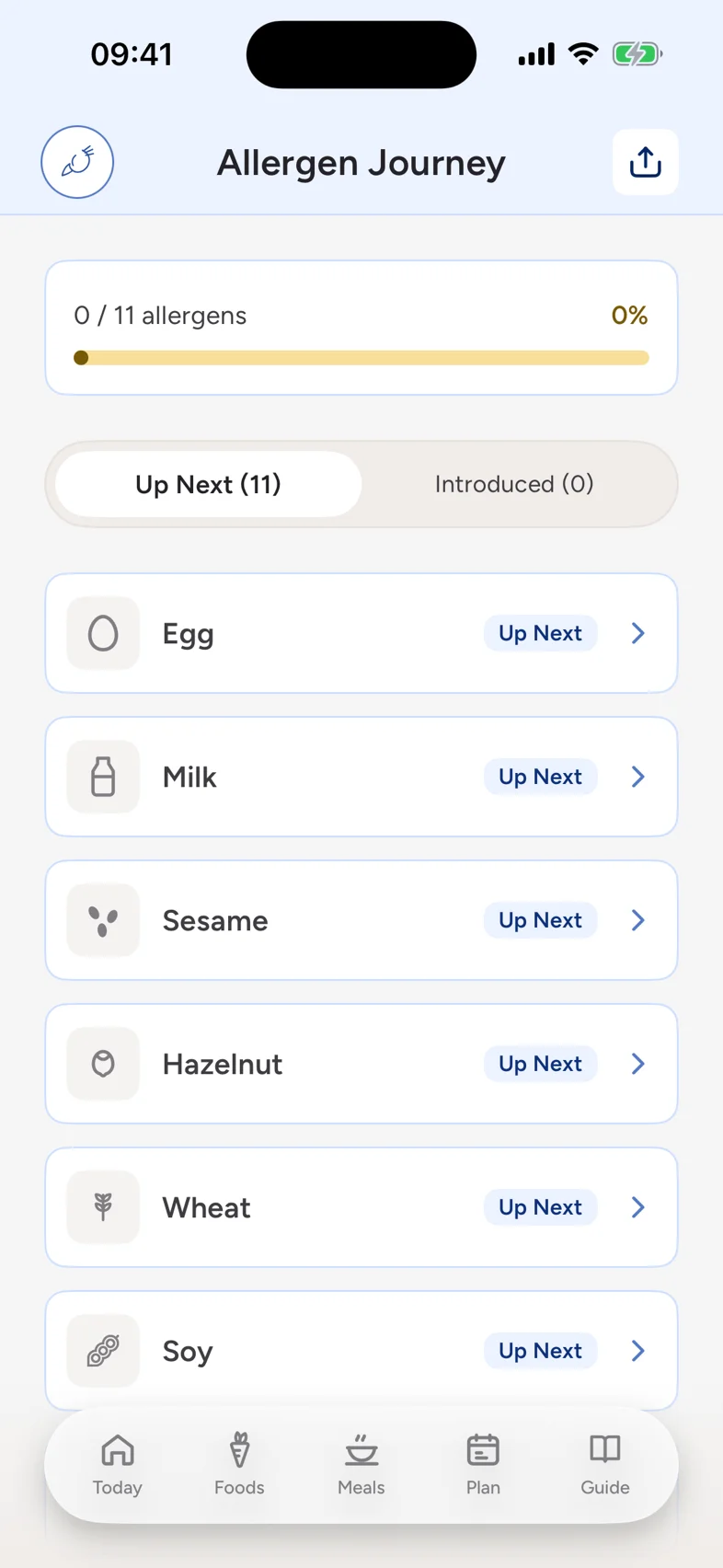
We plan your allergen days
The allergen journey adds each allergen to your calendar 3 days in a row. On those days, the plan focuses only on that introduction.
Start with LokminiWritten by the Lokmini teamLast updated October 19, 2026
Sources
- NIAID. (2017). Addendum Guidelines for the Prevention of Peanut Allergy in the United States: Report of the NIAID-Sponsored Expert Panel.
- American Academy of Pediatrics (AAP). (2025). Anaphylaxis in Infants & Children: Responding to Severe Allergic Reactions.
- National Health Service (NHS). (2026). Food allergy.
- National Health Service (NHS). (2024). Food allergies in babies and young children.
Lokmini is not a healthcare provider and does not offer health services. Lokmini shares information and does not diagnose. This information does not replace medical advice. Talk to your baby's doctor.