In short
• A cup can be introduced at around 6 months, when solids start. Sips of water can be offered at meals. [1,2]
• An open cup or a cup without a valve (free-flow cup) helps your baby learn to sip instead of suck. [1]
• Straw cups and training cups can also be used during the switch. [2]
• It is advised to finish the move from bottle to cup between 12 and 18 months. [3]
When does a baby start using a cup?
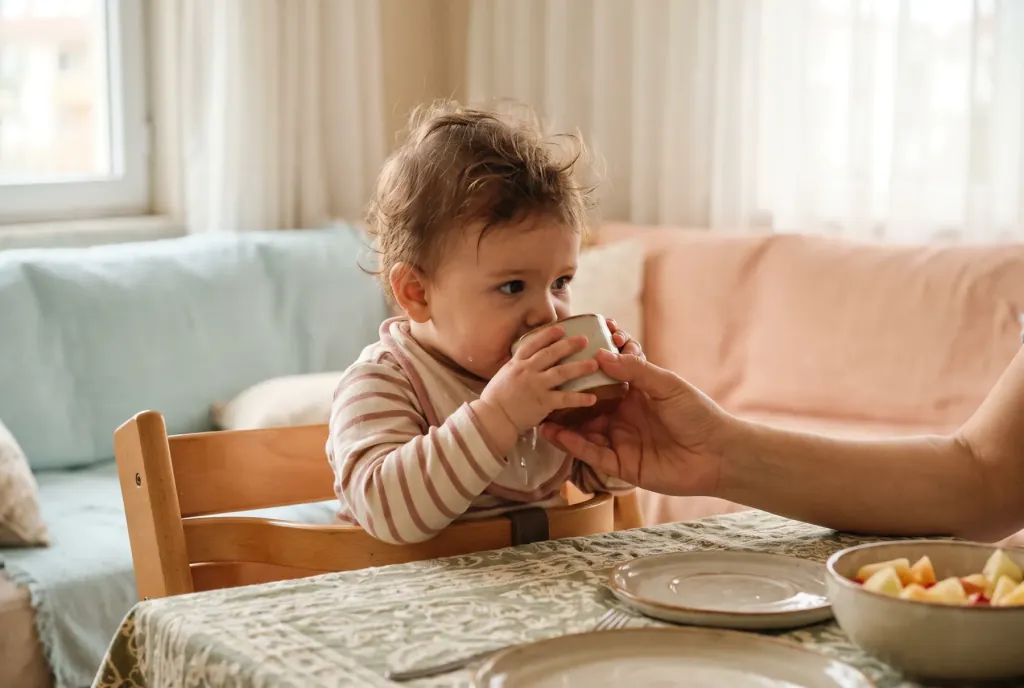
You can introduce a cup at around 6 months, when your baby starts solids. Offering a few sips of water at meals helps them learn to use a cup. [1,3]
The US Centers for Disease Control and Prevention (CDC) notes that babies can start learning to use a cup without a lid from about 9 months, and that at around 12 months they can drink from an open cup held by an adult. [2]
Why is an open cup preferred?
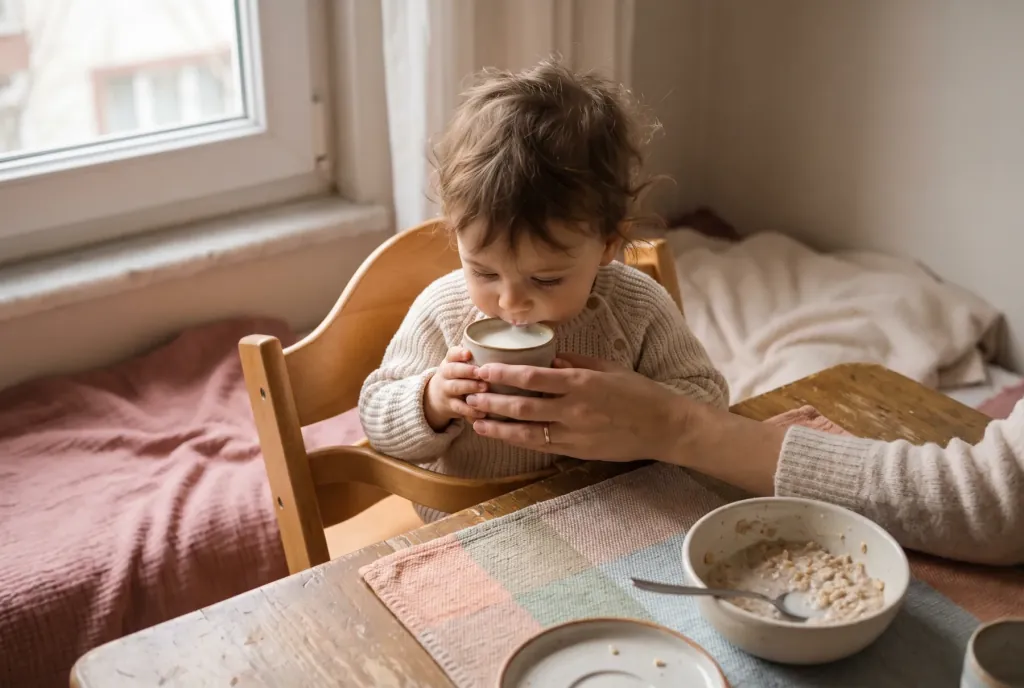
An open cup helps your baby learn to drink by sipping instead of sucking. Free-flow cups without a valve can also be used to build this skill.
The UK National Health Service (NHS) notes that open or valve-free cups support sipping skills and are better for teeth. [1]
When are straw cups and sippy cups used?
At about 6 months, you can also try straw cups or training cups with a spout. Which cup is easier to use varies from baby to baby. [2,3]
A sippy cup can be a short-term option during the switch. But it is important to help your baby learn to use an open cup over time. The American Academy of Pediatrics (AAP) advises using training cups while learning and moving to an open cup by about 2 years of age. [3]
What goes in the cup?
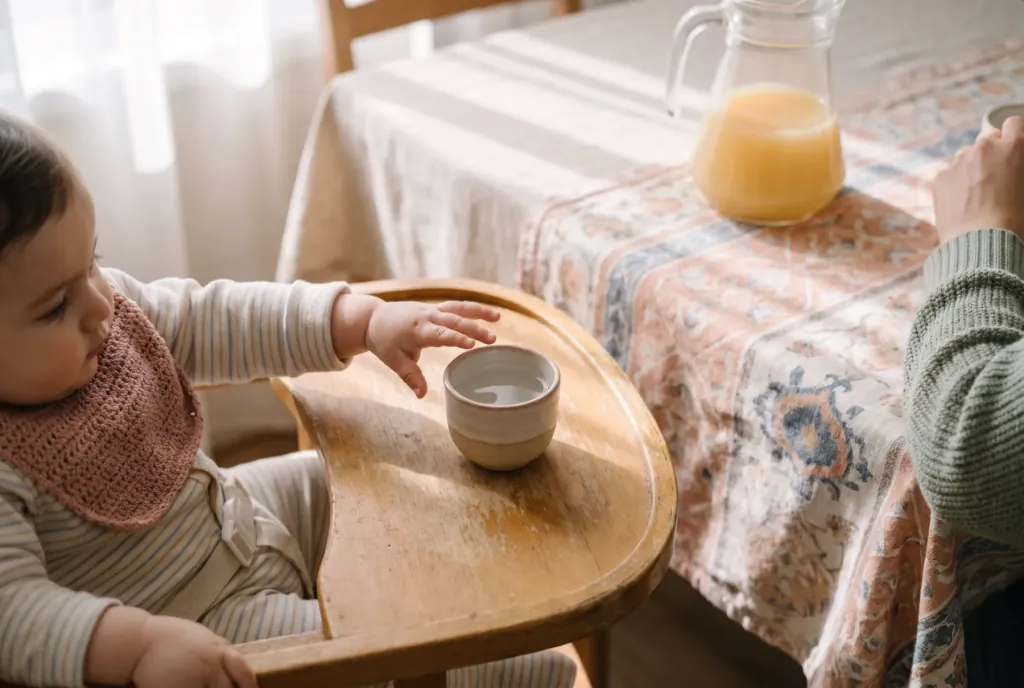
Between 6 and 12 months, small amounts of water can be offered with meals. The AAP gives about 120 to 240 ml of water a day as a suitable range for this age. Breast milk or formula stays the main drink at this stage. [4]
Do not give cow's milk as the main drink before 12 months. From 12 months, pasteurized whole cow's milk can be added to your child's diet. [1,4]
Whole fruit is a better choice than fruit juice. Babies under 12 months do not need fruit juice. [1]
When is the bottle stopped?
The AAP advises moving from bottle to cup gradually, starting at about 6 months. The NHS advises not encouraging bottle feeding after age 1. [1,3]
Instead of switching all at once, you can offer a cup regularly at meals and cut down on the bottle step by step.
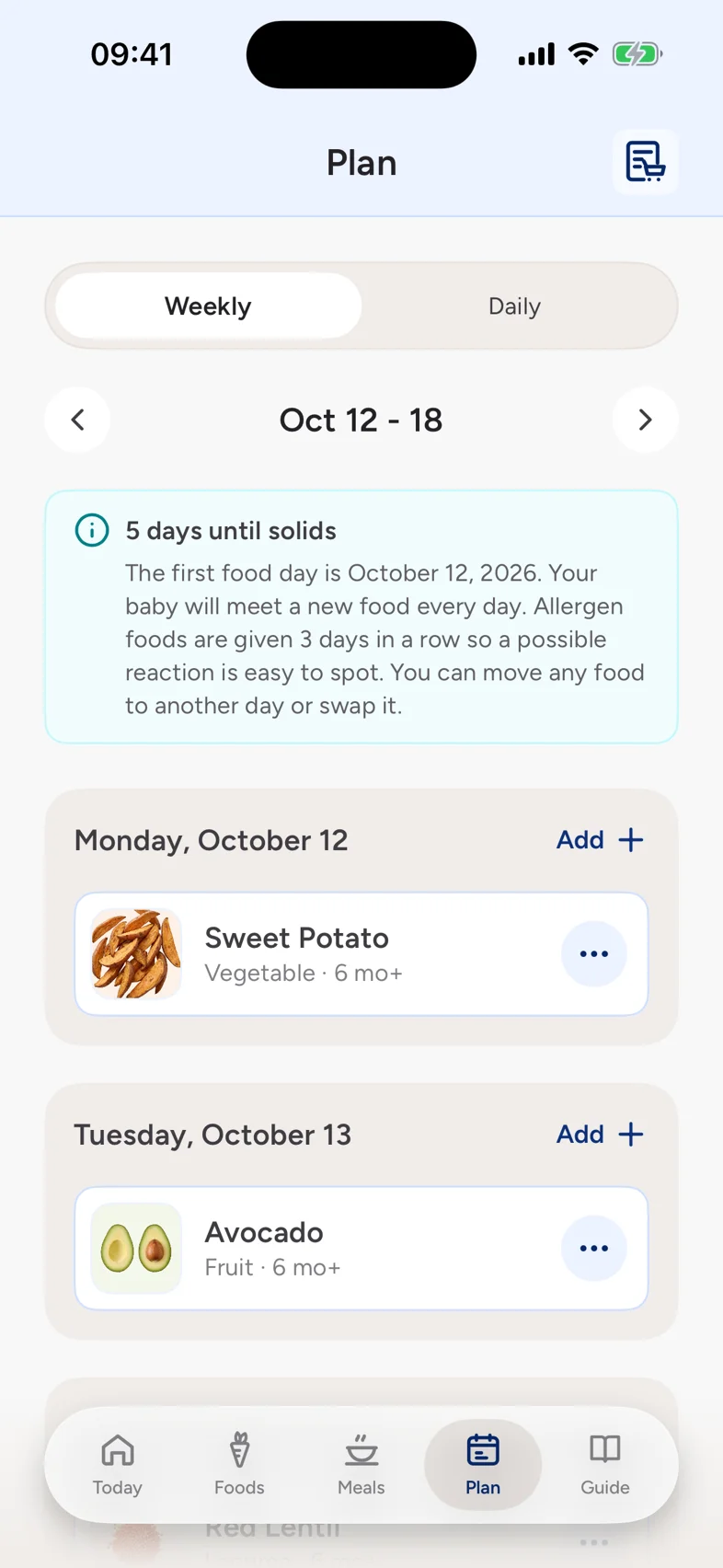
A starting solids calendar by age
Lokmini sets up a day-by-day starting solids calendar for your baby's age, introduces allergens one at a time and shows how to prepare every food by age.
Start with LokminiFrequently asked questions
Can fruit juice be given in a cup?
Fruit juice is not recommended for babies under 12 months. For older children too, whole fruit is a better choice than juice. [1]
Can a sippy cup harm my baby's teeth?
A sippy cup does not directly cause tooth decay by itself. But sipping sugary drinks often throughout the day can raise the risk of tooth decay. So water should be the first choice of drink in the cup. [1]
When can cow's milk go in the cup?
Cow's milk can be offered as the main drink from 12 months. At this age, you can choose pasteurized whole milk. In the first 12 months, breast milk or formula should be the main drink. [1]
Uzm. Dyt. Özge Uğur ErciyasPrepared the latest update, November 14, 2026
Sources
- National Health Service (NHS). (2026). Your baby's first solid foods.
- American Academy of Pediatrics (AAP). (2023). From Bottle to Cup: Helping Your Child Make a Healthy Transition.
- National Health Service (NHS). (2022). Drinks and cups for babies and young children.
- CDC. (2026). Fingers, Spoons, Forks, and Cups.
- American Academy of Pediatrics (AAP). (2023). Recommended Drinks for Children Age 5 & Younger.
- CDC. (2026). Cow's Milk and Milk Alternatives.
Lokmini is not a healthcare provider and does not offer health services. Lokmini shares information and does not diagnose. This information does not replace medical advice. Talk to your baby's doctor.