Dietitian's view
Gruyère can be risky because of its salt content.
Lokmini is not a healthcare provider and does not offer health services. For your baby's specific needs, talk to your doctor or a dietitian.
- Cow's milk allergen
- Dairy
- Not recommended for babies
- Medium choking risk
Can babies have Gruyère cheese?
Gruyère cheese is not recommended for babies. Its salt content may make it risky.
- Protein
- Calcium
- Zinc
- Selenium
- Vitamin A
- Vitamin B12
 Allergen, day 1/3
About Gruyère cheese
For babies
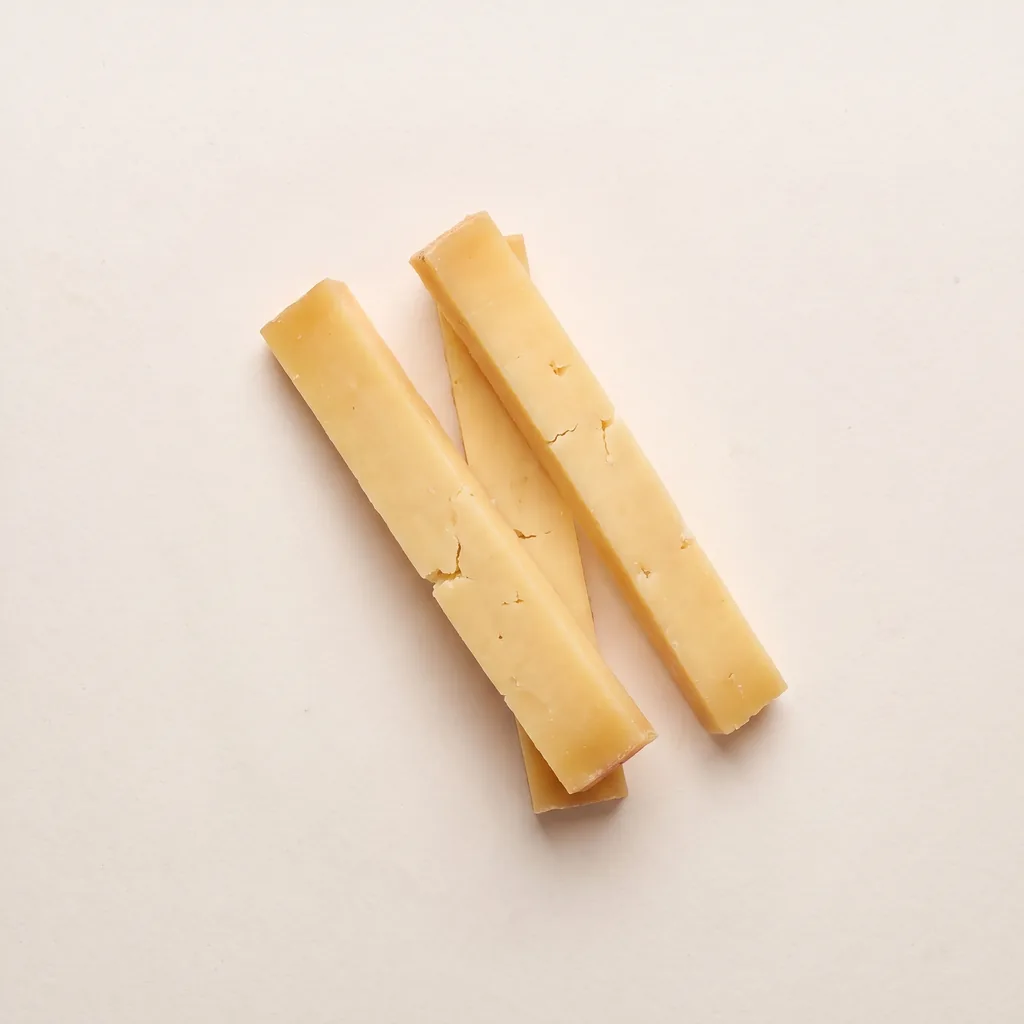
Named after the Swiss town of Gruyères, Gruyère is an aged, hard cheese made from cow's milk. It tastes mildly sweet and a little nutty. It shows up in quiche and fondue because it melts well.
Nutrients
Gruyère contains protein, fat, calcium, zinc, selenium, plus vitamin A and B12.
It is fairly high in sodium.
Also known as: gruyer peyniri, gruyer, gruyere, gruyère
- Gluten-free
- Vegetarian
- Contains dairy
Choking risk
- Low
- Medium
- High
Firm cheeses such as gruyère can clump in the mouth and become hard to manage, which raises the choking risk.
About Gruyère cheese allergy
FPIES warning
It is one of the known triggers of FPIES (a delayed-onset food allergy). In this condition, repeated severe vomiting, pallor and lethargy may occur, usually 1-4 hours after the food is eaten. Diarrhea may appear later. These symptoms require urgent medical evaluation.
Yes. Gruyère is made from cow's milk, a common allergen. The World Health Organization lists cow's milk as a global priority allergen. About one in five childhood food allergies involves milk. Dairy from sheep, goats, and buffalo can trigger similar reactions.
There is good news: milk allergy often fades. Most children with cow's milk allergy outgrow it by age 6. Some babies with mild milk protein allergy can retry milk around their first birthday, guided by their doctor.
Aged cheeses hold histamine. Children who are sensitive to it may get a rash.
Milk is also a common trigger of FPIES, a delayed reaction. Repeated vomiting and diarrhea begin a few hours after eating. Without treatment it can cause serious dehydration. Call your doctor if your baby shows these signs.
Lactose intolerance can be mistaken for allergy. It is rare in babies and toddlers. Aged cheeses are low in lactose, so many people tolerate them.
Frequently asked questions
What age can babies eat Gruyère cheese?
Is Gruyère cheese a common allergen?
Is Gruyère cheese a choking hazard for babies?
Is gruyère too salty for babies?
Can gruyère be made from raw milk?
Sources
- Nutrients, Liem DG. Infants and children with cow's milk allergy. Nutrients 9(9):1011 (2017)
- Annals of Allergy, Asthma & Immunology, The epidemiology of milk allergy in US children (2013)
- Biomolecules, Histamine Intolerance: The Current State of the Art (2020)
- Nutrients, Histamine Intolerance in Children: A Narrative Review (2021)
Prepared by the Lokmini team | Last updated November 17, 2026