Yogurt
- First taste
- 6 months
- Choking risk
- low
- Common allergen
- yes
- Iron
- low
Milk allergen · plain and full-fat
Contains allergens
Each new allergen is offered on its own and watched for two hours. Our allergen introduction guide is available in Turkish for now.
When can babies eat yogurt?
Yogurt can start when your baby is ready for solids, at about 6 months. If you have heard that babies cannot have dairy, know that dairy as a solid food, such as yogurt, can be introduced before 12 months. Only cow's milk as a drink has to wait until nearer 12 months.
Yogurt starts as milk, from cows, sheep, goats, buffalo, yaks, camels and more, which bacterial cultures thicken until it almost sets. The word yogurt comes from Turkish. Today it is widely made in Europe, North Africa and Asia.
Yogurt provides protein, fat and carbohydrate. It contains potassium, calcium, zinc, choline, omega-3 fats, and vitamins A, B6, B12, and D, and these benefit bones, eyes, skin, and the immune system. Its probiotics support the gut microbiome.
No honey
Do not give honey-sweetened yogurt to babies under 12 months. Honey carries an infant botulism risk.
How do you prepare yogurt for babies?
Which yogurt
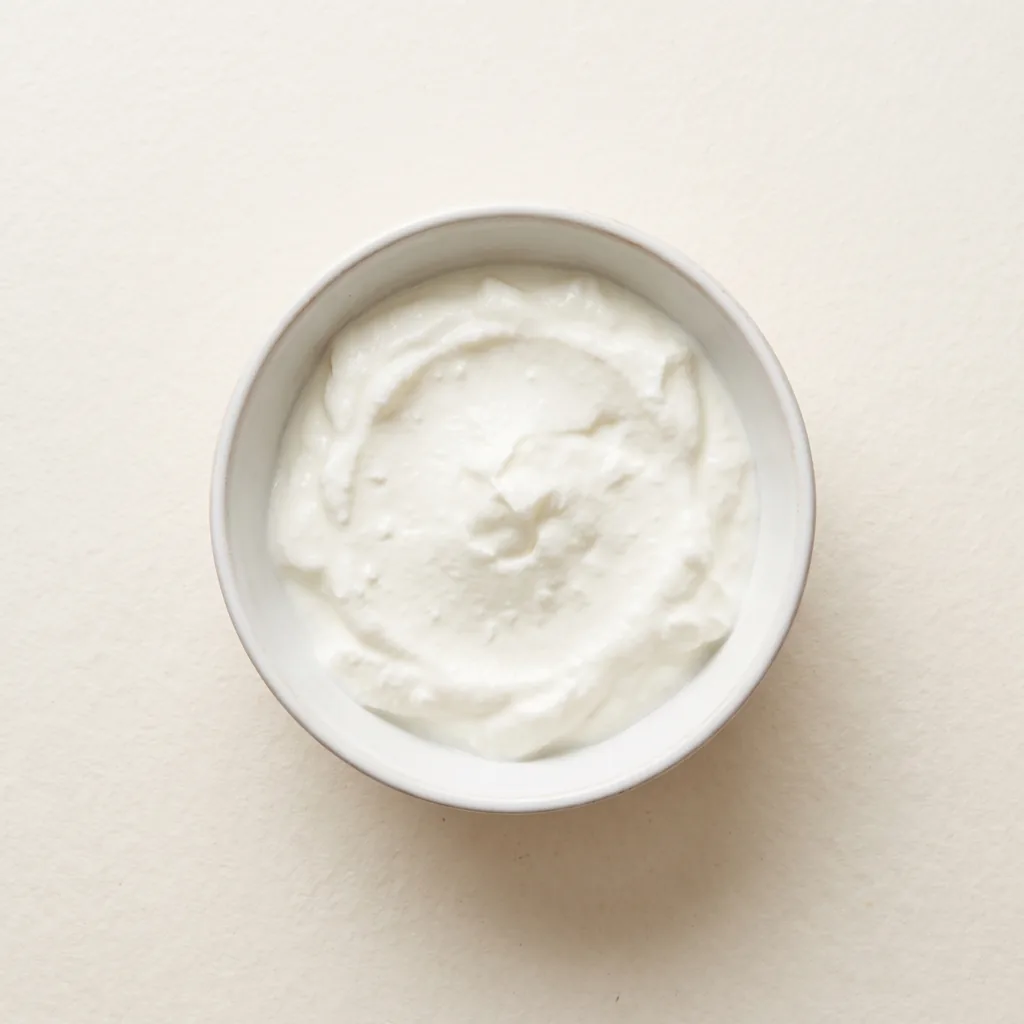
The best choice for babies is plain, pasteurized, full-fat yogurt. Strained (Greek-style) yogurt clings to spoons and hands, which helps especially in the early weeks. Goat, strained and sheep's milk yogurts usually have more protein than cow's milk yogurt. Raw milk yogurt is not safe. Babies have immature immune systems, and raw milk can carry harmful bacteria. In yogurt making, the milk is pasteurized before the cultures go in, so the probiotic benefit stays.
Serve it by hand or on a preloaded spoon, and hold the spoon in the air for easy grabbing. Once nut or seed butters are part of your child's diet, you can stir one in for extra nutrition and a thicker texture.
Plant-based yogurts
For regular plant-based yogurt, look for little or no added sugar and added calcium and vitamin D. Soy versions tend to have the most protein and are often fortified. Some plant yogurts fall short on protein, fat, calcium and B12 compared with dairy. If your child has food allergies, you can pick bases such as soy, oat, pea, coconut, cashew, almond, macadamia, fava, cassava or plantain.
Preparation by age
The same food is served differently at each age. What matters is how your baby sits, grasps and chews, more than the calendar.
6 months
6 months · How to serve on a spoonmash
Choose plain, unsweetened, full-fat yogurt with live cultures. Skip low-fat or flavored and sweetened types, because your baby needs the energy from fat at this age. If it is the first time, start with a small amount on a teaspoon and watch for a reaction over 3 to 4 days. You can also use it to loosen newly introduced vegetable or fruit purées and make them easier to accept.
9 months
9 months · How to serve with a self-feeding spooncube
Keep serving plain, pasteurized, full-fat yogurt or full-fat strained yogurt. Give your baby chances to pick up the spoon alone. Hold a preloaded spoon out in the air, or rest it on the bowl's edge. Many babies tire of this quickly, so alternate between fingers and spoon and keep several spoons ready.
12 months
12 months · How to serve for spoon practicemash
Prepare the spoon ahead and set it on the rim of the bowl so your child can reach for it. Be patient, since a child may not use a spoon steadily on their own until after age 2. Toddlers often take in too much dairy, and too much can cause iron deficiency anemia. Two to two and a half dairy servings daily, or another calcium-rich food of similar value, cover your child's needs.
Is yogurt a choking hazard for babies?
Choking risk: low
Yogurt is low risk. Serve it in a way that suits your baby's age and stay close at meals.
Yogurt is low risk when served to suit your child's age. Every food carries a small chance, so stay close during meals.
Is yogurt a common allergen?
Yes, yogurt contains allergens. It is usually made from cow's milk, which causes roughly one in five childhood food allergies. Sheep, goat and buffalo dairy can provoke similar reactions.
The good news is that milk allergy often fades. Most children with cow's milk allergy outgrow it by age 6. A milder milk protein allergy, which can appear as painless blood in the stool, often passes, and many such babies can return to cow's milk near their first birthday if a pediatric professional guides the process.
Lactose intolerance is actually uncommon in infants. In older children, yogurt may be easier to tolerate than milk, since it has less lactose and its probiotics help break lactose down.
First try
If you suspect milk allergy or have a strong family history, see an allergist before offering yogurt. Start with a small spoonful and increase slowly if there are no symptoms.
Key nutrients
Frequently asked questions about yogurt
When can babies have yogurt?
Once your baby is ready for solids, at about 6 months, as plain, full-fat, pasteurized yogurt.
Which yogurt should I choose for my baby?
Plain, full-fat, pasteurized yogurt. Strained yogurt sticks well to spoons and hands, and this is helpful in the beginning.
Is raw milk yogurt safe?
No. Babies have immature immune systems, and raw milk can carry harmful bacteria. Choose pasteurized.
What can replace yogurt with a milk allergy?
Plant yogurts with no added sugar and with calcium and vitamin D added. Soy yogurt tends to have the most protein. Choose together with your pediatrician or an allergist.
Is yogurt okay for lactose intolerance?
It is often better tolerated than milk, since it has less lactose and its probiotics help break lactose down.
Sources for this page
- Dünya Sağlık Örgütü. (2023). Guideline for complementary feeding of infants and young children 6-23 months of age.
- NHS. (n.d.). Preparing food safely for babies.
- CDC, Infant and Toddler Nutrition. (n.d.). Choking Hazards.
- Martin C, Ling PR, Blackburn G. (2016). Review of Infant Feeding: Key Features of Breast Milk and Infant Formula. Nutrients. doi:10.3390/nu8050279
- Warren CM, Jhaveri S, Warrier MR, Smith B, Gupta RS. (2013). The epidemiology of milk allergy in US children. Annals of Allergy, Asthma & Immunology. doi:10.1016/j.anai.2013.02.016
- Savaiano DA. (2014). Lactose digestion from yogurt: mechanism and relevance. The American Journal of Clinical Nutrition. doi:10.3945/ajcn.113.073023
Guides on iron, allergen introduction, gagging and drinks. Read the starting solids guides
Medical note
This page is for information only and is not a substitute for medical advice, diagnosis or treatment. Talk to your pediatrician before any feeding decision, especially about allergen introduction and reactions.
The Lokmini app
Log yogurt, reactions and your allergen journey in the app.
Open in LokminiLokmini is coming soon to the App Store.
Astro Tasarım Simay Yenice · Türkiye · merhaba@lokmini.com