Turkey
- First taste
- 6 months
- Choking risk
- medium
- Common allergen
- no
- Iron
- medium
Cook through · strips, not cubes
When can babies eat turkey?
Well-cooked turkey can be offered when your baby is ready for solids, at about 6 months. The turkey is a large bird native to the forests and open land of the Americas.
Turkey supplies protein, choline, iron, selenium and zinc, along with vitamins B6 and B12. These nutrients help growth, brain function, red blood cells and immunity.
How do you prepare turkey for babies?
Shape and cooking
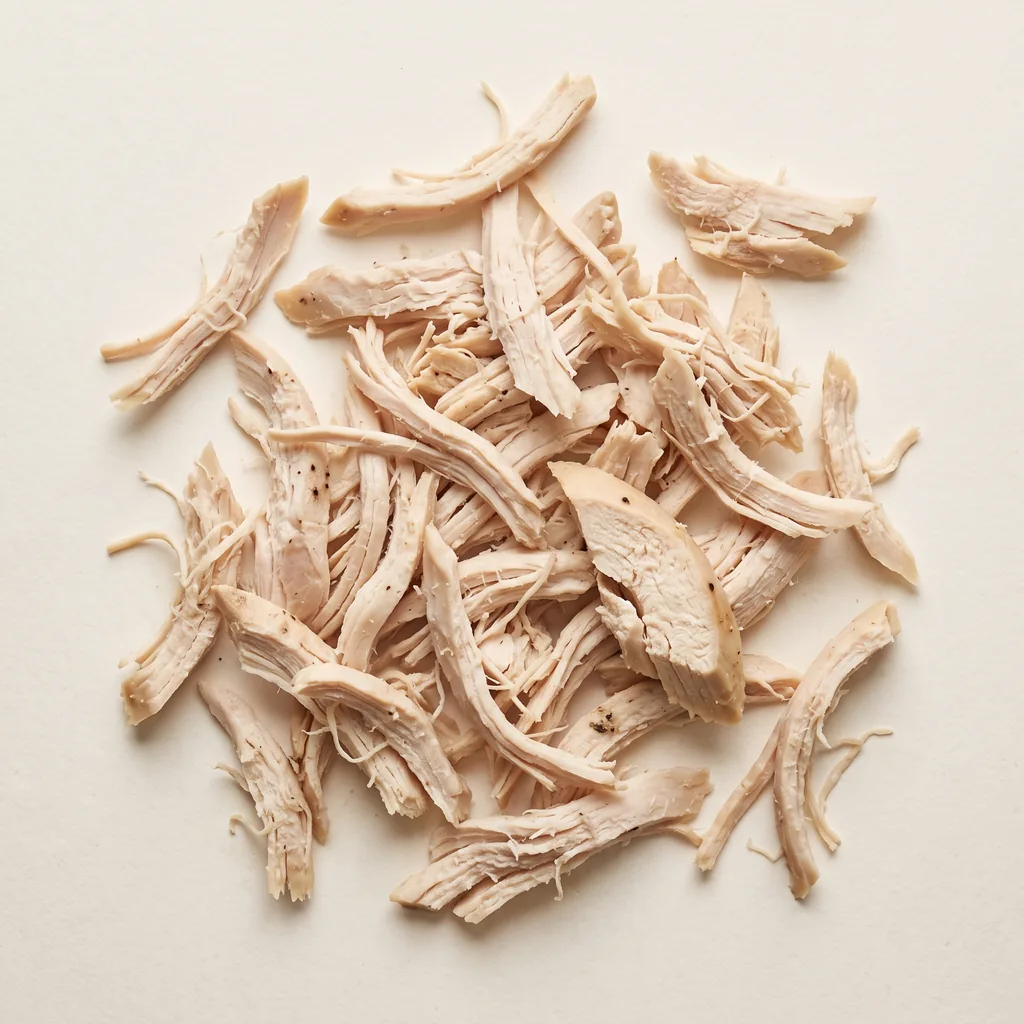
At 6 months, give long, flat strips with the bones and skin removed. Dark meat is moister and softer. You can also fold shredded or ground turkey into a vegetable purée. If you make meatballs, shape them larger than your baby's mouth, cook them to 165 F (74 C) and keep them soft enough to squash between your fingers.
A clean drumstick bone can build chewing and gripping strength. Strip off all meat, cartilage, bone shards and skin. Cooked drumstick bones can turn brittle, so bend one and press its edges before offering it. If it snaps or crumbles, skip it. Slow, gentle cooking such as stewing keeps bones sturdier.
At 9 months, offer shreds, thin slices or small pieces of meatball. At 12 months, move to bite-sized pieces or mix with bulgur or pasta. A whole drumstick with meat left on can also work for biting and tearing practice, after you remove the skin and loose bits.
Deli turkey
Sliced deli turkey can carry Listeria. If you decide to serve it, heat it until steaming and let it cool first. Skip honey-glazed turkey before the first birthday because of infant botulism.
Preparation by age
The same food is served differently at each age. What matters is how your baby sits, grasps and chews, more than the calendar.
6 months
6 months · How to cut and serve for baby-led weaningstrip
Cut: Finger strip
Serve cooked turkey as long, thin strips, with bones and skin taken out. Dark meat stays softer and moister, so it suits this age better. The other route is to stir ground turkey into a vegetable purée. Cook it until the center reaches 165 F (74 C), and leave it soft enough to squash between your fingers.
9 months
9 months · How to cut and servecube
Offer ground turkey, thin slices or bite-sized meatballs. Cook the meat in a sauce or stew so it does not dry out, and for meatballs mix in breadcrumbs and egg. If your baby crams in too much, put fewer pieces on the tray at a time.
12 months
12 months · How to cut and servecube
Cut: Bite sized piece
Serve turkey in bite-sized pieces, which also suit fork practice. You can toss shredded turkey with bulgur, pasta or vegetables. Do not overcook it, because dry meat is hard to chew and swallow.
Is turkey a choking hazard for babies?
Choking risk: medium
Turkey is hard to chew, so never cut it into cubes. Serve long strips, shreds or ground meat, and keep it moist.
Turkey is tough to chew and hard to move around the mouth, so it carries a choking risk. Never cut it into cubes. Serve long strips or shreds suited to your child's age. Do not let it dry out, since dry meat is hard to swallow. Stay close during meals.
No cubes
Cubes of turkey can plug the throat easily. Choose strips, shreds or ground meat.
Is turkey a common allergen?
Turkey is not a common allergen, though cases have been reported. People allergic to chicken have a higher chance of cross-reacting. Turkey can rarely trigger FPIES, with delayed vomiting that starts 2 to 4 hours after eating.
Some people with egg or feather allergy test positive to poultry meat. Since the allergenic protein is sensitive to heat, well-cooked meat usually causes no symptoms. Routine turkey testing is not advised with egg allergy.
Food safety
Raw turkey can carry Salmonella and Campylobacter. Store it separately in the fridge or freezer, thaw it in the fridge and cook it until the center hits 165 F (74 C). Afterward, wash your hands and anything the raw meat touched.
Key nutrients
Frequently asked questions about turkey
When can babies have turkey?
Well-cooked turkey can start when your baby is ready for solids, at about 6 months.
Which cut of turkey is best for babies?
Dark meat. It holds together better and stays moister and softer than white meat.
Can babies have deli turkey?
Be careful because of Listeria. If you serve it, heat it until steaming and let it cool. Skip honey-glazed turkey before age 1.
Can my baby gnaw a turkey drumstick bone?
Yes, if it is sturdy and stripped of meat, cartilage, bone shards and skin. Test it by bending it and pressing its edges. If it snaps or crumbles, do not give it.
Sources for this page
- Dünya Sağlık Örgütü. (2023). Guideline for complementary feeding of infants and young children 6-23 months of age.
- NHS. (n.d.). Preparing food safely for babies.
- CDC, Infant and Toddler Nutrition. (n.d.). Choking Hazards.
- Cahen, Fritsch, WÜthrich. (1998). Food allergy with monovalent sensitivity to poultry meat. Clinical and Experimental Allergy. doi:10.1046/j.1365-2222.1998.00356.x
- Hemmer W, Klug C, Swoboda I. (2016). Update on the bird-egg syndrome and genuine poultry meat allergy. Allergo Journal International. doi:10.1007/s40629-016-0108-2
Guides on iron, allergen introduction, gagging and drinks. Read the starting solids guides
Medical note
This page is for information only and is not a substitute for medical advice, diagnosis or treatment. Talk to your pediatrician before any feeding decision, especially about allergen introduction and reactions.
The Lokmini app
Log turkey, reactions and your allergen journey in the app.
Open in LokminiLokmini is coming soon to the App Store.
Astro Tasarım Simay Yenice · Türkiye · merhaba@lokmini.com