Tarhana
- First taste
- 6 months
- Choking risk
- low
- Common allergen
- yes
- Iron
- medium
Gluten and milk allergen · fermented · may be salty
Contains allergens
Each new allergen is offered on its own and watched for two hours. Our allergen introduction guide is available in Turkish for now.
When can babies eat tarhana?
When can babies have tarhana?
Tarhana contains the gluten and milk allergens. It can be offered from about 6 months to babies who are ready for solids, following the one-allergen-at-a-time approach. The current preparation card starts at 9 months. It should be cooked, fluid in texture and prepared without added salt.
What is it and why is it useful?
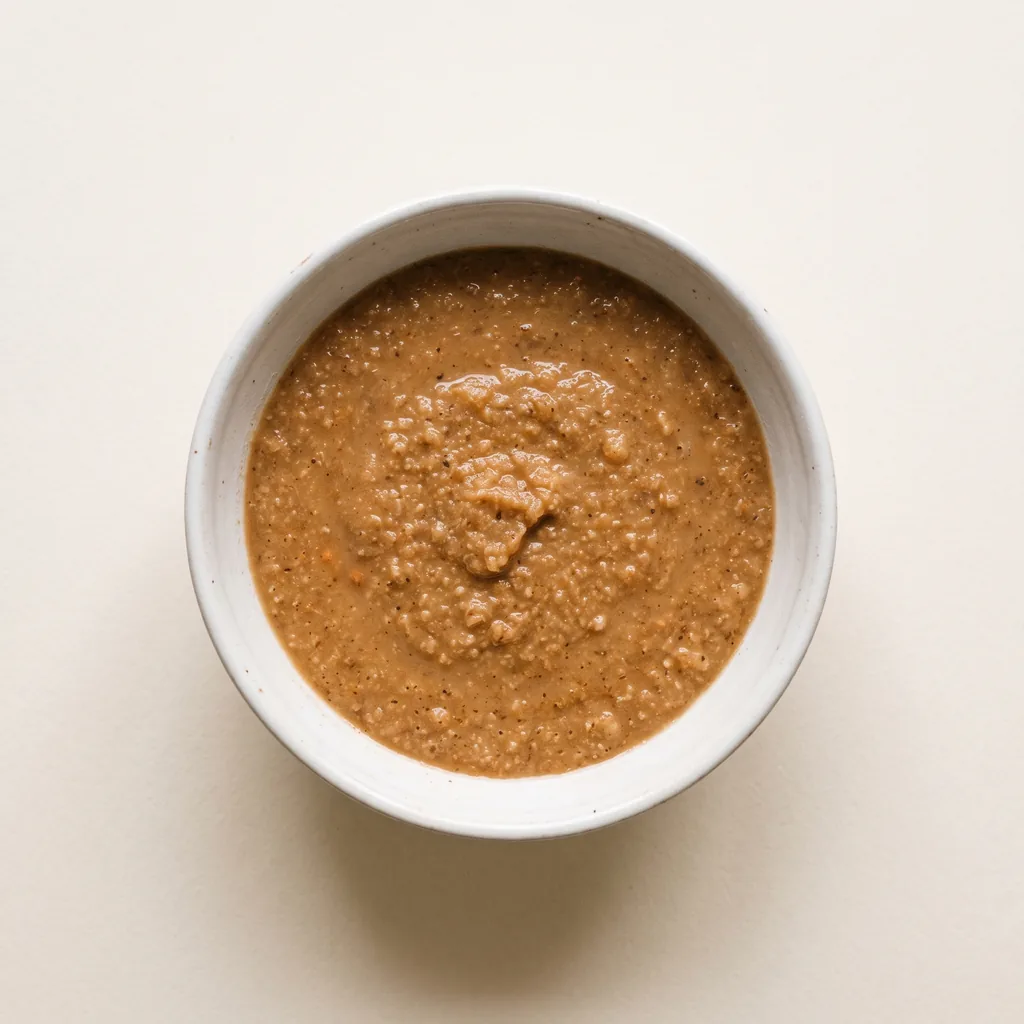
Tarhana is a traditional Turkish fermented cereal food. Wheat flour, yogurt, yeast and vegetables such as tomato and pepper are mixed. The mix is fermented, dried and sieved. A peer-reviewed review reports an average protein content of about 15 percent. Fermentation lowers the pH and creates the sour taste.
How do you prepare tarhana for babies?
Preparation basics
Dry tarhana is cooked by boiling it in water. For babies, add more water to make a fluid soup. Do not add salt. A study of homemade and commercial tarhana reported that sodium in homemade samples was inconsistent from sample to sample. Commercial samples were more uniform. The NHS says babies should not eat much salt because it is not good for their kidneys.
Check the salt on the label of packaged tarhana. If it looks salty, choose another food for your baby.
Spices and extras
Homemade tarhana can contain spices such as mint and chili flakes. For babies, choose an unspiced or mildly spiced one and leave out hot pepper. Do not add melted butter or chili-flake sauce.
Preparation by age
The same food is served differently at each age. What matters is how your baby sits, grasps and chews, more than the calendar.
9 months
9 months · How to servemash
Tarhana is made by fermenting wheat flour and yogurt, so it carries both gluten and milk allergens. For the first try, give only tarhana and do not add another new food that day. The sourness and salt level of homemade tarhana depend on the fermentation time, so check the salt on the label of packaged products. Boil it in water for 10 to 15 minutes and thin it with plenty of water until it runs off the spoon.
12 months
12 months · How to servemash
Serve tarhana soup a little thicker, on a spoon or in a small bowl. Prepare it without salt. You can top it with plain yogurt or unsalted vegetables. Check the salt on the label of packaged products. Let the soup cool to an eating temperature before serving.
Is tarhana a choking hazard for babies?
Choking risk: low
Cooked tarhana soup is fluid, so the choking risk is low. Do not give dry tarhana to babies. Hard pieces added to the soup can be risky.
Choking risk
Cooked tarhana soup is fluid, so the choking risk is low. Dry tarhana flour or lumps can coat the throat, so it is not given dry. Make sure the soup has no lumps. Seat your baby upright and do not leave them alone while eating.
Is tarhana a common allergen?
Allergen status
Tarhana contains wheat flour (gluten) and yogurt (cow's milk). The NHS advises introducing foods that contain gluten (wheat, barley, rye) and cow's milk from about 6 months, one at a time and in very small amounts. If tolerated, they become part of the regular diet.
So for the first try, give only tarhana and do not add another new food that day. That way the cause is clear if a reaction happens.
Signs of a reaction
Diarrhea, vomiting, cough, wheezing, throat swelling, rashes and eye irritation can be signs of an allergic reaction. Call emergency services for throat swelling or trouble breathing. Tarhana is not given to babies diagnosed with celiac disease.
Key nutrients
Frequently asked questions about tarhana
What texture should tarhana soup have?
At 9 months, a lump-free texture that runs off the spoon is suitable. Cook it with plenty of water. After 12 months you can thicken it a little.
Why can tarhana be salty?
Salt is part of the tarhana recipe, and the amount varies in homemade versions. One study reported inconsistent sodium in homemade tarhana. Check the salt on the label and do not add salt to the soup.
Does fermentation lower the allergen risk?
We found no reliable source on this. Tarhana contains wheat and yogurt, so it should be treated as a gluten and milk allergen.
Is homemade or packaged tarhana better?
For both, you need to check the salt. A peer-reviewed study reported that commercial samples were more uniform and homemade samples more variable. Do not give tarhana with unknown salt content to a baby.
Sources for this page
- Dünya Sağlık Örgütü. (2023). Guideline for complementary feeding of infants and young children 6-23 months of age.
- NHS. (n.d.). Preparing food safely for babies.
- CDC, Infant and Toddler Nutrition. (n.d.). Choking Hazards.
- Bulgarian Journal of Agricultural Science. (2016). Comparison of physicochemical and functional properties of domestic and commercial tarhana in Turkey.
- Nahrung/Food (Daglioglu). (2000). Tarhana as a traditional Turkish fermented cereal food. Its recipe, production and composition.
- NHS. (n.d.). Food allergies (weaning).
Guides on iron, allergen introduction, gagging and drinks. Read the starting solids guides
Medical note
This page is for information only and is not a substitute for medical advice, diagnosis or treatment. Talk to your pediatrician before any feeding decision, especially about allergen introduction and reactions.
The Lokmini app
Log tarhana, reactions and your allergen journey in the app.
Open in LokminiLokmini is coming soon to the App Store.
Astro Tasarım Simay Yenice · Türkiye · merhaba@lokmini.com