Swiss chard
- First taste
- 6 months
- Choking risk
- low
- Common allergen
- no
- Iron
- medium
Leafy green · stalks carry choking risk
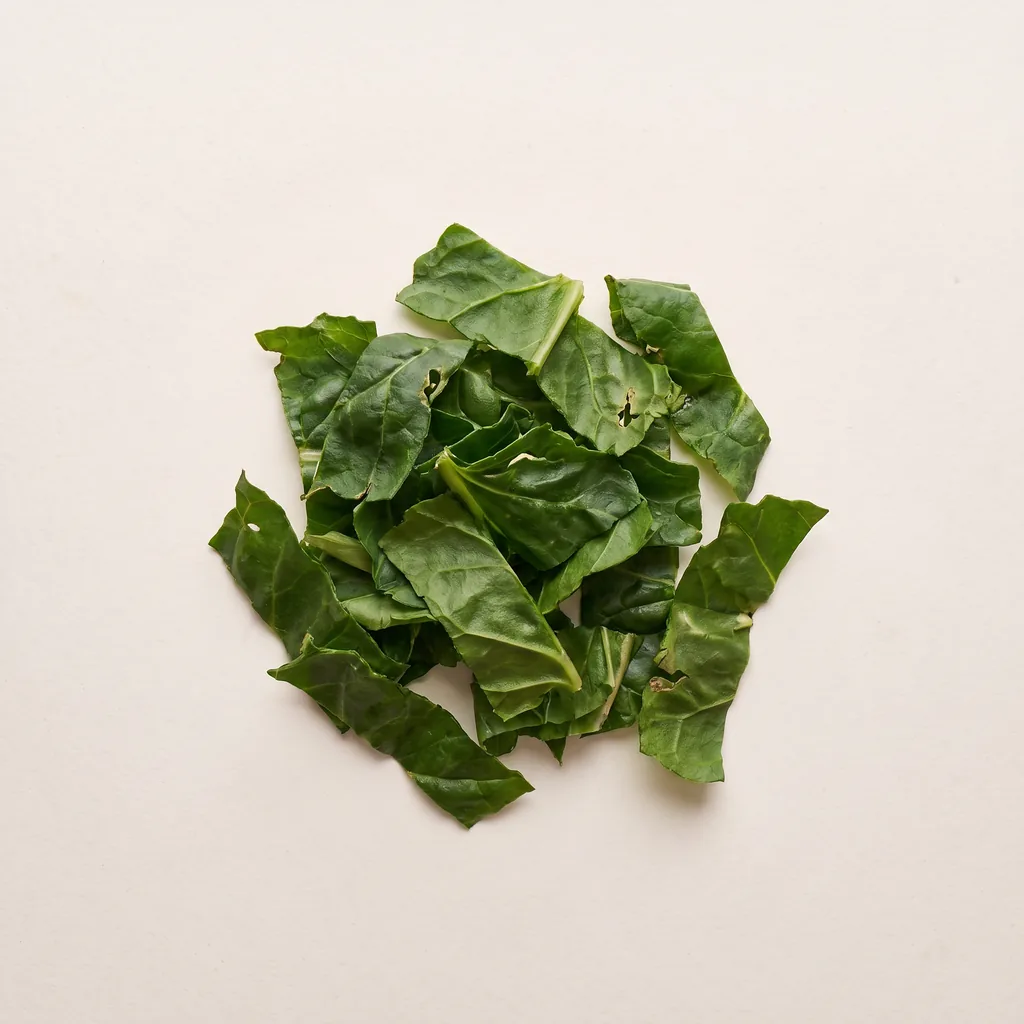
When can babies eat Swiss chard?
Swiss chard can be offered once your baby seems ready for solids, usually at 6 months. It belongs to the same plant family as beet and spinach. Its leaves are packed with vitamins and minerals.
In American English, the word Swiss is said to have been added to tell it apart from spinach. But the plant did not come from Switzerland. It comes from the sandy soils of Mediterranean coasts. It is called acelga in Spanish, bettes in French, mangold in German and silverbeet in Australian English.
Nutrition
Vitamin K, needed for bones and blood, is plentiful. Vitamin A supports vision and vitamin E supports immunity. It gives iron, fiber, and B and C vitamins. It also holds calcium, magnesium and potassium. Plant compounds protect cells from damage.
Raw leafy greens carry a greater E. coli risk. Wash chard before cooking or serving.
How do you prepare Swiss chard for babies?
Every baby develops at their own pace. These tips are general guidance.
At 6 months, mix cooked, finely chopped chard into omelet strips, grain porridge, vegetable purée or yogurt. If you like, give a whole stalk with the leaf removed and cooked until soft, to gnaw like a teether. If your baby breaks off a piece of stalk, keep your fingers out of their mouth. Give a moment to chew and swallow or spit it out. A hand on the back and a gentle forward lean brings the piece to the front of the mouth.
At 9 months, offer soft-cooked chopped pieces or small ribbons. Leaf bits may stick in the mouth and cause harmless gagging.
After 24 months, if you trust your child's chewing, try larger cooked or raw pieces. Raw stalk is a riskier piece than leaf.
Preparation by age
The same food is served differently at each age. What matters is how your baby sits, grasps and chews, more than the calendar.
Prep time: 15 min
6 months
6 months · How to prepare as a puréemash
Cut: Finely chopped
Separate the leaves from the stalks and wash them well. Cook until soft, chop finely and stir into yogurt, vegetable purée or oatmeal. Leafy greens contain nitrate. Do not give before 6 months, and serve freshly cooked rather than stored.
9 months
9 months · How to servestrip
Cut: Finely chopped
Cut cooked chard leaves into thin ribbons and mix them into rice or egg. Cook the thick stalk separately until soft and serve it in small pieces.
12 months
12 months · How to servestrip
Cut: Finger strip
Serve chard as cooked ribbons, alone or within a dish. You can set aside a portion of lightly salted home dishes such as chard rolls or chard with yogurt.
Is Swiss chard a choking hazard for babies?
Choking risk: low
The leaf is low risk. The stalk is firm and hard to chew. Cook stalks until soft. Leaf bits can stick to the tongue and cause gagging.
Chard leaves are not a major choking hazard. The stalk is firm and tough to chew, so the risk goes up. Prepare it to suit your baby's age. Flecks of raw or cooked leaf can stick to the tongue or palate. This causes harmless gagging. Stay within arm's reach during meals.
Stalks
Cook stalks until soft. Do not serve raw stalk before 24 months.
Is Swiss chard a common allergen?
Chard allergy is rare but reported. People with grass or mugwort pollen allergy may get oral allergy syndrome. It brings a short itch or burn in the mouth and is not expected to be dangerous. Cooking can ease the reaction.
Start with a small amount for the first servings. If there is no reaction, increase it slowly.
Nitrate
Leafy vegetables like chard naturally hold nitrate. In large amounts it can affect blood oxygen. Babies under three months and those with health problems are more sensitive. Pediatric and food safety bodies in the US and Europe (AAP, EFSA) do not treat vegetable nitrate as a problem for most healthy children. The benefit of a varied diet outweighs the risk.
Key nutrients
Frequently asked questions about Swiss chard
Can I give the chard stalk to my baby?
Yes, if it is cooked soft with the leaf removed. Stalks are a riskier part, so cook them well and stay beside your baby.
Should I worry about nitrate in chard?
According to the source, no. Vegetable nitrate is not seen as a problem for most healthy children. Extra care applies under three months. Serve cooked chard fresh.
Can I serve chard raw?
Serve it cooked to babies. Raw leafy greens can be riskier for E. coli, and raw stalk carries a choking risk. Always wash it well.
Sources for this page
- Dünya Sağlık Örgütü. (2023). Guideline for complementary feeding of infants and young children 6-23 months of age.
- NHS. (n.d.). Preparing food safely for babies.
- CDC, Infant and Toddler Nutrition. (n.d.). Choking Hazards.
- Brkić D, Bošnir J, Bevardi M, Bošković AG, Miloš S, Lasić D, et al. (2017). NITRATE IN LEAFY GREEN VEGETABLES AND ESTIMATED INTAKE. African Journal of Traditional, Complementary and Alternative Medicines. doi:10.21010/ajtcam.v14i3.4
Guides on iron, allergen introduction, gagging and drinks. Read the starting solids guides
Medical note
This page is for information only and is not a substitute for medical advice, diagnosis or treatment. Talk to your pediatrician before any feeding decision, especially about allergen introduction and reactions.
The Lokmini app
Log Swiss chard, reactions and your allergen journey in the app.
Open in LokminiLokmini is coming soon to the App Store.
Astro Tasarım Simay Yenice · Türkiye · merhaba@lokmini.com