Sweet pepper
- First taste
- 6 months
- Choking risk
- medium
- Common allergen
- no
- Iron
- low
Start cooked and peeled
When can babies eat sweet pepper?
Sweet pepper can be served around 6 months, once baby is ready.
The world has more than 50,000 pepper varieties. They all come from chili peppers native to the Americas. Sweet pepper is also called capsicum. It lacks capsaicin, the compound that makes hot peppers burn.
Nutrition
Sweet pepper supplies fiber and folate. Its vitamins include A, B6, C and E. These nutrients help with energy, the gut microbiome, brain development, vision, immune defense, iron absorption and healthy skin. Vitamin C helps the body absorb iron. Pair pepper with iron-rich foods such as beans, lentils, nuts and seeds.
How do you prepare sweet pepper for babies?
Removing the skin is not required. But skin can cling inside baby's mouth and make eating harder. Here is an easy way. As soon as the peppers are cooked, put them in a closed container such as a paper or plastic bag. Leave them to steam for a quarter of an hour. Steam separates the skin from the flesh. Peppers from a can or jar work as well.
Sauces, dips and spreads made from pepper are a good option. Expect a lot of spitting with raw pepper. It is normal while a child builds chewing skills.
Preparation by age
The same food is served differently at each age. What matters is how your baby sits, grasps and chews, more than the calendar.
Prep time: 20 min
6 months
6 months · How to cut and serve for baby-led weaningstrip
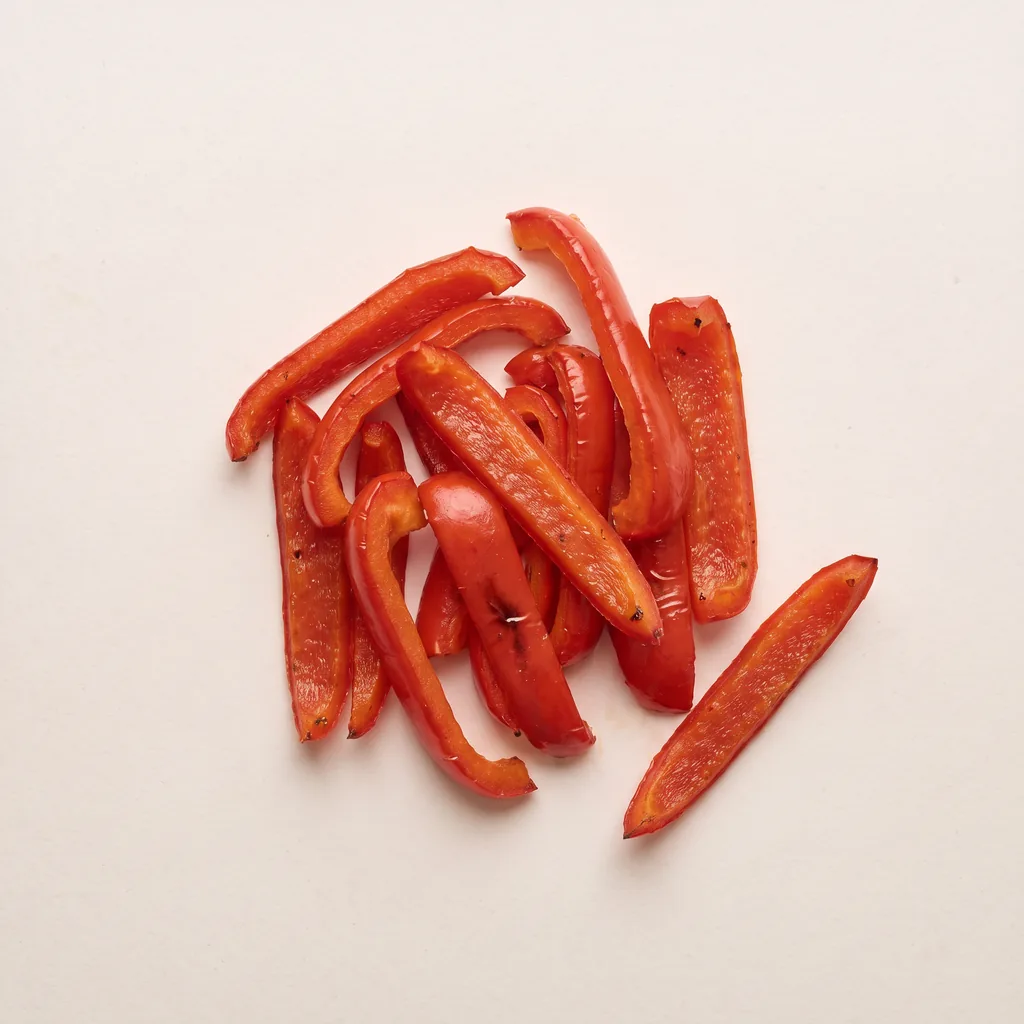
Cut: Finger strip
Roast red or yellow sweet pepper in the oven or over embers until soft, and remove the skin and seeds. Serve in long, finger-thick strips. Do not give hot or pointed peppers at this age.
9 months
9 months · How to cut and servecube
Cut cooked, peeled pepper into small pieces, or chop it fine and mix into egg, bulgur and rice. Raw pepper skin can slip against the gums, so prefer cooked pepper at this age.
12 months
12 months · How to cut and servecube
Cut: Bite sized piece
Keep serving cooked pepper in small pieces. You can try raw sweet pepper in thin, short strips. Thick raw pieces are too firm for now.
Is sweet pepper a choking hazard for babies?
Choking risk: medium
Raw pepper has firm flesh and slippery skin, which makes it risky. Under 12 months, cook it and peel it. Offer raw pepper only in thin, short strips.
Raw pepper carries a choking risk. Its firm, slippery texture is the problem. The risk grows when baby has teeth and can bite off pieces. Prepare it as described in the age cards.
Safe setting
Seat baby upright and stay within arm's reach during meals.
Is sweet pepper a common allergen?
Pepper allergy is not common but has been reported. People allergic to latex or some plant pollens may also react to pepper or develop oral allergy syndrome. A mild, passing tingle, itch or sting around the lips and tongue may appear. A dangerous reaction is not expected. Cooking, canning or peeling the pepper can reduce the reaction.
Peppers are in the nightshade family. Being allergic to one nightshade does not strongly predict allergy to the rest. The family also includes tomato, potato, eggplant, goji berry and spices made from peppers.
At the first try
Give only a small amount over the first few servings. When all goes well, raise it slowly at later meals.
Key nutrients
Frequently asked questions about sweet pepper
Does pepper make babies gassy?
Often, yes. Like other high-fiber foods, pepper can cause gas. Do not worry. The fiber interacts with gut bacteria, which means gas, stool movement and, over time, a more varied gut ecosystem. Add it at a pace your baby tolerates.
Do I need to peel pepper?
Not required, but the skin can stick in the mouth. If you let cooked peppers steam in a closed container for a quarter of an hour, the skin slips off easily.
Does pepper help iron absorption?
Vitamin C can boost iron absorption. Serve pepper alongside iron-rich foods such as beans, lentils, nuts and seeds.
Sources for this page
- Dünya Sağlık Örgütü. (2023). Guideline for complementary feeding of infants and young children 6-23 months of age.
- NHS. (n.d.). Preparing food safely for babies.
- CDC, Infant and Toddler Nutrition. (n.d.). Choking Hazards.
- Callero A, Cabrera-Hernandez V, Perez-Rodríguez E, Jimeno-Nogales L, Martinez-Tadeo J, Plata-Rodríguez E, et al. (2018). Bell Pepper Allergy: Different Sensitization Profiles. Journal of Investigational Allergology and Clinical Immunology. doi:10.18176/jiaci.0278
- Wagner S, Radauer C, Hafner C, Fuchs H, Jensen‐Jarolim E, Wüthrich B, et al. (2004). Characterization of cross‐reactive bell pepper allergens involved in the latex‐fruit syndrome. Clinical and Experimental Allergy. doi:10.1111/j.1365-2222.2004.02103.x
Guides on iron, allergen introduction, gagging and drinks. Read the starting solids guides
Medical note
This page is for information only and is not a substitute for medical advice, diagnosis or treatment. Talk to your pediatrician before any feeding decision, especially about allergen introduction and reactions.
The Lokmini app
Log sweet pepper, reactions and your allergen journey in the app.
Open in LokminiLokmini is coming soon to the App Store.
Astro Tasarım Simay Yenice · Türkiye · merhaba@lokmini.com