Shrimp
- First taste
- 12 months
- Choking risk
- high
- Common allergen
- yes
- Iron
- low
Shellfish allergen · not before 12 months
Contains allergens
Each new allergen is offered on its own and watched for two hours. Our allergen introduction guide is available in Turkish for now.
When can babies eat shrimp?
Shrimp belongs to the shellfish family. Hundreds of kinds live in oceans and fresh water. Some are tiny and some are very large. Colors run from pinkish red to dark brown.
When to offer
International sources say shrimp can start around 6 months when it is prepared safely. In the Lokmini record this food starts after 12 months. Shrimp is a common allergen and a high choking risk. Pick the timing with your family and your pediatrician.
Cook it through
Babies are more prone to food-borne illness. Cook shrimp until the inside is fully opaque.
Nutrition
Shrimp provides protein, omega-3 fats, and vitamins B6 and B12. It also has calcium, selenium, iodine, and zinc. These support growth, the nervous system, the heart, and immunity. Its mercury level is lower than many other seafoods.
How do you prepare shrimp for babies?
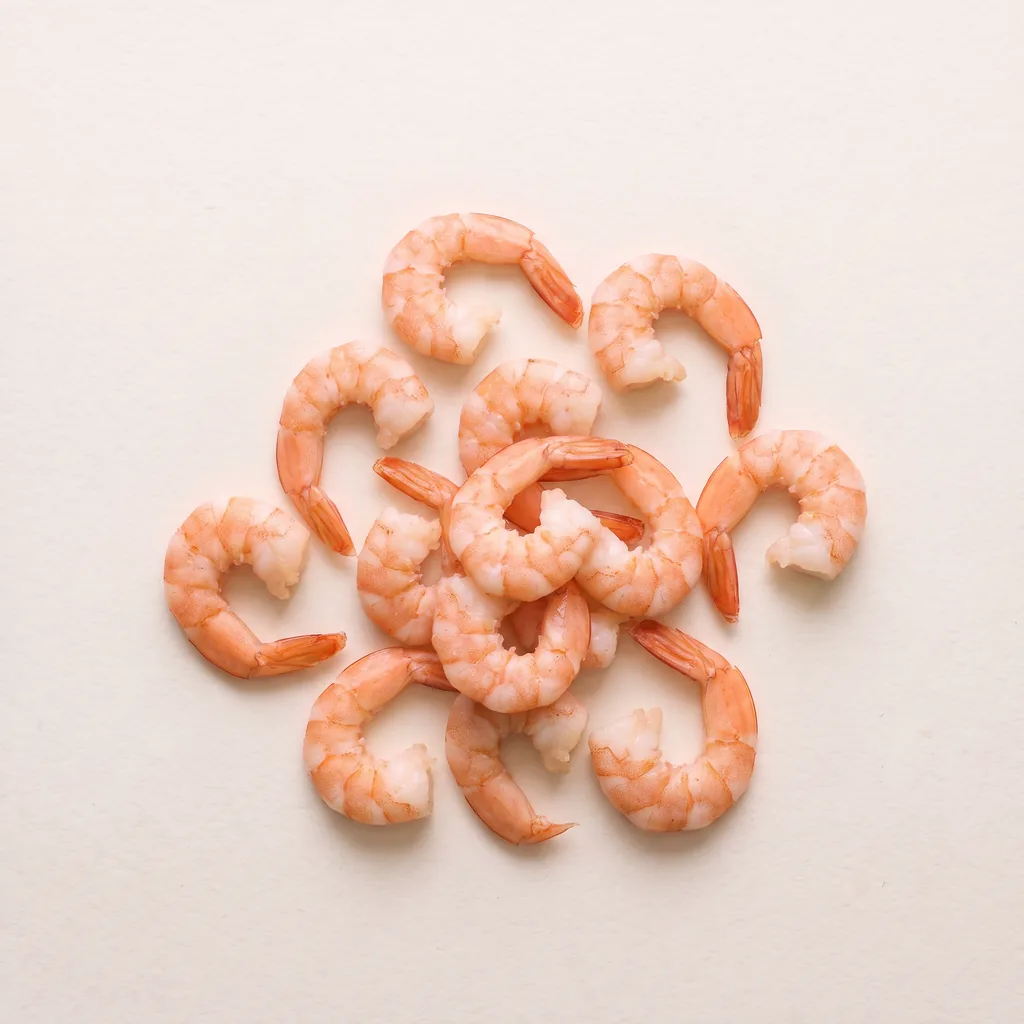
Remove the shell, tail, and back vein. Cook the shrimp all the way through. Raw shrimp is risky at every age and is never given to a baby.
You can mince it and stir it into a soft food. Shrimp cakes, dumpling filling, or small bits cooked into porridge also work. Do not cut shrimp into rounds or leave it in a tube shape. Split it lengthwise, then cut it into small pieces.
Fresh shrimp usually has less salt than dried, canned, or frozen products. Do not serve processed items like shrimp paste or chips on a regular basis.
As they grow
From about 18 months you can offer tiny canned shrimp one at a time. Teach your child to chew each piece well. After age three, if chewing skills are mature, a large, well-cooked whole shrimp can be tried. Show a small bite yourself first.
Preparation by age
The same food is served differently at each age. What matters is how your baby sits, grasps and chews, more than the calendar.
Prep time: 15 min
12 months
12 months · How to cut and servecube
Peel the shrimp, remove the vein along the back, and cook it fully. The inside should be opaque white. Raw or undercooked shrimp is never served. Because of its rubbery texture, mince it or cut it into small pieces. Whole or half-cut shrimp is not served. Shellfish is a new allergen. Offer a small amount for the first time, in the morning, on its own, and watch for 2 hours.
12 months · How to prepare as a puréemash
Cut: Finely chopped
Grind fully cooked, cleaned shrimp very fine and stir it into mashed potato, rice, or vegetable soup. Pick boiled or steamed shrimp over salted or fried ones.
Is shrimp a choking hazard for babies?
Choking risk: high
Shrimp is rubbery, firm, and round, so it is never served whole. Cook it fully, then cut it lengthwise and into small pieces, or mince it.
Shrimp is a high choking risk for babies and young children. Its texture is rubbery and firm, and its shape is round.
How you cut it matters at every age. Leave no round pieces behind. Stay close while your baby eats and set up a safe eating space.
Never serve whole
Do not serve whole shrimp before age three. Always cut lengthwise or mince.
Is shrimp a common allergen?
Shrimp is a common allergen. The World Health Organization counts it among the global priority allergens. A child allergic to shrimp may also react to crab, lobster, and crayfish. Reactions to mollusks such as mussels, squid, and octopus are less common.
Shellfish allergy mostly begins in adulthood. In most children who develop it, it does not go away. If you suspect an allergy, talk to an allergist before giving shrimp.
When introducing
Start with a small amount. Give it the first time in the morning, on its own, and watch for symptoms. If all goes well, raise the amount slowly over later meals. Once introduced, serving it weekly when possible helps keep the allergen in the routine. You do not need to try every shellfish type separately. Serve whichever you can find.
Other points
A shellfish allergy does not mean a fish allergy. Still, products made in the same facility can carry traces. Sulfites are sometimes used to preserve shrimp. In people with asthma, sulfites can trigger allergy-like reactions. Read the label.
Key nutrients
Frequently asked questions about shrimp
Can babies eat raw shrimp?
No. Raw shellfish is dangerous for babies at every age. Food poisoning is a high risk. Cook shrimp until the inside is opaque.
Can babies have canned shrimp?
In small amounts. Most canned shrimp is very salty. Remember to cut it for your child's age.
At what age is fried shrimp okay for babies?
Once your child is past the first birthday, in modest amounts. A taste now and then before that is fine. Cutting it for age is a must.
Should I worry about the cholesterol in shrimp?
No. Cholesterol from food has little effect on blood cholesterol. Shrimp also supplies omega-3 fats.
Is shrimp high in sodium?
That varies with the kind of product and how it is prepared. Fresh shrimp normally holds less salt than the dried, fermented, frozen, or canned kinds.
Sources for this page
- Dünya Sağlık Örgütü. (2023). Guideline for complementary feeding of infants and young children 6-23 months of age.
- NHS. (n.d.). Preparing food safely for babies.
- CDC, Infant and Toddler Nutrition. (n.d.). Choking Hazards.
- Halken S, Muraro A, de Silva D, Khaleva E, Angier E, Arasi S, et al. (2021). EAACI guideline: Preventing the development of food allergy in infants and young children (2020 update). European Academy of Allergy and Clinical Immunology. doi:10.1111/pai.13496
- Türkiye Ulusal Alerji ve Klinik İmmünoloji Derneği. (n.d.). Besin Alerjisi, öncelikli 10 besin.
- American Academy of Pediatrics, HealthyChildren. (n.d.). Choking Prevention for Babies and Children.
- Solid Starts. (n.d.). First Foods Database.
- Soliman GA. (2018). Dietary Cholesterol and the Lack of Evidence in Cardiovascular Disease. Nutrients. doi:10.3390/nu10060780
- Lopata AL, O'Hehir RE, Lehrer SB. (2010). Shellfish allergy. Clinical and Experimental Allergy. doi:10.1111/j.1365-2222.2010.03513.x
Guides on iron, allergen introduction, gagging and drinks. Read the starting solids guides
Medical note
This page is for information only and is not a substitute for medical advice, diagnosis or treatment. Talk to your pediatrician before any feeding decision, especially about allergen introduction and reactions.
The Lokmini app
Log shrimp, reactions and your allergen journey in the app.
Open in LokminiLokmini is coming soon to the App Store.
Astro Tasarım Simay Yenice · Türkiye · merhaba@lokmini.com