Sea bream
- First taste
- 6 months
- Choking risk
- medium
- Common allergen
- yes
- Iron
- low
Fish allergen · serve boneless
Contains allergens
Each new allergen is offered on its own and watched for two hours. Our allergen introduction guide is available in Turkish for now.
When can babies eat sea bream?
When can babies have sea bream?
Fish such as sea bream can be offered once your baby is ready for solids, from about 6 months. The NHS lists boneless fish among suitable protein foods at 6 months. An older Turkish Ministry of Health infant feeding booklet places fish on its month 7 chart.
Nutrition
Fish provides high-quality protein and essential amino acids. According to the Ministry of Health booklet it contains vitamins A, K and B, plus phosphorus and zinc. Saltwater fish are a good source of iodine, and sea bream is a saltwater fish. The FDA notes that fish provides nutrients that support a child's brain development, such as omega-3 fats, iron and choline.
How do you prepare sea bream for babies?
Preparation basics
Cook fish thoroughly and remove the skin and every bone. The NHS advises removing all bones and skin from fish. Steam or bake it to keep the flesh soft. Soften dry fish with olive oil, vegetable purée or potato. Do not add salt.
The choice of species matters for mercury. The FDA advises avoiding high-mercury fish such as shark, swordfish, king mackerel and marlin. The NHS also says to avoid shark, swordfish and marlin up to age 16. Sea bream does not appear on these avoid lists. A specific mercury figure for sea bream could not be verified in this work.
Preparation by age
The same food is served differently at each age. What matters is how your baby sits, grasps and chews, more than the calendar.
Prep time: 25 min
6 months
6 months · How to prepare as a puréemash
Cut: Shredded
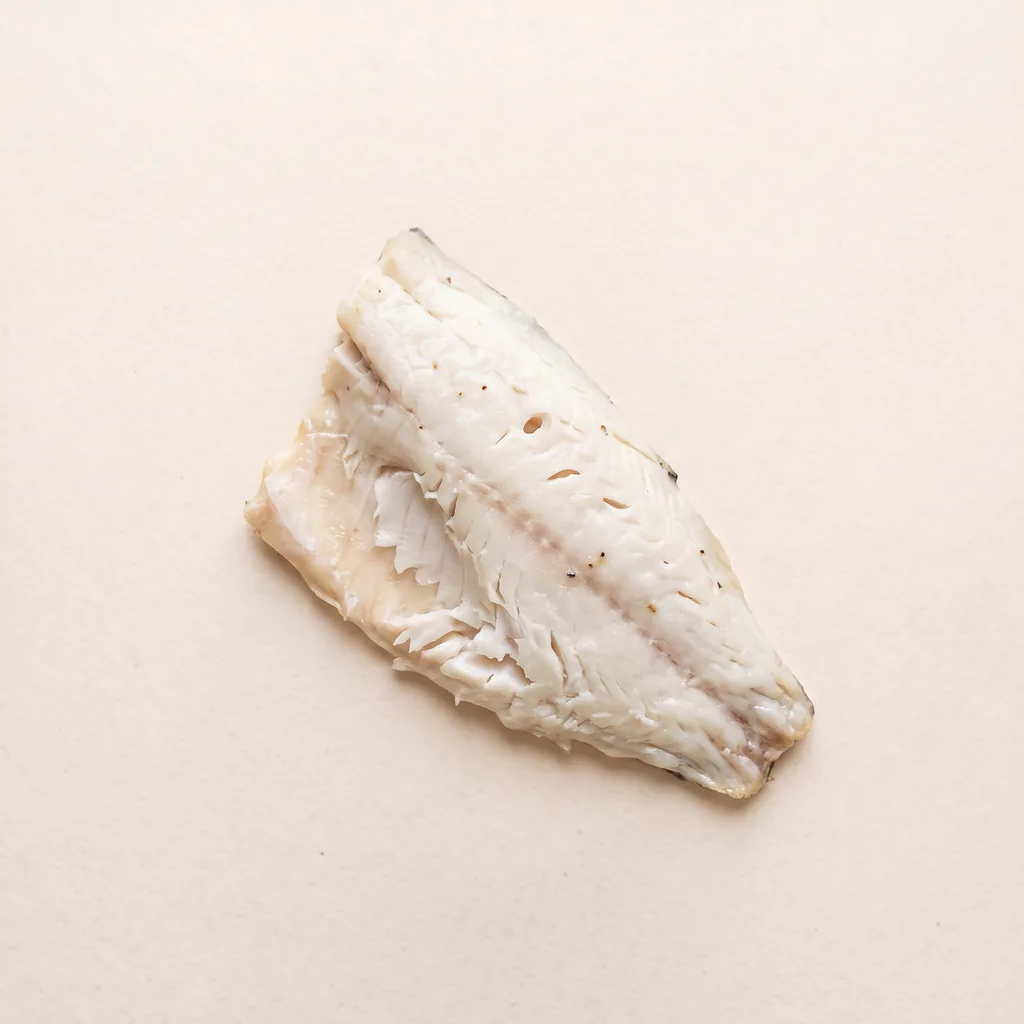
Steam or bake the sea bream fillet, remove the skin, and flake the flesh while checking for bones one by one. Sea bream has more bones than sea bass, so do not use the meat near the head. Mix the flesh into a vegetable purée. Fish is a new allergen, so introduce it in the morning and in a small amount.
9 months
9 months · How to cut and servecube
Cut: Shredded
Serve boneless cooked sea bream as flakes, or mixed with potato and bulgur. Dry flesh can catch in the throat, so add olive oil to soften it.
12 months
12 months · How to cut and servecube
Cut: Bite sized piece
Keep serving boneless sea bream in bite-size pieces. When you portion a whole baked sea bream, check for bones twice.
Is sea bream a choking hazard for babies?
Choking risk: medium
Fish bones are a choking and injury risk. Check for bones one by one as you flake the flesh. Dry fish can catch in the throat.
Choking risk
The main risk with fish is bones. Small, thin bones are easy to miss. Check every piece as you flake the flesh with your fingers. Do not use the meat near the head. When you portion a whole baked sea bream, check twice. Stay with your baby during meals.
Do not give your baby fish that has not been checked for bones.
Is sea bream a common allergen?
Allergen status
Fish is a common food allergen. The Turkish National Society of Allergy and Clinical Immunology notes that fish allergy can last for many years or for life. The AAP says there is no evidence that delaying foods such as egg, dairy, soy, peanut and fish beyond 4 to 6 months prevents allergy. For the first try, start with a small amount, serve it in the morning and watch your baby. If a serious food allergy runs in the family, ask your pediatrician first.
Key nutrients
Frequently asked questions about sea bream
Is bone a problem with sea bream?
Yes. Before serving, flake the flesh and check every bone one by one. The NHS advises serving fish without bones and skin.
Is sea bream safe in terms of mercury?
The FDA and NHS say to avoid high-mercury fish such as shark, swordfish and marlin. Sea bream is not on those lists. A separate official mercury figure for sea bream could not be verified in this work. Varying the fish you serve is a sensible approach.
When should I try fish?
Once your baby is ready for solids, from about 6 months. The AAP says there is no evidence that delaying fish prevents allergy. Decide together with your pediatrician.
Can I add salt to the fish?
No. The NHS says salt is not good for a baby's kidneys. You can flavor fish with vegetables and olive oil.
Sources for this page
- Dünya Sağlık Örgütü. (2023). Guideline for complementary feeding of infants and young children 6-23 months of age.
- NHS. (n.d.). Preparing food safely for babies.
- CDC, Infant and Toddler Nutrition. (n.d.). Choking Hazards.
- Halken S, Muraro A, de Silva D, Khaleva E, Angier E, Arasi S, et al. (2021). EAACI guideline: Preventing the development of food allergy in infants and young children (2020 update). European Academy of Allergy and Clinical Immunology. doi:10.1111/pai.13496
- Türkiye Ulusal Alerji ve Klinik İmmünoloji Derneği. (n.d.). Besin Alerjisi, öncelikli 10 besin.
- NHS Best Start in Life. (n.d.). Feeding your baby at 6 months.
- U.S. Food and Drug Administration. (n.d.). Advice about eating fish.
- AAP, HealthyChildren.org. (n.d.). Starting solid foods.
- T.C. Sağlık Bakanlığı. (2012). Bebek Beslenmesi (Sağlık Bakanlığı Yayın No: 726).
Guides on iron, allergen introduction, gagging and drinks. Read the starting solids guides
Medical note
This page is for information only and is not a substitute for medical advice, diagnosis or treatment. Talk to your pediatrician before any feeding decision, especially about allergen introduction and reactions.
The Lokmini app
Log sea bream, reactions and your allergen journey in the app.
Open in LokminiLokmini is coming soon to the App Store.
Astro Tasarım Simay Yenice · Türkiye · merhaba@lokmini.com