Red meat
- First taste
- 6 months
- Choking risk
- medium
- Common allergen
- no
- Iron
- high
Iron-rich · cook thoroughly
When can babies eat red meat?
When can babies have red meat?
Red meat can be offered once your baby is ready for solids, from about 6 months. The NHS lists beef and lamb among suitable protein foods from 6 months. An older Turkish Ministry of Health infant feeding booklet lists meat from month 7 instead. This is a difference in timing between sources. Decide the best moment for your baby together with your pediatrician.
Nutrition
Red meat provides high-quality protein. It contains iron and zinc that the body absorbs easily, plus vitamins B6 and B12. The NHS notes that iron and zinc are important for babies. The AAP also gives meat-based foods as an example for getting enough iron and zinc.
Trimming visible fat lowers the energy density. Lean, finely minced meat suits babies.
How do you prepare red meat for babies?
Preparation basics
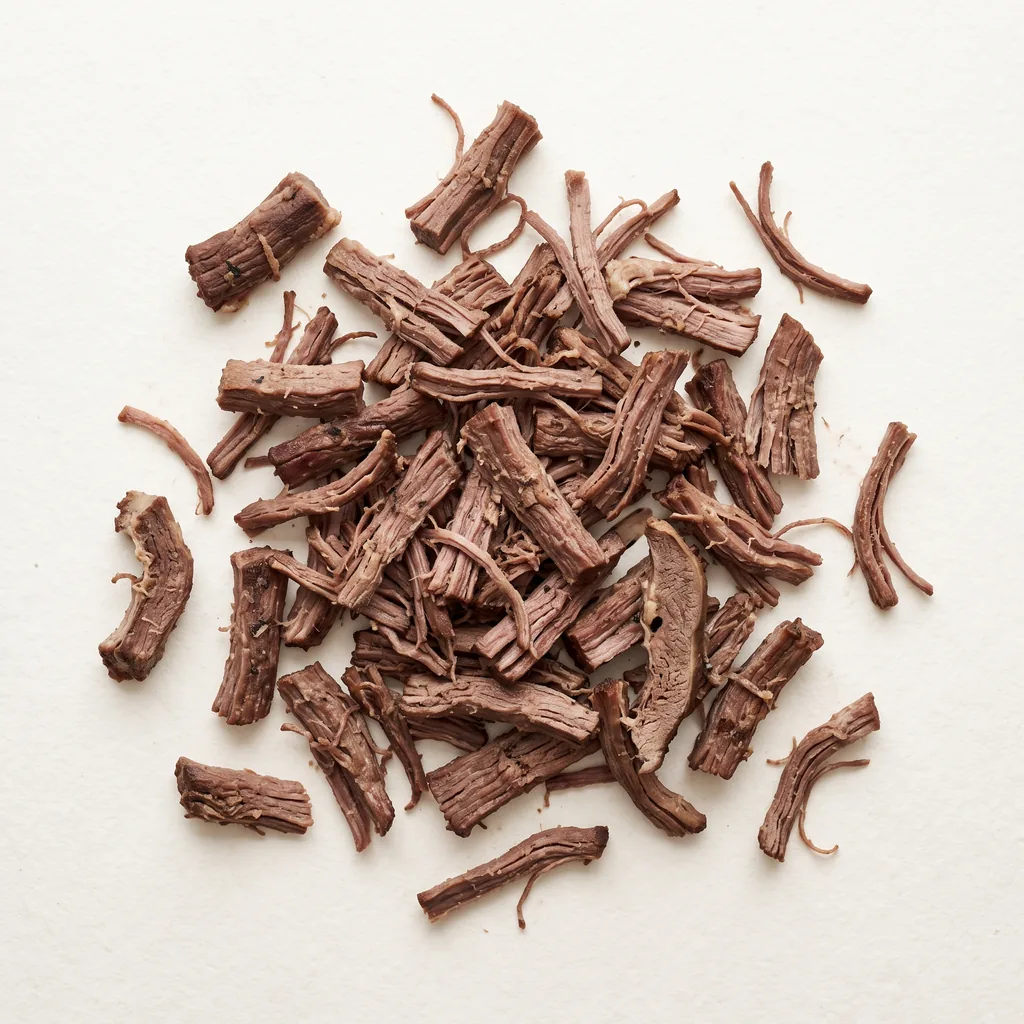
Cook meat thoroughly. For mince, burgers and meatballs, no pink should remain in the center and the juices should run clear. Remove bones, skin and fat. Mince the meat, purée it or cut it into thin strips. The Ministry of Health booklet advises serving meat minced or in small pieces inside vegetable purées, because its fibrous texture is hard for babies.
Do not add salt. The NHS says salty food is not good for a baby's kidneys. Avoid processed meats such as salami, spicy Turkish sausage and sausages, which are salty. Store raw meat in a sealed container on the bottom shelf of the fridge.
Preparation by age
The same food is served differently at each age. What matters is how your baby sits, grasps and chews, more than the calendar.
6 months
6 months · How to prepare as a puréemash
Cut: Smooth puree
Finely grind lean minced beef or boiled meat. Thin it with breast milk or the cooking water until it makes a smooth, runny purée. The WHO names iron as a top priority nutrient in complementary feeding. Red meat is one of the most iron-dense foods for this age group. From 9 months, slow-cooked, soft meat strips whose fibers separate easily suit baby-led weaning.
12 months
12 months · How to cut and servecube
Cook the meat until soft and serve it in small bite-size pieces, or as mince inside family dishes. If salt will be added to the family meal, set aside your child's portion before salting. Cut tough, stringy pieces into thin slices.
Is red meat a choking hazard for babies?
Choking risk: medium
Tough, stringy pieces of meat can cause choking. Mince the meat, purée it, or serve soft strips whose fibers separate easily.
Choking risk
The CDC lists tough, stringy pieces of meat among foods that can cause choking. The NHS advises cutting meat into narrow strips and removing skin and fat. Avoid round and firm shapes. Stay with your baby during meals and keep them sitting upright.
Do not give large, tough or stringy pieces of meat to a young baby.
Is red meat a common allergen?
Allergen status
Red meat is not counted among the common food allergens. It is also absent from the common allergen list of the Turkish National Society of Allergy and Clinical Immunology. Still, start with a small amount of any new food and watch your baby. If you see a rash, vomiting or breathing difficulty, contact your doctor.
Key nutrients
Frequently asked questions about red meat
Why is red meat recommended for babies?
Red meat contains iron and zinc. The NHS says both are important for babies. The AAP also points to meat-based foods as a source of iron and zinc.
What form should I serve the meat in?
Finely minced purée, or minced meat mixed into a vegetable purée, suits young babies. Babies who feed themselves can have soft strips whose fibers separate easily. Tough and stringy pieces carry a choking risk.
Do I need to watch the salt in meat dishes?
Yes. Do not add salt. The NHS says salt is not good for a baby's kidneys. Processed meats such as spicy sausage, salami and sausages are salty, so do not offer them.
Can minced meat stay pink?
No. Mince, burgers and meatballs must be cooked all the way through. The center should not be pink and the juices should run clear.
Sources for this page
- Dünya Sağlık Örgütü. (2023). Guideline for complementary feeding of infants and young children 6-23 months of age.
- NHS. (n.d.). Preparing food safely for babies.
- CDC, Infant and Toddler Nutrition. (n.d.). Choking Hazards.
- NHS Best Start in Life. (n.d.). Feeding your baby at 6 months.
- NHS. (n.d.). Meat in your diet.
- T.C. Sağlık Bakanlığı. (2012). Bebek Beslenmesi (Sağlık Bakanlığı Yayın No: 726).
- AAP, HealthyChildren.org. (n.d.). Starting solid foods.
Guides on iron, allergen introduction, gagging and drinks. Read the starting solids guides
Medical note
This page is for information only and is not a substitute for medical advice, diagnosis or treatment. Talk to your pediatrician before any feeding decision, especially about allergen introduction and reactions.
The Lokmini app
Log red meat, reactions and your allergen journey in the app.
Open in LokminiLokmini is coming soon to the App Store.
Astro Tasarım Simay Yenice · Türkiye · merhaba@lokmini.com