Raisins
- First taste
- 6 months
- Choking risk
- high
- Common allergen
- no
- Iron
- low
Not an allergen · high choking risk
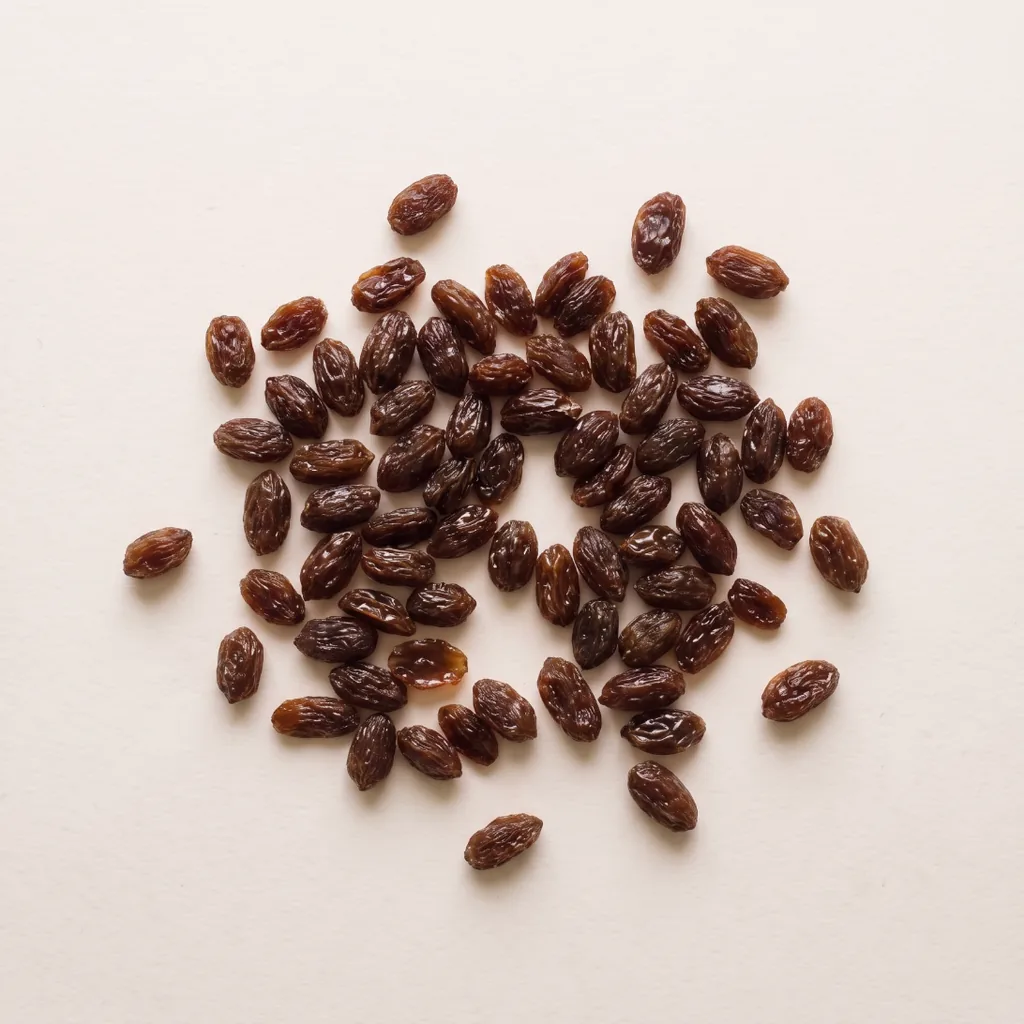
When can babies eat raisins?
When can babies have raisins?
Raisins can be offered once baby is ready for solids, from about 6 months. They should only be served softened and finely chopped or mashed.
Raisins are dried grapes, made in the sun or in a dehydrator. Most come from seedless green or red grapes. Larger ones are called sultanas and very small ones are zante currants.
Nutrition
They are high in carbohydrates and fiber, and they also provide potassium, iron, calcium and vitamin B6. Drying removes water, so the natural sugar becomes concentrated. In a balanced diet this natural sugar is not a concern.
How do you prepare raisins for babies?
Preparation basics
In the early months soften raisins in hot water, then mash them. Start with a small amount. The fiber content is high, so gas or loose stools can occur.
After 12 months finely chopped pieces are fine. From around 24 months many children can chew a whole raisin with their molars. Begin with one or two at a time and show good chewing yourself first.
Raisins last longer when kept cool. Store them in the fridge or a cool, dry cupboard.
Preparation by age
The same food is served differently at each age. What matters is how your baby sits, grasps and chews, more than the calendar.
6 months
6 months · Soften and mashmash
Leave raisins in hot water for a quarter of an hour. When they are fully soft, chop finely, mash or purée them. Serve them plain, or mix them into yogurt or oatmeal. Fiber is high, so start with a small amount. Too many can cause gas and loose stools.
12 months
12 months · Finely chopped raisinscube
Cut: Finely chopped
Chop raisins very finely. Soaking is no longer required at this age but it lowers the choking risk. Serve the pieces alone or stir them into spoonable foods.
12 months · Stir into oatmeal or yogurtmash
Cut: Fork mashed
Mash softened raisins into oatmeal or yogurt. The pieces spread through a soft food and are harder to swallow whole.
Is raisins a choking hazard for babies?
Choking risk: high
Dried fruit is firm and hard to chew, so the choking risk is high. Do not serve whole raisins. Soften them in warm water, then chop finely or mash.
Choking risk
Dried fruit is firm and sticky. Whole raisins are a choking risk for young children. Prepare them for the right age and stay within arm's reach throughout the meal.
No whole raisins
Do not serve whole raisins before age 2. Soften and chop them, or mash them.
Is raisins a common allergen?
Allergen status
Raisins are not a common allergen and allergy to them is rare. Raisins and other dried fruit can be high in histamine, which may worsen allergic reactions or upper airway complaints. Offer a small amount the first time and watch baby.
Key nutrients
Frequently asked questions about raisins
Why should I soften raisins?
Dry raisins are hard and sticky. Soaking makes them easier to chew and lowers the choking risk.
Are raisins too sugary?
Drying concentrates natural sugar. Natural fruit sugar is not a concern in a balanced diet, but a small portion is enough.
Can raisins cause gas?
The high fiber can cause gas or loose stools in some babies. Start small and increase slowly.
Sources for this page
- American Academy of Pediatrics, HealthyChildren.org. (n.d.). Choking Prevention.
- USDA. (n.d.). FoodData Central.
Guides on iron, allergen introduction, gagging and drinks. Read the starting solids guides
Medical note
This page is for information only and is not a substitute for medical advice, diagnosis or treatment. Talk to your pediatrician before any feeding decision, especially about allergen introduction and reactions.
The Lokmini app
Log raisins, reactions and your allergen journey in the app.
Open in LokminiLokmini is coming soon to the App Store.
Astro Tasarım Simay Yenice · Türkiye · merhaba@lokmini.com