Pasta
- First taste
- 6 months
- Choking risk
- medium
- Common allergen
- yes
- Iron
- low
Gluten allergen · cook very soft
Contains allergens
Each new allergen is offered on its own and watched for two hours. Our allergen introduction guide is available in Turkish for now.
When can babies eat pasta?
You can offer pasta once your baby is ready for solids, usually around 6 months. Pasta usually contains wheat and sometimes egg. Take care if you have not yet introduced those two foods.
Pasta and noodles are unleavened dough of starch and liquid. They come in many shapes, cook quickly and are eaten with sauce. Pasta is an Italian word. Noodles, in the broader sense, also include old dishes from East Asia.
Pasta gives plenty of carbohydrates for energy. Types made from legume flour are more nutritious than wheat or rice pasta. Enriched pasta adds iron and some B vitamins. As part of a balanced table, pasta is a healthy meal.
How do you prepare pasta for babies?
Which shape works
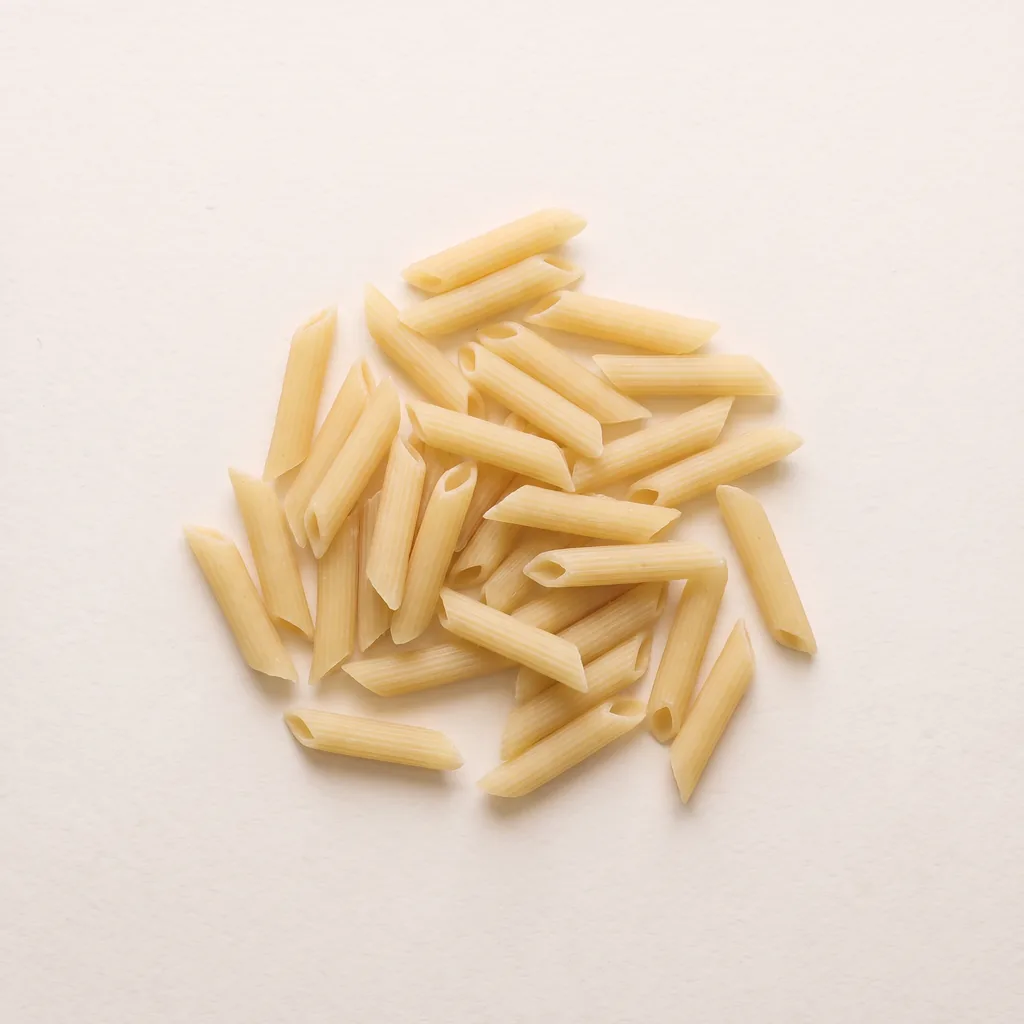
At 6 months, large pieces such as penne, rigatoni or wide flat noodles work well. A baby this age finds slippery pieces hard to hold, which is normal. You can also chop thin pasta and serve it in a bowl.
From 9 months your baby can pick up small pieces with two fingers. Halve large tubes, or offer short pasta or quartered ravioli. If your baby struggles, going back to big pieces is fine and helps build chewing skills.
Add sauce or oil
Plain pasta is harder to swallow and can cause gagging. A little sauce or oil makes it easier.
Kitchen scissors
You can shorten pasta right in the bowl with kitchen scissors.
Preparation by age
The same food is served differently at each age. What matters is how your baby sits, grasps and chews, more than the calendar.
Prep time: 15 min
6 months
6 months · How to cut and serve for baby-led weaningstrip
Boil large, long pasta shapes (penne, rigatoni, fettuccine) in unsalted water a few minutes past the package time, until very soft. Your baby can grip a long piece and suck on it. Toss with olive oil or vegetable purée. Gluten is a new allergen, so offer it on its own the first time.
9 months
9 months · How to cut and servecube
Cut: Bite sized piece
Cut very soft cooked pasta into bite-size pieces, or mix small shapes (orzo, stars) with vegetable purée. A hard, undercooked piece can catch in the throat.
12 months
12 months · How to cut and servecube
Cut: Bite sized piece
Keep offering pasta in small pieces or short shapes. Serve it with lightly salted homemade tomato sauce, yogurt or a mince sauce, since store-bought sauces are salty.
12 months · How to prepare as long thin noodlesstrip
At this age your child handles long thin pasta such as spaghetti, noodles and rice noodles more easily. Try different shapes and textures, and shorten them with scissors if needed. It is fine if your child still prefers eating by hand. Keep offering an age-appropriate fork.
Is pasta a choking hazard for babies?
Choking risk: medium
Hard, undercooked pasta and soft pasta that clumps in the mouth both carry risk. Cook it very soft, and serve long pieces at 6 months and bite-size pieces from 9 months.
Properly prepared pasta carries a low choking risk. Even so, any food can cause choking.
Hard, undercooked pasta is risky, so cook it very soft. Plain pasta can cause gagging, so add sauce or oil. Stay close while your baby eats and keep them upright.
Is pasta a common allergen?
Pasta is a common allergen. It contains wheat. Many pastas and noodles also contain egg. Certain alternative pastas are mixed with wheat flour or egg, so read the label.
Introduce the relevant allergens on their own before serving pasta. That way, if a reaction happens you know which one caused it. By the time you serve pasta, you can be sure your baby has already eaten the ingredients safely.
Give a small amount the first few times. If there is no reaction, increase the portion slowly.
Read the label
Egg pasta contains the egg allergen. Check the label every time.
Key nutrients
Frequently asked questions about pasta
Which pasta can babies eat?
Big pieces suit 6 months: penne, rigatoni or wide flat pasta. After 9 months try short shapes and chopped pasta. After 12 months long thin pasta such as spaghetti is an option.
Is pasta healthy for babies?
Yes. It gives plenty of carbohydrates. Legume-flour pasta and enriched pasta carry more nutrients. Serve it as part of a balanced meal.
Why does pasta make babies gag?
Plain pasta is hard to swallow. Stirring in a little sauce or oil makes swallowing easier.
Sources for this page
- Dünya Sağlık Örgütü. (2023). Guideline for complementary feeding of infants and young children 6-23 months of age.
- NHS. (n.d.). Preparing food safely for babies.
- CDC, Infant and Toddler Nutrition. (n.d.). Choking Hazards.
- Halken S, Muraro A, de Silva D, Khaleva E, Angier E, Arasi S, et al. (2021). EAACI guideline: Preventing the development of food allergy in infants and young children (2020 update). European Academy of Allergy and Clinical Immunology. doi:10.1111/pai.13496
- Türkiye Ulusal Alerji ve Klinik İmmünoloji Derneği. (n.d.). Besin Alerjisi, öncelikli 10 besin.
Guides on iron, allergen introduction, gagging and drinks. Read the starting solids guides
Medical note
This page is for information only and is not a substitute for medical advice, diagnosis or treatment. Talk to your pediatrician before any feeding decision, especially about allergen introduction and reactions.
The Lokmini app
Log pasta, reactions and your allergen journey in the app.
Open in LokminiLokmini is coming soon to the App Store.
Astro Tasarım Simay Yenice · Türkiye · merhaba@lokmini.com