Oats
- First taste
- 6 months
- Choking risk
- low
- Common allergen
- no
- Iron
- medium
Great as porridge · certified GF for celiac
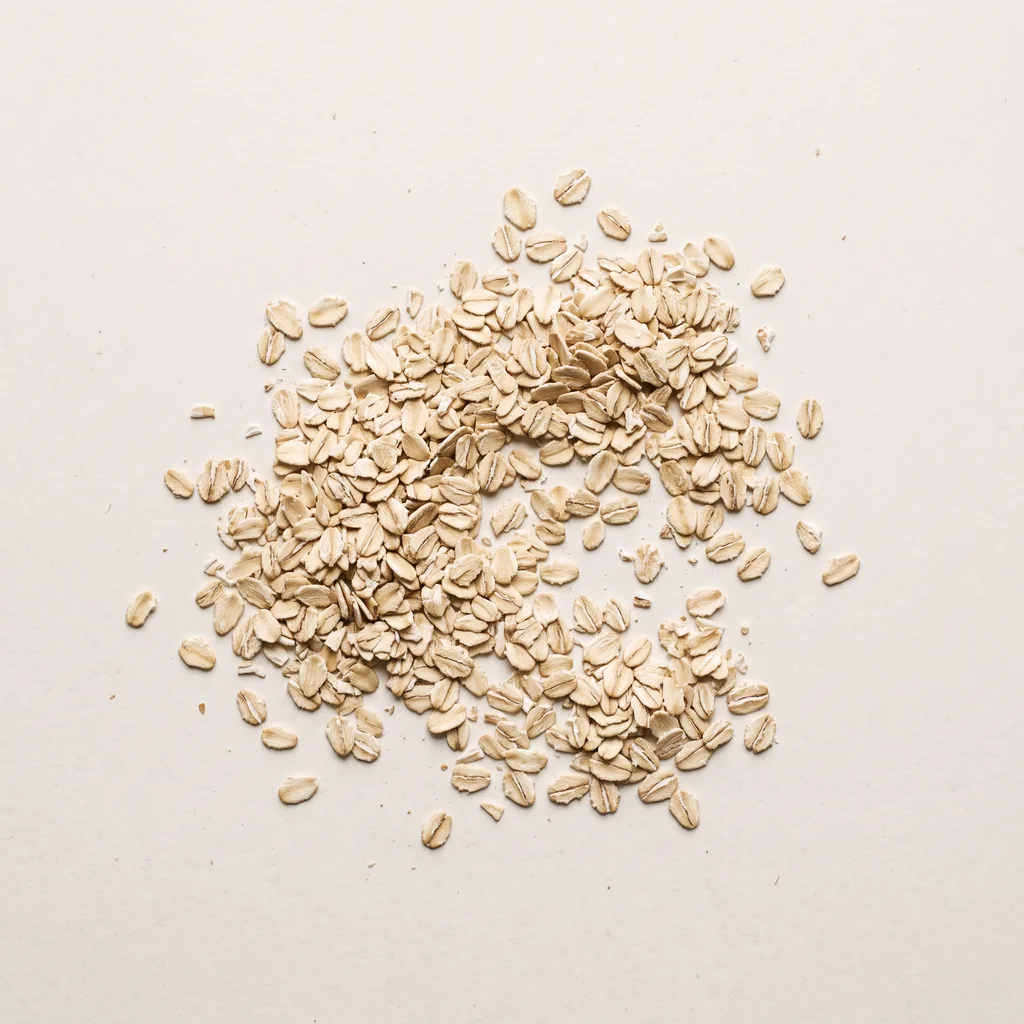
When can babies eat oats?
Oats can be offered once baby is about 6 months old and ready for solids. Wild oat grasses most likely originated in Southwest Asia and North Africa. The crop now grows wherever the climate is cool and damp. In South America it is called avena, and in Northern Europe havre.
Oats supply healthy carbohydrates and a special fiber called beta-glucan, which supports the gut and the immune system. Oats are also a good source of zinc. They also contain iron, magnesium, selenium, folate, and choline. Iron and zinc, and at times vitamin C, are added to many infant oat cereals.
How do you prepare oats for babies?
You can cook oats in cow's milk, formula, breast milk, or water. Use cow's milk only after dairy has been introduced safely.
Do not add honey to oats before 12 months, and skip oat products that contain honey. If you share granola, pick one without honey, grind it fully fine and stir it into a soft food such as applesauce or yogurt.
Rolled and instant oats are usually heat treated. Steel-cut oats may be less heat treated, so cook them before serving. Uncooked oats are also harder for a baby to eat and digest. Keep oats sealed in a tight container somewhere cool and dry.
Arsenic levels in rice and rice products generally exceed those in oats. To limit heavy metal exposure, favor multigrain products and a varied diet.
Infant cereal does not have to be the first food. Other iron-rich foods work too.
Oat milk can go into food. Do not give it as a drink until after the first birthday.
Preparation by age
The same food is served differently at each age. What matters is how your baby sits, grasps and chews, more than the calendar.
6 months
6 months · How to prepare for a spoonmash
Make the porridge using milk, formula, breast milk, or water. Cooking it uncovered and a little longer gives a texture that clings to the spoon and can be rolled into balls, and that makes it easier for baby to feed themselves. Preload the spoon and hold it out for baby to take. Because of the risk of infant botulism, no honey goes into porridge before 12 months.
9 months
9 months · How to servemash
Try oats two ways: as soft balls baby can hold and as a porridge baby can scoop. Oat flour also works in meatballs, cakes and grain balls.
12 months
12 months · How to servemash
Serve porridge so your child can practice spoon use. It is normal at this age if the child keeps scooping with the hands. You can also offer oat bread, cake and similar baked goods.
Is oats a choking hazard for babies?
Choking risk: low
Soft cooked oats carry a low risk. Granola, granola bars and other firm oat products raise the choking risk. If you share them, grind them fine and stir into a soft food.
Soft cooked oats and porridge carry a low choking risk. Granola, granola bars and other firm or hard-to-chew oat products raise the risk. Granola often has nuts and dried fruit mixed in, and those are frequent choking culprits.
Stay within arm's reach of your baby during meals.
Is oats a common allergen?
True IgE allergy to oats is uncommon. Most reported reactions to oats came after the oats touched the skin of sensitive people. Oat-based cereals, breads, and baked goods can also include common allergens such as wheat, egg, dairy, and tree nuts. Read the label.
Oats are a frequent FPIES trigger. FPIES is a rare, delayed allergy that begins hours after eating with repeated vomiting and diarrhea. Untreated, it can cause serious dehydration. Most cases resolve fully in early childhood.
If your baby has celiac disease, pick oats certified as gluten free. The grain itself has no gluten, yet cross-contact with wheat, barley and rye is common. For celiac disease, the gluten-free diet has to be strict and last a lifetime.
Start with a small amount at the first meals and watch your baby's response.
Key nutrients
Frequently asked questions about oats
Are oats gluten free?
Naturally yes, but most products pick up wheat, barley and rye in handling. For celiac disease, pick certified gluten-free oats.
Can babies eat raw oats?
Rolled and instant oats are usually heat treated. Steel-cut oats may be less so, so cook them. Uncooked oats of any kind are hard for a baby to eat and digest.
Is oatmeal better than rice cereal?
Rice products usually hold more arsenic than oats. Multigrain products and a varied diet lower heavy metal exposure.
Can babies have granola?
Yes, if it is honey free and ground very fine. Allergens it may contain, tree nuts and sesame for instance, should be tried separately first. Granola can be hard and sugary.
Can I cook oats with milk?
Yes. Once dairy has been introduced safely, cow's milk can be used.
Sources for this page
- Dünya Sağlık Örgütü. (2023). Guideline for complementary feeding of infants and young children 6-23 months of age.
- NHS. (n.d.). Preparing food safely for babies.
- CDC, Infant and Toddler Nutrition. (n.d.). Choking Hazards.
- Blackman AC, Anvari S, Davis CM, Anagnostou A. (2019). Emerging triggers of food protein–induced enterocolitis syndrome. Annals of Allergy, Asthma & Immunology. doi:10.1016/j.anai.2019.01.022
- Pinto-Sánchez MI, Causada-Calo N, Bercik P, Ford AC, Murray JA, Armstrong D, et al. (2017). Safety of Adding Oats to a Gluten-Free Diet for Patients With Celiac Disease: Systematic Review and Meta-analysis of Clinical and Observational Studies. Gastroenterology. doi:10.1053/j.gastro.2017.04.009
- Rothenberg SE, Jackson BP, Carly McCalla G, Donohue A, Emmons AM. (2017). Co-exposure to methylmercury and inorganic arsenic in baby rice cereals and rice-containing teething biscuits. Environmental Research. doi:10.1016/j.envres.2017.08.046
Guides on iron, allergen introduction, gagging and drinks. Read the starting solids guides
Medical note
This page is for information only and is not a substitute for medical advice, diagnosis or treatment. Talk to your pediatrician before any feeding decision, especially about allergen introduction and reactions.
The Lokmini app
Log oats, reactions and your allergen journey in the app.
Open in LokminiLokmini is coming soon to the App Store.
Astro Tasarım Simay Yenice · Türkiye · merhaba@lokmini.com