Mushroom
- First taste
- 6 months
- Choking risk
- medium
- Common allergen
- no
- Iron
- low
Cultivated only, always cooked
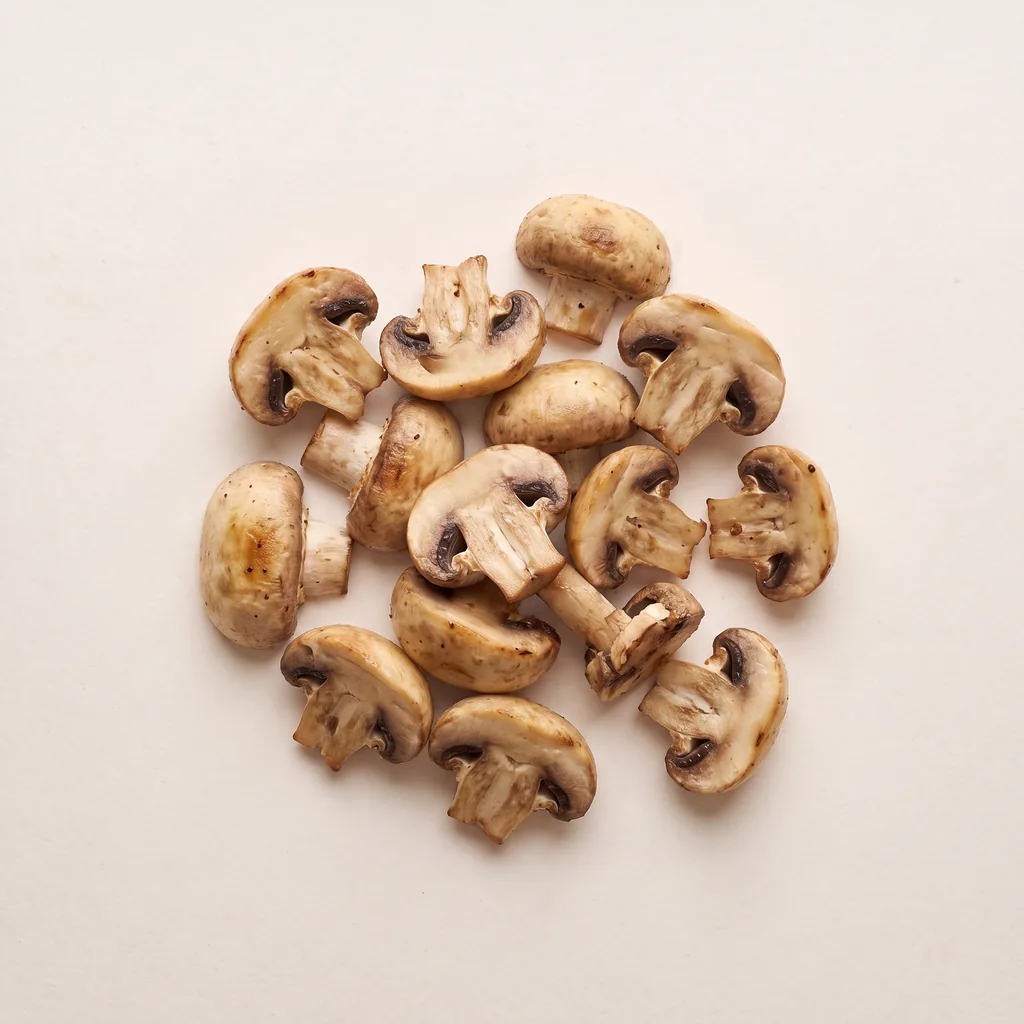
When can babies eat mushroom?
The white cultivated mushroom can start when your baby is ready for solids, at about 6 months. Botanically a mushroom is a fungus, not a fruit or a vegetable. More than 2,000 edible kinds exist, yet the button mushroom is the one eaten most. It is white or brown depending on the strain and sold as champignon, cremini or baby bella. Fully grown, it is marketed as portobello.
Besides a touch of protein and carbohydrate, mushrooms bring fiber, folate, potassium, selenium, zinc, vitamin B6 and vitamin C. These help gut health, fluid balance, brain growth and iron absorption. Some plant compounds may act as antioxidants or reduce inflammation.
Wild mushrooms
Buy mushrooms from a trusted source. Mushrooms picked in the wild should not be served unless a mycologist has checked them, because poisonous look-alikes are widespread.
How do you prepare mushroom for babies?
At 6 months, chop well-cooked mushroom very fine and stir it into egg strips, mash or porridge. At 9 months, add cooked mushroom to egg, bean or noodle dishes. The pincer grasp is developing, so thin slices of cooked mushroom can be served alone. Removing the stem lowers the choking risk.
After 18 months, serve chopped or sliced cooked mushroom. You can also try very thin raw slices. Large pieces and whole cooked mushrooms have a texture toddlers may find hard, so some spitting is normal. At this age you can leave the stem on, but cutting it in half lengthwise to take away the round shape lowers the risk.
Preparation by age
The same food is served differently at each age. What matters is how your baby sits, grasps and chews, more than the calendar.
Prep time: 15 min
6 months
6 months · How to prepare as a puréemash
Cut: Finely chopped
Wash cultivated mushrooms (white or brown) well and cook them until soft, then chop finely and stir into mashed potato or egg. Wild mushrooms are never served to babies. Raw mushrooms are not suitable at this age either.
9 months
9 months · How to cut and servecube
Slice cooked mushroom very thin, or cut it small, and add it to the meal. The rubbery texture may not bite off cleanly, so pieces should be smaller than a bite.
12 months
12 months · How to cut and servecube
Keep serving cooked mushroom as thin slices or small pieces. A whole small mushroom cap is round and slippery, so it is not served whole before age 4.
Is mushroom a choking hazard for babies?
Choking risk: medium
Mushrooms are slippery and rubbery, and stems are round and firm. Cook well, chop or slice thin, and remove stems.
White button mushrooms are slippery, and beginners have trouble chewing them up. The stem is round and firm. All of this raises the choking risk. Prepare them to suit your child's age and stay close during meals.
Is mushroom a common allergen?
Mushroom allergy is rare but does occur. Mushrooms contain chitin, a carbohydrate also found in shellfish and insects, which can play a part in allergic reactions. Many mushrooms give off spores, and those may irritate people with breathing problems or sensitivity to allergens in the air. People with pollen food allergy (oral allergy syndrome) may react as well, usually with brief itching in the mouth, and a dangerous reaction is unlikely.
First try
As with any new food, start with a small amount for the first few servings. If there is no reaction, increase it gradually.
Key nutrients
Frequently asked questions about mushroom
At what age can babies eat white button mushrooms?
Once your baby is ready for solids, at about 6 months, cooked and chopped fine.
Should I remove mushroom stems?
At 9 months, yes, to lower the choking risk. After 18 months you can leave them on, but halve them lengthwise to remove the round shape.
Can mushrooms be served raw?
After 18 months you can try very thin raw slices. For younger babies, serve them cooked.
Can I serve foraged mushrooms?
No, not unless a mycologist has confirmed that they are safe. Poisonous look-alikes are common.
Sources for this page
- Dünya Sağlık Örgütü. (2023). Guideline for complementary feeding of infants and young children 6-23 months of age.
- NHS. (n.d.). Preparing food safely for babies.
- CDC, Infant and Toddler Nutrition. (n.d.). Choking Hazards.
- Cebin AV, Petravić-Tominac V, Djakovic S, Srecec S, Zechner-Krpan V, Piljac-Zegarac J, et al. (2018). Polysaccharides and Antioxidants from Culinary-Medicinal White Button Mushroom, Agaricus bisporus (Agaricomycetes), Waste Biomass. International Journal of Medicinal Mushrooms. doi:10.1615/IntJMedMushrooms.2018027412
- Dauby PAL, Whisman BA, Hagan L. (2002). Cross-reactivity between raw mushroom and molds in a patient with oral allergy syndrome. Annals of Allergy, Asthma & Immunology. doi:10.1016/S1081-1206(10)61962-X
- Kayode OS, Siew LQC, Pillai P, Haque R, Rutkowski K, Caballero MR. (2020). Mushroom allergy: Case series. Journal of Allergy and Clinical Immunology: In Practice. doi:10.1016/j.jaip.2019.08.048
Guides on iron, allergen introduction, gagging and drinks. Read the starting solids guides
Medical note
This page is for information only and is not a substitute for medical advice, diagnosis or treatment. Talk to your pediatrician before any feeding decision, especially about allergen introduction and reactions.
The Lokmini app
Log mushroom, reactions and your allergen journey in the app.
Open in LokminiLokmini is coming soon to the App Store.
Astro Tasarım Simay Yenice · Türkiye · merhaba@lokmini.com